
AMD officially announced the launch of Helios production— is now a good time to position for it?

Options Sir Breaks Down the Buzz | Intel and AMD Hit New Highs! If You Missed NVIDIA, Can You Still Jump Into the CPU Race?
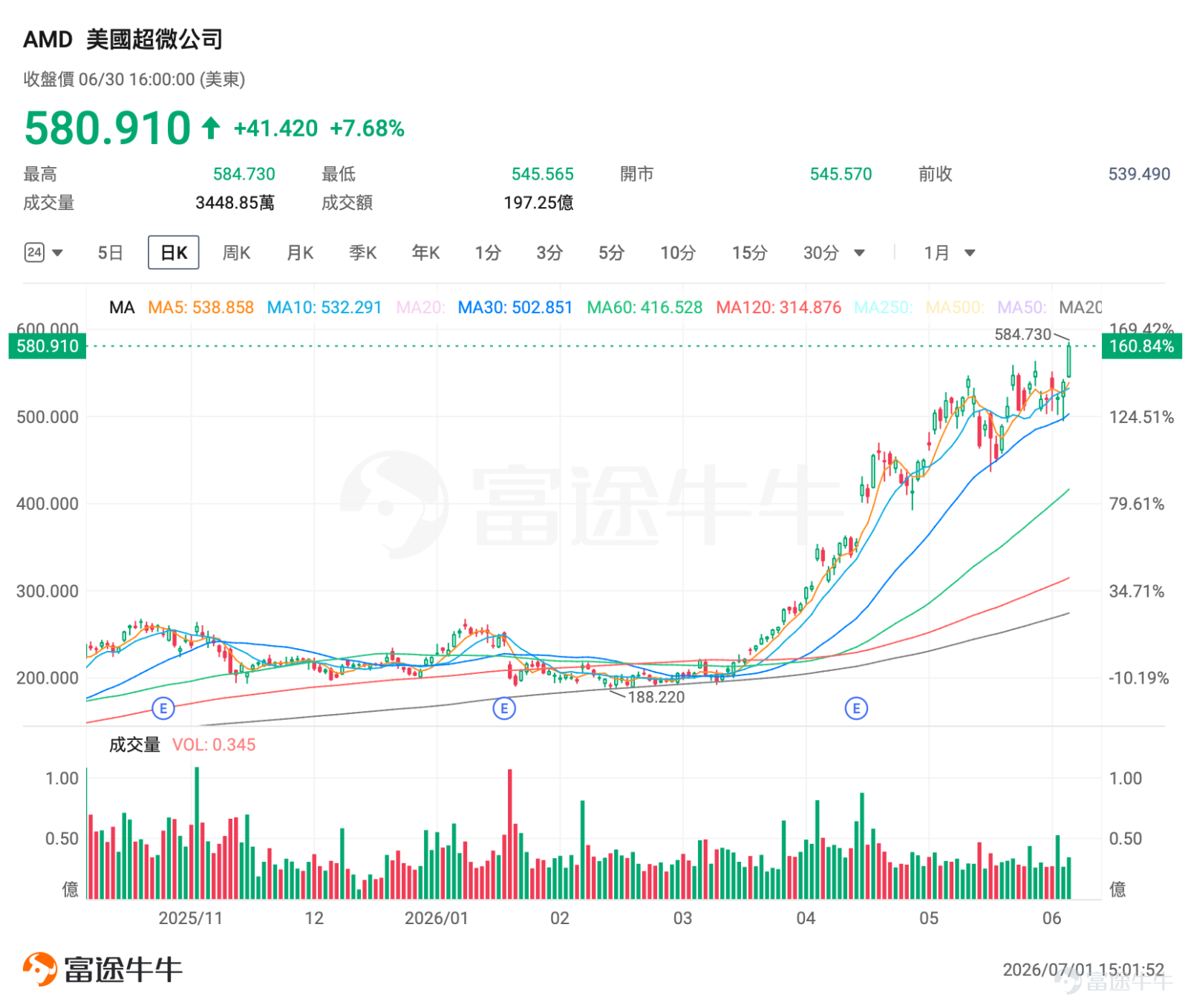
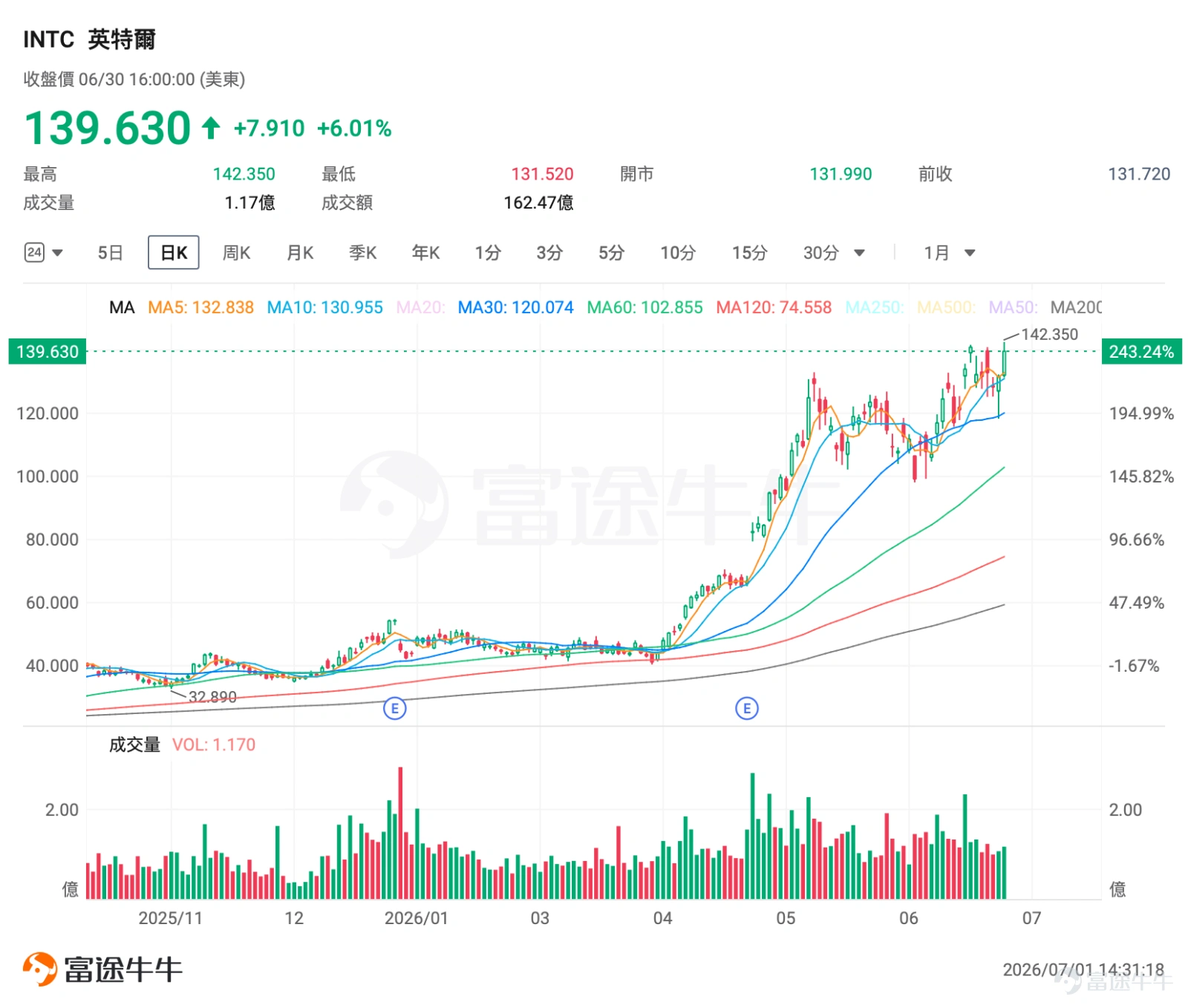
On the final trading day of the first half of 2026, U.S. CPU stocks rallied collectively, $Advanced Micro Devices (AMD.US)$ surging over 7%, $Intel (INTC.US)$ and another jumping more than 6%, with both hitting record highs simultaneously.
Over the past two years, countless investors missed out on the GPU super-cycle; now, the narrative around computing power is undergoing a fundamental shift—CPUs are stepping into the spotlight, driven by Agentic AI, which is doubling the industry's addressable market. AMD and Intel are each carving out distinct growth trajectories.
Can investors who missed $NVIDIA (NVDA.US)$ the GPU rally now capture a new wave of structural opportunities in the CPU space?
I. Driving Logic: AI Enters the Agentic Era—CPUs Evolve from Supporting Role to Computing Power Core
For the past two years, the market operated under a simple, blunt logic:AI equaled GPUs.Whoever owned more NVIDIA chips controlled computing power. But in 2026, this market logic is undergoing a pivotal shift:AI is evolving from training to inference, and from answering questions to autonomously completing tasks.
This marks the rise of Agentic AI.When AI assistants no longer merely output text but must plan steps, invoke tools, access databases, verify execution results, and coordinate multiple subtasks, computing power demand undergoes a structural shift—GPUs excel at large-scale parallel computation, while CPUs are better suited for sequential task orchestration.
Multiple Wall Street institutions have issued the same signal:
– Bank of America forecasts that the global server CPU market will expand from approximately $35 billion in 2025 to over $170 billion by 2030;
– Barclays took a more aggressive stance, raising its forecast for the total CPU market size in 2030 to nearly $200 billion;
– AMD CEO Lisa Su doubled her forecast for the server CPU TAM (Total Addressable Market) in 2030 to over $120 billion, implying a compound annual growth rate of more than 35%.
A more intuitive shift is evident in the CPU-to-GPU ratio.Intel CEO Lip-Bu Tan explicitly stated in a recent podcast interview thatwith the surge in Agentic AI and inference workloads, the CPU-to-GPU ratio in data center servers has evolved from the previous 1:8 to 1:4 or even 1:1.
In simple terms, the market previously only grasped the simplistic notion that “AI = GPU,” overlooking the fact that AI systems rely on a complete architecture combining both CPUs and GPUs. The rise of agentic AI has fundamentally revalued the role of CPUs—this overlooked theme now presents a fresh investment opportunity for those who missed out on NVIDIA.
II. AMD: Data Center Segment Delivering Strong Results with High Growth Visibility
In this wave of CPU resurgence, $Advanced Micro Devices (AMD.US)$ AMD has undoubtedly been one of the standout performers, with its stock up 171% year-to-date.
AMD’s core competitive advantage lies in its EPYC processor series, whose multi-core, multi-threaded architecture precisely meets the high-throughput demands of standalone AI servers.
Data center business performance is materializing, with supply chain capacity locked in, ensuring high growth visibility.
In Q1 of fiscal year 2026, AMD's data center revenue reached $5.775 billion, up 57% year-over-year. According to Mercury Research, AMD's revenue share in the server CPU market has reached 46.2% (up from 39.5% in the same period of 2025), with a unit shipment share of 33.2%.The significantly higher revenue share compared to shipment share indicates that its product portfolio is gaining stronger pricing power in the high-end market.
Lisa Su stated directly at the Taipei Forum: 'CPU demand is far exceeding any forecast made a year ago.'To address this, AMD announced over $10 billion in investments in AI, securing advanced packaging, substrate, and rack-level system manufacturing capacity in Taiwan through 2029. Additionally, the Venice CPU built on Taiwan Semiconductor’s 2-nanometer process has entered mass production.
AMD’s strength lies in the convergence of advantages across multiple dimensions.
– On the product side,its product lineup covers three key segments: general-purpose enterprise CPUs, head-node CPUs, and high-core-count CPUs tailored for agentic AI—effectively covering nearly all use cases.
– On the client side,Meta has signed a bundled order with AMD for 6 gigawatts of Instinct MI450 GPUs and sixth-generation EPYC CPUs; similarly, CPU deployment plans have been integrated into OpenAI’s 6GW GPU supply agreement.
– In terms of financial visibility,AMD raised its Q2 server CPU guidance to over 70% growth.
Valuation is no longer cheap, yet institutions continue to raise their estimates.
Frankly speaking, AMD’s valuation is no longer cheap after hitting new highs, but growth expectations are being revised upward in parallel:Wells Fargo & Co raised its price target from $505 to $615 on June 30; UBS Group significantly increased its target from $455 to $670.
Lisa Su has laid out an even more aggressive long-term vision: data center revenue growing at an average annual rate of over 60% over the next three to five years, driving annual data center revenue toward $100 billion.
III. Intel: A high-elasticity recovery story, with Foundry and AI PCs as key variables
If we say that $Advanced Micro Devices (AMD.US)$ is performance-driven, $Intel (INTC.US)$ is a classic expectation-recovery type—with greater upside potential but also higher uncertainty.
Why has the stock price surged 278% year-to-date?
Compared to AMD's steady progress, Intel's story is more dramatic and resilient. Under CEO Lip-Bu Tan, Intel is crafting a 'return of the king' turnaround narrative, and the market is voting on its recovery prospects.
Intel’s upside potential primarily stems from three areas:
1. Breakthroughs in process technology and foundry business: This is the core of Intel’s transformation.
Its highly anticipated Intel 18A process node has already entered volume production, and the upgraded 18A-P version has reached the 'risk production' stage. Meanwhile, the company has spun off its advanced packaging business into an independent unit and hired the former CEO of SK Hynix to oversee EMIB-T and HBI packaging production lines, directly competing with Taiwan Semiconductor’s CoWoS to capture the growing advanced packaging market.
More importantly, the foundry business continues to deliver positive developments.not only $Alphabet-A (GOOGL.US)$ has placed a foundry order for over 3 million TPUs by 2028, $NVIDIA (NVDA.US)$ is also testing Intel’s 18A process and EMIB packaging technology for its future GPU architectures, and SK Hynix is evaluating the compatibility of its HBM with Intel’s packaging solutions. $Apple (AAPL.US)$ has also confirmed a partnership with Intel to design and manufacture chips domestically in the United States.The U.S. government's CHIPS Act support and direct equity investment have provided Intel with a unique 'Made in America + policy tailwind' moat.
Intel's foundry business previously reported a single-quarter loss of $2.4 billion. If major customer orders materialize and yields continue to improve—leading to a return to profitability—it would generate significant valuation upside, a narrative unique to Intel and distinct from AMD.
2. AI PCs and Client Computing Business:
Intel is betting on AI PCs as a new growth driver. Its Core Ultra processor series, particularly products built on the 18A process node, emphasizes efficiency and battery life for running AI models locally on devices, and is collaborating with partners such as $Microsoft (MSFT.US)$ Perplexity to build a new PC ecosystem.
3. Leadership and Strategy:
In a recent interview, CEO Lip-Bu Tan outlined a long-term goal of delivering 10x shareholder returns over the next 5–10 years. He is also investing in glass substrates, synthetic diamond, and third-generation semiconductor materials—seeking to bypass the physical limits of Moore’s Law and lay the groundwork for the next decade.
Of course, Intel’s 'turnaround story' comes with significant uncertainty.Whether its foundry business can consistently earn the trust of major customers, whether yield targets can be met, and when massive investments will translate into profitability—all remain unknowns.But once these uncertainties are resolved, the stock’s upside potential could be substantial.
Overall, AMD is better suited for conservative investors, offering higher growth certainty, and positions can be built gradually during pullbacks. Intel is more appropriate for risk-tolerant investors due to its greater upside potential, though close monitoring of its foundry business progress and earnings reports is essential; if the stock price corrects into a reasonable range, its allocation value improves.
IV. Options Strategies
The CPU sector has a clear medium- to long-term bullish outlook, but after consecutive new highs in the short term, volatility has increased. Pure stock trading involves significant profit-and-loss swings; using options tools can reduce risk and lower average holding costs:
1. Already holding a base position in AMD or Intel and seeking enhanced returns: Covered Call strategy
This suits investors who already hold shares, do not plan to sell in the short term, and expect mainly sideways price action. Sell near-term out-of-the-money call options: if the stock price stays below the strike price, collect the full premium to boost returns; if the price surges above the strike, the shares are automatically sold at the agreed-upon price, locking in interim gains.
Given the substantial recent gains in both stocks, selling calls can hedge against downside risk and generate steady cash flow.
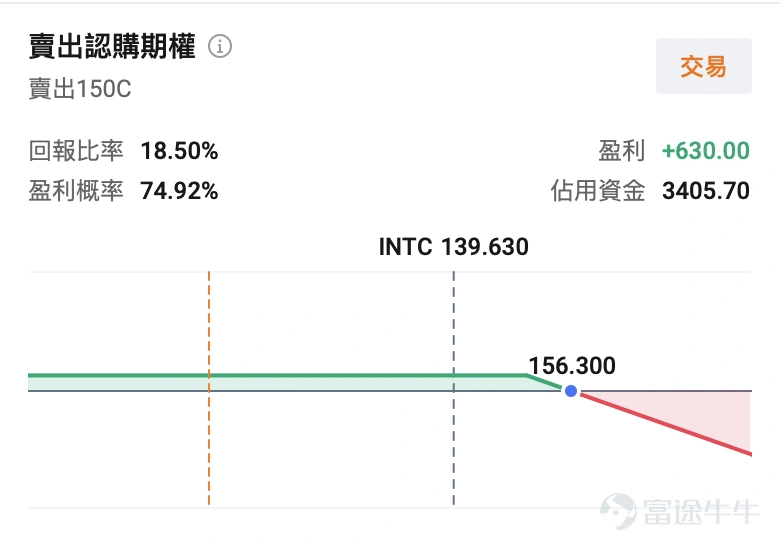
(Using Intel as an example to illustrate the options strategy; the on-screen design image is for demonstration purposes only and does not constitute any investment advice or guarantee. Market conditions change frequently, and the prices shown in the illustration do not reflect real-time data.)
2. Not yet invested, bullish on the medium- to long-term outlook, and aiming to establish positions at lower levels: Cash-Secured Put strategy
For those optimistic about long-term opportunities in the CPU space but unwilling to chase current high prices, consider selling longer-dated out-of-the-money put options to passively establish a position if the stock price pulls back to the strike level.
If the stock continues to rise, the option premium enhances returns on idle capital; if the sector experiences a short-term pullback, shares are acquired at a price significantly below the current market level, substantially lowering the cost basis—aligning with the sector’s long-term upward trajectory while avoiding the risk of buying high and facing a subsequent drawdown.
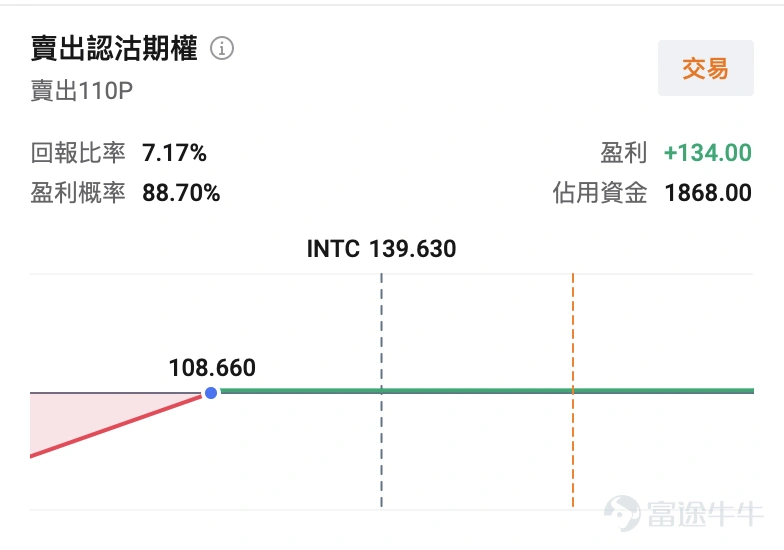
(Using Intel as an example to illustrate the options strategy; the on-screen design image is for demonstration purposes only and does not constitute any investment advice or guarantee. Market conditions change frequently, and the prices shown in the illustration do not reflect real-time data.)
3. Bullish but concerned about a short-term pullback—balance cost and risk: Bull Call Spread)
For investors looking to bet on a potential rally in CPU stocks driven by increased Q3 capital expenditures from cloud providers while capping maximum losses, a bull call spread could be considered: buy an at-the-money near-month call option and simultaneously sell an out-of-the-money call option with the same expiration date but a higher strike price.
The maximum loss of this strategy is limited to the net premium paid to establish the position, fully capping downside risk. If the stock price surges significantly, the position captures the full gain between the two strike prices, offering higher capital efficiency than directly purchasing the underlying stock.
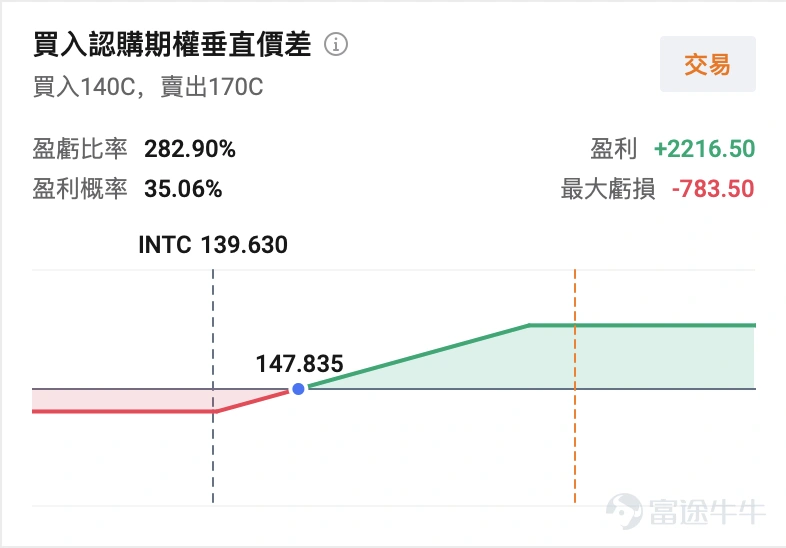
(Using Intel as an example to illustrate the options strategy; the on-screen design image is for demonstration purposes only and does not constitute any investment advice or guarantee. Market conditions change frequently, and the prices shown in the illustration do not reflect real-time data.)
Summary
For investors who missed NVIDIA’s early rally, the CPU sector indeed shows compelling potential.
The new highs reached by AMD and Intel reflect a shift in AI investment logic—from 'hardware scarcity' to 'infrastructure proliferation.' As the foundational computing platform for AI inference and intelligent agent applications, CPUs are undergoing a fundamental revaluation.
As Lip-Bu Tan stated: 'CPU orchestrates the show.'
 Fellow investors, how will you position yourselves in the CPU sector in the second half of 2026?
Finally, here's a small perk for fellow Futubull investors, welcome to claim it.Options Beginner Pack
*This event is exclusive to invited HK users. Click to learn more.Detailed event rules>>
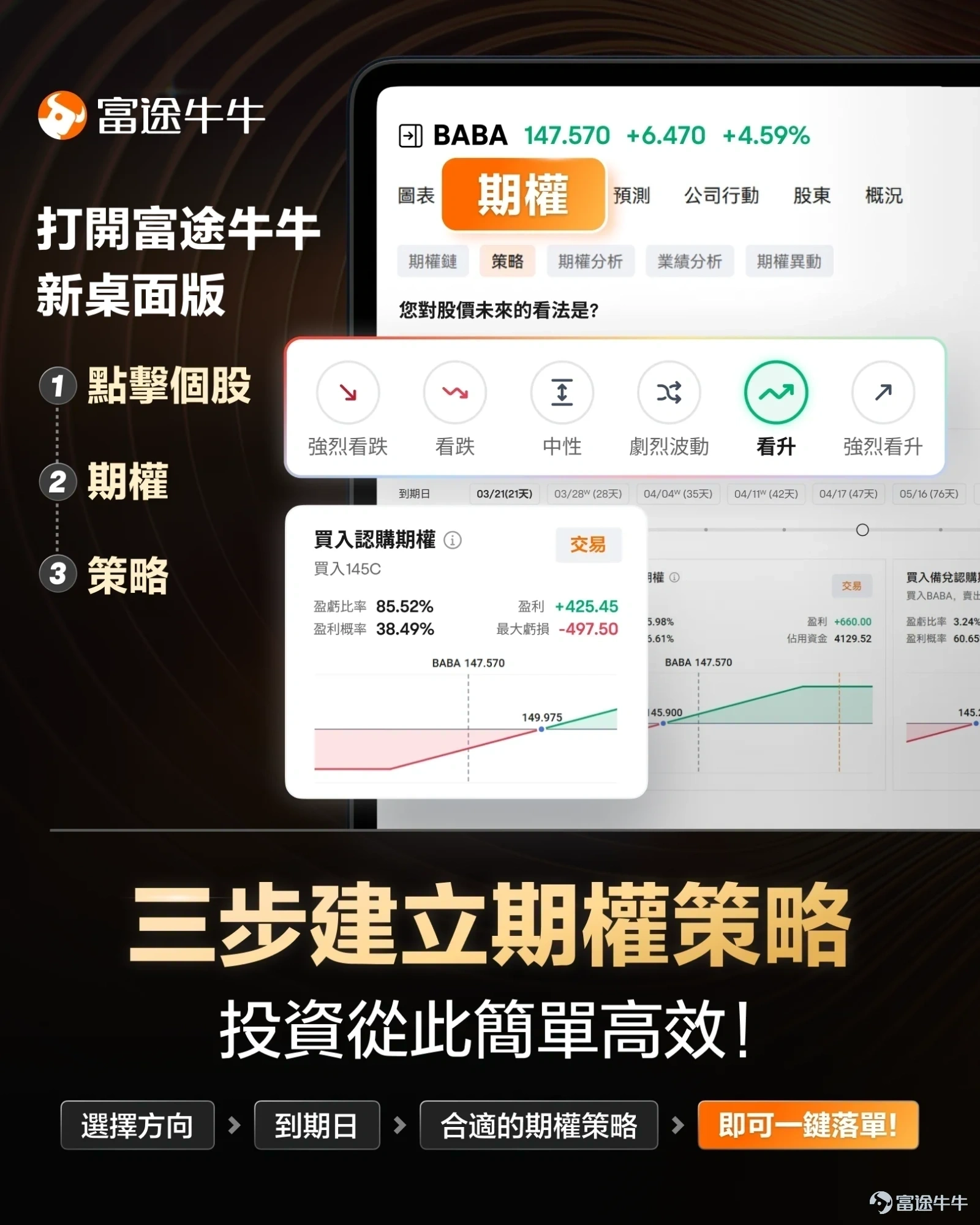
Market conditions are complex and volatile,Options StrategyOverwhelmed by too many choices? Futubull helps you set up your portfolio in three simple steps.Options Strategymaking investing simple and efficient!
Option Risk Warning:An option is a contract that grants the holder the right—but not the obligation—to buy or sell an underlying asset at a predetermined price on or before a specified date. Option prices are influenced by multiple factors, including the current price of the underlying asset, the strike price, time to expiration, and implied volatility. Implied volatility reflects the market’s expectation of future price fluctuations over the life of the option and is derived by reverse-engineering the Black-Scholes pricing model. It is commonly used as a gauge of market sentiment. When investors anticipate greater volatility, they may be willing to pay higher premiums for options to hedge risk, leading to elevated implied volatility. Traders and investors use implied volatility to assess the relative attractiveness of option prices, identify potential mispricings, and manage risk exposure.
Disclaimer:This content does not constitute any offer, solicitation, recommendation, opinion, or guarantee of any securities, financial products, or tools. The risk of loss in trading options can be substantial. In some cases, losses may exceed the initial margin deposited. Even if you set contingent orders such as 'stop-loss' or 'limit' orders, these may not prevent losses. Market conditions may make such orders unexecutable. You may be required to deposit additional margin within a short period. If you fail to provide the required amount within the specified time, your open positions may be liquidated. However, you will still be responsible for any shortfall in your account. Therefore, before trading, you should study and understand options and carefully consider whether such trading is suitable for you based on your financial situation and investment objectives. If you trade options, you should be familiar with the procedures for exercising options and the rights and obligations upon exercise and expiration. Options trading carries extremely high risks and is not suitable for all investors. Investors should carefully readCharacteristics and Risks of Standardized Options。
Risk Disclaimer: The above content only represents the author's view. It does not represent any position or investment advice of Futu. Futu makes no representation or warranty.Read more


Comments (2)
to post a comment
21
40