
New stock party is in full swing! Around 80% of new listings in 2026 rose on their debut day

Chando's second IPO attempt: over RMB 8 billion in marketing expenses over three years, R&D expense ratio at 2%
Recently, Chando Global Holdings Limited (hereinafter referred to as 'Chando') has been actively pursuing a Hong Kong IPO, with Huatai International and UBS Group acting as joint sponsors.
This is not Chando’s first attempt at an IPO. The company previously submitted an application to the Hong Kong Stock Exchange on September 29, 2025, but that initial attempt lapsed automatically after six months without completing the listing. Returning to the market, Chando continues to face considerable skepticism, particularly regarding its heavy emphasis on marketing over R&D, along with mounting customer complaints and reputational pressures.
High concentration in a single brand leads to volatility in net profit.
According to the prospectus and Tianyancha, CHANDO was founded in 2001, offering products across skincare, color cosmetics, masks, men's care, and personal care. The company emphasizes in-house research and development as well as self-manufacturing, cultivating a multi-brand, multi-category portfolio that integrates core ingredients with Eastern aesthetics.
Currently, CHANDO’s diversified brand portfolio includes five core brands: CHANDO, PERSHING, MEICEN, CHUNXIA, and JI CHU. The company’s comprehensive product range aims to provide integrated solutions for various consumer needs—including hydration, brightening, repair, anti-wrinkle, oil control and acne prevention, sensitive skin care, and anti-aging—and also offers personal care and color cosmetic products to cater to diverse consumer segments.
During the historical reporting period, CHANDO’s revenue primarily derived from its flagship brand 'CHANDO.' From 2023 to 2025 (hereinafter referred to as the 'Reporting Period'), the CHANDO brand generated revenue of RMB 4.261 billion, RMB 4.39 billion, and RMB 5.07 billion, accounting for 95.9%, 95.4%, and 95.3% of total revenue in each respective year—consistently exceeding 95% of total revenue, reflecting heavy reliance on this single dominant brand.
By comparison, other brands—including PERSHING, MEICEN, CHUNXIA, and JI CHU—collectively accounted for less than 5% of total revenue. During the Reporting Period, these other brands generated revenue of RMB 171 million, RMB 194 million, and RMB 231 million, representing 3.9%, 4.2%, and 4.4% of total revenue, respectively. Additionally, 'other revenue' amounted to RMB 99.97 million, RMB 167.05 million, and RMB 167.98 million, accounting for 0.2%, 0.4%, and 0.3% of total revenue, indicating a minimal contribution.
In its prospectus, CHANDO attributes its sustained revenue growth to two main factors: first, increased sales from skincare products, driven by higher unit volumes, relatively stable average selling prices, and the launch of new SKUs; and second, growth in personal care product sales, supported by strong product competitiveness, brand strength, and effective marketing strategies.
By product category, during the Reporting Period, skincare generated revenue of RMB 3.892 billion, RMB 4.029 billion, and RMB 4.573 billion, representing 87.6%, 87.6%, and 86.0% of total revenue, respectively; color cosmetics generated revenue of RMB 189 million, RMB 179 million, and RMB 209 million, accounting for 4.2%, 3.9%, and 3.9% of total revenue, respectively.
During the same period, personal care generated revenue of RMB 150 million, RMB 173 million, and RMB 340 million, representing 3.4%, 3.8%, and 6.4% of total revenue, respectively; other product categories generated revenue of RMB 201 million, RMB 203 million, and RMB 180 million, accounting for 4.6%, 4.3%, and 3.4% of total revenue, respectively.
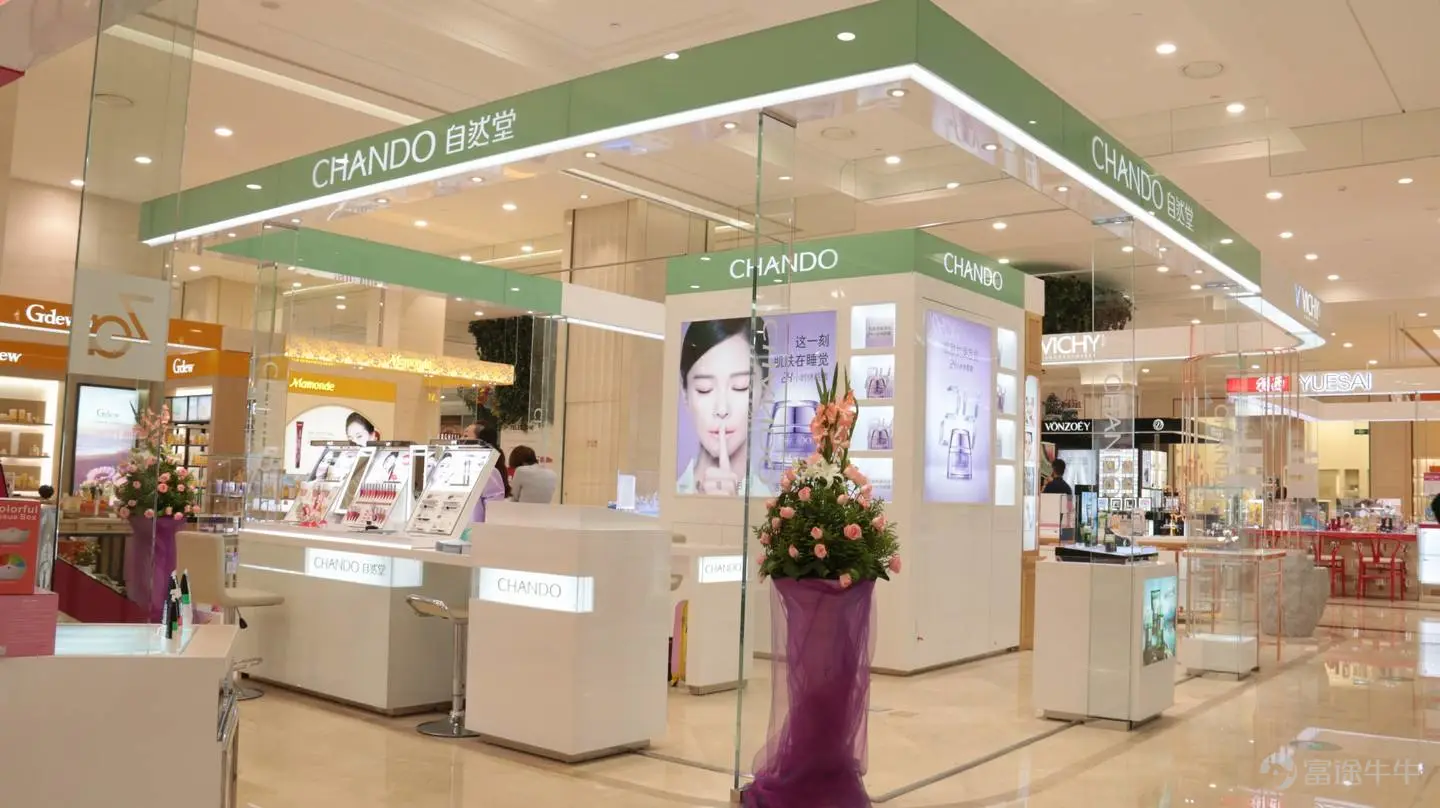
CHANDO sells its products through an integrated online-and-offline sales network, enabling it to effectively reach a broad consumer base. As of the latest practicable date, its online channels include direct-operated stores and sales to online retailers, while offline channels primarily consist of sales to distributors and brick-and-mortar retailers. Additionally, CHANDO opened its first offline flagship store in Shenzhen in July 2025.
During the Reporting Period, revenue from online channels accounted for 61.9%, 68.8%, and 69.5% of total revenue, respectively, while revenue from offline channels represented 37.9%, 30.8%, and 30.2%.
Through online channels, the company primarily sells its products via third-party digital platforms, including Tmall, Douyin, JD.com, PDD Holdings, Kuaishou, Xiaohongshu, Vipshop, Meituan, Dewu, and WeChat Channels. During the reporting periods, revenue from the company’s online direct stores amounted to RMB 1.957 billion, RMB 2.436 billion, and RMB 3.003 billion, accounting for 44.1%, 53.0%, and 56.5% of total revenue in each respective period.
On the offline front, CHANDO has established a nationwide offline sales network through partnerships with numerous distributors. At the end of each reporting period, revenue from distributors totaled RMB 1.287 billion, RMB 939 million, and RMB 872 million, representing 29.0%, 20.4%, and 16.4% of total revenue for the respective periods. The number of authorized distributors was 226, 289, and 311 during these periods, respectively.
It is evident that in recent years, CHANDO’s offline channel contribution has consistently remained below that of its online channels, with the offline share continuing to contract. This trend is primarily attributable to the rapid development of e-commerce, which has steadily increased the proportion of online sales in China’s cosmetics industry, thereby gradually reducing foot traffic in offline channels—particularly traditional distributor networks.
This channel emphasis has also indirectly influenced gross margin levels. During the reporting periods, CHANDO’s gross margins were 67.8%, 69.4%, and 70.6%, respectively, reflecting a consistent upward trend and strong performance.
In terms of overall financial performance, CHANDO inevitably experienced fluctuations in net profit. Revenue during the reporting periods amounted to RMB 4.442 billion, RMB 4.601 billion, and RMB 5.318 billion, while net profit stood at RMB 302 million, RMB 190 million, and RMB 351 million. Adjusted net profit was RMB 313 million, RMB 203 million, and RMB 413 million, yielding net profit margins of 6.8%, 4.1%, and 6.6%, and adjusted net profit margins of 7.0%, 4.4%, and 7.8%, respectively.
In 2024 and 2025, the company’s revenue growth rates were 3.56% and 15.61%, respectively, while net profit growth rates were -37.09% and 84.74%. In 2024, the company reported higher revenue but lower profits.
Additionally, CHANDO’s return on total assets declined from 11.9% in 2023 to 7.1% in 2024, primarily due to the year’s reduced profitability. However, it rebounded to 11.7% in 2025, driven by a significant increase in annual profit.
Marketing expenses exceeded RMB 8 billion over three years, with an R&D expense ratio of 2%.
Regarding the decline in net profit margin from 6.8% in the prior year to 4.1% in 2024, CHANDO attributed this to intensified marketing activities for its products and brands, which led to higher sales and marketing expenses.
In fact, beyond the company’s own explanation, external observers widely believe that its substantial sales expenses are severely eroding profit margins.
During the reporting periods, CHANDO's sales and marketing expenses amounted to RMB 2.406 billion, RMB 2.717 billion, and RMB 3.044 billion, representing 54.2%, 59.0%, and 57.2% of total revenue for the respective periods. Over the past three years, CHANDO’s cumulative sales and marketing expenses exceeded RMB 8.1 billion.
In 2024, CHANDO’s sales and marketing expenses increased by 12.9% year-over-year, primarily due to intensified product and brand marketing activities—including enhanced digital marketing such as publishing brand and product content, sharing beauty and skincare tips, engaging consumers on major e-commerce and social media platforms, hosting live streams with internal and external KOLs, and increased outdoor advertising expenditures—leading to higher marketing and promotional spending.
In 2025, sales and marketing expenses rose by 12.1% year-over-year, mainly driven by the company’s intensified product and brand marketing efforts—including enhanced digital marketing such as publishing brand and product content, sharing beauty and skincare tips, engaging consumers on major e-commerce and social media platforms, hosting live streams with internal and external KOLs, and outdoor advertising expenditures.
In sharp contrast, CHANDO’s R&D expense ratio remained around 2% throughout the reporting periods, reflecting weak R&D momentum. During the reporting periods, the company’s administrative expenses were RMB 200 million, RMB 210 million, and RMB 245 million, accounting for 4.5%, 4.6%, and 4.6% of period revenue, respectively; R&D expenses were RMB 93.822 million, RMB 91.212 million, and RMB 106 million, representing 2.1%, 2.0%, and 2.0% of period revenue, respectively.
Zhan Junhao, a renowned strategic positioning expert and founder of Fujian Huace Brand Positioning Consulting, stated,CHANDO’s sales expenses over the past three years have cumulatively exceeded RMB 8 billion, with an expense ratio approaching 60%, exemplifying a classic heavy-marketing, light-R&D model. High marketing investment—driven by celebrity endorsements and traffic acquisition—has boosted short-term visibility, but the return on investment has declined, severely compressing profitability. Meanwhile, the R&D expense ratio has decreased and remains far below industry peers, which will erode product competitiveness and innovation capacity over the long term, making sustained growth difficult.
At the same time, while expanding its revenue base, CHANDO faces financial risks including continuously rising trade receivables and significant inventory impairment losses.
As of the end of each reporting period, the company recorded trade and other receivables and prepayments of RMB 323 million, RMB 280 million, and RMB 375 million, respectively; on the same dates, it recorded provisions for impairment of trade receivables of RMB 125 million, RMB 41 million, and RMB 63 million, with trade receivables turnover days of 11.7 days, 12.6 days, and 11.3 days, respectively.
As of the end of each reporting period, CHANDO’s inventory stood at RMB 488 million, RMB 440 million, and RMB 476 million, with inventory turnover days of 134.2 days, 120.5 days, and 107 days, respectively.
Due to high levels of accounts receivable and inventory significantly tying up working capital, CHANDO’s operating cash flow declined substantially in 2024 compared to the prior year. Net cash generated from operating activities during the reporting periods amounted to RMB 4.44 billion, RMB 652.03 million, and RMB 4.91 billion, respectively.
In 2024, Chando's operating cash flow declined significantly year-over-year, primarily due to the company’s annual profit of RMB 190 million, adjustments for non-cash and non-operating items, changes in working capital, interest received of RMB 48 million, interest paid of RMB 63 million, and income tax paid of RMB 570 million. Adjustments for non-cash and non-operating items mainly included depreciation and amortization of RMB 1.168 billion and income tax expenses of RMB 211 million. Changes in working capital primarily consisted of a RMB 1.32 billion decrease in trade and other payables and a RMB 1.618 billion decrease in contract liabilities, partially offset by a RMB 520 million reduction in trade and other receivables and prepayments and a RMB 483 million decline in inventory.
Specifically, as of the end of each reporting period, the company’s cash and cash equivalents were RMB 575 million, RMB 858 million, and RMB 949 million, respectively; trade and other payables were RMB 8.02 billion, RMB 10.55 billion, and RMB 8.22 billion, respectively; contract liabilities were RMB 3.91 billion, RMB 2.29 billion, and RMB 1.87 billion, respectively; and current income tax liabilities were RMB 296.38 million, RMB 433.23 million, and RMB 932.62 million, respectively.
As of the end of each reporting period, Chando reported net current assets of RMB 920.71 million, net current liabilities of RMB 2.47 billion, and net current assets of RMB 3.21 billion, respectively.
Chando stated: 'The net current liabilities recorded in 2024 primarily stem from redemption liabilities arising from pre-IPO investments, which have been classified as financial liabilities measured at fair value through profit or loss. These redemption liabilities were formed because the redemption amounts are linked to the company’s fair value, reflecting the increase in the company’s valuation in prior accounting periods. Upon completion of the listing, these redemption liabilities will be converted into ordinary shares and reclassified as equity, thereby offsetting the related liabilities. Consequently, the company is expected to transition from a net current liabilities position to a net current assets position following the listing.'
For this IPO, Chando plans to allocate the proceeds primarily toward enhancing its direct sales capabilities through sales channels; improving synergy between online and offline sales networks; expanding its multi-brand portfolio and increasing brand visibility; research and development and product innovation; strengthening digital capabilities in membership management, supply chain management, and sales management; operating and upgrading production facilities; expanding overseas business operations; and general corporate purposes and working capital.
Regarding shareholding structure, as of the last practicable date of the prospectus, Zheng Chunying is Chando’s controlling shareholder, and the Zheng family, comprising four members in total, collectively holds approximately 87.82% of the voting rights.
In January 2026, the China Securities Regulatory Commission (CSRC) issued a request for supplementary materials concerning Chando’s overseas listing filing, requiring additional explanations on five aspects: equity transfers, business operations, pricing of new shareholder investments, trust arrangements, and compliance with offshore structure establishment and round-trip mergers and acquisitions.
Chando’s domestic operating entity is Shanghai Chando Group Co., Ltd. According to Tianyancha, as of June 29, Chando was involved in 95 legal cases, including administrative rulings, trademark infringement disputes, labor disputes, other administrative actions, employment contract disputes, and contract-for-work disputes, with Chando acting as the plaintiff in 68.42% of these cases.
According to Heimao Complaints, as of June 29, a search for the keyword 'Chando' yielded 702 complaints, of which 439 have been resolved. Consumer complaints primarily concern product-related allergic reactions, quality issues, unresponsive customer service, pricing disputes, and false advertising. A broader search on the Heimao Complaints platform shows 1,546 complaints related to Chando.
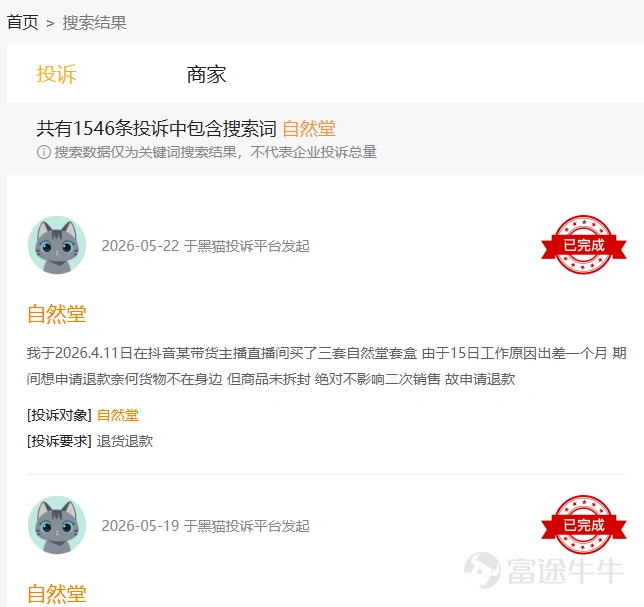
Zhan Junhao further noted: 'Over a thousand Heimao complaints centering on allergic reactions, product defects, and evasive after-sales service reveal weaknesses in quality control and customer support. In the beauty industry, reputation is paramount—frequent consumer disputes erode the brand’s national image and undermine user trust. Post-listing, regulatory scrutiny will intensify; if the company fails to systematically address quality control and after-sales service issues, it will negatively impact investor confidence and long-term growth.' (Produced by Harbour Financial)
Harbor Business Observer, reporter Zifu Shi
Risk Disclaimer: The above content only represents the author's view. It does not represent any position or investment advice of Futu. Futu makes no representation or warranty.Read more
Comments
to post a comment