
“人工智慧”新基建領域中有何投資機會?

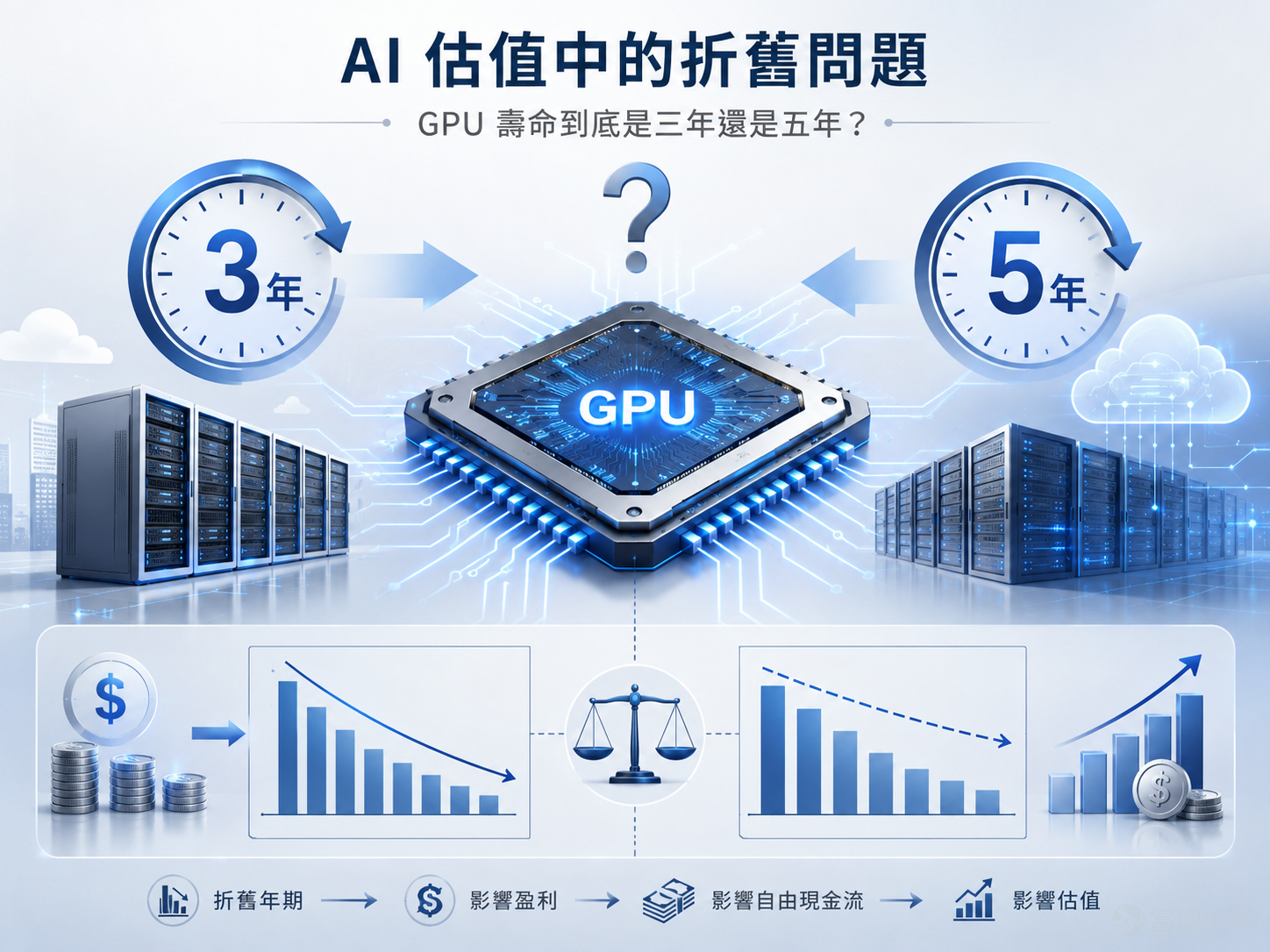
Is the useful life of a GPU three years or five?
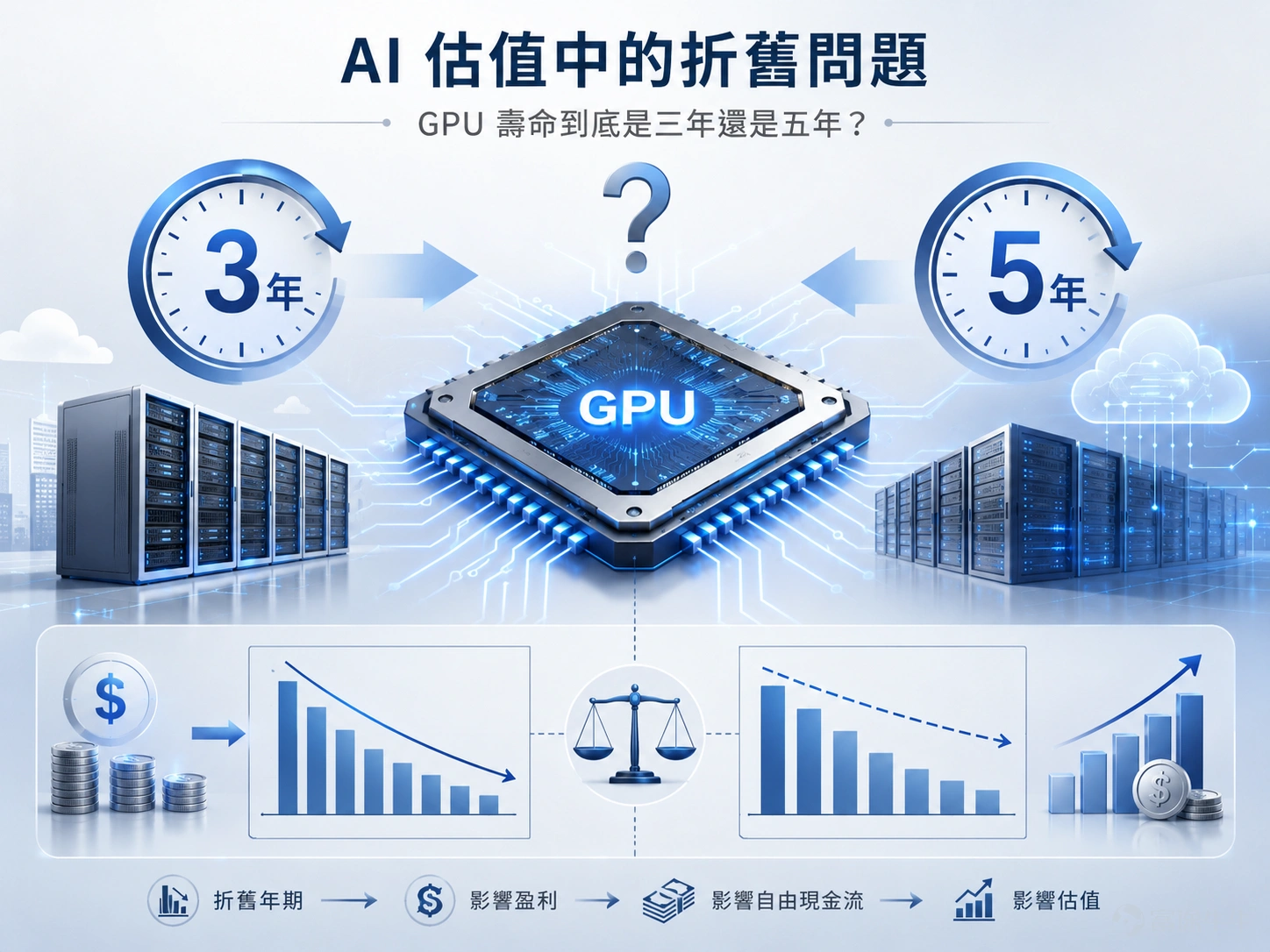
As the AI boom enters its second half, the market is shifting from asking 'who bought the most GPUs' to questioning 'how long will these GPUs actually generate returns?' Over the past two years, cloud computing giants, AI infrastructure companies, and large-model enterprises have significantly ramped up capital expenditures, making NVIDIA GPUs a core asset on the balance sheets of next-generation tech firms. The issue is that when a single chip costs tens of thousands of dollars and an entire compute cluster runs into the billions, the depreciation period is no longer just a technical footnote in financial statements—it has become a critical assumption directly impacting profitability, cash flow, and valuation.
At the heart of the debate is a simple question: Should the economic life of a GPU be calculated as three, four, five, or even six years? A three-year depreciation schedule results in higher annual recognized costs, which depresses near-term profits but aligns with a conservative assumption given the rapid pace of technological obsolescence. Conversely, a five- to six-year schedule lowers annual depreciation expenses, making reported earnings appear stronger—but this requires investors to believe that these GPUs can maintain sufficient utilization rates and pricing power over a longer horizon. This difference alone can reshape the narrative of whether an AI cloud company is 'approaching profitability.'
On the surface, the three-year camp makes a compelling case. AI chips are evolving at breakneck speed—from the A100 to the H100, then to the H200 and Blackwell—with compute performance, energy efficiency, memory bandwidth, and interconnect architectures all advancing rapidly. Large model training is especially sensitive to the latest hardware because training costs hinge on speed and efficiency. Once older GPUs fall behind in cost-per-unit-compute, they risk being replaced by newer models. If a company’s primary revenue comes from renting cutting-edge training capacity, the pricing power of older cards could indeed decline significantly within three years. Therefore, for AI infrastructure firms heavily reliant on clients using frontier-model training, adopting a shorter depreciation period isn’t alarmist—it reflects the inherently high hardware turnover embedded in their business model.
However, the five-year camp isn’t merely engaging in window dressing. GPUs aren’t used exclusively for the most advanced training tasks. As AI applications shift from training to inference, many older GPUs can still support lower-cost workloads with different latency requirements, smaller models, or on-premises enterprise deployments. For cloud providers, hardware can be tiered: the newest GPUs serve high-end training and high-performance inference, while previous-generation GPUs handle general inference, fine-tuning, image generation, open-source model deployment, and enterprise applications. As long as demand remains broad enough, older GPUs don’t necessarily lose economic value immediately. In other words, technological life, accounting life, and commercial life aren’t perfectly aligned.
This is precisely where large cloud providers differ from pure-play AI compute rental firms. Microsoft, Amazon, Google, and Meta operate vast ecosystems encompassing cloud customers, advertising, social platforms, and enterprise software—GPUs aren’t just rented hardware but are deeply integrated into search, ad recommendations, Office, cloud services, content generation, and enterprise APIs. Even if certain GPUs can no longer support the most cutting-edge training, they can be redeployed to lower-tier workloads. For these companies, assuming a five-year—or even longer—depreciation period for servers and networking equipment is grounded in operational reality.
However, when it comes to valuation, investors cannot simply accept management’s statement that 'the useful life is longer.' Three key questions must be addressed: First, can GPU utilization remain consistently high over the long term? Second, will the rental prices of older GPUs decline sharply with the launch of new-generation products? Third, does the company need to continually increase capital expenditures just to sustain its current revenue growth? If revenue growth heavily depends on purchasing new GPUs while older GPUs fail to retain their pricing power, the accounting practice of depreciating assets over five years may significantly underestimate the true economic depreciation.
This is also why free cash flow deserves more attention than adjusted EBITDA. Many AI infrastructure companies can present an attractive story at the EBITDA level because depreciation is a non-cash item, and interest expenses, stock-based compensation, and one-time charges can all be adjusted away. However, GPUs are tangible assets purchased with real cash, and capital expenditures represent actual cash outflows. If a company must undertake large-scale equipment upgrades every two or three years, reported profits do not necessarily reflect real earnings for shareholders. The biggest pitfall in AI valuations is often not whether revenue exists, but rather the underestimation of the reinvestment intensity required to sustain that revenue.
(Chip and Computing Power Series #69)
Risk Disclaimer: The above content only represents the author's view. It does not represent any position or investment advice of Futu. Futu makes no representation or warranty.Read more

Comments
to post a comment
2