
New stock party is in full swing! Around 80% of new listings in 2026 rose on their debut day

Xiangdao Mobility narrows losses but faces multiple underlying concerns: 98.5% of orders rely on aggregators, while proprietary channels plummet
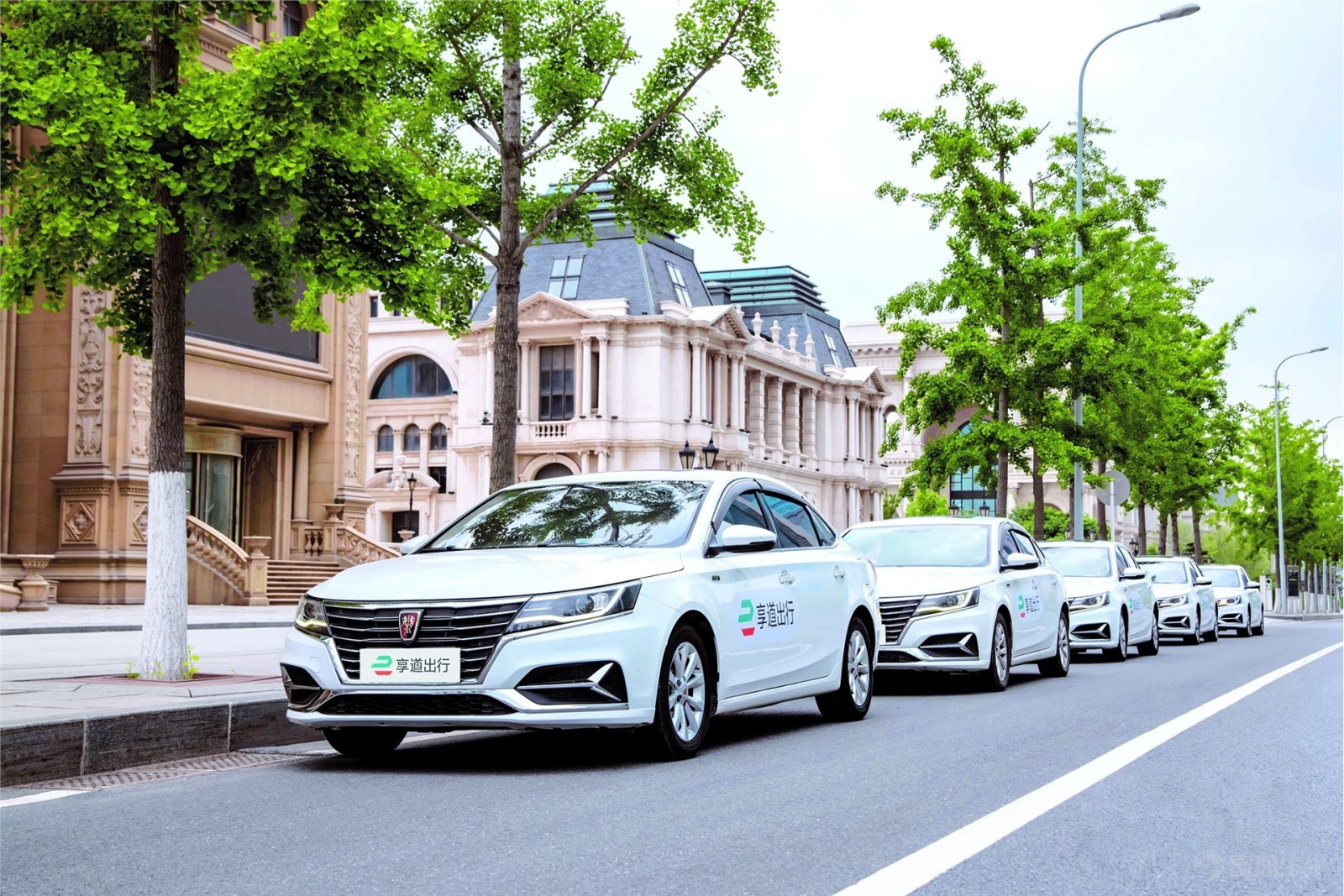
On May 22, 2026, Xiangdao Mobility (Shanghai) Technology Co., Ltd. (hereinafter referred to as 'Xiangdao Mobility') resubmitted its prospectus to the Main Board of the Hong Kong Stock Exchange. This marks its renewed attempt to go public following the expiration of its initial filing on October 28, 2025. China International Capital Corporation (CICC) and Guotai Haitong Securities serve as joint sponsors.
While the prospectus suggests improving financial performance, a closer look reveals a more complex reality: persistent unprofitability, extreme reliance on aggregator platforms, persistently high driver-related costs, numerous compliance issues, and massive investments in Robotaxi initiatives—all of which collectively define the real challenges facing this sixth-largest ride-hailing platform.
Cumulative losses of RMB 1.257 billion over three years—revenue growth fails to mask underlying losses
According to the prospectus and Tianyancha, EnjoyGo Mobility was founded in 2018. The company is a Chinese multi-scenario intelligent mobility platform that provides ride-hailing services, vehicle leasing, vehicle sales, and Robotaxi services, aiming to build a comprehensive mobility service platform covering personal travel, corporate travel, and autonomous driving needs. Backed by an automaker background and driven by technological innovation, it seeks to deliver diversified and sustainable mobility solutions.
From 2023 to 2025 (the reporting period), the company’s revenue expanded steadily and gross profit gradually improved, yet it remained unprofitable throughout, exhibiting a trend of 'rising revenue with narrowing losses.' Revenue for the period amounted to RMB 5.718 billion, RMB 6.395 billion, and RMB 6.774 billion, respectively, representing a three-year compound annual growth rate (CAGR) of 8.80% and consistent scale expansion. Net losses during the same period were RMB 6.04 billion, RMB 4.07 billion, and RMB 2.46 billion, totaling RMB 12.57 billion in cumulative losses, with the loss magnitude declining year-over-year. Gross margin rose from 6.60% to 7.00%, and further to 11.00%, indicating some recovery in profitability.
In terms of transaction volume, the company’s gross transaction value (GTV) during the reporting period was RMB 4.828 billion, RMB 5.538 billion, and RMB 6.199 billion, respectively. Total order volumes were 175 million, 228 million, and 240 million orders, with daily average orders increasing from 480,000 to 668,000. Monthly active users surged explosively from 50.1 million to 142 million, underpinning revenue growth through expanding user and order bases.

Breaking down the revenue structure, the company exhibits high business concentration, with ride-hailing serving as the dominant pillar. Ride-hailing service revenue during the reporting period amounted to RMB 4.209 billion, RMB 4.991 billion, and RMB 5.345 billion, respectively, increasing its share of total revenue from 73.60% to 78.90%. Vehicle leasing revenue stood at RMB 1.130 billion, RMB 1.084 billion, and RMB 1.156 billion, with its contribution declining from 19.80% to 17.10%. Revenue from used car sales and other businesses accounted for less than 5%, indicating that the company’s multi-scenario strategy has yet to achieve balanced revenue diversification and remains vulnerable to risks.
Regarding ride-hailing services, the company launched multiple service tiers—including Economy, Comfort, Lite, Premium, Quality Chauffeur, Business, and Luxury—to cater to diverse consumer segments. However, average order prices faced persistent downward pressure. Overall, GTV across all ride-hailing service lines gradually increased, reaching RMB 4.827 billion, RMB 5.537 billion, and RMB 6.196 billion, respectively. Yet, average selling prices showed a consistent downward trend.The average price per Comfort ride dropped from RMB 27.9 to RMB 24.5, Premium from RMB 33.9 to RMB 28.4, Business from RMB 76.9 to RMB 67.6, and Luxury from RMB 65.9 to RMB 36.7. Overall, the average price declined from RMB 28.1 to RMB 25.8. Intensifying price competition and rising traffic acquisition costs have directly compressed per-order profit margins.
Notably, in the ride-hailing industry, drivers and fleet capacity are core operational assets, yet EnjoyGo Mobility’s operational data reveals multiple efficiency and stability challenges. During the reporting period, the company’s monthly active driver count stood at 94,000, 110,000, and 100,000, respectively—declining in 2025 despite continued growth in orders and users. This driver contraction directly constrained supply capacity. Average order acceptance rates also fluctuated, rising from 87.20% to 90.10% before falling back to 86.20%, indicating that operational efficiency did not consistently improve alongside scale expansion.
On the cost side, driver-related expenses and subsidies represent the largest fixed outlays. Cost of sales over the three years totaled RMB 5.342 billion, RMB 5.947 billion, and RMB 6.031 billion, respectively, of which ride-hailing driver costs and subsidies amounted to RMB 3.907 billion, RMB 4.335 billion, and RMB 4.497 billion, accounting for 73.10%, 72.90%, and 74.60% of total cost of sales.
The rigid upward pressure on driver costs has become a key bottleneck to profitability. In the ride-hailing sector, high driver churn and strong driver bargaining power compel the company to continuously invest in driver subsidies and vehicle resources to maintain sufficient fleet density and meet aggregator platform demands. This creates a vicious cycle of 'dependence on aggregators → fleet expansion → commission payments → widening losses.' Although the company claims this model helps reduce customer acquisition costs and enhances response efficiency, its long-term reliance on external traffic channels undermines business independence and risk resilience.
Additionally, volatility in the used car segment further exacerbates operational risks. During the reporting period, gross margins from used car sales turned from positive to negative, standing at 13%, -30.70%, and -8.50%, respectively. This deterioration was primarily driven by vehicle depreciation and market price fluctuations. Since these vehicles originate from retired leased fleets, inventory impairment risks remain difficult to manage, amplifying overall business volatility.
98.5% of orders rely on aggregators, leaving the company's own channels virtually mute
On the cost side, the company’s sales expenses have risen year after year due to higher commission fees charged by aggregator platforms. During the reporting period, sales expenses increased from RMB 555 million to RMB 718 million, and their share of total revenue rose from 9.70% to 10.60%. While persistent losses are a common issue across the ride-hailing industry, Xiangdao Mobility’s extreme reliance on aggregator platforms represents its most pronounced structural risk.
According to Zhang Xiang, Adjunct Professor at Huanghe S&T University, Xiangdao Mobility was established with investment led by SAIC Motor and belongs to the same category of automaker-backed ride-hailing platforms as T3 Mobility and Caocao Mobility (HKEX: 2643). Compared with internet-native mobility platforms, companies backed by automakers inherently face disadvantages in user traffic acquisition and online influence. Automakers enter the mobility sector both to capture growth opportunities in this market and to absorb excess vehicle inventory and boost overall vehicle sales—this dual motive underpins the strategic logic behind automakers’ foray into ride-hailing.
During the reporting period, the company completed 159 million, 217 million, and 238 million orders through aggregator platforms such as Amap Taxi, Didi, Baidu Maps, Tencent Mobility, and Meituan, accounting for 91.80%, 96.10%, and 98.50% of total orders, respectively. The corresponding share of gross transaction value (GTV) was equally high at 91.80%, 96.10%, and 98.50%. Meanwhile, orders via its own channels plummeted from 12.15 million to just 2.46 million, indicating an almost complete loss of independent customer acquisition capability.
From 2023 to 2025, the company paid RMB 329 million, RMB 442 million, and RMB 556 million in commissions to aggregator platforms, respectively—amounting to over 77% of total sales expenses each year, making these commissions the primary driver of rising sales costs. Commission rates charged by aggregators range between 9.00% and 12.00%, and most cooperation agreements are renewed annually, effectively granting aggregators absolute pricing power.
Zhang Xiang emphasized,The data clearly shows that Xiangdao Mobility’s order volume and gross transaction value are heavily dependent on aggregator platforms, while it incurs substantial annual commission payments—commissions account for more than 70% of its sales expenses. This starkly reflects its weak ability to acquire customers independently and its insufficient control over proprietary traffic. Currently, automaker-backed mobility platforms across the industry face a dilemma: operating without aggregators makes it difficult to sustain order volume, yet deep reliance on them results in most profits being captured by the platforms—a clear constraint on long-term corporate development.
He added that, based on current developments, Xiangdao Mobility initially invested in promoting its own app, but the results fell short of expectations. It subsequently halted large-scale independent marketing efforts, relying primarily on aggregator platforms to drive business growth. As one of Xiangdao’s earliest users, Zhang Xiang had taken several free rides but has since deleted the Xiangdao app. He noted,This model carries multiple inherent risks: first, the platform loses control over traffic and remains subject to external aggregators’ pricing decisions; second, hefty commission expenses squeeze profit margins and further undermine earnings stability; third, prolonged dependence on external traffic continuously erodes brand strength and user loyalty, creating a significant barrier to sustainable independent operations.
Given this, Zhang Xiang believes the most prudent strategy for Xiangdao Mobility is to 'walk on two legs'—pursuing coordinated development of both its own channels and aggregator partnerships to diversify operational risks. With customer acquisition costs continuing to rise and regulatory scrutiny intensifying in the ride-hailing industry, Xiangdao should avoid any hasty exit. Once it leaves the market, re-entry would be extremely difficult. The company must act strategically—leveraging aggregators to stabilize its core business while gradually exploring ways to strengthen proprietary traffic and enhance independent operational capabilities.
On the R&D front, however, the company's investment in research and development appears misaligned with its strategic positioning as a platform. R&D expenditure stood at RMB 170 million in 2023, dropped to RMB 85.436 million in 2024, and rebounded slightly to RMB 95.405 million in 2025—representing just 1.40% of revenue. This level of technological investment falls significantly short of what would be expected for a company pursuing Robotaxi (autonomous ride-hailing) as a core strategic initiative.
Expanding its Robotaxi business has drawn numerous complaints and legal actions.
Facing intense competition and profitability challenges in the traditional ride-hailing market, Xiangdao Mobility is attempting to break through industry bottlenecks via technological innovation. According to its prospectus, in July 2025, the company obtained Shanghai’s Intelligent Connected Vehicle Demonstration Operation License and launched driverless services. In August, it inaugurated an L4-level Robotaxi tourism route connecting Shanghai International Resort to Pudong International Airport, becoming China’s first L4 autonomous driving project deployed in a premium cultural and tourism setting. The company plans to achieve large-scale commercial operations across multiple cities by 2027 and develop custom L4 vehicles. Proceeds from this IPO will primarily fund autonomous driving R&D, procurement of custom vehicles, and platform infrastructure development.
From an industry perspective, Robotaxi indeed represents a long-term breakthrough path for mobility platforms. L4 autonomous driving can eliminate driver costs, enhance operational efficiency, reduce per-kilometer expenses, and ultimately reshape the industry’s profit model. Backed by SAIC Motor’s vehicle manufacturing capabilities, Momenta’s autonomous driving technology, and AutoNavi’s mapping resources, Xiangdao Mobility possesses a synergistic advantage across 'vehicle + algorithms + operations.' Compared with pure internet-based ride-hailing platforms, it enjoys a more robust industrial chain foundation.
However, beneath the promising strategic outlook lie significant near-term risks. First, Robotaxi remains in the early stages of commercialization, with uncertainties surrounding technological maturity, regulatory compliance, and the pace of cost reduction. Large-scale investments are unlikely to translate into revenue or profits in the short term and will instead continue to widen losses. Second, capital-intensive outlays—including procurement of custom L4 vehicles, R&D spending, and pilot operations—place extremely high demands on the company’s cash flow and financing capacity. Third, industry competition is intensifying, as leading platforms and tech firms are all deploying Robotaxi initiatives; it remains unclear whether Xiangdao Mobility can sustain its current technological and operational edge.
Currently, its traditional ride-hailing business remains unprofitable yet must continuously fund bleeding-edge technology investments, creating a tension between short-term financial pressure and long-term strategic commitments. If Robotaxi commercialization progresses slower than expected, the company could face dual pressures of an unprofitable core business and cash-burning new ventures, leaving minimal room for strategic error.
Amid this capital-intensive growth phase, the company’s asset structure and cash position remain concerning. During the reporting period, total assets were RMB 4.105 billion, RMB 4.186 billion, and RMB 3.72 billion, respectively, while total liabilities amounted to RMB 4.09 billion, RMB 4.587 billion, and RMB 3.02 billion, resulting in debt-to-asset ratios of 99.63%, 109.58%, and 81.18%, respectively. Net asset value stood at RMB 150.54 million at the end of 2023 but turned into a net liability of RMB 4.02 billion in 2024. Only after a RMB 13.45 billion capital injection from shareholders in 2025 did the company report net assets of RMB 6.99 billion.
In terms of cash flow, operating activities generated continuous net outflows of RMB 3.78 billion in 2023 and RMB 2.03 billion in 2024, turning positive only in 2025 with a modest inflow of RMB 551.02 million. Its self-sustaining cash generation capability remains weak, and operations are heavily reliant on external financing. Should IPO fundraising fall short of expectations, the company’s liquidity could come under severe stress.
More critically, the company explicitly cautioned in its prospectus that it expects to continue reporting net losses and negative operating cash flows through 2026 and 2027, primarily due to driver incentives, commissions paid to aggregator platforms, technology R&D, and fleet expansion.
Prior to this IPO, Xiangdao Mobility’s equity structure was highly concentrated. SAIC Corporation is the absolute controlling shareholder, holding 6.43% directly and an additional 68.94% indirectly through Changzhou Saike, amounting to a combined stake of 75.37%. SAIC Motor Group is its core related party. Other shareholders include Alibaba, which holds 6.47% through Tianjin Gaoxing; Momenta, holding 5.29% via Suzhou Chusu Du; and Shanghai Yixiang, with a 5.21% stake. While these strategic investors provide strong industry backing, their influence pales in comparison to that of the controlling shareholder.
The highly concentrated equity structure raises concerns regarding related-party transactions and operational independence. During the reporting period, SAIC Motor Corporation Limited was both the company's largest customer and its largest supplier. The company’s sales revenue from SAIC Motor amounted to RMB 94.4 million, RMB 69.8 million, and RMB 59.1 million, representing 1.70%, 1.10%, and 0.90% of total revenue, respectively. Purchases from SAIC Motor totaled RMB 303 million, RMB 404 million, and RMB 293 million, accounting for 5.10%, 6.40%, and 4.30% of total procurement costs, primarily used for vehicle acquisition and supply chain services.
Although the proportion of related-party transactions is relatively low, and the company states that it does not have significant operational or financial dependence on SAIC Motor, the controlling shareholder objectively exerts influence over the company’s strategy, operations, procurement, and sales. From vehicle supply and technological collaboration to business resources, Xiao Dao Mobility is deeply embedded in SAIC’s ecosystem. While this synergy is an advantage, it may also constrain the company’s independence in market-oriented decision-making—particularly in business expansion, vendor selection, and pricing mechanisms—potentially raising questions about the fairness of related-party transactions.
On the risk and internal control front, Xiao Dao Mobility exhibits multiple compliance deficiencies, with notable exposure to administrative penalties. The company acknowledged in its prospectus that during the reporting period, some platform vehicles and drivers had not fully obtained mandatory licenses such as the 'Online Ride-hailing Vehicle Transport Permit' and the 'Online Ride-hailing Driver Permit,' indicating clear non-compliance in operations. Additionally, 236 leased properties remain unregistered, exposing the company to potential administrative fines of up to RMB 2.36 million. Furthermore, the platform faces increasingly stringent regulatory requirements regarding algorithmic applications, data security, and personal information protection, with uncertainties surrounding algorithm compliance, cross-border data transfers, and cybersecurity reviews.
Meanwhile, the excessively high proportion of aggregated orders further complicates service management.
According to the prospectus, the company received approximately 889,000 passenger complaints in 2025, of which 845,000 originated from aggregated platform orders, accounting for a staggering 95%. Service quality and brand reputation are thus heavily tied to third-party channels, lengthening the control chain and amplifying both compliance risks and user experience risks.
As of June 17, 2026, a search for official complaints against 'Xiao Dao Mobility' on Heimao Complaints Platform yielded a total of 5,535 recorded complaints, of which 3,739 have been resolved. Key complaint categories include driver misconduct, poor customer service responsiveness and attitude, and unwarranted deductions from driver earnings.
According to data disclosed by Tianyancha, as of the same date, Xiao Dao Mobility was involved in 105 legal disputes, with the company appearing as defendant in 98 cases—accounting for 93.33%—and a cumulative disputed amount of RMB 1.4908 million, highlighting a pronounced level of litigation exposure. (Produced by Harbor Finance)
Harbor Business Observer, Xiao Xiuni
Risk Disclaimer: The above content only represents the author's view. It does not represent any position or investment advice of Futu. Futu makes no representation or warranty.Read more
Comments
to post a comment