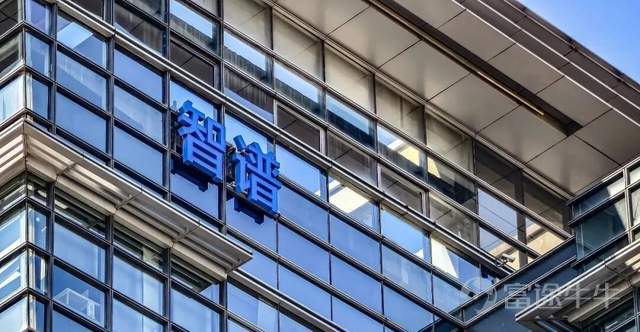

What is Zhipu AI relying on to sustain its market capitalization of nearly HK$500 billion?

On the June 15 opening, $Z.AI (02513.HK)$ it gapped up nearly 15%. Buying pressure continued to flood in, driving the share price up by as much as 45% intraday, before closing with a gain of 32.82%. On that day, both its price volatility and turnover rate reached extreme levels, with trading volume rapidly swelling to tens of millions of Hong Kong dollars.

Within the same timeframe, MiniMax (0100.HK)—dubbed alongside it as one of Hong Kong’s 'AI twin titans'—had already tumbled from its year-to-date high of HK$1,330 to around HK$402, a decline exceeding 70%. One stock could still stage a violent single-day rally above a HK$500 billion market cap, while the other kept hitting new lows.
Zhipu AI's own price action has been equally dramatic.
Starting from its IPO price of HK$116.2, it reached an all-time intraday peak of HK$1,993 on May 29, 2026, briefly pushing its market capitalization beyond HK$880 billion—an increase of nearly 40x from its offering price.
Then came a steep vertical drop: in just a few trading sessions, it shed between HK$300 billion and HK$400 billion in market value, pulling the share price back down to just above HK$1,000—only to surge violently again on June 15.
Viewing both companies side by side, there is only one question the market truly cares about: against the backdrop of MiniMax repeatedly getting halved, is Zhipu AI’s relative resilience—and even its aggressive counter-trend rally—driven by fundamentally strong fundamentals, or is it orchestrated by manipulative capital flows?
To answer this question, we first need to understand what kind of company Zhipu AI really is. Branded as the 'world’s first publicly listed general-purpose large AI model company,' it is priced in secondary markets through an AGI (Artificial General Intelligence) narrative—but its revenue and cost structure tell a very different story.
An enterprise software integrator disguised as an AGI play
Zhipu AI’s revenue is indeed growing exponentially.
From 2022 to 2024, its revenue was RMB 57.4 million, RMB 124.5 million, and RMB 312.4 million, respectively. In the first half of 2025, it reported RMB 190.9 million in revenue and is on track to reach RMB 7.24 billion for the full year 2025, representing a 131.9% year-over-year increase. Based on 2024 revenue, it ranks as China’s top independent large-model developer.
So, where does this revenue come from?
According to its prospectus, 84.8% of Zhipu’s revenue in the first half of 2025 came from on-premises deployments, while API call revenue—which truly reflects the cloud-based SaaS model—accounted for only 15.2%. Of that 84.8% from on-premises deployments, mainland Chinese clients contributed 88.4%, while overseas markets such as Southeast Asia accounted for just 11.1%.
These figures reveal the true nature of Zhipu’s business.
Its core business revolves around providing private, on-premises model deployment and customized fine-tuning services for large domestic government-affiliated enterprises, financial institutions, and energy giants. These clients impose extremely stringent requirements on data privacy and technological autonomy, making them inherently resistant to uploading core data to public-cloud large models. Consequently, Zhipu must dispatch engineering teams onsite to handle development, fine-tuning, software-hardware integration, and long-term operations and maintenance. This is a highly labor-intensive, project-based integration and delivery model—fundamentally different from the traditional software business model of 'develop once, replicate infinitely, with marginal costs approaching zero.'
The cost of being labor-intensive is directly reflected in its gross margin.
Zhipu’s overall gross margin declined steadily from 64.6% in 2023 to 56.3% in 2024, and further dropped to 50.0% in the first half of 2025. As on-premises deployments scale up, the non-standardized marginal costs rise, pushing gross margins downward.
As of June 2025, its R&D team consisted of 657 people, accounting for approximately 74% of total employees, and its total R&D investment was 4.4 times its revenue during the same period. Behind every seemingly impressive enterprise contract lies a massive team of algorithm and engineering specialists delivering highly customized solutions through sheer manpower.
Even more critical than gross margin is its compute bill.
There’s a counterintuitive aspect to the large-model business: unlike traditional software—which involves one-time development and infinite distribution—large models exhibit linear revenue growth alongside exponentially rising compute costs. Zhipu’s payments to third-party computing service providers were only RMB 14.6 million in 2022, but surged to RMB 3.117 billion in 2023, skyrocketed to RMB 15.528 billion in 2024, and had already reached RMB 11.451 billion by the first half of 2025.
This spending has not achieved economies of scale despite rising revenues and so-called technological iterations. Exploding model parameters and the race for ultra-long context capabilities have driven compute consumption during inference ever higher.
As a result, for the full year of 2025, Zhipu reported a net loss of RMB 4.718 billion beneath the surface-level revenue of RMB 724 million, with net cash flow from operating activities plunging to negative RMB 2.246 billion.

Source: Annual Report of the Company
R&D expenditure is 4.4 times its revenue, meaning that for every RMB 1 it earns, it pays chipmakers and cloud providers far more than RMB 1 in 'compute taxes.' Unless there’s a revolutionary breakthrough in chip architecture, the company will resemble a compute-hungry black hole requiring massive, sustained capital injections over the next few years—not a technology firm capable of generating free cash flow for shareholders.
Two hard-to-replicate moats
A capital-intensive business model doesn’t mean Zhipu lacks barriers to entry. On the contrary, this very capital-heavy approach has enabled it to establish two hard-to-replicate competitive moats.
One is the open-source flywheel.
On June 13, 2026, Zhipu announced that GLM-5.2—its most powerful flagship open-source model supporting 1M-token ultra-long context—would be made available to all GLM Coding Plan users and formally open-sourced under the permissive MIT license the following week.

Open-sourcing today is no longer just about academic sharing—it’s an aggressive pricing strategy. Releasing top-tier foundation models for free or fully open-source aims to attract developers en masse.
Once mid-to-large enterprises or small-to-midsize developers build their core workflows and agent applications on GLM-5.2, subsequent large-scale compute usage, dedicated private fine-tuning, and data-cleaning projects will all translate into highly sticky, long-term revenue within Zhipu’s ecosystem.
The other lies hidden in its list of cornerstone investors.
When Zhipu AI listed on the Hong Kong Stock Exchange, it secured a cornerstone investor lineup with strong 'national team' credentials: JSC International Investment Fund SPC, an affiliate of Beijing Financial Holdings Group, committed USD 179 million; JinYi Capital, affiliated with Tsinghua University Education Foundation, subscribed for USD 7 million; Taikang Life Insurance invested USD 30 million; GF Fund Management pledged USD 42 million; and together with Shanghai Gaoyi Asset Management and others, a total of 11 core state-owned institutions, insurance capital providers, and top-tier public and private asset managers agreed to subscribe for HKD 2.98 billion, accounting for nearly 70% of the offering.
In China, when government agencies and enterprises—especially in sensitive sectors like finance, energy, public security, and e-governance—procure large-model infrastructure, the vendor’s ownership background, data security, and autonomous control over computing power are non-negotiable deal-breakers. Zhipu AI’s deep roots in Tsinghua University and its heavy backing by state capital have served as its policy gatepass to secure those localized contracts representing 84.8% of its revenue—a trust barrier that pure U.S. dollar VC-backed ventures or AI startups embedded within big tech firms find extremely difficult to overcome.
The moat is real, but it can’t justify a price-to-sales ratio of 576x.
What’s propping up the bubble is Hong Kong’s unique market liquidity mechanism.
Based on projected full-year 2025 revenue of RMB 724 million (approximately HKD 780 million), Zhipu AI’s static price-to-sales ratio stands at a staggering 576.26x on a market capitalization of HKD 495.8 billion, with an enterprise value-to-revenue (EV/Revenue) multiple of 581.52x.
For context: even the world’s top SaaS and cloud computing companies, which are in the early stages of explosive growth and enjoy the highest growth expectations, rarely trade above 20x to 40x price-to-sales—already considered an extreme valuation premium.
A 576x multiple implies that even if Zhipu AI sustains 100% year-over-year revenue growth for the next five years—and completely ignores its annual cash burn and massive computing infrastructure expenditures—the current valuation remains absurdly inflated. At least 80% of this price reflects a scarcity premium from the 'China’s OpenAI' narrative, compounded by a liquidity bubble caused by an extremely tight free float.
So why hasn’t the bubble burst in the short term—and how could the stock surge so sharply in a single day? The answer lies in Hong Kong’s unique market liquidity mechanism.
The first force is mandatory buying from passive index funds.
On June 8, 2026, Zhipu AI will officially be added to the Hang Seng Tech Index and the Stock Connect eligibility list. With the Hang Seng Tech Index down nearly 13% year-to-date, index compilers urgently need core hard-tech assets like Zhipu to restore its appeal.
Morgan Stanley estimates that the inclusion of new constituents like Zhipu will result in a 5% to 7% index weight reallocation, translating into approximately USD 1.25 billion to USD 1.75 billion of passive inflows; JPMorgan is even more aggressive, suggesting a weight close to 9%, equivalent to about USD 4 billion (roughly HKD 31.2 billion) in ETF buying.
These passive funds tracking indices have no discretion over valuation—once the effective date arrives, whether the price-to-sales ratio is 50x or 500x, they must complete their positions within a very narrow window. When such forced buying lands on a newly listed stock with inherently limited float, it inevitably triggers a sharp upward price spike.
The second source of support comes from southbound capital flows.
Bloomberg forecasts that Zhipu could attract HKD 51 billion to HKD 92 billion in southbound inflows following its inclusion in Stock Connect. This reflects a structural gap in the A-share market: mainland China currently lacks a pure-play, globally top-tier publicly listed company focused on foundational large language models.
Facing the AI industrial revolution, vast pools of mutual fund and institutional capital feel intense pressure to establish core positions. Zhipu, as the only pure-play large-model leader accessible via Stock Connect with state-backed credentials, has become a safe haven to fill this void.
The third force is more nuanced—it stems from the stark difference in shareholding structures between Zhipu and MiniMax. Both companies listed in January this year, and under Hong Kong listing rules, cornerstone investors are subject to a six-month lock-up period, meaning both face major unlocks in July.
However, the scale and nature of these unlocks differ dramatically.
According to CICC’s analysis, MiniMax’s unlock on July 9 accounts for a staggering 63% of its total Hong Kong-listed shares, with over one-third held by early-stage VCs and PEs—financial investors who, given MiniMax’s 2025 projected loss widening by 302% year-over-year to USD 1.87 billion, have strong incentives to exit and cash out.
In contrast, Zhipu’s unlock on July 8 represents only 11.6% of its shares, predominantly held by state-backed cornerstones like Beijing Financial Holdings Group. These patient-capital investors bear the strategic mandate of supporting China’s foundational AI computing ecosystem and are unlikely to dump shares immediately after unlock purely for short-term paper gains.
Quantitative and hedge funds are capitalizing precisely on this divergence in expectations, aggressively executing pairs trades that short MiniMax while going long Zhipu’s tightly held shares. This is the core market dynamic explaining why Zhipu has shown exceptional resilience amid the broader AI sector’s recent pullback.
MiniMax handed its critics a weapon itself—when launching its new flagship M3, it quietly switched its API pricing model from the straightforward 'pay-per-call' to a more complex 'pay-by-token-consumption.' Some developers found that performing the same tasks now incurred significantly higher token usage, sparking panic over 'stealth price hikes,' which triggered a wave of complaints and mass cancellations, further undermining market confidence in its commercialization loop.
The nearly 45% violent surge on June 15 had an even more immediate catalyst: geopolitics. On June 12, 2026, local time, overseas AI giant Anthropic severed access for all non-U.S. users to its two cutting-edge models, Claude Fable 5 and Mythos 5—both released less than 72 hours earlier—due to U.S. government export control directives, instantly paralyzing business operations for hundreds of millions of overseas and China-based outbound users.
Zhipu AI reacted swiftly, announcing the next day—June 13—that GLM-5.2 would be fully open to all users, highlighting its 1 million-token ultra-long context performance to capture developers displaced by the sudden cutoff of Claude.
In real-world tests, GLM-5.2 demonstrated performance on par with Opus 4.8 when handling long-context tasks such as processing 740,000 log entries or thousands of lines of code. The combination of overseas supply disruption, domestic top-tier open-source models serving as foundational replacements, and an immediate jump in developer adoption and market share ignited a coordinated bullish momentum among domestic speculative capital, southbound funds, and passive index trackers.
The final piece supporting its valuation came from the A-share market. On June 1, 2026, Zhipu announced plans to issue new shares on the STAR Market of the Shanghai Stock Exchange, representing 2% to 8% of its post-offering total shares, aiming to raise RMB 15 billion, with 80% allocated to foundational large-model R&D.
This move carries two implications.
First, it’s about replenishing capital: facing annual third-party computing bills exceeding RMB 1.5 billion—and growing alongside its 1 million-token long-context technology—the HKD 4.3 billion raised from its Hong Kong IPO is simply insufficient for this 'hundred-models war.' A net operating cash flow of negative RMB 2.246 billion has already signaled fragile liquidity; this RMB 15 billion is the lifeline needed to cross the AGI technology gap and survive until the commercialization inflection point.
Second, it’s about valuation anchoring: the STAR Market typically assigns hard-tech firms a significantly higher liquidity premium than the Hong Kong market. Once the RMB 15 billion fundraising proceeds, it will provide psychological and valuation support across markets for Zhipu’s nearly HKD 500 billion market cap in Hong Kong, effectively capping short-term downside risk in its Hong Kong-listed shares at the expectation level.
Three cracks will determine whether the bubble bursts
When these forces converge, Zhipu’s resilience becomes clear: it’s not driven by an actual earnings inflection point, but rather a liquidity storm woven together by sudden geopolitical catalysts, mandatory index inclusion, southbound fund accumulation, highly asymmetric lock-up expiration dynamics, the narrative of domestic substitution, and expectations of A-share lifeline financing.
The market euphoria may be propping up the stock price, but it also means that any crack in the foundation could instantly erase the credibility of its 576x price-to-sales (P/S) ratio. At least three fault lines warrant close monitoring.
The first lies in the RMB 15 billion raised on the A-share market.
Zhipu AI’s confidence in its Hong Kong listing hinges critically on the successful completion of its fundraising on the STAR Market.
However, Chinese regulators have consistently been cautious about approving listings for unprofitable companies—especially those like Zhipu AI, which reported a net loss of RMB 4.718 billion in 2025 and shows no clear turning point toward profitability. If this RMB 15 billion fundraising is delayed or even rejected due to concerns over excessive losses, allegations of capital over-raising, or regulatory scrutiny over the company's technological substance and commercial viability, Zhipu AI’s already thin liquidity on the Hong Kong books could be rapidly depleted by its annual tens-of-billions-of-yuan spending on computing power procurement.
Once institutional investors broadly agree on the risk of a cash flow crisis, the valuation narrative underpinning its 576x P/S ratio would collapse immediately, triggering a stampede similar to what happened with MiniMax.
The second vulnerability lies in its on-premise deployment model itself. The market is assigning a valuation in the hundreds of billions of HKD based on the bet that Zhipu AI will eventually drive down marginal costs through standardized cloud-based APIs and evolve into a supercloud platform for the AI era.
Yet in the first half of 2025, a staggering 84.8% of its revenue still came from costly on-premise deployments, with only a meager 15.2% from the cloud, causing its gross margin to drop from 64.6% to 50%. If major Chinese state-owned enterprises and large corporations continue to resist cloud adoption over data security concerns and insist on private, perpetual-license deployments over the next year or two, Zhipu AI will be forced to maintain a large and inefficient team of on-site engineers indefinitely.
In that scenario, the true nature of its business model would become apparent: it would be reclassified from a 'globally scalable AGI infrastructure platform with unlimited growth potential' to a 'large-scale AI software outsourcing and systems integrator.' Traditional software integrators typically trade at P/S ratios between 2x and 5x. Once long-term international capital reaches consensus on this downgrade in strategic positioning, the potential downside in valuation would be terrifying.
The third vulnerability lies in the physical economics of computing power. Almost everyone is ignoring an off-balance-sheet risk: the inference compute cost of large models does not decline rapidly with model maturity as predicted by Moore’s Law in traditional semiconductors.
Zhipu AI recently touted its new GLM-5.2 model with 1 million-token context length—but under the Transformer architecture, exponentially longer context windows lead to quadratic—or even higher-order—increases in GPU memory consumption and inference compute requirements.
In 2024, its third-party computing power costs have already reached RMB 1.5528 billion, representing an abnormally high share of revenue. To maintain technological parity with rivals such as OpenAI, Anthropic, and DeepSeek, it must continue procuring expensive computing clusters, yet customers in China's B2B market—embroiled in fierce price wars—simply refuse to accept price increases. The widening scissors gap between soaring computing costs and downward pressure on average revenue per customer could expand indefinitely, potentially trapping the company in a diseconomies-of-scale death spiral: the larger its revenue grows, the more it bleeds cash, and the deeper its computing-power deficit becomes. This is a fundamental risk that even passive index inclusion and state-backed market stabilization cannot contain.
Let’s revisit the violent candlestick on June 15. Zhipu AI’s near HK$650 billion market cap and its single-day explosive rally may superficially appear as if fundamentals delivered a lesson to MiniMax—but in essence, it was a liquidity-driven博弈 ignited by sophisticated capital instruments, unexpected events, and grand narratives.
It does possess genuine moats—its open-source flywheel and inclusion on the state-approved whitelist are real—but between those moats and its 576x price-to-sales ratio lies a vast chasm. Who ultimately bridges this gap hinges on two pending developments: whether the planned RMB 15 billion listing on the STAR Market proceeds smoothly, and how much standardized cloud revenue actually materializes in the next earnings report.
Until then, Zhipu AI trading above HK$1,000 represents a long-duration, highly volatile forward-looking asset driven by narratives and funding flows—not a value stock with a margin of safety.
Risk Disclaimer: The above content only represents the author's view. It does not represent any position or investment advice of Futu. Futu makes no representation or warranty.Read more

Comment (1)
to post a comment
5
6