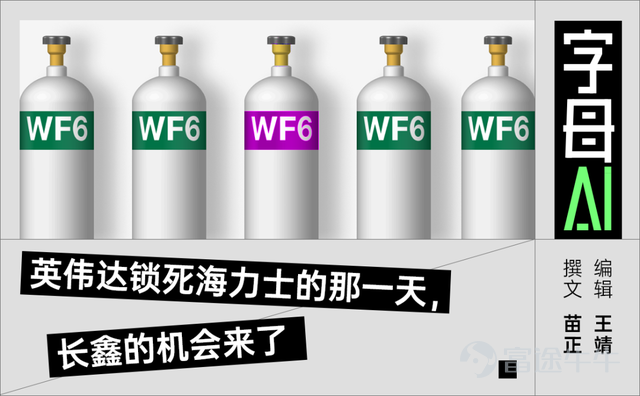

Critical memory raw material supply cut off—could CXMT emerge as the biggest winner?
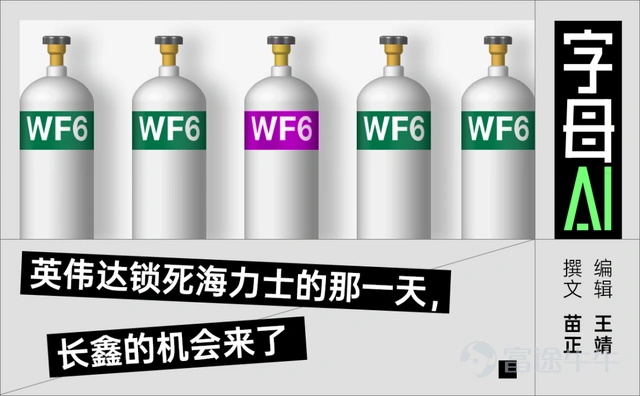
Have you heard of tungsten hexafluoride?
It's a critical material used in 3D NAND and HBM production. In semiconductors, it's primarily used in CVD processes to deposit tungsten films. In DRAM, tungsten is used in contact plugs, interconnects, word lines, and other structures.
Tungsten hexafluoride itself is toxic, highly corrosive, and reacts with water to produce hydrofluoric acid (HF), demanding extremely high standards for purity, packaging, gas cylinders, transportation, and on-site delivery systems.
Without it, tungsten metal interconnect layers inside chips cannot be deposited, and circuits in advanced nodes simply won't connect.
However, starting July 1, two Japanese companies—Kanto Denka and Central Glass—will permanently cease tungsten hexafluoride production, eliminating roughly 25% of global capacity by July.
The direct reason for the production halt is that China's exports of high-purity tungsten powder to Japan will effectively drop to zero starting January 2026.
Tungsten hexafluoride production primarily relies on tungsten powder, and approximately 80% of global tungsten resources and refining capacity come from China.
It was bad enough that AI-driven demand overheated the memory market—now even raw materials are getting hit.
So who stands to benefit?
A. NVIDIA, B. SK Hynix, C. Obtuse Angle.
None of the above. The real beneficiary is CXMT.
NVIDIA certainly wants stable memory supply, but a disruption in tungsten hexafluoride supply will inevitably drive up costs for HBM and server memory, which will ultimately be reflected in its procurement prices.
SK Hynix, a major customer of Japanese tungsten hexafluoride, now has no choice but to switch to domestic Korean suppliers SK Specialty and Foosung—but both have already notified customers of a 70% to 90% price increase in their 2026 contracts.
While the big three scramble to manage the raw material crisis and pressure to expand HBM production, CXMT has perfectly seized this heaven-sent opportunity.
01
CXMT has made it onto Corsair's AVL.
Corsair is one of the world's largest consumer memory brands. It previously sourced its memory chips exclusively from Micron, Samsung, and SK Hynix.
Now, ChangXin memory chips have appeared in its Vengeance DDR5-6000 kits, with the model number CMK5X16G3E60C36A2-CN—the 'CN' suffix indicating it is exclusive to the Chinese market.
Screenshots from CPU-Z and HWiNFO64 clearly show 'ChangXin Technologies' listed as the manufacturer. This product supports both Intel XMP and AMD EXPO overclocking profiles, with timings of CL36, a voltage of 1.35V, and specifications fully aligned with mainstream standards.
When news broke that Corsair had started using ChangXin chips, many people’s immediate reaction was about pricing.
After all, memory prices have surged dramatically over the past year or so—DDR5 modules rose from around $60–$70 at the start of 2025 to $200–$300, with some high-capacity kits even exceeding $400.
However, after interviewing multiple memory manufacturers during Computex 2026, Wccftech received feedback indicating that ChangXin’s DDR5 pricing is close to that of Samsung, SK Hynix, and Micron. One memory brand explicitly stated that ChangXin’s chip procurement price is 'almost on par' with the big three, differing by only single-digit percentages.
Many outsiders assumed ChangXin would enter the market with lower prices—after all, the word 'domestically produced' often evokes thoughts of 'budget alternatives.'
Currently, industry consensus holds that DDR5 is in short supply, meaning prices are no longer determined solely by cost but also by deliverability.
For brands like Corsair, if chips from Samsung, SK Hynix, or Micron are unavailable—or if delivery timelines, allocation quotas, or pricing are unstable—even a slight cost advantage from ChangXin, or pricing nearly matching the big three, still makes ChangXin worth sourcing.
This is the real significance behind ChangXin’s pricing being close to that of the big three. It’s not about proving ChangXin has fully caught up with them, but rather demonstrating that the memory market has shifted from 'who is cheaper' to 'who can still supply.'
The issue facing the big three memory makers right now isn't that prices are too high—it's that there's simply no supply. Their capacity has been diverted to HBM, LPDDR5X, and server DDR5, leaving a severe shortage of chips for consumer PCs.
PC manufacturers and memory brands don’t need cheaper chips—they need more available chips.
CXMT (ChangXin Memory Technologies) is stepping precisely into this gap. It doesn’t face pressure from AI data center orders or long-term contracts with NVIDIA, AMD, or hyperscale cloud providers, so its entire production capacity can be dedicated to the consumer market.
But the significance of Corsair’s move isn’t really about price alone.
What it truly signals is that CXMT has already passed international brands’ qualification systems.
In the PC industry, there’s a term called AVL—short for Approved Vendor List—which essentially means a 'qualified supplier list.'
For PC makers, memory brands, and server manufacturers, sourcing memory chips isn’t as simple as picking any vendor off the open market.
Suppliers must undergo rigorous validation covering yield rates, stability, compatibility, batch-to-batch consistency, after-sales risk, and long-term supply capability. Only after passing these checks do they get added to a customer’s AVL.
Established, mature companies like Corsair would never randomly integrate another manufacturer’s memory chips into their product lines.
They must test compatibility, validate yield rates, confirm batch stability, assess after-sales risks, and ensure the supplier can reliably deliver over the long term.
ChangXin's inclusion in Corsair's Approved Vendor List (AVL) indicates that the company has taken its first step into international markets.
ChangXin also holds an advantage that the current trio of industry leaders finds difficult to replicate: certainty in raw material supply.
As previously mentioned, Japanese tungsten hexafluoride suppliers halted production on July 1, forcing Samsung and SK Hynix to switch to domestic Korean suppliers. This has driven up production costs and undermined the stability of raw material supply.
ChangXin, however, does not face this issue. China is neither short of tungsten resources nor lacks a foundation in fluorochemical manufacturing.
In terms of tungsten, China is the world’s largest supplier; as for fluorochemicals, China also possesses a highly integrated industrial chain.
The basic synthesis route for tungsten hexafluoride is also well-known—it typically involves reacting tungsten powder with fluorine gas, followed by distillation and purification.
Therefore, ChangXin has solid grounds for pricing its memory chips close to those of Samsung and SK Hynix.
02
AI PCs offer ChangXin a broader stage to showcase its capabilities.
Moreover, if AI PC market sales grow, ChangXin’s inclusion in Corsair’s AVL could bring the company even greater benefits.
An AI PC is not simply a device with an added NPU; it will reshape the fundamental configuration of PCs.
Microsoft's Copilot+ PCs explicitly state a minimum requirement of 16GB of RAM. In the past, the standard baseline configuration was typically 8GB.
In the first half of 2026, the AI hardware community widely observed that local models with 7B to 13B parameters require 16GB to 32GB of RAM for smooth operation, while 70B-parameter models need more than 64GB.
Although most consumers won’t run 70B-parameter models directly, the selling point of AI PCs lies in their on-device capabilities.
If an AI PC only has 8GB of RAM, its functionality will be severely limited. Opening a few browser tabs, running several background applications, and launching a local AI assistant would nearly max out its memory.
Thus, 16GB is shifting from 'sufficient' to 'barely adequate,' and 32GB is transitioning from 'high-end' to 'standard.'
This places enormous cost pressure on PC manufacturers.
The bill of materials (BOM) for AI PCs is already inflating: CPUs must support NPUs, displays require higher resolution, batteries need larger capacity, and thermal designs must be more robust.
Each of these components adds cost.
If memory prices continue to rise, it will be difficult for AI PCs to move beyond premium showcase devices into the mass market. Therefore, OEMs preparing to enter the AI PC space—such as Lenovo, HP Inc, Dell, ASUS, and Acer—must secure stable supply sources for DDR5 and LPDDR5X memory.

Yet the reality is that the three major suppliers currently cannot deliver sufficient volume.
NVIDIA's Grace CPU Superchip uses 960GB of LPDDR5X memory in a single configuration—equivalent to the memory capacity of 60 high-end smartphones. Server-grade DDR5 prices are expected to double by the end of 2026 compared to early 2025.
Moreover, HBM consumes roughly three times the wafer area of DDR5.
PC manufacturers want to push AI PCs, but memory supply can't keep up.
This presents an opportunity for ChangXin, whose value will also be amplified by AI PCs.
Specifically, as of Q1 2026, ChangXin’s three 12-inch wafer fabs in Hefei and Beijing are all operating at full capacity, with stable monthly output of 290,000–300,000 wafers.
During the same period, SK Hynix’s DRAM monthly capacity is approximately 550,000 wafers, and Samsung’s is around 720,000.
Although ChangXin still lags behind in capacity for now, its growth rate is very rapid.
In March 2026, ChangXin officially launched its Shanghai mega fab, with a planned total capacity of 400,000–600,000 wafers per month. Equipment installation is scheduled for the second half of 2026, with mass production beginning in 2027 and full capacity reached by 2028—while Micron’s newly announced fab during the same period won’t begin production until 2028.
Furthermore, ChangXin is expanding DDR5 production faster than the top three DRAM makers because it doesn’t need to divert capacity to HBM.
More importantly, ChangXin’s customer base is entirely different from that of the top three DRAM giants.
As AI PCs move further into the mainstream market, PC manufacturers will increasingly need memory suppliers beyond the three dominant players.
ChangXin is riding the cycle in which the PC industry is raising its baseline memory configuration. This cycle could last for several years.
AI applications will become increasingly prevalent, on-device models will grow larger, and edge-side inference will become more complex.
16GB will quickly become 'entry-level yet already outdated,' 32GB will become the 'standard configuration,' and even 64GB could potentially become standard.
Throughout this process, ChangXin’s position on the Approved Vendor List (AVL) will become increasingly solidified.
03
NVIDIA has locked in SK Hynix,
The DDR5 market opportunity will continue to expand.
In early June 2026, NVIDIA and SK Hynix signed a multi-year memory cooperation agreement in South Korea.
NVIDIA committed to purchasing next-generation memory products from SK Hynix, while SK Hynix pledged to provide customized memory solutions for NVIDIA’s Vera Rubin AI system, RTX Spark PC, and Jetson Thor robotics platform. The agreement spans multiple years and covers roadmap coordination, capital expenditure planning, advanced packaging technologies, and production scheduling.
Given that AI data centers place larger orders with higher margins and deeper binding commitments, the internal priority assigned by the big three memory makers to DDR5 memory chips will naturally decline.
SK Hynix’s HBM production capacity in 2026 is expected to increase by 50% compared to 2025. Samsung plans to add approximately 60,000 wafers per month of capacity in the first half of 2026, primarily for HBM4 production. Micron announced in December 2025 that it would exit the consumer memory and storage market to focus exclusively on serving AI data center customers.
All these moves point to the same conclusion: the three memory giants, who have already been cutting back on standard memory chip production, will further reduce output going forward.
After all, HBM offers significantly higher margins than DDR5—everyone wants to make more money.
NVIDIA’s Vera Rubin platform is expected to use over 1TB of LPDDR5X per system, more than double the amount used in the Grace platform. AMD’s MI450 processor will also heavily utilize HBM4.
Do you think that’s all? Clearly not.
According to foreign media reports, hyperscale cloud providers are stockpiling AI servers en masse, and their memory demand will remain elevated for the next three to five years. Even with capacity expansions, the additional output from the big three may still fall short of meeting demand.
This leaves even more room for CXMT to grow.
Even excluding AI PCs, ordinary PCs, consumer memory modules, edge devices, and certain server segments still require substantial volumes of DDR5 and LPDDR5X.
On June 9, Jensen Huang himself stated in an interview that the memory shortage will persist for 'quite a few years.'
Current DDR5 supply is so tight that it has moved beyond a mismatch of just one or two quarters’ worth of inventory—in other words, the memory you buy today is likely what manufacturers had been waiting nearly half a year to receive.
If PC manufacturers want to keep pushing AI PCs, they can't wait for Samsung, SK Hynix, and Micron to expand capacity. They must bring new suppliers into the Approved Vendor List (AVL).
Another interesting point: on the same day NVIDIA announced a multi-year memory partnership with SK Hynix, South Korea's KOSPI index closed down more than 8%. SK Hynix shares fell 7.7%, dipping as much as 10.3% intraday, while Samsung Electronics plunged 10.2% at the open.
South Korean financial media believe this sell-off doesn’t mean the market suddenly lost faith in AI; rather, it’s because Korean chip stocks had rallied too quickly previously.
Hynix and Samsung have already been traded as HBM leaders, with their share prices pricing in substantial AI order expectations well in advance. Even a slight softening of those expectations triggers partial profit-taking by investors.
However, falling stock prices don’t signal a shift in industry direction. NVIDIA is still locking in SK Hynix capacity, cloud providers continue scrambling for AI servers, and HBM remains the tightest—and most profitable—segment of the memory market. For the three memory giants, production will undoubtedly keep shifting toward AI-optimized memory, leaving ever more room for CXMT.
DDR5 supply constraints will persist as a long-term condition.
Multiple supply chain sources interviewed by Tom’s Hardware during Computex 2026 indicated that DRAM and NAND shortages will last throughout 2027.
Motherboard makers have even started restarting DDR4 motherboard production lines. AMD has re-released the Ryzen 7 5800X3D 10th Anniversary Edition, and Intel stated it will continue ensuring availability of products supporting 'legacy memory technologies.' $NVIDIA (NVDA.US)$$NVIDIA Portfolio (LIST20882.US)$$Virtual Reality (LIST2139.US)$$Memory Chip (IC0159)$$Data storage stock (LIST23925.US)$$Data storage concept (LIST24055.HK)$$SK Hynix (000660.KR)$$CSOP SK Hynix Daily (2x) Leveraged Product (07709.HK)$$Semiconductors (LIST22912.HK)$$AI Chip (LIST2548.US)$
Risk Disclaimer: The above content only represents the author's view. It does not represent any position or investment advice of Futu. Futu makes no representation or warranty.Read more

Comments
to post a comment
3
1