
Power Station | Cockpit-driving integration becomes a trend, Qualcomm leverages its smart cockpit advantage to challenge NVIDIA and Horizon Robotics

Reporter Hua Zijian
Editor: Gao Yulei
In the automotive sector, Qualcomm Snapdragon has established its presence across three key areas closely tied to vehicle intelligence: smart cockpits, advanced driver assistance systems (ADAS), and cockpit-driving integration, through its Snapdragon Cockpit, Snapdragon Ride, and Snapdragon Ride Flex platforms.
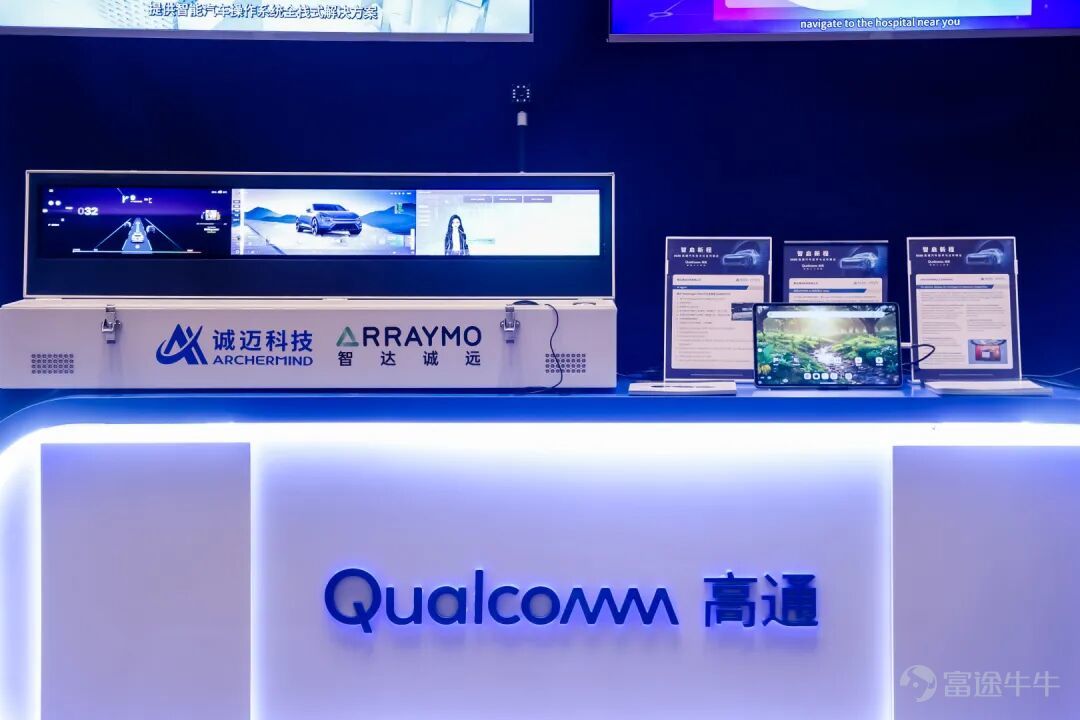
In the smart cockpit segment, Qualcomm Snapdragon has become the undisputed core. Nakul Duggal, Executive Vice President and General Manager of Qualcomm’s Automotive, Industrial, and Embedded IoT & Robotics business group, revealed at the 2026 Qualcomm Automotive Technology and Cooperation Summit in Wuxi that the Snapdragon Cockpit Platform has so far empowered more than 75 million vehicles globally.
Qualcomm’s leadership in smart cockpits continues to expand. The latest-generation Snapdragon Cockpit Platform Premium Edition has already been selected for 18 vehicle models, with 10 either already in production or currently ramping up manufacturing. Capitalizing on this strength—and as cockpit-driving integration emerges as this year’s dominant technological trend—Qualcomm aims to intensify competitive pressure on NVIDIA, Huawei, and Horizon Robotics in the intelligent driving space. These three companies rank first, second, and third respectively in China’s ADAS chip market share.
However, the market still offers substantial growth potential. Urban NOA (Navigation on Autopilot) capability is one of the key indicators of high-level ADAS systems. According to data from the China Association of Automobile Manufacturers, over 3 million passenger vehicles were equipped with urban NOA functionality in 2025, but penetration remains below 16% of total insured passenger vehicle sales, an increase of approximately 5.6 percentage points compared to the full year of 2024.
Domestic brands are the main drivers of urban NOA functionality. Last year, domestic brands accounted for over 80% of passenger vehicle sales in China equipped with urban NOA features. This means Qualcomm still has significant opportunities: the overall increase in urban NOA penetration and the demand from joint-venture brands to adopt urban NOA capabilities.


Accelerated integration of cockpit and driving systems: Qualcomm holds a production advantage
About three years ago, Qualcomm determined that, given the pace of AI expansion, it was no longer reasonable to keep the in-cabin infotainment system separate from the ADAS system. Whether in the cockpit domain or the intelligent driving domain, both fundamentally process data—sensor data collected by the vehicle and handled via AI.
In the past, this process relied on computer vision and classical AI; today’s dominant trend is VLM (Vision-Language Models), which essentially enables vehicles to perceive their surroundings using AI and then relay that information to various stakeholders—including the ADAS system, the cockpit system, and integrated forms of both.
Based on this foresight, Qualcomm decided to design its chips with oversized specifications, combining the computational power required for both cockpit and ADAS platforms, thereby offering downstream automotive partners ample flexibility to integrate both functions—delivering top-tier performance for both cockpit and ADAS on a single chip. Qualcomm named this platform Flex.
In January 2023, at CES, Qualcomm unveiled its first single-chip solution—the Snapdragon Ride Flex SoC, codenamed Snapdragon 8775—that simultaneously supports digital cockpit, ADAS (Advanced Driver Assistance Systems), and AD (Autonomous Driving) functionalities.
The Arcfox Qwen V9, the all-new Alpha T5, and the all-new Alpha S5 are the latest three mass-produced models built on the Snapdragon 8775, supporting L2+ and above advanced driver-assistance features such as memory parking and highway/urban NOA, along with multi-screen display applications including center console, instrument cluster, and HUD.

Currently, the primary benefits of cockpit-driving integration manifest in two aspects: First,打通 between the intelligent driving domain and cockpit domain significantly reduces computing latency, enabling parallel operation of cockpit and ADAS functions. Organizationally, this integration allows software development, hardware development, and testing/validation workflows to be consolidated into a unified process, accelerating AI model deployment. Second, it lowers the overall cost of vehicle intelligence.
In an interview, Nakul Duggal revealed that Qualcomm launched the Snapdragon Ride Flex platform both to better address the competitive landscape and to achieve a breakthrough. By integrating intelligent cockpit and ADAS functions into a single SoC via Snapdragon Ride Flex, Qualcomm significantly reduces total cost of ownership for downstream automakers. 'From a bill of materials (BOM) perspective, memory also benefits—dedicated memory for two separate SoCs is no longer needed.' Founders of emerging EV companies like Lei Jun of Xiaomi Auto and Li Bin of Nio have repeatedly highlighted how rising memory prices negatively impact vehicle cost control.
Ahead of the Beijing International Automotive Exhibition in April this year, Horizon Robotics also launched its first cockpit-driving integrated chip, the Starry series. Horizon CEO Yu Kai noted that integrating cockpit and intelligent driving functions onto a single chip could reduce per-vehicle costs for automakers by RMB 1,500 to 4,000.
"The Flex integrated architecture accelerates technological advancement and software development, delivering exceptional flexibility that reduces overall system costs. Leveraging binary compatibility, it enables reuse of R&D成果 from previous-generation systems in next-generation platforms, significantly cutting automakers' development costs and timelines. This mixed-criticality architecture is not constrained by specific functional domains. Thanks to its outstanding flexibility, it supports coexistence of cockpit and ADAS systems," said Nakul Duggal.
Qualcomm's Snapdragon Ride Flex architecture supports heterogeneous computing, allowing applications of varying criticality levels to run concurrently on the same SoC, with hardware isolation ensuring that the safety of the advanced driver-assistance system (ADAS) remains unaffected by the infotainment system.

Compared with Horizon Robotics, Qualcomm’s strengths lie in its mass-production experience and extensive partner ecosystem. Qualcomm has established a comprehensive product portfolio targeting entry-level and mid-tier vehicles—such as the new Arcfox Alpha T5 and Alpha S5, Dongfeng Nissan N7, and Buick Zhijing L7—offering the Snapdragon 8775 chip to support highway NOA and basic urban navigation-assisted driving features.
The Snapdragon 8787 sits between the Snapdragon 8775 and Snapdragon 8797, aiming to serve as an upgraded solution replacing the combination of the Snapdragon 8295 cockpit chip and other intelligent driving chips, addressing cabin-ADAS integration needs for mainstream models priced between RMB 150,000 and RMB 250,000. "The Snapdragon 8787 shares the same core capabilities as other premium-tier chips; it is simply tailored for different vehicle segments," said Anshuman Saxena, Vice President and General Manager of ADAS and Robotics at Qualcomm Technologies, in an interview.
For high-end requirements, the Snapdragon 8797 supports end-to-end assisted driving, advanced AI Agent interactions, and multimodal cockpit experiences. The first mass-produced vehicle equipped with the Snapdragon 8797 is the Leapmotor D19, which has already begun deliveries. Additionally, the new Li Auto L9 Livis also employs the Snapdragon 8797 chip to power its cockpit, enabling AI Agent interaction experiences.

To date, the Snapdragon Ride Flex platform has secured design wins for nine vehicle models in the Chinese market, and mass-produced vehicles leveraging Qualcomm’s cabin-ADAS integrated solutions are expected to grow rapidly in the coming years. The pace of mass production for these integrated solutions has accelerated significantly: "In the case of the Leapmotor D19, our partner completed implementation in just about six months after receiving the platform. We worked closely with Leapmotor to integrate our platform into their new vehicle and achieve mass production," said Nakul Duggal.
At this year’s Automotive Technology and Collaboration Summit, Qualcomm announced a series of collaborations with ecosystem partners focused on cabin-ADAS integration and AI Agents. Together with ecosystem companies including Thundersoft, Chehe Tech, Banma Intelligence, Desay SV, Megatronix, and ThunderSoft, Qualcomm jointly launched the 'Claw On-Vehicle AI Ecosystem Initiative' to accelerate large-scale deployment of AI Agent assistants in vehicles.
Qualcomm also announced a collaboration with SAIC Volkswagen to jointly explore in-vehicle intelligent technologies based on the premium-tier Snapdragon Automotive Platforms. Additionally, Qualcomm and Zhuoyu Technology unveiled a next-generation cabin-ADAS domain controller built on the premium-tier Snapdragon Ride Platform (i.e., the Snapdragon 8797), working together to drive broader adoption of integrated cabin-ADAS solutions across more vehicle models and future mobility scenarios.


Qualcomm moves in sync with China’s pace
Nakul Duggal highlighted Qualcomm’s connection with China’s automotive intelligence evolution: "In July 2023, I brought my team to China right at the early explosive stage of ADAS development in the country. I heard discussions about memory-based driving, 5V5R (five cameras plus five radars), highway NOA, and urban NOA. But at that time, we had not yet partnered with Chinese ecosystem players in the ADAS space."
Over the past three years, the global automotive market has seen a polarized landscape in vehicle electrification and intelligence. Major automotive markets such as Japan and Europe have slowed their vehicle electrification efforts and delayed bans on internal combustion engine vehicles, while major traditional automakers in the United States have also reduced the priority of electric vehicle development due to changes in subsidy policies. In contrast, the Chinese market presents a different picture: not only domestic Chinese automakers and new EV entrants, but also joint-venture brands are more inclined to invest in vehicle electrification and intelligence.
Volkswagen plans to launch approximately 40 new models in the Chinese market between 2025 and 2027, with more than half being electrified products. Volkswagen is also collaborating with XPeng to develop intelligent electric vehicles exclusively for the Chinese market. Global automotive giants including BMW, Mercedes-Benz, Audi, Nissan, Toyota, and Stellantis have similar plans.
From Qualcomm’s perspective, Chinese automakers operate in a highly competitive domestic environment that strongly incentivizes them to roll out new products rapidly. They view electric vehicles as a must-win arena, leading to massive investments that accelerate China’s transformation toward vehicle electrification. However, the pace of change in other major automotive markets—such as Europe, the U.S., Japan, and South Korea—is comparatively slower.
‘For global automakers, truly embracing this transformation and integrating it into products and systems serving other global markets is significantly more complex. Chinese automakers, by contrast, benefit from a unique market environment and development opportunities that better position them to deploy cutting-edge AI large models and more advanced ADAS software stacks,’ Nakul Duggal told Dianchang. He emphasized that it is precisely the intensely competitive landscape Chinese automakers face that drives their strong willingness to adopt the latest intelligent technologies.
Anshuman Saxena shares the same view. He believes that the fierce price-driven competition across China’s EV supply chain has paradoxically pushed domestic EV makers to increase investment in deploying new features and enhancing user experience to acquire new customers. This dynamic, in turn, creates an opportunity for Qualcomm in the Chinese market: by providing high-performance solutions to local automakers, Qualcomm helps them reduce costs and thrive in this highly competitive environment.

In China, Qualcomm has assembled a team of over 1,000 engineers dedicated to automotive-related work. According to Qualcomm data, nearly 40 Chinese automotive brands and Tier-1 suppliers have already selected the Snapdragon Ride platform to develop driving assistance and cabin-driving integrated solutions. Additionally, the Snapdragon 8775—a single, scalable SoC platform supporting both intelligent cockpits and ADAS—has entered mass production and has been designated for nine vehicle models.
In an interview, Nakul Duggal clearly stated that Qualcomm adheres to a strategy of deep collaboration with ecosystem partners in the Chinese market and will not develop or provide any ADAS software stack specifically for China—a stance that differs from NVIDIA, which is aggressively building its own ADAS software stack, and Horizon Robotics, which insists on an integrated hardware-software approach. ‘We are fully committed to offering our customers, partners, and the broader ecosystem the widest possible range of choices. Our primary path to delivering ADAS capabilities is through our partners.’
Qualcomm has operated in the Chinese market for 30 years and has become an undisputed leader in computing for smartphones and other mobile smart devices. Today, Qualcomm’s substantial investments in the Chinese automotive market and its established ecosystem of partners are driving rapid growth in its automotive business and accelerating Qualcomm’s comprehensive transformation. Qualcomm CEO Cristiano Amon projects that automotive revenue could reach as high as $6 billion in fiscal year 2026, which ends this September.
Risk Disclaimer: The above content only represents the author's view. It does not represent any position or investment advice of Futu. Futu makes no representation or warranty.Read more

Comments
to post a comment
2