
Establishing the Token Foundry business unit, Alibaba's large AI models accelerate their sprint toward SOTA

Alibaba’s latest reorganization of its AI large model division further reinforces its commitment to aggressively investing in AI.
On June 8, Alibaba announced the merger of the Tongyi Large Model Business Unit and the Future Living Lab to form theToken Foundry Business Unitwhich will be directly overseen by Alibaba Group CEO Eddie Wu.
According to reports, the Token Foundry Business Unit is a sub-unit under the Alibaba Token Hub (ATH) business group, operating at the same level as the Qwen Business Unit and Wukong Business Unit.
Both led personally by Wu Yongming, the Token Foundry business unit and the ATH business group have clearly differentiated positioning and responsibilities.
The ATH business group, established in mid-March, has effectively consolidated nearly all of Alibaba Group's AI initiatives, forming a complete closed loop spanning foundational models, AI applications (both B2B and B2C), commercialization, and entrepreneurial exploration.
By contrast, the Token Foundry business unit is directly overseen by the CEO, tasked with bridging Alibaba’s model research and commercialization efforts—serving as the strongest execution arm of the 'AI-driven' strategy.
This may suggest thatToken Foundry is an elite vanguard unit, poised to lead Alibaba’s AI push toward state-of-the-art (SOTA) models.
Alongside this new unit, Alibaba also announced additional organizational adjustments.
The executive who led Alibaba’s Tongyi large models from inception to maturityZhou Jingrenwill assume the role of Chief Scientist at Alibaba, spearheading the establishment of the Alibaba AI Future Lab, dedicated to exploring and achieving breakthroughs in cutting-edge AI technologies.
According to informed sources, the title of Chief Scientist represents the highest academic honor within Alibaba’s technical hierarchy. This appointment is both a strong acknowledgment of Zhou Jingren’s contributions and a strategic move oriented toward the future.
Another key executiveZheng Bowill bring two new models to join the Token Foundry division.
Public records show that Zheng Bo joined Alibaba in September 2017 and was promoted to M6 (Vice President) level in January 2022. He previously served as CTO of Alimama and Chief Scientist and President of Technology at Taotian Group.
In April this year, Zheng Bo's Future Life Lab released the video generation model Happy Horse and the open-world model Happy Oyster, which received widespread acclaim and were ultimately integrated into the Token Foundry division to work alongside the Qwen large models.
However, as the training and inference costs of AI large models continue to rise and the notion of 'excessive large model performance' gains traction, whether to keep pushing toward state-of-the-art (SOTA) has become a difficult strategic choice for companies balancing technology and business considerations.
Against a backdrop where many peers are wavering on pursuing SOTA, Alibaba’s establishment of the Token Foundry division—directly overseen by Eddie Wu—signals a shift away from fragmented command structures for models, infrastructure, and products toward integrating them into a unified operational unit.
Alibaba was the first in China to put this approach into practice. This means Alibaba is not fighting isolated battles but rather waging an integrated campaign. The core objective of this comprehensive effort is to consolidate models scattered across multiple business units and unify the group’s infrastructure to ensure coordinated operations under a single command structure.
Clearly, following the creation of the Token Foundry division, Alibaba’s ATH architecture now exhibits a clear 'layered relay,' forming a complete echelon spanning infrastructure, model development, commercialization, and frontier exploration.
A
Based on the current portfolio of the Token Foundry division, there are three main focus areas:foundational models, video generation models, and world models.
The foundational models are led by Qwen. Refined under the Qwen Large Model division, recent versions of Qwen have consistently ranked among the industry’s top tier, serving as a reliable AI foundation for various Alibaba Group businesses.
Qwen 3.7 Max, released in May this year, is the current flagship version of the Qwen series. It has been comprehensively optimized for agent scenarios and achieves breakthroughs in programming and complex reasoning capabilities, enabling it to autonomously execute complex task workflows lasting up to 35 hours.
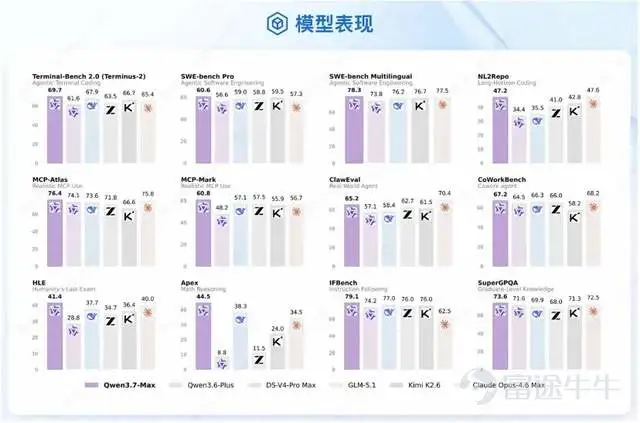
On Arena, a globally recognized blind evaluation benchmark for large language models, Qwen 3.7 Max has surpassed multiple domestic large models and further narrowed the gap with international leaders such as GPT, Claude, and Gemini, ranking first among Chinese models.
In early June, Alibaba launched Qwen 3.7 Plus, which significantly enhances multimodal capabilities. It ranks among the top five globally—and first in China—on Vision Arena, a global benchmark for vision models, achieving deep integration of image and video understanding with autonomous reasoning, tool invocation, and self-verification capabilities.
However, Qwen still faces a significant gap from the pinnacle of the pyramid.Whether to continue investing heavily to chase state-of-the-art (SOTA) performance or to slow down and control expenditures is not only a technical question but also a matter of resource allocation and strategic planning at the Alibaba Group level.
Meanwhile, the Token Foundry division now operates alongside divisions such as Qwen and Wukong, enabling closer collaboration between Qwen and various business scenarios and fostering efficient synergy and mutual reinforcement between model development and product teams.
Previously, Qwen and AI applications like Qwen and Wukong maintained a quasi 'upstream-downstream' relationship: Qwen iterated its models through continuous R&D, while AI applications built products and services on top of Qwen. To some extent, this arrangement led to organizational coordination challenges.
However, in the agent era, this collaboration model has become inefficient and increasingly fails to meet practical demands. The two business units must better understand each other’s goals, changes, and needs to achieve more effective R&D and operations.
In addition to the foundational Qwen model, the Token Foundry division also includes the video generation model Happy Horse and the world model Happy Oyster.
In early April, Happy Horse made a stunning debut, sweeping the Artificial Analysis Video Arena leaderboard and securing the top spot in both text-to-video and image-to-video categories, surpassing competitors such as ByteDance's Seedance 2.0, Kuaishou's Kling 3.0, and Google's Veo 3.1.
However, in terms of user numbers and discussion热度 alone, video generation models fall far short of foundational models, and their commercial prospects are comparatively narrow. The direct monetization capability of state-of-the-art (SOTA) video generation models lags behind mainstream foundational models by two to three orders of magnitude.
For Alibaba, however, Happy Horse has extremely broad potential applications—for instance, helping merchants generate product descriptions and advertising assets at low cost, or enabling enterprises to create AI avatars and social media content. Compared to its much-publicized benchmarking achievements,its extensive range of use cases within Alibaba’s ecosystem is the key reason Happy Horse stands shoulder-to-shoulder with Qwen.
Happy Oyster, meanwhile, is Alibaba’s first open-world model. Built on a native multimodal architecture, it supports multimodal inputs and joint audio-video generation, and can continuously receive user instructions during generation to enable real-time visual responses and ongoing narrative evolution.
Compared to Qwen and Happy Horse, Happy Oyster is further removed from Alibaba’s current business operations and primarily serves to explore new technological pathways for AI.
Currently, the dominant AI paradigm remains large language models, but the world model approach—grounded in physical-world simulation—is gaining traction. With companies like Google, NVIDIA, Meta, Tencent, and ByteDance entering the field, world models are emerging as the next AI paradigm. In this context, Alibaba naturally needs to stake its claim, securing a place for Happy Oyster within its Token Foundry division.
B
Alibaba’s AI efforts are now at the beginning of a new phase.
After several years of groundwork, this segment has started generating substantial revenue. Last quarter, Alibaba’s AI products generated RMB 8.971 billion in quarterly revenue, accounting for over 30% of external commercial revenue for the first time, with an annualized revenue exceeding RMB 35.8 billion.
At the time, Eddie Wu stated on the earnings call: 'AI has moved beyond the initial investment phase and entered a period of large-scale commercial returns.'
Yet at the same time, Alibaba continues to face a fiercely competitive environment.
Domestic players such as ByteDance, Tencent, DeepSeek, and the 'Six Little Dragons,' along with international counterparts like OpenAI, Anthropic, and Google, each excel in either model development or product offerings and are backed by ample funding, enabling them to sustain this battle over the long term.
On the other hand, AI competition is no longer merely about model capabilities or just chatbot rivalry—it has evolved into a comprehensive contest encompassing technology, products, engineering, cost-effectiveness, and ecosystem.
For enterprises to ultimately thrive amid the AI-driven wave, they must first align their organizational structure with strategic objectives. Anddriving business growth through organizational transformationhas always been Alibaba's strength.
Since the beginning of this year, Alibaba has restructured its AI business units multiple times. In March, it established the ATH Business Group, integrating Tongyi Lab, the MaaS business line, Qwen, Wukong, and other AI innovation initiatives, creating a comprehensive layout spanning foundational model research and development, model-as-a-service platforms, and AI applications for both consumers and enterprises.
The core objective of the ATH Business Group is 'to create tokens, deliver tokens, and apply tokens.' This goal transcends specific business formats and reorganizes Alibaba's AI portfolio around the full lifecycle of tokens.

This approach provides Alibaba’s internal AI-related organizations, teams, and personnel with a more unified business logic and clearer operational guidance.ATH not only achieves a unified AI organizational structure within Alibaba but also aims to foster strong ideological alignment among employees.
In early April, Alibaba reshuffled again, establishing a Group Technology Committee with Eddie Wu as head and Jingren Zhou, Zeming Wu, and Fei-Fei Li as members. The former Tongyi Lab was upgraded to the Tongyi Large Model Business Unit.
The essence of this round of restructuring is thatAlibaba has clarified the core leadership team of its AI task force,Daniel Wu (Wu Yongming) is personally taking charge, and the other three members are also Alibaba’s most senior technology executives. Such a high-caliber technical committee once again signals Alibaba’s firm commitment—both internally and externally—to fully embrace AI.
On another front, the Tongyi large model team has been upgraded from a 'laboratory' to a 'business unit,' reflecting a practical shift in naming and reducing its academic research connotations while emphasizing product and business orientation.
Now, Alibaba has established a new Token Foundry business unit—a further strategic bet on AI—placing its models directly under the CEO’s oversight.
In Alibaba’s view, foundational models are the cornerstone of all AI applications; only by achieving state-of-the-art (SOTA) performance with Qwen can applications built atop it—such as Qwen Chat, Wukong, and others—secure a leading position in the industry. Isolating Qwen as a standalone entity and grouping it with two emerging models into an independent unit reaffirms and reinforces this strategic vision.
In just six months,Alibaba’s AI initiative has consolidated its operations and clarified its strategic logic through the ATH business group; solidified its core leadership via the Group Technology Committee; and finally deployed its elite teams to the front lines through the newly formed Token Foundry business unit.Alibaba’s organizational transformation remains, as always, both profound and swift.
C
At last September’s Cloud栖 Conference, Daniel Wu stated in his keynote address that achieving AGI (Artificial General Intelligence) is a certainty, but realizing ASI (Artificial Superintelligence)—capable of comprehensively surpassing human intelligence—is the ultimate endgame.
At that time, Eddie Wu did not provide a detailed roadmap for Alibaba's AI Strategy Initiative (ASI). However, during his three-year tenure leading Alibaba,Alibaba has been advancing comprehensively toward this ultimate goal.
On the funding front, Alibaba announced last year a three-year plan to invest RMB 380 billion in AI infrastructure. During the earnings call in mid-May, Wu stated that over the next five years, investment in AI infrastructure will far exceed RMB 380 billion, as this period represents a critical window of opportunity for Alibaba.
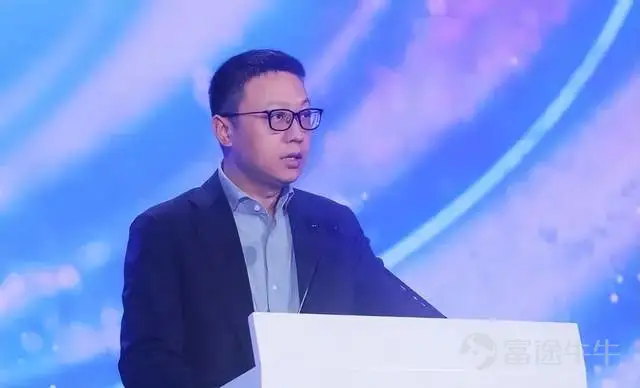
In terms of business, Alibaba has already established a presence across nearly all AI segments, spanning foundational models, vertical-specific models, AI applications, cloud computing power, hardware products, and chip design. Indeed, Alibaba can be considered one of the few global tech giants with full-stack AI capabilities.
On the commercialization front, Alibaba’s 'token economy' has already reached significant scale and entered a phase of commercial returns. During last quarter’s earnings call, Wu noted that API demand on the Bailian platform has grown more than tenfold over the past six months, with virtually every GPU in its servers fully utilized and a long queue of waiting customers.
Alibaba’s management expects that by the June quarter, annualized recurring revenue (ARR) from AI models and application services—including the Bailian MaaS platform—will surpass RMB 10 billion, and exceed RMB 30 billion by year-end.
Finally, through a series of organizational restructuring initiatives, AI has become a CEO-led priority, with Alibaba’s most elite teams now reporting directly to the CEO. Internal silos across AI business units have been completely dismantled, driving deep integration among technology, product development, engineering, and business operations.
In just a few short years,Alibaba has laid solid groundwork for AI across financial, operational, commercialization, and organizational dimensions.Wu previously announced a target: within the next five years, annual revenue from cloud and AI commercialization—including MaaS—will exceed USD 100 billion.
But this is not a goal that can be easily achieved.
Alibaba is pushing forward, but its rivals are advancing just as rapidly. Longstanding competitors like ByteDance and Tencent, as well as emerging players such as DeepSeek and Zhipu AI, have all demonstrated unprecedented resolve and competitive strength. Especially after capital markets opened their doors to AI companies, the so-called 'Six Little Dragons' have gained extraordinary attention and fundraising capabilities, positioning them to go head-to-head with tech giants.
Alibaba needs to act with greater determination and deliver more impressive performance.
Alibaba has long been one of the most coveted destinations for top young talent. Now that its AI division restructuring is largely complete and its elite teams are in place, Alibaba can offer an even broader stage for talent. Moreover, its AI business group—operating under the unified leadership of the CEO—can provide abundant resources, particularly computing power. A smoother, more efficient organizational structure with direct access to the CEO will also make Alibaba more attractive to top-tier talent.
By establishing the ATH Business Group, the Group Technology Committee, and the Token Foundry Business Unit—and personally taking on the role of head—Eddie Wu has taken on additional responsibilities, marking a critical step toward the ASI future envisioned by both Wu and Alibaba. $Alibaba (BABA.US)$$BABA-W (09988.HK)$$BABA-WR (89988.HK)$$China Concept Stocks (LIST2517.US)$$HKEX Secondary Listings (LIST1304.HK)$$Alibaba Ecosystem (LIST2118.US)$$AI (LIST0535.SH)$$Artificial Intelligence (LIST23586.HK)$$Artificial Intelligence (LIST2136.US)$
Risk Disclaimer: The above content only represents the author's view. It does not represent any position or investment advice of Futu. Futu makes no representation or warranty.Read more
Comments
to post a comment