
Crypto markets are volatile! Should you enter the market or stay on the sidelines?

Daily Options Seller Strategy | First-Ever Share Sale Sparks Panic! MSTR Plunges Below Key Technical Levels—How to Use Options to Hedge Against Drawdowns?
I. Market Barometer
U.S. equity indexes extended gains in the previous session, but Bitcoin-leveraged stocks $Strategy (MSTR.US)$ faced massive sell-offs. Bitcoin dropped below the $70,000 mark, hitting a two-month low. Compounded by the company’s first Bitcoin sale since 2022, MSTR fell over 9% in a single day with surging trading volume—heightened volatility has created an excellent premium window for options seller strategies.
II. Focus on Hot Targets
$Strategy (MSTR.US)$ : Does the Bitcoin sale signal a historic turning point? Technical breakdown amid intense bullish-bearish debate
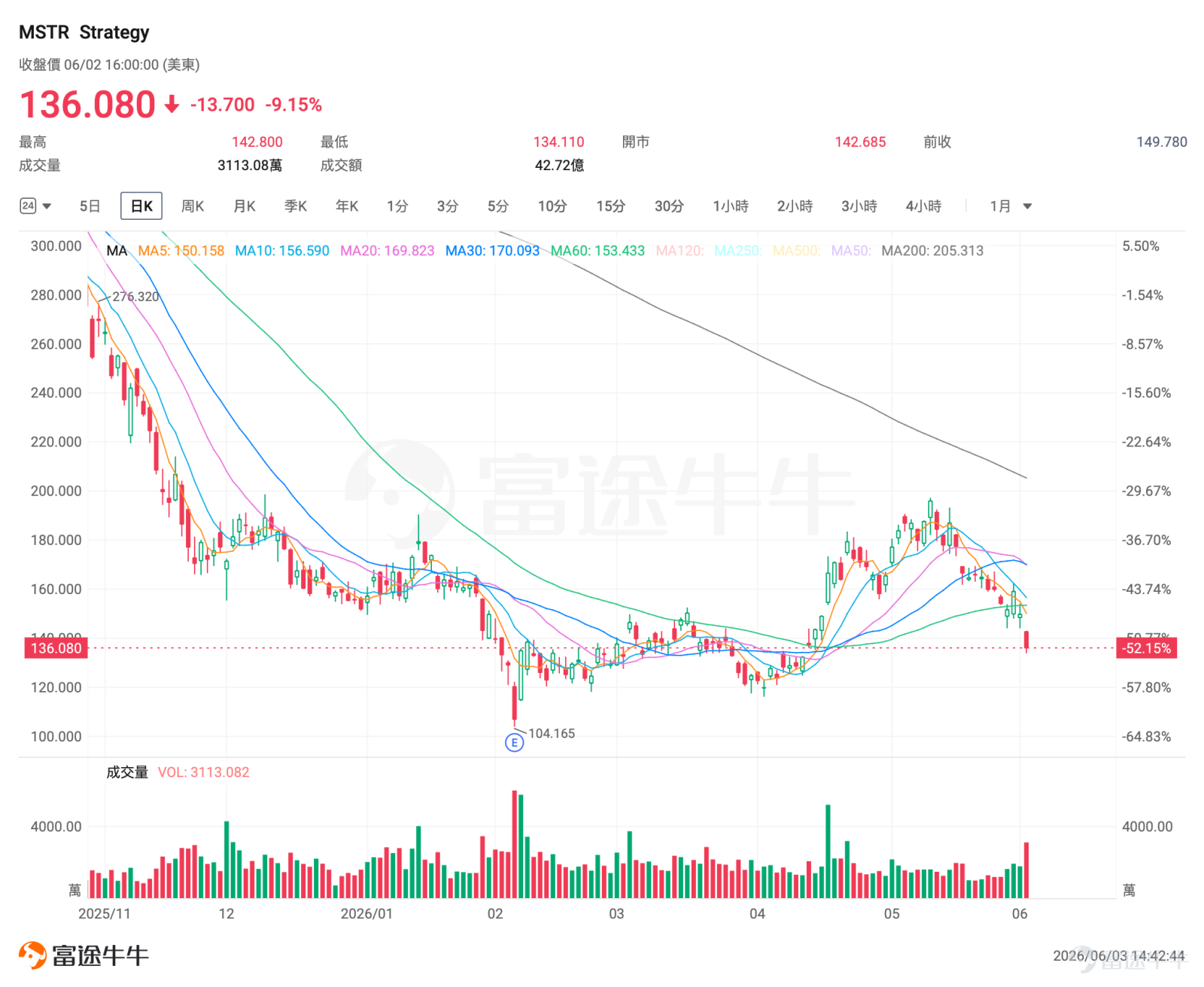
$Strategy (MSTR.US)$ MSTR closed down 9.15% in the previous session at $136.08, touching an intraday low of $134.11. Trading volume surged to $4.272 billion, up 60% from the prior day.
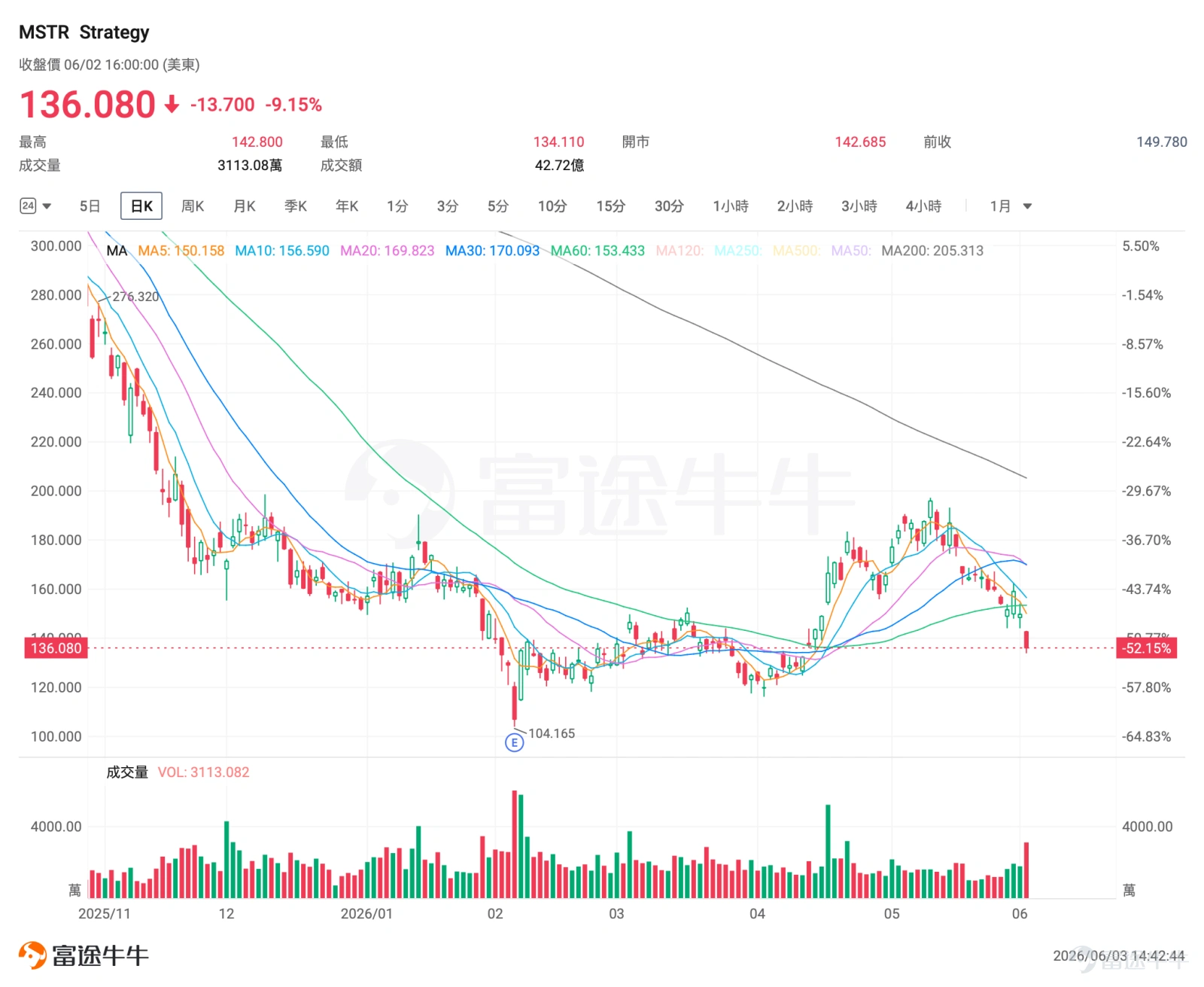
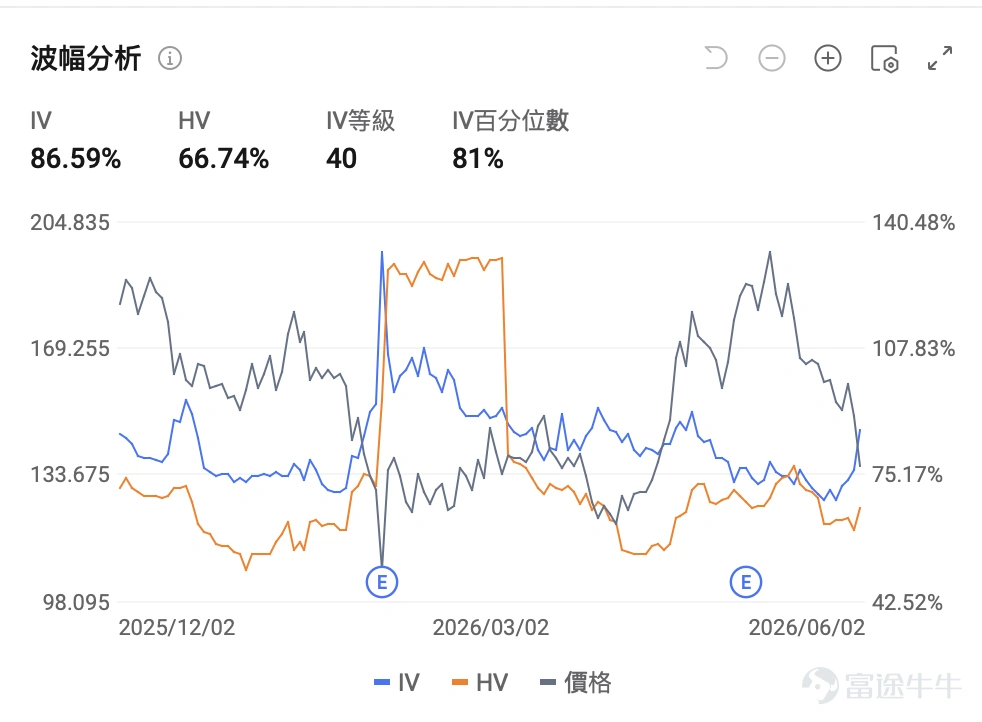
From a technical perspective, the stock has broken below all key moving averages—5-day, 10-day, 20-day, 50-day, and 200-day—with multiple bearish crossovers forming among them. The RSI has plunged into deeply oversold territory, the MACD’s negative divergence has widened, and the lower Bollinger Band at $148 has been breached, with signal lines showing a strongly bearish alignment. Near-term support lies in the previous dense trading zone between $110 and $120; a break below that would test the $104 low. Upside resistance is seen in the $144–$150 range. Implied volatility remains elevated, and the put/call ratio in the options market has risen significantly, reflecting heightened risk-aversion sentiment.
The sharp sell-off was primarily triggered by the company’s first Bitcoin sale since December 2022. According to SEC filings, the firm sold 32 Bitcoin between May 26 and May 31 for approximately $2.5 million to cover preferred dividend payments. This move breaks founder Michael Saylor’s long-standing pledge to shareholders of 'never selling,' raising serious doubts about the company’s medium- to long-term strategy.
At the same time, $Bitcoin (BTC.CC)$ Prices fell below the $70,000 mark amid geopolitical concerns and persistent outflows from ETFs, hitting a nearly two-month low since early April. The dual headwinds have clearly weighed on MSTR’s share price.
Wall Street analysts are divided on MSTR’s outlook. Mizuho recently lowered its Bitcoin price forecast to $94,000 and cut its target price for MSTR from $320 to $265. The consensus analyst rating remains 'strong buy,' with an average target price around $320 and a low estimate of $200.
III. Seller Options Strategy
1. Cash Secured Put
Sell 1 contract of $Strategy (MSTR.US)$ MSTR June 18, 2026 $115 Put; estimated required margin (for reference only): $11,500 ($115 × 100)
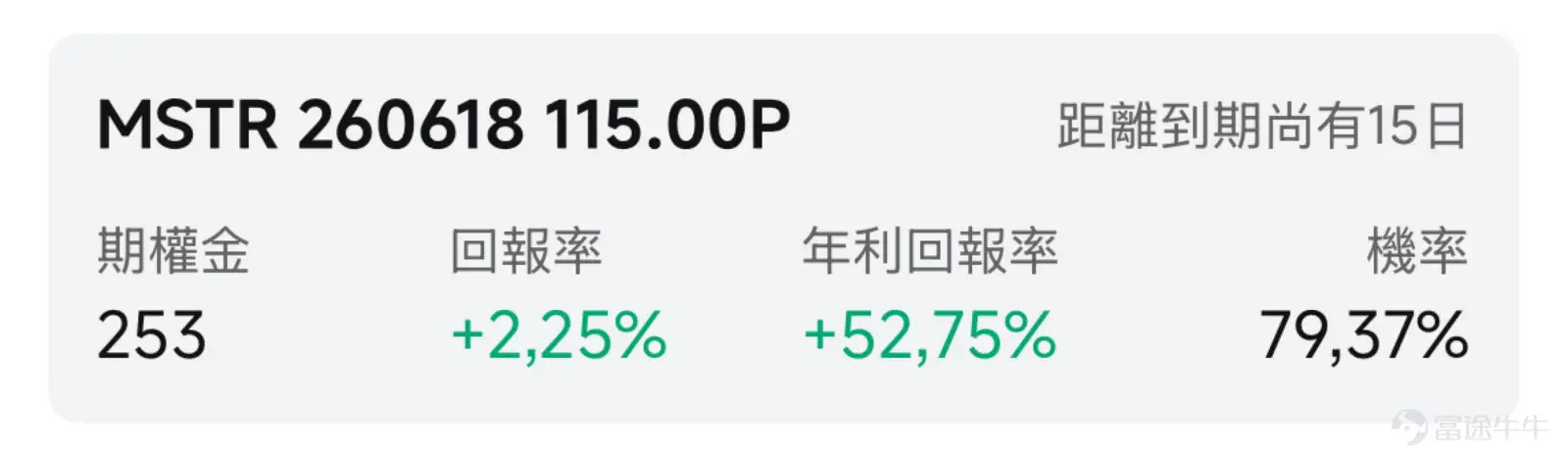
Opportunity Screening Logic:
For investors who do not yet hold a position but believe the market has overreacted to the Bitcoin sale and wish to establish positions amid panic sentiment, buying the dip outright carries significant downside risk.
MSTR’s fundamentals remain supportive—the company still holds approximately 844,000 Bitcoin, valued at roughly $61 billion. The sale of 32 Bitcoin has a negligible impact on its overall holdings. Firms like Benchmark have explicitly stated that the symbolic significance of the sale has been overly interpreted by the market. Although Mizuho lowered its target price, it remains substantially above the current share price.
By selling puts, if the stock stabilizes near current lows or rebounds modestly, investors can collect premium income to enhance the annualized return on idle cash (high implied volatility provides rich premiums). If the stock declines further toward the $115 strike price, investors can also acquire shares at a cost basis below the current market price.
2. Covered Call
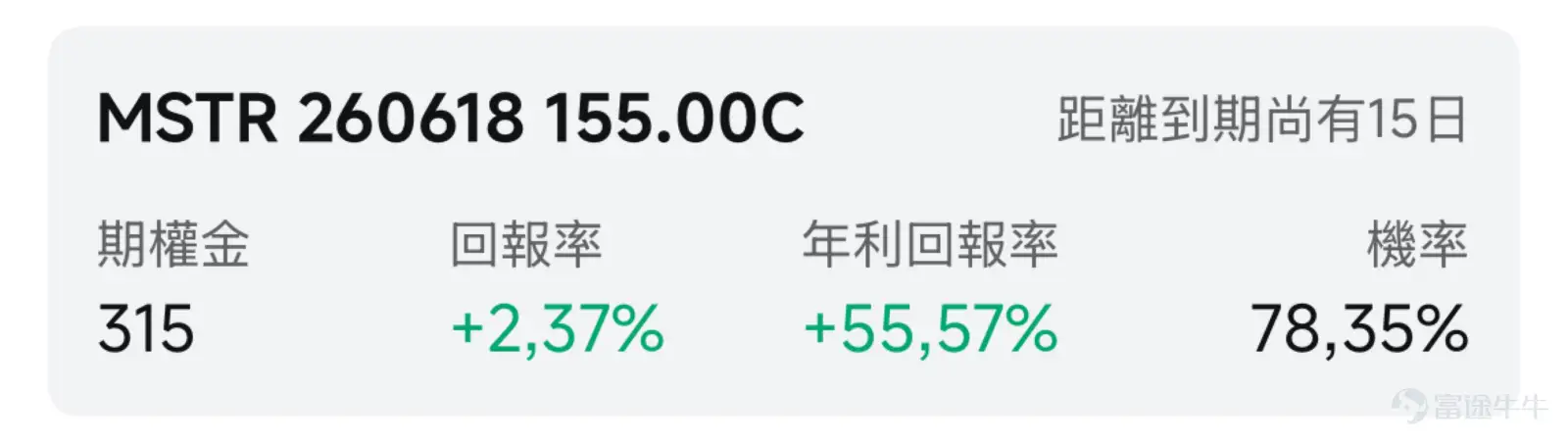
Opportunity Screening Logic:
For investors who already hold MSTR shares and are facing significant unrealized losses, the stock price faces strong resistance from multiple moving averages in the near term, following a single-day plunge of over 9% and a complete technical breakdown. Although these investors agree with Bitcoin’s long-term value, they are concerned that the short-term trust crisis triggered by the 'first-ever sale' and continued outflows from Bitcoin ETFs could further weigh on the share price.
At this point, selling covered calls can generate premium income to lower the cost basis of the position. If the stock price consolidates within a low trading range, the premium income can effectively offset time decay. If the stock rebounds and is assigned near the $155 strike price, it would effectively lock in gains by exiting near the resistance level of the 60-day moving average.
IV. Risk Control Reminder
Although the seller strategy has a high probability of success, investors must still manage risks effectively:
– Position management is key:The biggest risk for option sellers lies in black swan events. It is recommended that margin exposure for a single underlying should not exceed 20% of total capital. Never sell options beyond your capacity for the sake of greedy premiums.
– Timely rolling of covered call options: When a covered call option becomes deeply in-the-money (stock price far exceeds the strike price), and if the underlying stock is still viewed favorably, decisively 'roll' the position — that is, close the current option by buying it back and simultaneously sell an option with a later expiration date and a higher strike price to avoid having the stock called away at a low price.
– Cash-secured put options warn of 'left-tail risk':For cash-secured puts, if the stock price collapses due to deteriorating fundamentals (rather than a normal pullback), do not hold on stubbornly. At this time, stop losses should be executed, or 'rolling down' can be employed to buy time and wait for volatility to normalize.
Make good use of the options seller zone to understand the income strategies for selling optionsEarn option premiums!
Make good use of the options seller zone to understand the income strategies for selling optionsEarn option premiums!

Options Risk Warning
An option is a contract that grants the holder the right, but not the obligation, to buy or sell an asset at a fixed price on a specific date or at any time before that date. The price of an option is influenced by various factors, including the current price of the underlying asset, the strike price, time to expiration, and implied volatility. Implied volatility reflects the market’s expectations for the level of volatility in the option over a future period. It is a data point derived inversely from the Black-Scholes option pricing model and is generally regarded as an indicator of market sentiment. When investors anticipate greater volatility, they may be more willing to pay a higher price for options to hedge risks, resulting in higher implied volatility. Traders and investors use implied volatility to assess the attractiveness of option prices, identify potential mispricings, and manage risk exposure.
Disclaimer
This content does not constitute any offer, solicitation, recommendation, opinion, or guarantee for any securities, financial products, or tools. The risk of loss in trading options can be substantial. In some cases, losses incurred may exceed the initial margin deposited. Even if you set contingency orders, such as 'stop-loss' or 'limit' orders, these may not necessarily prevent losses. Market conditions may make such orders unexecutable. You may be required to deposit additional margin within a short period. If you fail to provide the required amount within the specified time, your open positions may be liquidated. However, you will still be responsible for any shortfall in your account resulting from such liquidation. Therefore, before trading, you should study and understand options and carefully consider whether such trading suits you based on your financial situation and investment objectives. If you trade options, you should be familiar with the procedures for exercising options and the rights and obligations upon expiration. Options trading involves extremely high risks and is not suitable for all investors. Investors should read Characteristics and Risks of Standardized Options carefully before engaging in any options trading strategy.
Editor/Doris
Risk Disclaimer: The above content only represents the author's view. It does not represent any position or investment advice of Futu. Futu makes no representation or warranty.Read more


Comments (2)
to post a comment
9
12