
Micron's earnings beat expectations! NVIDIA's conference sends strong signals—what should you invest

Power Plant | Li Auto Breaks Through Winter: Doubling Down on R&D Amid Headwinds, Focused on the Next Decade

Author: Shang Dian
On May 28, Li Auto released its first-quarter 2026 financial results, reporting revenue of RMB 23 billion and a gross profit of RMB 1.8 billion for the quarter.
Across the broader auto market, China’s halved purchase tax on new energy vehicles officially took effect this year, pushing the market into a period of volatility, with quarterly retail sales plunging 21.1% year-over-year. However, driven by its all-electric i-Series, Li Auto delivered 95,000 vehicles during the quarter—exceeding guidance and marking a 2.5% year-over-year increase.
‘Resilience’ was a key theme in Li Auto’s Q1 earnings report—the other being ‘long-termism.’ While this term may sound clichéd, as many companies tout it, Li Auto has demonstrated it through concrete actions.
Li Auto initially covered the cost itself by compensating buyers of the Li i6—whose orders far exceeded expectations—for the difference caused by the halved purchase tax, even though these customers won’t take delivery until 2026. Additionally, Li Auto made a counter-industry decision: it discontinued the outgoing L-series models outright without discounting inventory to clear stock. This move subjected the company to a months-long delivery vacuum and significant revenue losses.

The Li i6 rolled out 100,000 units in under seven months, accelerating growth in the RMB 200,000–300,000 all-electric SUV segment. Meanwhile, the Li i8 achieved the highest Net Promoter Score (NPS) among mid-to-large SUVs with a score of 88.1. Bolstered by these two models, Li Auto stabilized its core business and reclaimed the top spot in China’s new energy vehicle market for brands priced above RMB 200,000.
How can an emerging EV maker navigate a new cycle? This is an unavoidable question in the auto industry, and Li Auto has offered a fresh approach: prioritizing long-term investment over short-term volatility and losses.

Discontinuing the L-series for a generational shift while the i-series stabilizes sales
Li Auto’s previous delivery guidance for Q1 2026 had an upper limit of 90,000 vehicles; therefore, the actual delivery volume of 95,142 units significantly exceeded that ceiling.
Achieving this delivery performance was no easy feat for Li Auto. In March this year, the company proactively stopped accepting new orders for the current L7, L8, and L9 models to pave the way for the next-generation L-series. At the same time, to protect existing owners’ interests, Li Auto refrained from discounting remaining L-series inventory to liquidate stock. As a result, the company entered a painful transitional period marked by order volatility and a delivery vacuum.
The growth primarily came from the all-electric series. The Li i8 and Li i6 began customer deliveries in August and September last year, respectively, with the Li i6 emerging as the key sales driver. In April this year, the 100,000th Li i6 rolled off the production line—reaching this milestone in less than seven months and setting an industry record for the fastest production ramp-up in the RMB 200,000–300,000 all-electric SUV segment.

With production capacity steadily scaling up to stable levels, the Li i6 has entered a phase of consistent high-volume output, maintaining monthly sales above 20,000 units. Meanwhile, the Li i8 continues to see rising Net Promoter Scores (NPS), securing the top NPS ranking among mid-to-large SUVs with a score of 88.1.
Beyond strong word-of-mouth, sales growth also stems from Li Auto’s robust foundation of user trust and its rapidly expanding ultra-fast charging network.
The Li i6 sold out immediately upon launch, with firm orders surpassing 70,000 by November last year. Due to insufficient production capacity, Li Auto apologized to customers in January this year for delivery delays and proactively allocated over RMB 500 million to cover the purchase tax differential resulting from cross-year delivery, thereby safeguarding customer interests.
On the other hand, Li Auto chose to absorb the cost increases of batteries and storage chips in the first quarter itself, refraining from raising prices across its entire lineup. It also avoided discounting its current L-series models to clear inventory, thereby protecting existing owners’ interests while offering tangible benefits to new buyers—building a robust foundation of user trust.
Another key driver behind the sales of Li Auto’s battery electric vehicles (BEVs) is its persistent investment in an ultra-fast charging network. As of the end of April this year, Li Auto operated over 4,077 ultra-fast charging stations. The company plans to accelerate the expansion of this network, with the number of 5C ultra-fast charging guns expected to exceed 8,300 by the end of 2026, further boosting BEV sales conversion and supporting the large-scale rollout of the next-generation L-series models equipped with the 5C extended-range system.
Li Auto’s substantial investments in its ultra-fast charging network over the past three years are now translating into real incremental growth opportunities and future momentum.

Li Auto’s healthy financial position and disciplined marketing spending provide the confidence to invest significantly in safeguarding user interests and expanding its ultra-fast charging infrastructure. According to its financial report, the company’s selling, general, and administrative expenses amounted to RMB 2 billion in the first quarter of this year, down 19% year-over-year.
As of the end of the first quarter this year, Li Auto held cash reserves of RMB 94.3 billion, maintaining a cash position of approximately RMB 100 billion for ten consecutive quarters. This financial resilience underscores Li Auto’s sound fiscal health. Despite being in a transitional phase during the first quarter, the company continued to uphold its long-term strategy through rigorous cost control and ample liquidity, enabling heavy investment in R&D.
Li Auto maintained steady growth in R&D spending in the first quarter, with quarterly R&D expenses reaching RMB 2.7 billion, up 8.3% year-over-year. The company prioritized investment in two core R&D areas: autonomous driving—the first half of embodied intelligence—and general-purpose humanoid robots—the second half. For this year, Li Auto expects total R&D expenditures of approximately RMB 12 billion, with about 50% allocated to AI-related initiatives.

During the earnings call, Li Xiang, Chairman and CEO of Li Auto, stated that competition in the mid-to-high-end intelligent vehicle segment over the next three to five years will fundamentally be a competition in embodied intelligence—the industry’s highest technological barrier and the core determinant of long-term competitiveness. Therefore, Li Auto will focus on deep co-design of chips and large models.
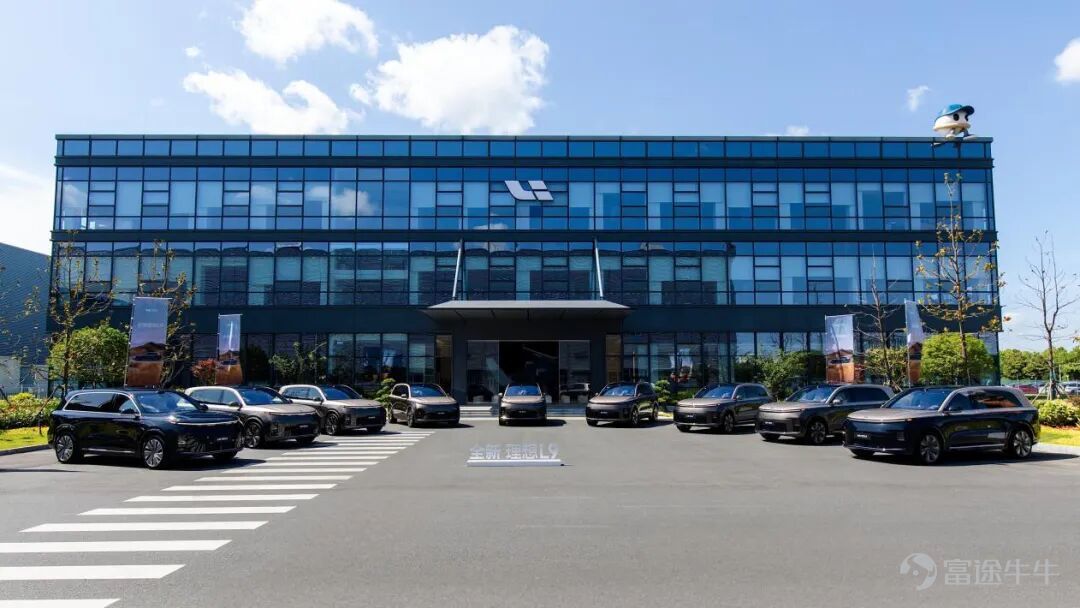
The all-new Li Auto L9, a flagship SUV featuring embodied intelligence, marks the industry’s first full-stack application of embodied intelligence core technologies in a mass-produced vehicle. Officially launched on May 15, this new model not only showcases Li Auto’s concentrated technological achievements for a new era but also presents its strategic approach to 'long-termism.'

All-New L9: The Logic Behind Its Generational Leap
The all-new Li Auto L9 integrates numerous innovative technologies developed by the company: the Livis version features dual Mach M100 chips, the Mach VLA large model, a 'complete' drive-by-wire chassis, an 800V active suspension system, a 3D ViT perception model, and the Star Ring OS operating system—representing the first full-stack mass production implementation of embodied intelligence core technologies.

For Li Auto, this holds significant importance in three aspects:
First, the all-new Li L9 has validated the product portfolio strategy for the new cycle. Li Tie, Chief Financial Officer of Li Auto, acknowledged during the earnings call that this year’s new L-series product matrix, along with upcoming pure electric vehicle models, will be equipped with a substantial amount of in-house developed core technologies, laying a solid foundation for Li Auto’s growth over the next two years.
Second, it enhances Li Auto’s gross margin, thereby further improving its financial health. Ma Donghui, President of Li Auto, expects that the steady-state monthly sales volume of the all-new L9 will surpass the average monthly sales of the previous-generation L9 by the third quarter of this year. Li Xiang also expressed optimism that the Li L9 Livis can maintain a market share of over 20% in the new energy SUV segment priced above RMB 500,000, and aims to secure an equivalent share for the L9 Ultra in its respective market segment.
With the ramp-up of deliveries of the all-new Li L9, Li Auto’s gross margin will quickly rebound to the 10% level in the second quarter of this year.
Underpinning this achievement is the fact that the all-new Li L9 marks the first time Li Auto has integrated mass production deployment of a suite of core technologies—including its self-developed Mach M100 chip, Mach VLA large model, 800V active suspension, and a full-stack drive-by-wire chassis. These proven technical capabilities—spanning self-developed chips, large models, perception systems, control systems, and operating systems—could also serve as the foundational core technologies for general-purpose humanoid robots. Currently, Li Auto has initiated development of its humanoid robot product, accelerating the realization of its embodied intelligence product roadmap covering both upper- and lower-body systems.

A series of technological innovations and breakthroughs have also established Li Auto’s competitive framework for the next decade. 'It took us four years from initiating the development of our self-developed chip to its official deployment in vehicles. In the new decade, we will continue maintaining our technological and innovation competitiveness, and more importantly, sustain a technology moat that is sufficiently far-reaching, highly advanced, and enduring,' said Li Xiang during the earnings call.
What does 'long-termism' mean? As of the end of March this year, Li Auto’s cumulative vehicle ownership has exceeded 1.63 million units—representing 1.63 million car owners, 1.63 million families, and 1.63 million expressions of trust.
Faced with short-term competitive and sales pressures, Li Auto proactively suspended accepting new orders for its current L-series models and refrained from discounting inventory during the latest L-series model refresh, thereby safeguarding the interests of over 1.3 million L-series owners. During the capacity ramp-up phase for the Li i6, which experienced delivery delays, Li Auto honored its commitment to 100,000 reservation holders by covering the entire purchase tax differential resulting from delayed deliveries since the beginning of this year.
This approach is not uncommon in Li Auto’s history. In April 2024, Li Auto adjusted prices for certain L-series and pure electric models and implemented a complementary '120-day rolling price protection' policy to compensate affected customers, earning unanimous user approval.
In the first quarter of this year, despite short-term revenue pressure, Li Auto tightly controlled management and marketing expenses while significantly investing in R&D with a 'next-decade-oriented' mindset to maintain its long-term technological competitiveness—thereby providing lasting assurance to the many customers who have already placed their trust in Li Auto.

"User-centric enterprise": User trust is the foundation
Since 2015, China has ranked first globally in new energy vehicle (NEV) production and sales for 11 consecutive years. By 2025, NEV sales reached 16.49 million units, accounting for nearly 48% of total domestic new car sales.
However, beneath the dazzling growth of the NEV industry lie shadows. Many NEV brands have focused solely on fundraising to fuel marketing and expansion, neglecting their ability to generate sustainable internal cash flow and ensure long-term viability. This has led to operational distress for these companies and left numerous users stranded without after-sales support or reliable vehicle usage guarantees. Behind the industry’s rise to global leadership lies a race centered on 'speed,' with technology and product iteration cycles drastically compressed. Users, in turn, bear significant costs—receiving vehicles that are effectively outdated upon delivery and facing steep depreciation—eroding their trust in NEVs.
Entering 2026, changes to China's purchase tax policy and national subsidies for NEVs signal the start of a new cycle for the industry. The impact of these policy shifts is already evident in sales volatility: in the first quarter of this year, retail sales of NEVs in China plunged 21.1% year-over-year, with no signs of improvement in April and May.
Amid broader market adjustments, NEV startups are being tested on their resilience to short-term fluctuations and their foresight in building future competitiveness. Li Auto’s first-quarter earnings report offers a strategic approach to navigating this new cycle: avoiding overreaction to near-term volatility, refocusing on user concerns, steadfastly investing in proven technological directions, strengthening corporate resilience, and prioritizing the development of core long-term competitive advantages.
The financial pressure reflected in the first-quarter results represents a deliberate strategic cost incurred by Li Auto as it chooses to 'go all-in on the future, protect user interests, and solidify foundational infrastructure.' With the sales momentum of the all-new Li Auto L9 gaining traction and successive upgrades across the L-series lineup, Li Auto is poised to return to a strong growth trajectory, powered by its dual-engine strategy combining extended-range electric vehicles and pure electric models.
Risk Disclaimer: The above content only represents the author's view. It does not represent any position or investment advice of Futu. Futu makes no representation or warranty.Read more

Comments
to post a comment
1