
Valuation approaching Kuaishou's—Is spinning off Kling a smart move?

Source | Tech Planet
Text| Zhai Yuanyuan
Half a month after reports surfaced about Kuaishou’s video-generation large model business, Kling AI, being spun off for an independent fundraising and IPO, Kuaishou released its Q1 2026 financial results, with Kling emerging as the biggest highlight of this earnings report.
During the earnings call on the evening of May 27, Cheng Yixiao, Chairman and CEO of Kuaishou, stated that in Q1 2026, Kling AI generated revenue exceeding RMB 650 million, a year-over-year increase of over 300%. By March 2026, Kling AI’s annualized recurring revenue (ARR) had reached nearly USD 5 billion—up from USD 1 billion in March of the previous year, representing a fourfold increase within one year.
However, Kuaishou did not disclose any updates regarding Kling AI’s financing progress during the earnings call.
Half a month earlier, LatePost reported that Kuaishou planned to spin off its video-generation large model business, Kling AI, and initiate pre-IPO fundraising at a USD 20 billion valuation, targeting approximately USD 2 billion in capital, with Tencent among the potential investors. The following day, Kuaishou issued a statement saying its board was evaluating options to restructure Kling AI’s related assets and operations, but emphasized that 'the plan remains in preliminary stages and no definitive agreements have been signed.'
The spin-off of Kling AI by Kuaishou is widely viewed as a positive move—an opinion that has nearly become an industry consensus. However, another key question drawing external attention is whether Kling AI’s USD 20 billion valuation is overinflated or undervalued.
The USD 20 Billion Valuation Debate: Overvalued or Undervalued?
Kling’s valuation is roughly equivalent to the entire market capitalization of Kuaishou Group, which has drawn significant scrutiny over the underlying valuation logic.
According to Kuaishou's latest earnings report, in Q1 2026, Kuaishou recorded revenue of RMB 33.716 billion, with daily active users reaching 413 million and monthly active users growing to 772 million. Yet, in terms of market valuation, Kuaishou as a whole isn’t significantly higher than that of its subsidiary business—which has only 12 million monthly active users.
Compared to half a month ago, Kuaishou's market capitalization has shrunk by nearly USD 4 billion. As of this writing, Kuaishou’s market cap stands at HKD 194.05 billion (approximately USD 24.9 billion). Stripping out the Keling business, valued at USD 20 billion, would significantly discount Kuaishou’s overall worth.
Keeping Keling within Kuaishou Group would clearly affect its valuation and growth trajectory. Spinning off Keling for independent fundraising and listing would undoubtedly benefit the business. Bai Lu, a veteran internet industry analyst, told Tech Planet that a Keling spin-off would facilitate independent team incentives. Given the vastly different growth rates between AI-driven businesses and traditional operations, an independent listing would better reflect Keling’s market value and avoid constraints from profit-based performance evaluations within a listed parent company.
It is understood that on the investor side, Keling is currently in talks with leading industry players and major dollar-denominated funds (such as KKR and Tencent), though specific participants and valuation assessments remain unclear.
Zhuang Minghao, an internet investor, noted that whether Keling’s valuation is too high depends entirely on the benchmark. Compared with Zhipu and Minimax, anyone would appear cheap. As of this writing, Zhipu’s market cap has soared to HKD 675 billion—more than double that of JD.com, which has a market cap of USD 40.3 billion (HKD 314.3 billion)—and far exceeds the market caps of Meituan and Baidu. 'PixVerse has already surpassed USD 10 billion in valuation; is a USD 20 billion valuation for Keling, which generates revenues many times higher, really excessive?'
Zhuang Minghao believes this is a story of ‘Tiyunzong’—as long as the bottom doesn’t break. But the situation is now delicate: lock-up expirations for cornerstone investors are scheduled for June–July, full tradability arrives in January next year, and Zhipu and Minimax are expected to go public in June. All these factors act as significant negative catalysts. However, the industry-wide consensus on strong positive catalysts remains equally compelling, so the tug-of-war will likely continue.
Notably, the market has raised some skepticism regarding the use of forward-looking ARR (Annual Recurring Revenue) for Keling’s valuation. Analyst Bai Lu stated that the rumored USD 20 billion valuation is derived from Keling’s Q1 next-year ARR target of USD 1.3 billion. However, most overseas AI companies—particularly text-to-video firms—typically base valuations on current-period ARR (using roughly a 20x price-to-sales multiple). The practice of using forward-looking ARR for valuation remains controversial within the industry.
This is because performance targets may not be met, and growth remains highly uncertain. ‘Whether Keling can achieve USD 2 billion in ARR by next year—or even reach USD 1 billion in ARR by year-end—is likely to spark debate,’ Bai Lu said.
Previously, Kuaishou provided annual revenue guidance for Keling of approximately RMB 2 billion (RMB 1 billion last year). Based on this guidance, Keling’s ARR by year-end would be roughly USD 600–700 million. The market’s expectation of USD 1 billion significantly exceeds the company’s official forecast, prompting questions about the source of this projected incremental growth.
Kuaishou’s Keling faces off directly against ByteDance’s Seedance.
Keling’s market valuation is closely tied to its growth potential.
On the earnings call held on May 27, Cheng Xiaoxiao stated that Keling's rapid revenue growth stems from dual drivers: API usage revenue from B2B enterprise clients and subscription revenue from P-end paying members. Both user numbers and average monthly spending per user have experienced rapid growth. In terms of application scenarios, Keling primarily serves professional content creation fields such as advertising and marketing, short-form dramas, and gaming.
AI-powered short-form dramas represent a key application scenario. Keling’s performance growth has benefited significantly from the rise of AI-generated short dramas. AI technology has increased content supply in the short-drama industry by dozens of times, while conversely, AI-driven comic drama production and ad-spending consumption have enabled tech platforms to scale output by hundreds of titles. In Q1 2026, Kuaishou’s marketing spend on AI comic dramas surged over 100-fold year-over-year and more than 150% quarter-over-quarter. By the end of March, the peak daily online marketing spend on AI comic dramas on Kuaishou exceeded RMB 20 million.
According to third-party forecasts, China’s comic drama market is expected to surpass RMB 30 billion in 2026 and exceed RMB 85 billion by 2030. Every comic drama produced using AI tools boosts valuations for platforms like Keling and Seedance, owned by ByteDance.
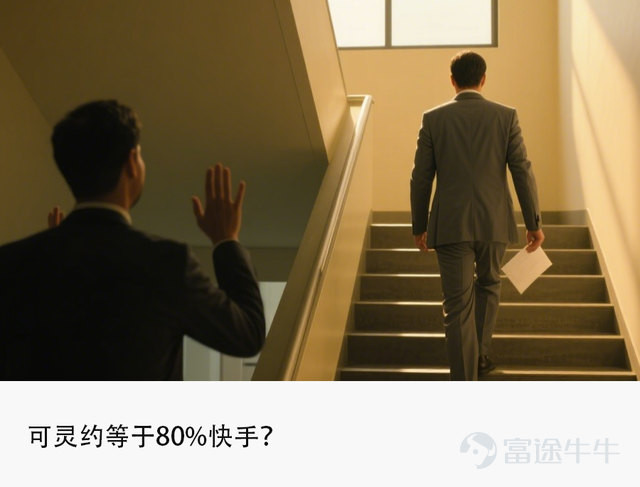
However, a key concern is that compared to Seedance, Keling faces intense market competition, with its market share being significantly eroded. According to informed sources and third-party data, Seedance currently holds approximately 80% of the market share, while Keling accounts for around 10%. Although Seedance’s pricing is slightly higher (about RMB 1 per second), its high ‘gacha’ success rate and consistent output quality make it highly favored among professional producers.
Pricing power and premium pricing ability reflect, to some extent, the intensity of market competition.
After accessing Keling through agents or integrated tools, the effective price typically ranges from RMB 0.1 to RMB 0.2 per second—significantly lower than Seedance’s. A Keling agent disclosed to Tech Planet that calling Keling’s API directly via the official website requires a RMB 60,000 top-up and only offers a 20% discount, whereas going through service provider channels can secure discounts as deep as 30–35% off (i.e., 65–70% of the list price).
The effective price for Seedance 2.0 ranges from RMB 0.4 to RMB 0.5 per second, and becoming a Seedance 2.0 agent involves certain spending thresholds. A Seedance 2.0 agent revealed that signing an annual framework agreement with Seedance 2.0 requires meeting specific criteria, including a minimum guaranteed monthly spend. Additionally, the company has set a strict price floor, prohibiting any external sales below RMB 1 per second.
Keling’s B2B advantage is gradually being overtaken. An insider told Tech Planet that Seedance, via Volcano Engine, is pursuing a major-client strategy requiring API integration agreements worth over RMB 2 million annually.
ByteDance is aggressively targeting large B2B clients, aiming to onboard 500 agents each generating tens of millions in annual revenue. The aforementioned agent noted that Seedance 2.0 has already signed around 200 ‘SVIP’ clients with annual framework deals exceeding RMB 10 million each, and market rumors suggest its target is 500 such clients.
Of course, Keling’s competitors include not only Seedance 2.0 but also other players such as Alibaba’s HappyHorse.
Currently, Kling needs to further strengthen its overseas advantages. Analyst Bai Lu noted that ByteDance has established a complete closed-loop ecosystem encompassing IP origination (Tomato Novels), model tools (Seedance, Xiaoyunque, Jimeng), and traffic distribution (Douyin, Xigua Video), resulting in significant synergy. Kling has been relatively conservative in commercial partnerships but performs well in professional-grade close-up shooting and specific scenarios. Additionally, its traffic platform (Kuaishou) holds a certain distribution advantage in overseas markets, with 70% of Kling's revenue coming from abroad.
‘It’s still too early to talk about the endgame—the market players ranked fifth through eighth are all securing big money, so why can’t the runner-up?’ analyzed Zhuang Minghao.
Risk Disclaimer: The above content only represents the author's view. It does not represent any position or investment advice of Futu. Futu makes no representation or warranty.Read more

Comments
to post a comment
1