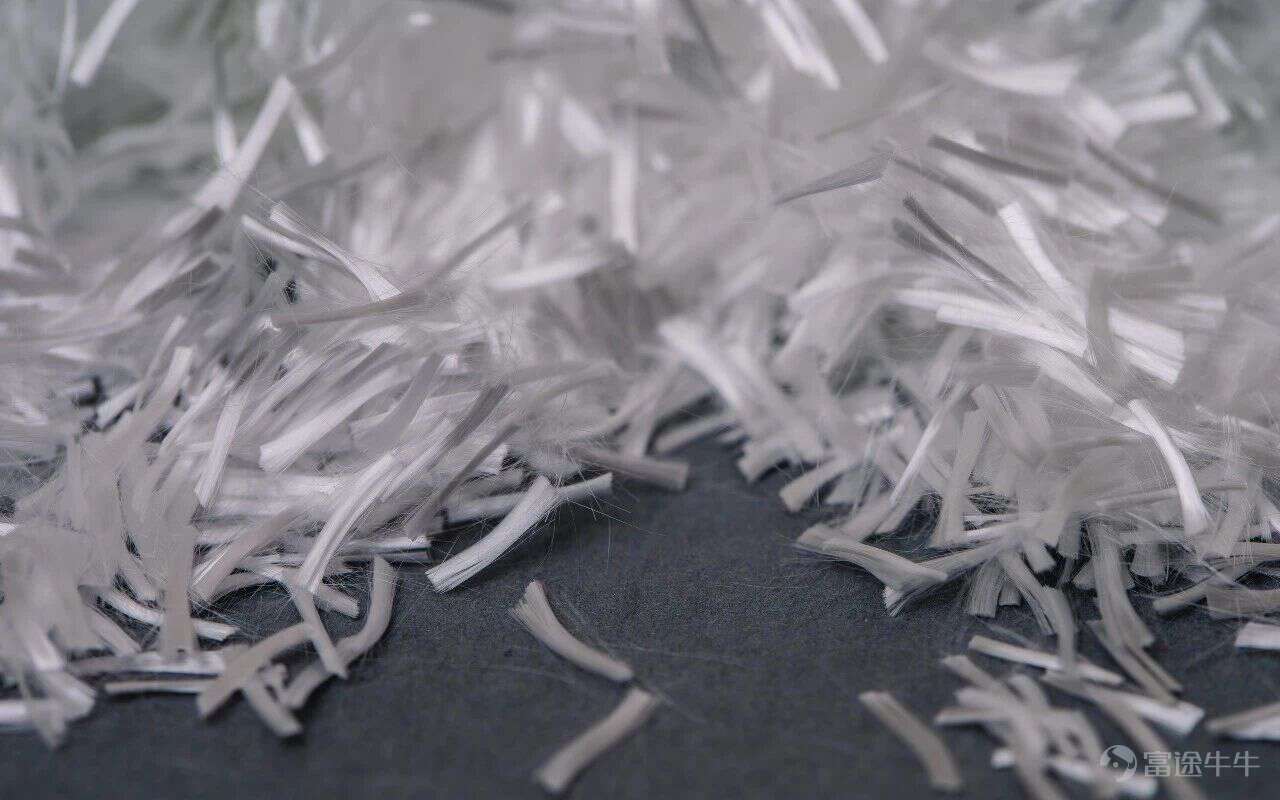

Soaring over 20-fold, the AI electronics fabric leader is going wild
![Since 2026, fiberglass prices have continued to rise. By the end of the first quarter, the average selling price of electronic-grade fiberglass cloth, represented by Honghe Technology, had increased to RMB 9.78 per meter, up 116.9% year-over-year. Benefiting from this price surge, the A-share fiberglass index has risen nearly 120% year-to-date (as of May 26). Among them, Honghe Technology surged nearly 400%, China National Materials Corporation rose over 200%, and China Jushi gained almost 140%. So, who will ultimately come out on top in this cyclical recovery? [The Battle for Electronics Fabric] Sustained global AI demand has triggered an unexpected ripple effect—high-end fiberglass is now in short supply. This specialized electronic fiberglass fabric is one of the essential materials for manufacturing AI chips and PCBs, directly affecting signal transmission speed and stability. In a scramble for supply, NVIDIA CEO Jensen Huang personally flew to Japan in the first quarter to visit Nittobo, the global industry leader. Apple, not to be outdone, took extraordinary measures by dispatching staff to be permanently stationed in Japan to negotiate directly with Nittobo. Meanwhile, Qualcomm has been forced to break from traditional supply chain hierarchies, actively seeking and qualifying alternative sources beyond Nittobo to secure the supply of substrate materials for its AI and smartphone chips. Notably, tech giants such as Google, Amazon, and Microsoft are also caught up in this battle for resources. Electronic cloth has become a bottleneck in the AI supply chain, naturally driving prices higher. From late September 2025 to now, the price of 7628 electronic cloth has risen from RMB 4.15 per meter to...](https://nnqimage.futunn.com/sns_client_feed/18891453/20260527/web-1779845960626-GOyuLaHMBA.jpeg/big?area=1&is_public=true&imageMogr2/ignore-error/1/format/webp)
Since 2026, fiberglass prices have continued to rise. By the end of the first quarter, the average selling price of electronic-grade fiberglass cloth, represented by Honghe Technology, had increased to RMB 9.78 per meter, up 116.9% year-over-year.
Benefiting from this price surge, the A-share fiberglass index has risen nearly 120% year-to-date (as of May 26). Among them, Honghe Technology surged nearly 400%, China National Materials Corporation rose over 200%, and China Jushi gained almost 140%.
So, who will ultimately come out on top in this cyclical recovery?
[The Battle for Electronics Fabric]
Sustained global AI demand has triggered an unexpected ripple effect—high-end fiberglass is now in short supply.
This specialized electronic fiberglass fabric is one of the essential materials for manufacturing AI chips and PCBs, directly affecting signal transmission speed and stability.
In a scramble for supply, NVIDIA CEO Jensen Huang personally flew to Japan in the first quarter to visit Nittobo, the global industry leader. Apple, not to be outdone, took extraordinary measures by dispatching staff to be permanently stationed in Japan to negotiate directly with Nittobo.
Meanwhile, Qualcomm has been forced to break from traditional supply chain hierarchies, actively seeking and qualifying alternative sources beyond Nittobo to secure the supply of substrate materials for its AI and smartphone chips. Notably, tech giants such as Google, Amazon, and Microsoft are also caught up in this battle for resources.
With electronic fabric constraining the AI supply chain, prices have naturally surged. From late September 2025 to now, the price of 7628 electronic fabric has risen from RMB 4.15 per meter to the current mainstream range of RMB 6.6–6.9 per meter, representing a cumulative increase of 59%–66%.
Entering 2026, the latest round of price hikes has spread from high-end to standard-grade products, and the repricing cycle has shortened from several months to just weeks, underscoring the severity of supply-demand tightness.
Against this backdrop of rising prices, the cyclical recovery of the fiberglass industry is already underway.
In the first quarter of 2026, revenue for the glass fiber sector (CITIC index) reached RMB 16.05 billion, up 20% year-over-year, with parent-company net profit amounting to RMB 2.15 billion, a substantial 72% year-over-year increase.
Aside from a few companies like Zaisheng Technology, all other listed fiberglass firms have returned to positive year-over-year growth in parent-company net profit. Among them, the four industry leaders performed particularly well: China Jushi, Sinoma Science & Technology, CPIC Composite Materials, and Honghe Technology reported year-over-year net profit growth of 73.5%, 40%, 412.9%, and 354%, respectively.

▲ Year-over-year growth in attributable net profit among the top four fiberglass producers, Source: Wind
As earnings rebounded strongly, valuations of leading fiberglass producers have also begun to recover upward. Since 2025 (as of May 26, 2026), Honghe Technology’s stock has surged by over 2,100%.It has become the only stock in the AI-related sector to achieve a 20x return during the same period,Its latest trailing price-to-earnings ratio has climbed to 535x. Additionally, China National Bluestar, Sinoma Science & Technology, and China Jushi saw gains of 514%, 475%, and 273%, respectively, over the same period.
This clearly shows that the fiberglass sector is making a strong comeback.
[The Supply-Demand Inflection Point Has Arrived]
As a critical industrial raw material, fiberglass is highly capital-intensive and exhibits pronounced cyclical price patterns.
The previous peak in the fiberglass electronic fabric cycle occurred in 2021, reaching RMB 8.75 per meter. After that, the industry entered a downturn, with prices falling as low as RMB 3.3 per meter in 2024—a decline of over 60%.

▲ Trend of fiberglass prices and industry inventory ratio, Source: Huatai Securities
The core reason for the decline was supply-demand imbalance, particularly due to continuous capacity expansion on the supply side. This surge in capacity stemmed from the high-profit environment of the previous boom cycle, which triggered a wave of large-scale capacity additions.
According to statistics, nearly 300,000 tons of new electronic fabric capacity were added domestically in 2021–2022 alone. It’s important to note that once a fiberglass tank furnace is ignited, it must operate continuously for several years, as shutdown costs are extremely high. With this wave of new capacity coming online all at once, supply surged and could not be easily curtailed, while demand growth fell short of expectations, quickly plunging the industry into widespread losses.
It wasn’t until 2025 that emerging demand from AI computing power, wind power, and new energy vehicles began to materialize, enabling fiberglass prices to bottom out and start recovering.
According to TrendForce, global AI server shipments will grow by 24% in 2025, with revenue rising approximately 48%. Growth is expected to reach 20% and 30%, respectively, in 2026. Additionally, the amount of low-dielectric electronic fabric used per AI server is three to five times that of a traditional server.
Huatai Securities estimates that demand for low-dielectric electronic fabric driven by computing GPUs will reach approximately 68.57 million meters in 2025, increasing to 140 million meters in 2026.
Beyond AI computing, the global wind power market is also growing rapidly, providing strong support for demand for fiberglass yarn used in wind turbine blades.
Global wind power installations hit a record high in 2024, reaching 117 GW. According to GWEC forecasts, new installations will reach 138 GW and 140 GW in 2025 and 2026, respectively, with a compound annual growth rate of nearly 9% from 2024 to 2030. Assuming each gigawatt of installed capacity requires 10,000 metric tons of fiberglass, annual demand for wind turbine fiberglass yarn over the coming years will be approximately 1.4 million metric tons, accounting for more than 15% of China's total fiberglass output.
Moreover, the global new energy vehicle (NEV) industry continues to expand, with rising penetration rates supporting demand for thermoplastic yarn. Each NEV carries a heavy battery pack, making weight reduction directly tied to driving range and performance—thus, material lightweighting has become a key consideration for automakers.
Thermoplastic composites represent one of the key technological pathways to achieving lightweighting, creating significant market potential for thermoplastic yarn. Changhai Shares projects that by 2030, each NEV will use approximately 20 kg of fiberglass, translating into thermoplastic yarn demand of 760,000 metric tons.
As fiberglass demand ramps up, supply-side conditions are also tightening quietly.
In late 2024, the China Glass Fiber Industry Association issued an industry self-discipline covenant. In July of the following year, after top leadership emphasized curbing 'internal competition,' the association joined nine leading companies—including China Jushi and Sinoma Science & Technology—in jointly calling for a firm rejection of below-cost predatory pricing and reckless capacity expansion.
Consequently, China’s fiberglass industry abruptly slowed its expansion in 2025, with total annual capacity reaching 8.54 million metric tons—flat year-over-year—after having grown at a compound annual rate of nearly 10% over the previous three years.
In summary, amid emerging supply-demand tightness and guided by industrial policy, leading companies in the sector have repeatedly coordinated price increases to improve industry profitability.
At that time, fiberglass industry leaders indeed had both the confidence and fundamentals to raise prices, and the upward inflection point of the industry cycle had emerged.
[Who Can Grab a Bigger Slice of the Pie?]
China's fiberglass industry chain is relatively straightforward. The upstream segment primarily involves mineral raw materials (mainly pyrophyllite), chemical inputs, and energy. The midstream segment encompasses fiberglass manufacturing and product production—this is where technology, capital intensity, and economies of scale are most concentrated, and it is also the key determinant of product differentiation and value-added potential.
Based on alkali metal oxide content, fiberglass is categorized into E-glass (alkali-free) and C-glass (medium-alkali), with the former accounting for approximately 90% of the market. By form, fiberglass is divided into coarse yarn and fine yarn. Coarse yarn is used in wind turbine blades, pipes, and structural profiles, while fine yarn is further split into electronic yarn and industrial fine yarn. Downstream applications span five major sectors: infrastructure and construction materials, electronics and electrical equipment, transportation, industrial machinery, and wind power.

▲ Composition of China's fiberglass demand by segment, Source: Kaison Securities
As end-use demand continues to expand, the global fiberglass market is steadily growing. According to HengCe data, the global fiberglass market was valued at approximately USD 12.6 billion in 2025 and is projected to reach USD 17.7 billion by 2032, representing a compound annual growth rate (CAGR) of nearly 5% from 2026 to 2032.
Chinese companies account for over 70% of global fiberglass production capacity. Among them, China Jushi alone holds a quarter of the global market share, making it the world’s largest producer. In the domestic market, the top three players are China Jushi, Sinoma Science & Technology, and CPIC, with market shares of 35%, 17%, and 14%, respectively.
Among these leaders, China Jushi boasts the most pronounced cost advantage. In 2024, its unit cost stood at RMB 3,872 per ton, compared to RMB 4,686 per ton for Sinoma Science & Technology and RMB 5,718 per ton for CPIC—a significant gap.
This cost advantage has enabled China Jushi to remain profitable even during industry downturns, while most competitors have struggled with losses. For instance, in 2024, China Jushi reported attributable net profit of RMB 2.45 billion, whereas CPIC incurred a substantial loss of RMB 350 million.
So, where does China Jushi’s status as the world’s lowest-cost producer come from?
From Market Cap Insights’ perspective, one key factor is massive scale. In the fiberglass sector, greater production capacity translates into stronger bargaining power over raw materials and energy procurement, thereby lowering per-unit manufacturing costs. Notably, the company also owns its own mines and is largely self-sufficient in pyrophyllite.
The other factor is technological breakthroughs. Large-scale tank furnaces are among the critical enablers for cost reduction. Tank furnace fiber-drawing technology represents a core technical barrier in the fiberglass industry—not merely a piece of production equipment, but rather an integrated engineering system combining capital intensity, process know-how, control systems, and economies of scale.
As early as 1993, after partnering with a central state-owned enterprise to introduce alkali-free fiberglass tank furnace technology, China Jushi embarked on an independent R&D path, scaling up single-line capacity from the 10,000-ton level to today’s average of over 120,000 tons.
By comparison, Sinoma Science & Technology and CPIC each have single-furnace capacities of only 79,000 tons and 76,000 tons, respectively. Larger furnace scale means higher energy efficiency and lower energy consumption per unit—naturally translating into a stronger cost advantage.

▲ Single-line production capacity of major fiberglass companies, Source: Minsheng Securities
Overall, the current cyclical upturn in the fiberglass industry stems not only from AI-driven shortages in electronic-grade fabric, but also from robust demand from emerging sectors like wind power and new energy vehicles, as well as supply-side policy measures that have slowed capacity additions. Amid this confluence of factors, industry leaders—with their scale and technological advantages—are seizing the initiative in the ongoing recovery.
Who will ultimately prevail? The answer may already be written on the cost curve. $China Jushi Co., Ltd (600176.SH)$$Sinoma Science & Technology (002080.SZ)$$Chongqing Polycomp International Corporation (301526.SZ)$
By Little Flying Dagger
Disclaimer
The content in this article regarding listed companies is based on the author’s personal analysis and judgment derived from information disclosed by the companies according to their legal obligations (including but not limited to interim announcements, annual reports, and official interactive platforms). The information or opinions presented do not constitute any investment or other business advice. Market Value Observer assumes no responsibility for any actions taken based on this article.
——END——
Risk Disclaimer: The above content only represents the author's view. It does not represent any position or investment advice of Futu. Futu makes no representation or warranty.Read more

Comments
to post a comment
1
3