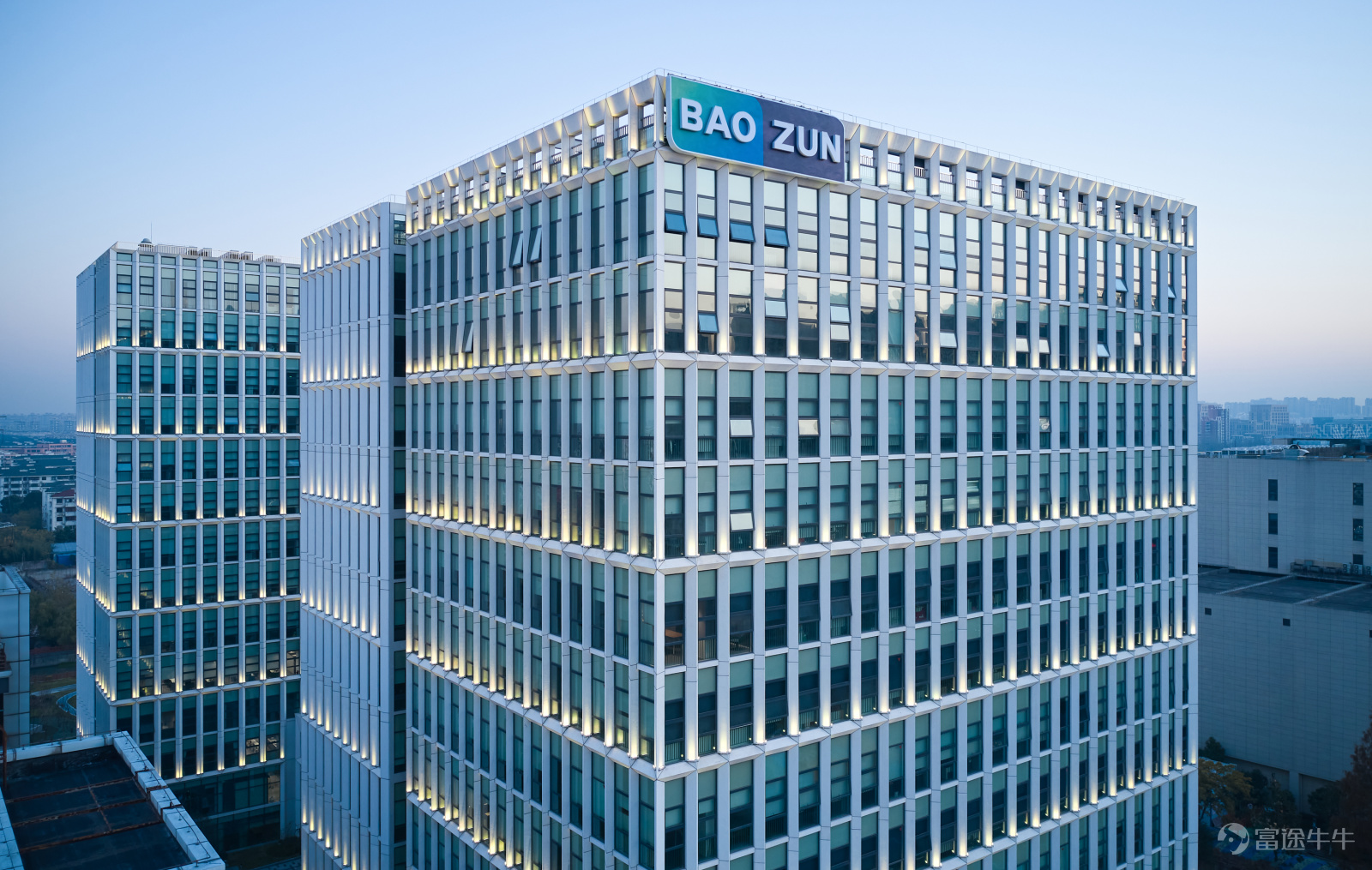

Baozun's Next Battle: E-commerce Efficiency Gains and Brand Scalability

Baozun's multi-year transformation is now yielding clearer financial results.
In the first quarter of 2026, Baozun reported total net revenue of RMB 2.381 billion, up 15.3% year-over-year, and Non-GAAP operating profit swung from a loss of RMB 669.1 million in the same period last year to a profit of RMB 81.1 million.
Specifically, Baozun’s return to profitability stems not merely from revenue growth and its natural cost dilution effect, but more importantly from concurrent improvements in business mix, cost efficiency, and working capital turnover.
Over the past few years, Baozun has been steadily transitioning from a traditional e-commerce service provider to a dual-engine model combining e-commerce operations and brand management. In the early stages of this shift, the brand management segment was in an investment phase, weighing on group profitability; meanwhile, the e-commerce segment faced slowing industry traffic tailwinds, adjustments in service models, and margin pressure.
In the first quarter, both of Baozun’s business segments showed improved profitability: the e-commerce segment (BEC), guided by a focus on sustainable profitability, posted an adjusted operating profit of RMB 129.6 million, turning positive; the brand management segment (BBM) saw a significant reduction in losses due to revenue scaling and enhanced operational efficiency.
The value proposition of Baozun’s dual-engine strategy is now moving from narrative to financial validation.
01 E-commerce Profitability Reversal Starts with Efficiency
Baozun’s return to Non-GAAP operating profitability at the group level stems first from the stability of its e-commerce core, but more critically from improved quality of growth in its e-commerce business.
In the first quarter, revenue from the Brand E-Commerce (BEC) segment rose 10.4% year-over-year to RMB 1.886 billion, driven by dual growth in both distribution and service models. Specifically, e-commerce product sales revenue climbed 20.6% year-over-year to RMB 510 million, while service revenue grew 7.1% year-over-year to RMB 1.38 billion.
In the past, the e-commerce agency services industry could more easily drive growth by focusing on GMV, client count, and revenue scale. When platform traffic was abundant and brands were still reaping the benefits of digital migration, scaling up could mask certain efficiency issues.
However, as online traffic costs rise, brand budgets become more cautious, and platform rules continue to evolve, a model relying solely on scale expansion now faces margin pressure.
For Baozun E-Commerce at this stage, a more realistic path is to anchor growth on improvements in gross margin quality, cost structure, and capital efficiency.
This strategic shift is first evident in its distribution business. The distribution model places extremely high demands on inventory management, procurement, inventory turnover, and pricing capabilities. Once the product category mix becomes unbalanced, revenue growth can easily be eroded by inventory write-downs, discount-driven clearance sales, and tied-up capital.
Baozun E-Commerce has optimized its category mix, focusing its non-standardized distribution business primarily on apparel, which drove the gross margin of its distribution segment up by 98 basis points year-over-year to 15.9% in the first quarter. This indicates the company is deliberately shifting its distribution business away from merely maximizing sales volume toward selecting a more profitable category portfolio.
Meanwhile, its service business is also evolving toward a lighter revenue structure. First-quarter service revenue growth was primarily driven by capability-intensive offerings such as digital marketing, technology solutions, and online store operations.
This type of revenue relies heavily on technological expertise, operational experience, and deep understanding of brand services. If the company can develop reusable methodologies and tools, marginal costs could fall below those of traditional labor-intensive services, thereby creating greater profit elasticity.
In its earnings report, Baozun E-Commerce stated that it conducted a comprehensive review of working capital and leveraged technology-driven process streamlining to continuously improve resource allocation and operational efficiency.
In the first quarter, the group’s working capital turnover days improved significantly from 193 days a year earlier to 109 days. At the same business scale, this translates into reduced capital tied up, faster cash recovery, and enhanced operating resilience.
Technology tools further amplify these efficiency gains. Baozun E-Commerce is also integrating AI and automation into consumer insights, marketing execution, supply chain forecasting, operational coordination, and process management—aiming to reduce repetitive costs and enhance decision-making efficiency.
In the short term, such transformations may not directly generate substantial revenue; however, for e-commerce service providers, the long-term value lies in improving labor productivity, reducing inefficient investments, and driving an upgrade of overall service capabilities from labor-intensive to technology- and data-driven models.
If the trends of business structure optimization and improved working capital turnover continue, and if costs and expenses remain relatively restrained, BEC’s role could gradually shift from being a baseline revenue contributor to a stabilizer for profits and cash flow, thereby providing more resilient earnings support for the group.
This assessment will soon be tested during the upcoming 618 mega-promotion event.
Wu Junhua, Chief Strategy Officer and President of E-commerce at Baozun Group, stated during the earnings call that the company is actively collaborating with numerous brands to participate in the '618' mega-promotion. This year’s promotional period is longer, and as of now, performance during the initial phase has met expectations. If this strong start continues, the company is confident about achieving positive results from this year’s 618 promotion.
02 Brand Management Business Amplifies the Second Growth Engine
If the value of traditional e-commerce operations lies in stabilizing the profit base, then the Brand Management Business (BBM) offers a more flexible source of incremental growth.
In the first quarter, revenue from the brand management business rose 38.8% year-over-year to RMB 538 million, making it the group’s fastest-growing segment. More importantly, adjusted operating losses narrowed significantly from RMB 210.7 million a year earlier to RMB 48.5 million.
The improvement in profitability initially stems from operating leverage following revenue scaling. The brand management business operates closer to retail, requiring upfront investments in stores, personnel, merchandise, supply chains, and marketing. Once revenue scales up and per-store efficiency improves, the fixed-cost dilution effect becomes markedly stronger.
Looking at the core segment within the brand business, GAP’s same-store sales grew by over 20% year-over-year in the first quarter, with improvements seen across store traffic, conversion rates, and average transaction value. This indicates that BBM’s growth is not merely driven by channel expansion but by enhanced operational efficiency across existing units.
More crucially, this growth has maintained solid profit quality. Despite rapid revenue growth, the brand management business sustained a healthy gross margin of around 50%, while inventory turnover days improved significantly year-over-year to 114 days. The simultaneous stability in gross margins and inventory efficiency suggests smoother coordination in product planning, sales pacing, replenishment mechanisms, and channel synergy.
In other words, the recovery of GAP is not merely a natural outcome of revenue scaling up, but rather a reflection of realigning products, marketing, and channels.
On the product side, Baozun adjusted its product mix and new launch cadence; on the marketing side, it strengthened local relevance through collaborations with IPs like the Forbidden City and Chinese Peking Opera, celebrity endorsements, and women-focused initiatives; on the channel side, it advanced store upgrades, asset-light joint operations, and online-offline integration to enhance per-store efficiency.
This aligns with the 'Yuan Yang' theory proposed by Qiu Wenbin, Founder of Baozun E-Commerce and Chairman and CEO of Baozun Group: GAP’s global brand equity is like 'coffee,' while Chinese local consumer demand is like 'tea.' Effective localization is not about choosing one over the other, but about preserving the brand’s core DNA while reconfiguring its products, channels, and consumer engagement for the Chinese market.
During the earnings call, Qiu Wenbin noted that Baozun has entered an 'acceleration phase' focused more on profitability quality and operational efficiency. He pointed out that Baozun’s current 'MMC' (Merchandise-Marketing-Channel integrated) operating model is nearly unique in the industry. Going forward, even if Baozun continues to onboard international brands, it will maintain higher standards: the brand must be sufficiently large in scale, remain focused on fashion apparel to maximize reuse of GAP’s proven operational capabilities, and—most importantly—the new business must contribute profits more quickly.
Thus, BBM’s expansion logic is not simply about exhausting the residual momentum of international brands in the Chinese market, but rather leveraging stronger local product capabilities, faster market responsiveness, and integrated supply chain, marketing, and channel competencies to rebuild brand value while scaling up.
Whether such reuse can succeed ultimately hinges on effective synergy between the two engines.
BBM’s operating model did not emerge in isolation—it draws on Baozun’s years of accumulated expertise in e-commerce, including consumer insights, platform operations, digital marketing, technology tools, and omnichannel experience. Conversely, the product, channel, and retail expertise developed through brand operations can deepen Baozun’s understanding of brand clients and enhance the depth of its e-commerce services.
During the earnings discussion, Qiu Wenbin stated that the brand management business—which currently enjoys relatively higher margins—is now driving overall growth more visibly. As synergies between BEC and BBM are increasingly unlocked, Baozun also sees opportunities to deepen collaboration with existing brands within its e-commerce ecosystem, generating more high-margin business opportunities.
For Baozun, profit improvement is clearly no longer just a short-term financial target, but has become the central operational focus following the company’s strategic upgrade.
*The above content does not constitute investment advice, does not represent the views of the publishing platform, the market carries risks, invest with caution, and make independent judgments and decisions.
Risk Disclaimer: The above content only represents the author's view. It does not represent any position or investment advice of Futu. Futu makes no representation or warranty.Read more

Comments
to post a comment
1