
Who will take up the mantle? How will Ethereum move forward in the post-Foundation era after losing its 'big brother'?

Author: Nancy, PANews
While leading public blockchains like Solana and Base are aggressively competing for developers, user traffic, and ecosystem expansion, the Ethereum Foundation (EF) has chosen to step back voluntarily.
Continuous loss of core talent, coupled with repeated selling pressure on ETH, has fueled growing FUD surrounding the EF. This laid-back strategy is steadily eroding market trust in the foundation.
On May 25, Vitalik Buterin published a lengthy post addressing recent controversies, stating that the EF is merely an ordinary node with a specific mission. He clearly outlined the EF’s upcoming leaner operational strategy and future technical roadmap, and explicitly stated that maintaining ETH’s price is not within the EF’s responsibilities.
After losing its ‘leading figure,’ how will Ethereum continue to move forward in the post-foundation era?
Recently, the ongoing exodus of core EF members, frequent ETH sales, and disputes over ecosystem execution have intensified external skepticism toward the EF, with some even calling for alternative initiatives.
Meanwhile, Vitalik recently revealed,Currently, the Ethereum Foundation (EF) holds only approximately 0.16% of the total ETH supply, far below the typical 10%–50% range commonly held by many public blockchain foundations.
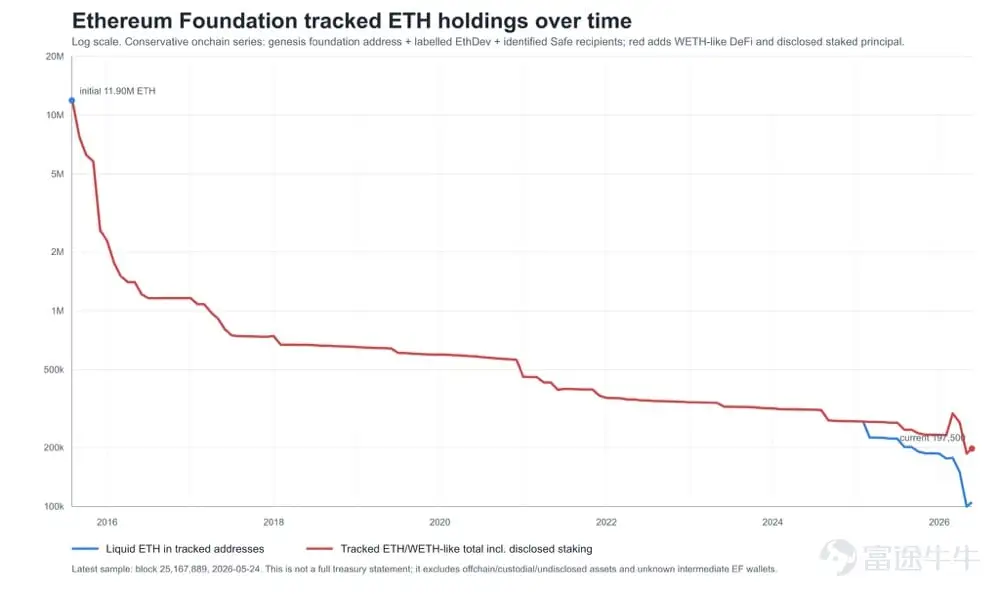
In other words, of the EF’s initial allocation of roughly 6 million ETH (8.3% of the initial total supply), only about 100,000 ETH remain after a decade of expenditure. Today, the EF—whether in terms of financial reserves, team size, or organizational execution capacity—can no longer effectively sustain the role of supporting the rapid operation of Ethereum’s vast ecosystem.
As one of the industry’s most representative pure foundations, the EF has long focused on protocol research, public goods development, and support for the open-source ecosystem. Although the EF does not directly control the Ethereum network, it has long been regarded as a key coordinating and driving force within the Ethereum ecosystem, thanks to its early accumulation of ETH reserves and the continued influence of core developers like Vitalik Buterin.
However, as the Ethereum ecosystem gradually matures,the EF and Vitalik are deliberately diminishing their centralized influence, shifting toward a more low-profile, behind-the-scenes support role.This shift stems both from a commitment to neutrality and long-termism and from real-world constraints.
As the EF’s role within Ethereum diminishes, the single growth path that ecosystem projects once heavily relied on—foundation-driven resource support—is gradually becoming obsolete. Ecosystem expansion is now pivoting toward community-driven innovation and diversified external collaboration.
In fact, the foundation models adopted by different public blockchains have not only shaped their respective governance cultures but also determined their ecosystems’ maturity, degree of decentralization, and long-term evolutionary trajectories.
By contrast, other emerging public blockchains remain in an aggressive expansion phase, with their foundations playing a more assertive and dominant role. For example, newer chains such as Solana, Aptos, and TON employ more flexible, foundation-driven models—holding larger initial token allocations and deploying intensive resource commitments, ongoing incentive programs, and support from affiliated entities like DAT companies. In some cases, founding teams even directly engage in operations to maintain high execution efficiency and rapid growth.
Base represents yet another approach. As a Coinbase-backed Layer 2, it does not rely on a traditional independent foundation structure. Instead, it leverages its parent company’s resources and business network to drive ecosystem development, supplemented by an ecosystem fund to incentivize developer and application integration. This model offers exceptional resource integration efficiency, enabling rapid user growth and product deployment.
Polygon and Avalanche, among others, adopt a hybrid structure with both a foundation and Labs operating in parallel: the foundation focuses on governance transparency and community public affairs, while Labs concentrates on product development and commercial execution. This setup avoids excessive centralization under a single entity and enhances both decision-making speed and implementation efficiency. Hyperliquid Foundation, by contrast, follows a more finance-native governance approach, deeply integrating governance rights, economic incentives, and ecosystem development funds through its token mechanism, and allocates part of its resources to policy research and external communications, thereby strengthening the ecosystem’s self-sustainability and adaptability.
More importantly, as emerging Layer 1 blockchains remain in a fiercely competitive expansion phase, they commonly offer high cash salaries and generous token incentives to aggressively attract developer talent, giving them a clear advantage in the short-term battle for human capital. In contrast,Ethereum lags behindin terms of compensation competitiveness,relying instead on developers’ idealism, commitment to open-source culture, and Ethereum’s long-term ecosystem reputation to sustain contributions.Meanwhile, many core developers who entered the Ethereum ecosystem early have already reaped substantial financial rewards during the previous bull market. Some have gradually stepped back from frontline development and maintenance roles, leading to a noticeable shortage of consistent execution capacity within the ecosystem.
One could say that Ethereum’s pivot toward ETFs is both a natural outcome of its evolutionary trajectory and a strategic long-term survival choice necessitated by constraints in funding and execution capacity.
“The Ethereum Foundation has done a lot of technical work, but the market treats it like a company—this mismatch in expectations has caused dissatisfaction. Honestly, it all comes down to price,” noted Lanhu Notes, a prominent crypto influencer, hitting the nail on the head.
For the Ethereum community, nearly every controversy ultimately circles back to the issue of ETH’s persistently low price.
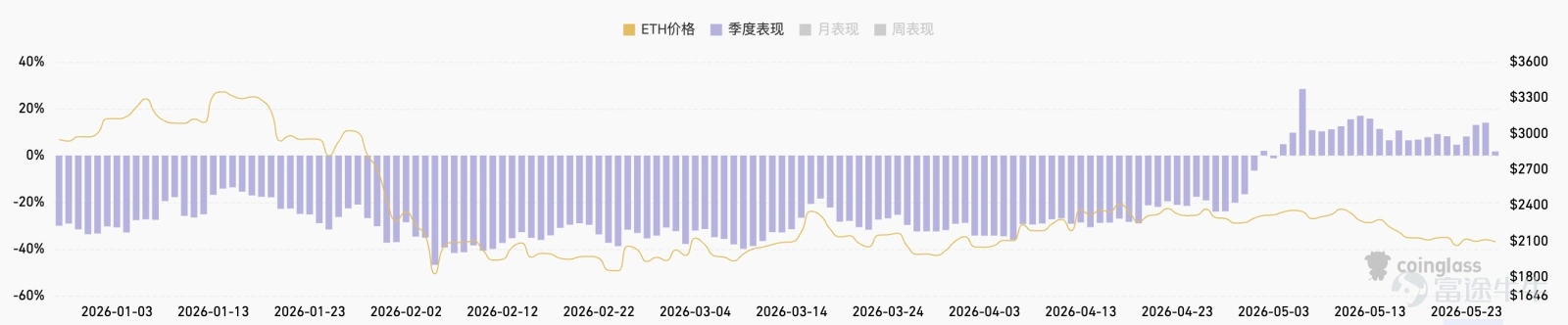
Crypto journalist Laura Shin pointed out that since the Cancun upgrade, Ethereum's series of roadmap decisions have consistently lacked sufficient consideration of tokenomics, overly emphasizing ideology while neglecting capital markets and price performance—leading to discontent among the community and investors. Involving external organizations may help expand business operations, but it does not fundamentally address Ethereum’s underlying market issues.
More importantly, the competition has only just begun. Laura Shin believes we are now at a critical stage for real-world adoption. However, while competitors are aggressively capturing market share and attracting developers and capital, the Ethereum Foundation increasingly appears to be relying on past successes. Especially as the ecosystem continues to lose its most competitive talent, this hands-off attitude could ultimately bolster rivals—or even give rise to new challengers.
Vitalik also addressed market concerns in a lengthy post. He emphasized that ETH is Ethereum blockchain’s most valuable product, with the network currently securing approximately $250 billion worth of ETH. Over 90% of his personal net worth is held in ETH, with the remainder consisting primarily of around $40 million in on-chain fiat-denominated assets, all of which he has already invested in open-source biotech, software, and hardware projects.
But Vitalik also stated,although the Foundation plans to reduce ETH sales going forward, maintaining ETH’s price is not within the Ethereum Foundation’s (EF) mandate.In his view, the Ethereum ecosystem already includes numerous individuals and institutions with far greater financial resources than EF. To genuinely drive ETH’s asset value higher, more ecosystem 'heroes' must step up. EF is actively planning to connect with such entities and provide them with essential early-stage support.
Blockchain researcher William Mougayar expressed a similar perspective. He argued that ETH is fundamentally an asset, Ethereum is shared computational infrastructure, and the Ethereum Foundation is merely a nonprofit organization tasked with advancing protocol development. One of its long-term goals, he noted, is even to 'make the founders themselves gradually less relevant.'
As EF deliberately steps back from the spotlight, ETH is entering a new phase that relies more heavily on organic ecosystem momentum.。
Amid community anxiety over ETH’s price, Ethereum’s mainstream adoption is accelerating. Two Ethereum-focused DAT companies, BitMine and Sharplink, are expected to be included in the U.S. Russell indexes on June 29 this year. Specifically, BMNR will join the Russell 1000 Index and Russell 3000 Index, while SBET will be added to the Russell 2000 Index and Russell 3000 Index.
According to BitMine Chairman Tom Lee, based on BitMine’s current market capitalization of $10.75 billion, successful inclusion would bring in at least $2.15 billion in passive buying pressure.
Blue Fox Notes further pointed out that global assets tracking the Russell 2000 and Russell 3000 indices amount to trillions of dollars. Once officially included, index funds tracking these benchmarks will be required to allocate capital to the corresponding stocks, effectively opening the floodgates of passive investment for SBET and BMNR. This would allow a large number of ordinary investors—who previously had no exposure to the crypto market—to automatically hold these shares, thereby channeling Ethereum into mainstream traditional finance. Purchases by passive funds generate real demand, often providing short-term price support around the time of inclusion and, over the long term, enhancing stock liquidity and institutional ownership. It should be noted that while this capital is buying shares rather than ETH itself, it could indirectly strengthen demand for ETH.
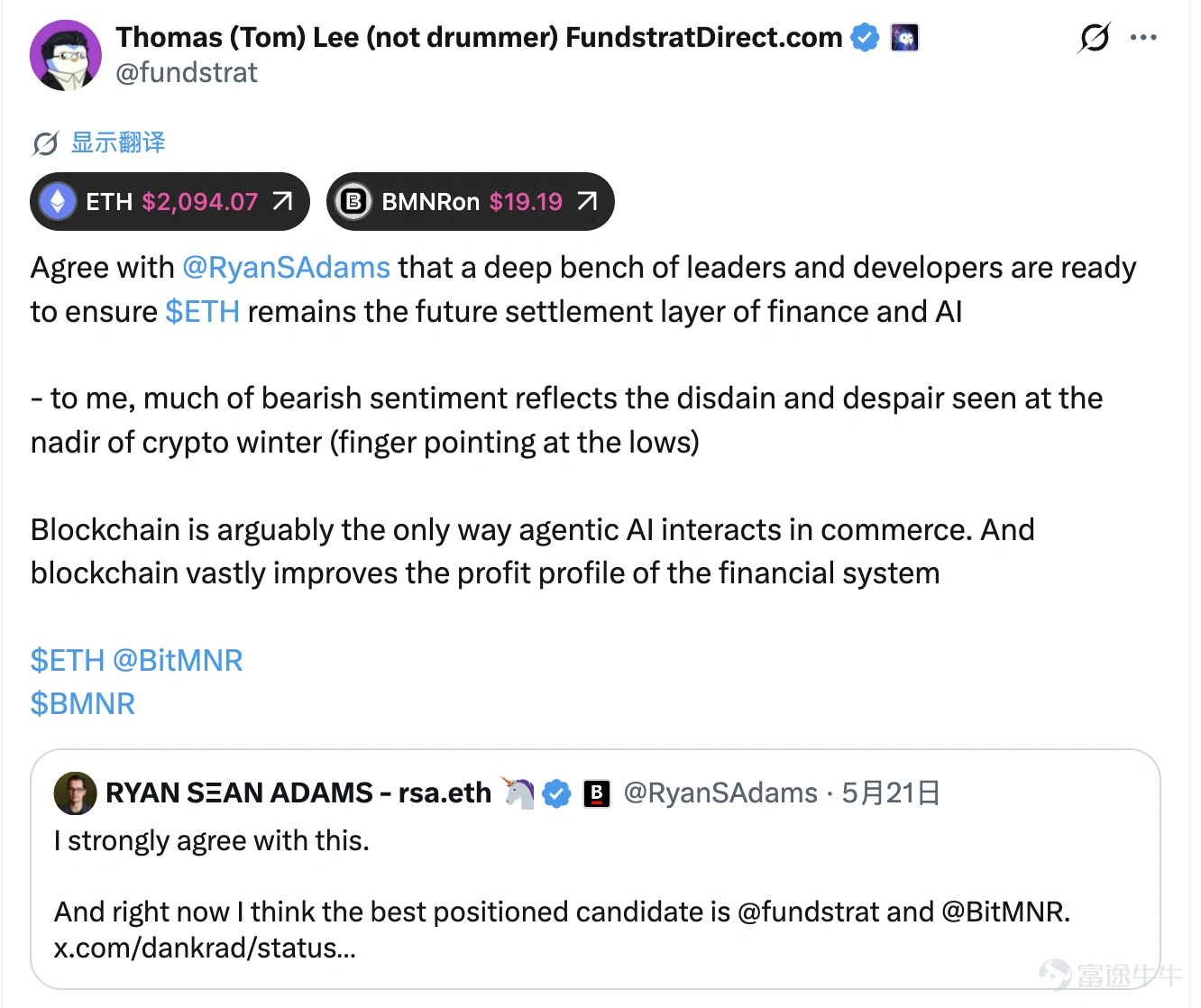
In the post-foundation era, who might emerge as Ethereum’s next community leader? Tom Lee has volunteered himself, with his firm Fundstrat and BitMine widely seen by the community as top contenders. BitMine already holds approximately 5.28 million ETH, representing 4.37% of the total supply, making it the world’s largest ETH treasury.
Beyond outlining the Ethereum Foundation’s new strategic positioning, Vitalik also shared his personal reflections on Ethereum’s future technical roadmap.
In Vitalik’s view, Ethereum must cultivate unique and hard-to-replicate competitive advantages. With AI technology evolving rapidly and the broader tech sector experiencing explosive growth, Ethereum risks losing its appeal if it merely clings to its existing EVM architecture and relies solely on periodic hard forks to meet short-term user demands.
He argues that simply chasing high-speed scalability—while maintaining only a marginal edge in decentralization over other public blockchains—will ultimately relegate Ethereum to mediocrity. Ethereum needs scalability, but even more critically, it must prioritize CROPS: Censorship Resistance, Robustness against predation, Openness, Privacy, and Security.
In fact, over the past few years, market attention on public blockchain competition has almost entirely focused on performance, cost, and user growth. Whether Solana, Sui, or various modular narratives, the core of their competition has fundamentally revolved around being 'faster, cheaper, and easier to use.'
However, Vitalik clearly does not want Ethereum to remain trapped in this performance race. In practice, Ethereum faces significant challenges in decisively outperforming next-generation high-performance blockchains on pure performance metrics—and if it continually sacrifices its core characteristics in pursuit of performance, it risks eroding its foundational value proposition.
Vitalik particularly emphasized that for foundational infrastructure-level blockchains like Ethereum and Bitcoin, even if 34% of nodes go offline, they must never rely on social consensus or hard forks as a 'rescue mechanism.' While such approaches might be acceptable for chains like Hyperledger, BNB, or Solana, they are fundamentally unacceptable for Ethereum, Bitcoin, or Zcash.
Meanwhile, state scalability remains a key research focus for Ethereum. Well-designed Layer 2 (L2) networks can continue delivering substantial value to the ecosystem—particularly specialized L2s tailored for vertical use cases like transactions and privacy. Additionally, with advancements in erasure-coded P2P technologies and other optimizations, Ethereum’s future block intervals could be further reduced.
Compared to ecosystem vibrancy, Vitalik now appears more focused on ensuring Ethereum maintains its irreplaceability—a technological direction imbued with Vitalik’s values.
In Vitalik’s view, if a company appears overly dogmatic in upholding its principles, the worst outcome would merely be slower growth for itself, while technological progress would still be driven forward by other companies. The best possible outcome, however, is that a company truly aligned with community values can organically gain support, talent, and marketing resources from the community—support that cannot be easily bought with money alone. He believes some AI companies previously attempted to achieve similar results through effective altruism, but because consequentialism is prone to corruption, those efforts ultimately yielded limited success.
In the post-foundation era, although the Ethereum Foundation (EF) has gradually stepped back from Ethereum’s central stage under the banner of neutrality and long-termism, whether it can genuinely quell negative market sentiment remains uncertain. A more pressing question for the market is how Ethereum, currently in a downtrend, can initiate an upward trajectory through roadmap reforms.
Risk Disclaimer: The above content only represents the author's view. It does not represent any position or investment advice of Futu. Futu makes no representation or warranty.Read more
Comment (1)
to post a comment