
The Fed's Richest Chair in 112 Years Has Arrived: Kevin Warsh Is Rewriting the Rules

On May 22 local time, Kevin Warsh assumed office as Chair of the Federal Reserve.
Warsh, a Wall Street investment banker who played a direct role in managing the 2008 financial crisis and lacks the traditional academic background of central bank officials, has proposed an unconventional policy mix of 'balance sheet reduction plus interest rate cuts,' aiming to reshape the Federal Reserve's monetary policy framework.
His push to reform the Fed’s decision-making mechanisms and tighten the messaging discipline around policy announcements offers a novel way out for a Fed caught in the dilemma of 'fiscal expansion paired with constrained monetary balance sheet contraction,' while simultaneously introducing significant uncertainty for global capital markets, the credibility of the U.S. dollar, and the structure of global asset allocation.
This seemingly routine personnel change is far from an ordinary handover of power; it marks a pivotal turning point that will redefine the Fed’s decision-making logic, disrupt price trends in core assets such as U.S. Treasuries, the dollar, and commodities, and ultimately rewrite the global monetary and financial order. Enjoy the following analysis:
Source丨Ricequant Investment
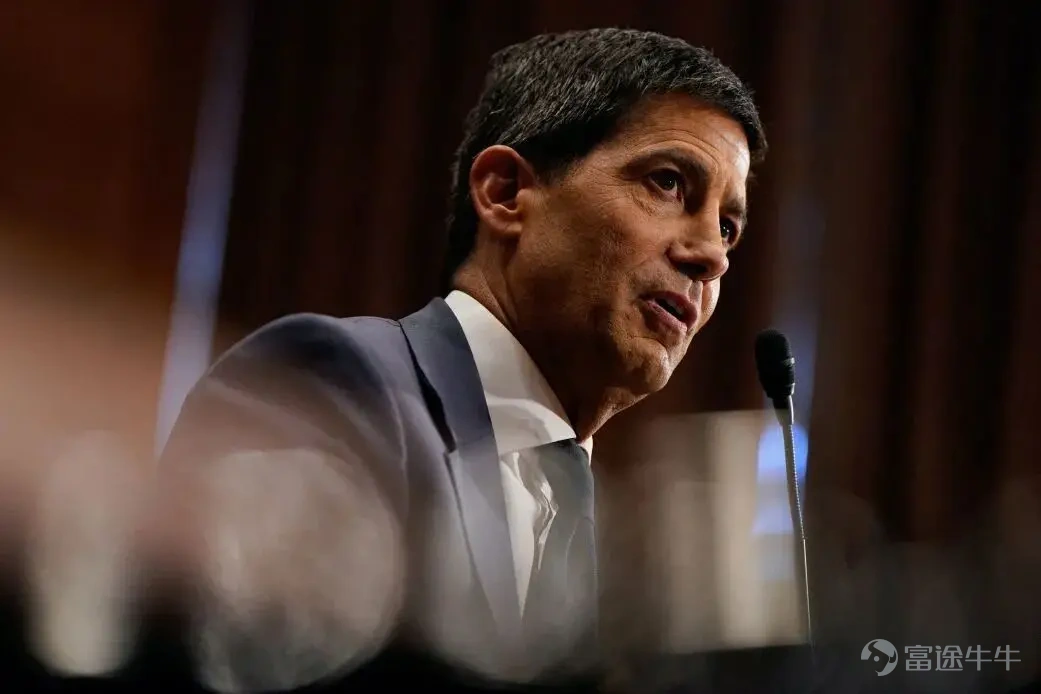
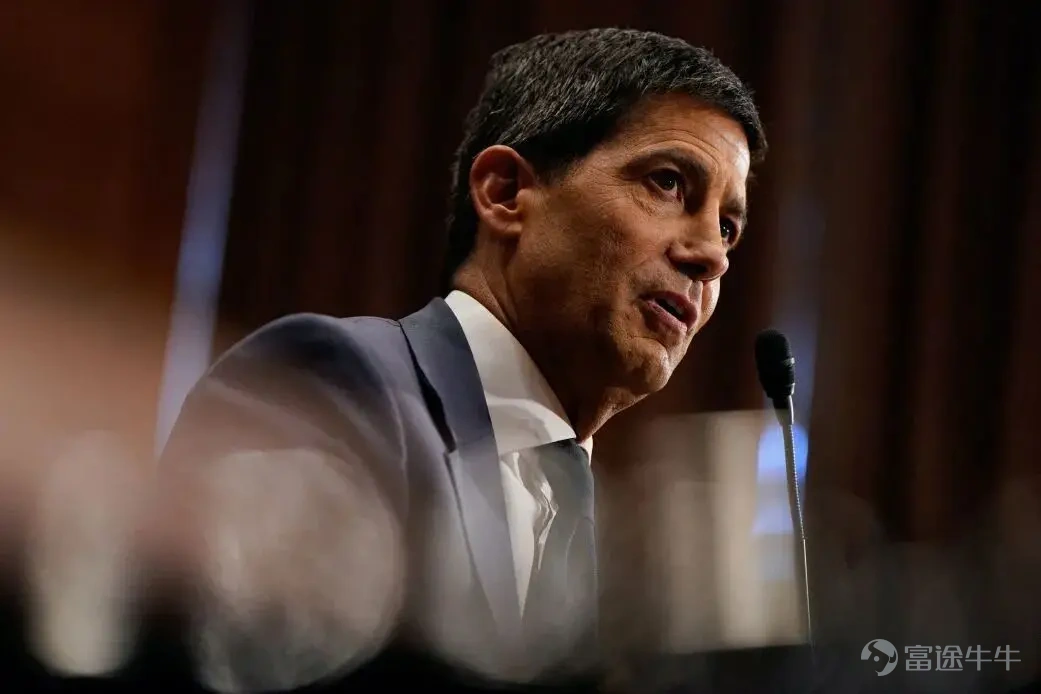
On April 21, 2026, the hearing room of the U.S. Senate Banking Committee was packed to capacity.
The man seated at the witness table had filed personal asset disclosures exceeding $130 million, and his wife is an heir to the Estee Lauder family fortune, bringing their combined net worth to approximately $27 billion. He is the wealthiest nominee ever for chair of the Federal Reserve in its 112-year history.
His name isKevin Warsh( Kevin Warsh )。
(Elizabeth Frantz/Reuters)
On Friday, May 22, Trump hosted a swearing-in ceremony at the White House, officially handing over the reins of the Federal Reserve to Warsh. Warsh became the person in charge of the world’s most powerful financial institution.
Many people assume the Fed chair makes interest rate decisions alone, but that’s not how it works.
Interest rate decisions by the Federal Reserve are voted on by the Federal Open Market Committee ( FOMC ), with 12 voting members each casting one vote, and decisions requiring a majority. The chair’s power lies in setting the agenda and guiding public opinion.
In other words, he decides what to discuss and how to discuss it, but the final decision still depends on the vote count.
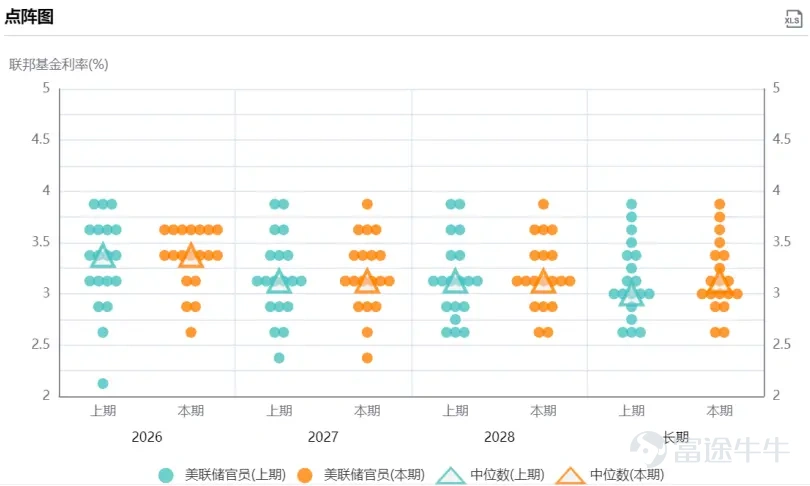
Following meetings in March, June, September, and December each year, FOMC the Federal Reserve releases two key tools:
One isDot plot( the Dot Plot ). Each committee member anonymously indicates their own expectation for future interest rates, which are then aggregated into a single chart. The market reads this for signals of dovish or hawkish sentiment.
Source: Federal Reserve Dot Plot
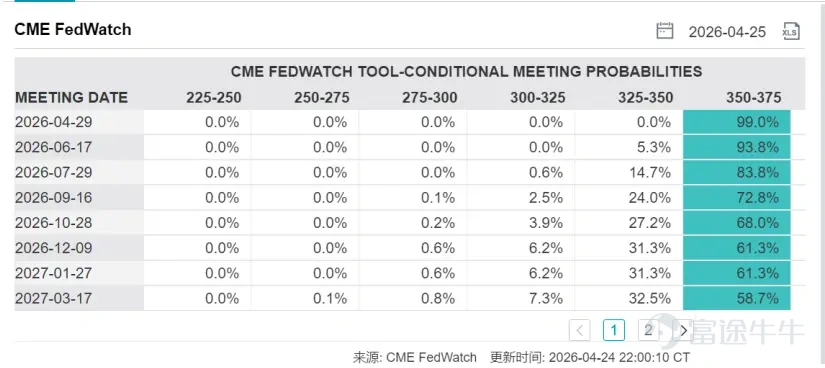
The other is called the Summary of Economic Projections( SEP ), which includes forecasts for GDP GDP growth, unemployment, and inflation. Market traders typically combine this with data from CME Group's FedWatch tool converts this information into probabilities of rate cuts or hikes—a chart that is very common (as shown below).
Understanding this mechanism is crucial because the first thing Walsh intends to change upon taking office is the mechanism itself.
Let’s first review Walsh’s background. While reading it, I had a distinct impression: this doesn’t look like a government official’s résumé—it reads more like a Who’s Who of Wall Street.
Walsh was born in 1970 in Albany, New York. He earned a bachelor’s degree in public policy from Stanford University and a Juris Doctor from Harvard Law School. After graduation, he joined Morgan Stanley, working in mergers and acquisitions, and later became vice president and executive director. In 2002, he was appointed by President George W. Bush to serve as executive secretary of the National Economic Council at the White House.
In 2006, at age 35, Walsh was appointed to the Federal Reserve Board of Governors, making him one of the youngest governors in Fed history at the time. During his tenure, he was a core member of Ben Bernanke’s team handling the 2008 financial crisis, responsible for coordinating communications with major Wall Street financial institutions—such as during the acquisition of Bear Stearns and the collapse of Lehman Brothers, AIG and related bailouts, where he served as a key intermediary.
After leaving the Federal Reserve in 2011, Walsh joined legendary investor Stanley Druckenmiller ( Stanley Druckenmiller ) at Duquesne Family Office, with an annual salary exceeding $10 million. He also serves as a board member of UPS and South Korean e-commerce giant Coupang , and is a research fellow at the Hoover Institution at Stanford University.
Financial disclosures from April 2026 show that Warsh’s personal assets range between $131 million and $226 million, including a significant stake in the hedge fund Juggernaut Fund , as well as shares in Polymarket 、 SpaceX and several cryptocurrency companies. His wife, Jane Lauder , is the granddaughter of Estee Lauder’s founder, with Forbes estimating her personal net worth at approximately $1.9 billion. When Powell was confirmed in 2018, he was considered the wealthiest Fed chair in history, with assets ranging from $19 million to $75 million. Warsh’s wealth is several times larger than Powell’s.
Based on his background, I believe he has a deep understanding of how capital markets operate—for example, the transmission mechanisms of liquidity, leverage, and balance sheet expansion.
Frankly speaking, Wallsh is not an academic central banker.
He does not hold a PhD in economics and has not published influential papers in academia. Compared with Bernanke—who was a Princeton economics professor and led the Fed through the subprime crisis—and Yellen, who was previously a professor at the University of California, Berkeley, Wallsh’s academic background is notably thin.
However, he has put forward a policy proposal that markets are watching closely:Balance sheet runoff + rate cuts。
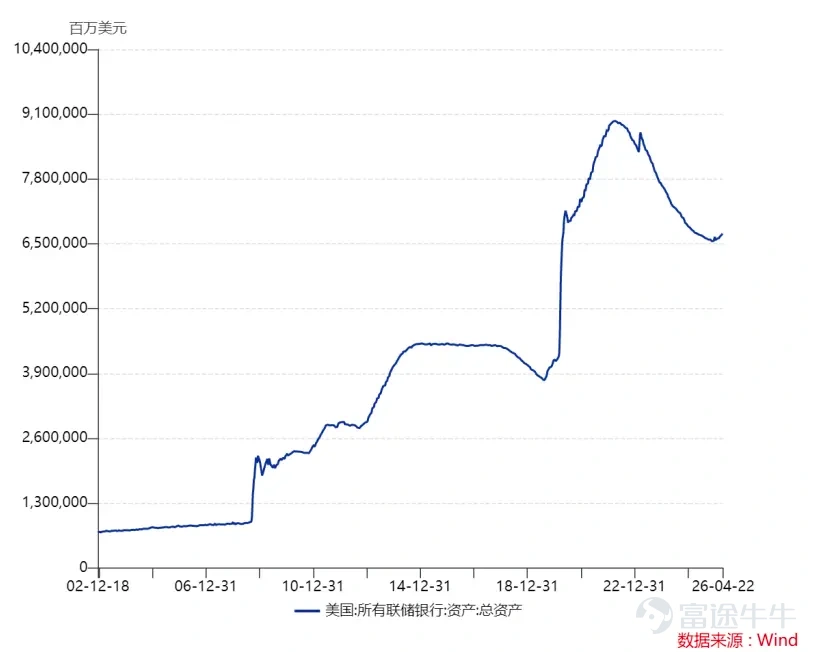
Wallsh’s reasoning goes like this: Since September 2024, the Fed has cumulatively cut rates by 175 basis points, yet long-end Treasury yields have risen rather than fallen. He believes the problem lies in the Fed’s massive $6.7 trillion balance sheet. Balance sheet expansion itself acts as implicit easing. In his own words, 'If the printing press could just quiet down, policy rates could go even lower.' Thus, theoretically, balance sheet runoff is needed to create room for interest rate tools to function effectively.
Rate cuts and balance sheet runoff are two entirely different things.
Rate cuts are a price-based tool, adjusting the federal funds rate; balance sheet runoff is a quantity-based tool, reducing the size of the balance sheet. Rate cuts represent monetary easing, while balance sheet runoff represents tightening—two opposing directions. Wallsh suggests tightening first via quantities and then easing via prices, but this demands extremely precise execution.
There’s an even more critical issue:It is almost impossible for the Fed to resume balance sheet runoff.
Quantitative tightening under Powell officially ended in December 2025. The balance sheet has shrunk by over $2 trillion from its pandemic-era peak of nearly $9 trillion and is now stabilizing around $6.7 trillion. The Federal Reserve is currently in a holding pattern: purchasing enough Treasuries to match the growth in banks’ reserve demand, neither expanding nor shrinking its balance sheet.
Warsh and Federal Reserve Board members Miran and others advocate restarting balance sheet runoff. However, the problem is that fiscal policy is slamming the accelerator in the opposite direction. The deficit is widening, tax cuts under the ‘Big and Beautiful Act’ are set to intensify further, and the Treasury must keep issuing new debt. If the Fed simultaneously restarts quantitative tightening—by not reinvesting proceeds from maturing Treasuries or even selling assets—it would mean two sellers competing for the same pool of buyers, causing long-end rates to spiral out of control. The dismal outcome of the 20-year U.S. Treasury auction in May 2025 was an early warning signal.
The core contradiction today is that fiscal policy is expanding the balance sheet while monetary policy is unable to shrink it.
At historically extreme levels, fiscal expansion is surging while the Fed cannot meaningfully shrink its balance sheet. Thus, Warsh’s real surgical tool lies not in the balance sheet itself, but in the monetary policy framework—he could redesign the inflation targeting framework, reduce reliance on forward guidance, and tighten discipline around Fed officials’ public communications. In short, he cannot change the Fed’s size, but he can reshape how the Fed speaks and how it makes decisions.
An analysis of Warsh’s public speeches, congressional testimonies, and media interviews from 2009 to 2025 reveals a clear profile: during the Obama era, he was a staunch hawk.
Citadel Securities once published a report titled: ' A Framework for Chair Warsh ', which noted that during his tenure, Warsh delivered 13 public speeches specifically highlighting upside inflation risks, whereas during that period, core PCE Inflation rarely exceeded 2.5%, and the unemployment rate once soared to 10%.
In 2010, he FOMC voted in favor of Bernanke's $600 billion QE2 program, but simultaneously published an article in The Wall Street Journal attributing economic weakness to the Obama administration's fiscal and regulatory policies. During Trump’s first term, his stance began to shift.
In 2018, after being passed over by Trump for nomination as Fed Chair, Warsh warned in The Wall Street Journal that Trump’s protectionist trade policies would harm economic growth. By 2024–2025, his position shifted again.
Following the Federal Reserve’s 50-basis-point rate cut in September 2024, Warsh criticized the move as an "impulsive action lacking theoretical grounding." Just 13 months later, in November 2025, he again wrote in The Wall Street Journal urging the Fed to cut rates more aggressively.
Critics have pointed out that Warsh’s monetary policy stance appears to adjust with changes in White House leadership—more flexible under Republican administrations and tougher under Democratic ones. But viewed differently, this is precisely the hallmark of a pragmatic monetarist: unbound by any single theoretical framework and making judgments based on the prevailing political and economic context.
At the April 21 hearing, Warsh laid out this approach explicitly, clearly calling for institutional reform at the Federal Reserve ( regime change). He believes Federal Reserve officials talk too much. In his view, "Seeking the truth is more important than repeating talking points."
The central clash during the hearing revolved around one question:Can you withstand Trump’s pressure to cut rates?
Wassh’s response was carefully crafted. In his opening statement, he wrote: "Monetary policy independence is of critical importance." When Senator Kennedy asked him whether he would be Trump’s "puppet," he replied: "Absolutely not. The president has never asked me to preset, promise, fix, or decide any interest rate decision." But he also included a crucial line: "When elected officials—whether the president, senators, or representatives—express their views on interest rates, I don’t believe that particularly threatens the operational independence of monetary policy."
The subtext of this statement may be that, in Wassh’s view, Trump publicly calling for rate cuts does not constitute a threat to independence—it’s merely expressing an opinion. By comparison, when Powell faced similar pressure from Trump in 2019, he chose to ignore the president’s tweets outright and emphasized at a press conference, "We will not be influenced by short-term political considerations."
Wassh’s phrasing is softer, giving the White House more room in public discourse.
Moreover, Wassh has consistently argued that the Federal Reserve should "stay in its lane" (stay in its lane), narrowing its mandate and avoiding involvement in discussions on social or fiscal policy. This aligns with Trump’s desire to curtail the Fed’s administrative authority.
Returning to practical issues: the real-world constraints facing Waller after taking office include fiscal expansion hindering balance sheet runoff, rate cuts constrained by inflation not yet meeting targets, and framework reforms requiring FOMC broad support... On these points, I have the following thoughts:
First, U.S. Treasury market volatility is likely to remain elevated. Fiscal balance sheet expansion combined with monetary balance sheet runoff being blocked means U.S. Treasury supply pressure will persist. Waller wants to shrink the balance sheet but can’t act, while the Treasury continues issuing debt aggressively. The market needs more private buyers to absorb this supply. Long-end rates are prone to rise rather than fall, and U.S. Treasury volatility indicators may stay elevated. For investors holding Treasuries, short-duration instruments offer greater certainty than long-duration ones—don’t bet on direction with long bonds.
Second, the long-term credibility anchor of the U.S. dollar is weakening. This is a structural trend. Huatai Securities’ strategy team recently unpacked 'de-dollarization' in an in-depth report into three layers: divestment from dollar-denominated assets (private capital selling), reduction of dollar reserves (central bank sales), and shift away from dollar-based settlement (trade payments moving to alternatives). These three dynamics reinforce each other but progress at different paces: asset divestment is episodic and sentiment-driven, whereas reserve and settlement shifts unfold gradually over years or even decades.
As of end-2025, the U.S. dollar’s share of global foreign exchange reserves had fallen to 56.77%, the lowest level since 1994—down from 73% in 2001.
Third, cracks are emerging in the petrodollar system. On the data front, in March 2026, renminbi settlement accounted for over 41% of China-bound crude oil trade from the Middle East, making the RMB the second-largest settlement currency in Middle Eastern oil trade for the first time. Iran has settled 100% of its oil exports to China in renminbi since January 2026. Daily transaction volume on China’s Cross-Border Interbank Payment System (CIPS) reached RMB 920.5 billion in March, hitting a 12-month high.
There’s an often-overlooked dimension: if Waller can rebuild the Federal Reserve’s policy credibility through institutional reforms, it could temporarily delay sentiment-driven de-dollarization trades, as market confidence would be partially restored. However, in the long run, unless the current dynamic—fiscal balance sheet expansion coupled with constrained monetary balance sheet contraction—is altered, the downward shift in the dollar’s credit anchor will continue, regardless of who chairs the Federal Reserve.
For retail investors, the core response strategy lies in diversification. In an environment of heightened dollar credit volatility, gold—as a reserve asset free of sovereign credit risk—remains an indispensable component of investment portfolios. Meanwhile, renminbi-denominated assets, particularly Chinese government bonds, are seeing their weight passively increase in global asset reallocations.
The China Securities Regulatory Commission’s recently issued Announcement No. 7 is quite intriguing and merits reflection; it would be worth discussing further. In the author’s view, this marks an important step in the internationalization of the renminbi.
But the market has already begun pricing in the 'Waller era.'
★ Disclaimer: The above represents solely the author’s personal views and is provided for reference, learning, and discussion purposes only.
Original article link
Risk Disclaimer: The above content only represents the author's view. It does not represent any position or investment advice of Futu. Futu makes no representation or warranty.Read more

Comments
to post a comment
2
1