
What to Watch in US Stocks | NVIDIA's Annual Shareholder Meeting Is Here—Why Even Beginners Should T

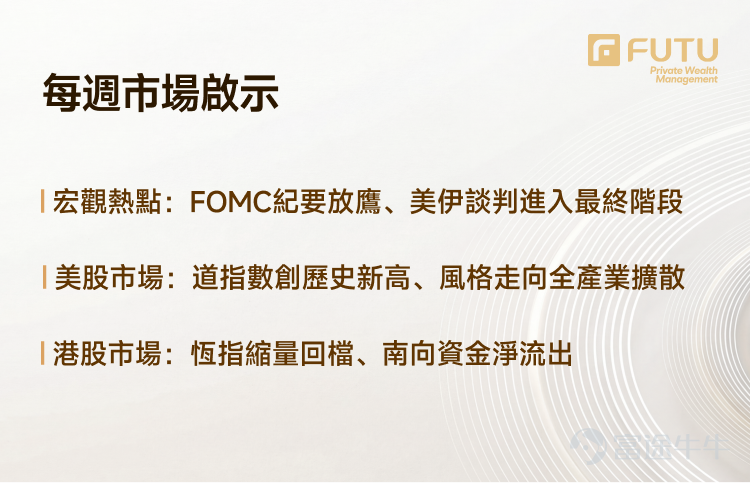
[Weekly Market Insights] Hawkish minutes weigh on U.S. Treasuries as Middle East negotiations near a breakthrough
Guide to this week's strategies for the US and Hong Kong markets:
With hawkish Fed minutes and Middle East uncertainties converging, how will U.S. equities perform amid elevated volatility in Treasury yields?
Early signs of recovery in China's property sector emerge, yet retail sales remain sluggish—where lie the rebound opportunities in Hong Kong stocks?
![Guide to this week's strategies for the US and Hong Kong markets: With hawkish Fed minutes and Middle East uncertainties converging, how will U.S. equities perform amid elevated volatility in Treasury yields? Early signs of recovery in China's property sector emerge, yet retail sales remain sluggish—where lie the rebound opportunities in Hong Kong stocks? [I. Macroeconomic Observations] 1.1 International Macroeconomic: FOMC Minutes Turn Hawkish; U.S.-Iran Negotiations Enter Final Stage The April FOMC meeting minutes released on May 20 sent a markedly hawkish signal: the Fed not only affirmed a consensus to 'keep policy rates at current levels for longer,' but internal concerns over resurgent inflation have intensified sharply. Key expectation gap:Most officials explicitly stated they would support restarting rate hikes if inflation remains persistently above 2%.As a result, the 2-year U.S. Treasury yield broke above the 4% mark, with markets rapidly unwinding expectations for rate cuts this year and even beginning to price in some probability of further hikes. A critical geopolitical turning point has emerged—Trump said negotiations with Iran have entered the "final stage", with WTI crude oil plunging 5.5% on the day. If the Strait of Hormuz resumes normal shipping, oil prices could decline further, though they remain in the $95–$100 range. Crude oil has risen roughly 40% since the start of the year, while refined product prices in Asia have surged by 60%–120%. Strong support underpins current oil prices, and any supply recovery will be a gradual process. On May 14, 2026, the Senate Banking Committee formally passed the CLARITY Act by a vote of 15 to 9, marking a critical breakthrough as the bill cleared what had been the most decisive hurdle in the Senate for crypto-related legislation. Earlier, the biggest obstacle to advancing the bill was...](https://nnqimage.futunn.com/sns_client_feed/988889/20260524/web-1779626350841-DICtmuF9Xo.png/big?area=1&is_public=true&imageMogr2/ignore-error/1/format/webp)
[I. Macroeconomic Observations]
1.1 International Macroeconomic:
FOMC Minutes Turn Hawkish; U.S.-Iran Negotiations Enter Final Stage
The April FOMC meeting minutes released on May 20 sent a markedly hawkish signal: the Fed not only affirmed a consensus to 'keep policy rates at current levels for longer,' but internal concerns over resurgent inflation have intensified sharply. Key expectation gap:Most officials explicitly stated they would support restarting rate hikes if inflation remains persistently above 2%.As a result, the 2-year U.S. Treasury yield broke above the 4% mark, with markets rapidly unwinding expectations for rate cuts this year and even beginning to price in some probability of further hikes.
![Guide to this week's strategies for the US and Hong Kong markets: With hawkish Fed minutes and Middle East uncertainties converging, how will U.S. equities perform amid elevated volatility in Treasury yields? Early signs of recovery in China's property sector emerge, yet retail sales remain sluggish—where lie the rebound opportunities in Hong Kong stocks? [I. Macroeconomic Observations] 1.1 International Macroeconomic: FOMC Minutes Turn Hawkish; U.S.-Iran Negotiations Enter Final Stage The April FOMC meeting minutes released on May 20 sent a markedly hawkish signal: the Fed not only affirmed a consensus to 'keep policy rates at current levels for longer,' but internal concerns over resurgent inflation have intensified sharply. Key expectation gap:Most officials explicitly stated they would support restarting rate hikes if inflation remains persistently above 2%.As a result, the 2-year U.S. Treasury yield broke above the 4% mark, with markets rapidly unwinding expectations for rate cuts this year and even beginning to price in some probability of further hikes. A critical geopolitical turning point has emerged—Trump said negotiations with Iran have entered the "final stage", with WTI crude oil plunging 5.5% on the day. If the Strait of Hormuz resumes normal shipping, oil prices could decline further, though they remain in the $95–$100 range. Crude oil has risen roughly 40% since the start of the year, while refined product prices in Asia have surged by 60%–120%. Strong support underpins current oil prices, and any supply recovery will be a gradual process. On May 14, 2026, the Senate Banking Committee formally passed the CLARITY Act by a vote of 15 to 9, marking a critical breakthrough as the bill cleared what had been the most decisive hurdle in the Senate for crypto-related legislation. Earlier, the biggest obstacle to advancing the bill was...](https://nnqimage.futunn.com/sns_client_feed/988889/20260524/web-1779624853076-NBz9IoOEjq.png/big?area=1&is_public=true&imageMogr2/ignore-error/1/format/webp)
A critical geopolitical turning point has emerged—Trump said negotiations with Iran have entered the "final stage", with WTI crude oil plunging 5.5% on the day. If the Strait of Hormuz resumes normal shipping, oil prices could decline further, though they remain in the $95–$100 range. Crude oil has risen roughly 40% since the start of the year, while refined product prices in Asia have surged by 60%–120%. Strong support underpins current oil prices, and any supply recovery will be a gradual process.
![Guide to this week's strategies for the US and Hong Kong markets: With hawkish Fed minutes and Middle East uncertainties converging, how will U.S. equities perform amid elevated volatility in Treasury yields? Early signs of recovery in China's property sector emerge, yet retail sales remain sluggish—where lie the rebound opportunities in Hong Kong stocks? [I. Macroeconomic Observations] 1.1 International Macroeconomic: FOMC Minutes Turn Hawkish; U.S.-Iran Negotiations Enter Final Stage The April FOMC meeting minutes released on May 20 sent a markedly hawkish signal: the Fed not only affirmed a consensus to 'keep policy rates at current levels for longer,' but internal concerns over resurgent inflation have intensified sharply. Key expectation gap:Most officials explicitly stated they would support restarting rate hikes if inflation remains persistently above 2%.As a result, the 2-year U.S. Treasury yield broke above the 4% mark, with markets rapidly unwinding expectations for rate cuts this year and even beginning to price in some probability of further hikes. A critical geopolitical turning point has emerged—Trump said negotiations with Iran have entered the "final stage", with WTI crude oil plunging 5.5% on the day. If the Strait of Hormuz resumes normal shipping, oil prices could decline further, though they remain in the $95–$100 range. Crude oil has risen roughly 40% since the start of the year, while refined product prices in Asia have surged by 60%–120%. Strong support underpins current oil prices, and any supply recovery will be a gradual process. On May 14, 2026, the Senate Banking Committee formally passed the CLARITY Act by a vote of 15 to 9, marking a critical breakthrough as the bill cleared what had been the most decisive hurdle in the Senate for crypto-related legislation. Earlier, the biggest obstacle to advancing the bill was...](https://nnqimage.futunn.com/sns_client_feed/988889/20260524/web-1779625003368-bYXYDHP8qJ.png/big?area=1&is_public=true&imageMogr2/ignore-error/1/format/webp)
On May 14, 2026, the Senate Banking Committee formally passed the CLARITY Act by a vote of 15 to 9, marking a key hurdle cleared in the Senate—the most decisive obstacle for crypto-related legislation. The primary earlier disagreement blocking the bill centered on the 'stablecoin yield provision,' as traditional banks feared crypto platforms offering deposit-like interest would divert bank deposits. The latest compromise text explicitly states:Prohibits 'passive stablecoin yields' that are economically or functionally equivalent to bank deposit interest, but permits 'active rewards' tied to genuine transactions, payments, or platform usage.。
1.2 Domestic Macroeconomics:
Home prices in Tier-1 and Tier-2 cities turned positive month-over-month, yet social retail sales growth hit a new low.
In April, the average transaction price of commercial housing reached RMB 10,009 per square meter, up 12.83% month-over-month and turning positive year-over-year at +2.12%. Secondhand home prices in Tier-1 cities rose 0.4% month-over-month, led by Shanghai’s 0.7% increase—the highest nationwide. However, supply-side pressures persist: real estate development investment in April alone declined by 20.1% year-over-year, and newly started construction area hit its lowest level for the same period since 2003.
![Guide to this week's strategies for the US and Hong Kong markets: With hawkish Fed minutes and Middle East uncertainties converging, how will U.S. equities perform amid elevated volatility in Treasury yields? Early signs of recovery in China's property sector emerge, yet retail sales remain sluggish—where lie the rebound opportunities in Hong Kong stocks? [I. Macroeconomic Observations] 1.1 International Macroeconomic: FOMC Minutes Turn Hawkish; U.S.-Iran Negotiations Enter Final Stage The April FOMC meeting minutes released on May 20 sent a markedly hawkish signal: the Fed not only affirmed a consensus to 'keep policy rates at current levels for longer,' but internal concerns over resurgent inflation have intensified sharply. Key expectation gap:Most officials explicitly stated they would support restarting rate hikes if inflation remains persistently above 2%.As a result, the 2-year U.S. Treasury yield broke above the 4% mark, with markets rapidly unwinding expectations for rate cuts this year and even beginning to price in some probability of further hikes. A critical geopolitical turning point has emerged—Trump said negotiations with Iran have entered the "final stage", with WTI crude oil plunging 5.5% on the day. If the Strait of Hormuz resumes normal shipping, oil prices could decline further, though they remain in the $95–$100 range. Crude oil has risen roughly 40% since the start of the year, while refined product prices in Asia have surged by 60%–120%. Strong support underpins current oil prices, and any supply recovery will be a gradual process. On May 14, 2026, the Senate Banking Committee formally passed the CLARITY Act by a vote of 15 to 9, marking a critical breakthrough as the bill cleared what had been the most decisive hurdle in the Senate for crypto-related legislation. Earlier, the biggest obstacle to advancing the bill was...](https://nnqimage.futunn.com/sns_client_feed/988889/20260524/web-1779625182325-IN4IxB7eCM.png/big?area=1&is_public=true&imageMogr2/ignore-error/1/format/webp)
Consumer demand also remains weak: April’s social retail sales grew just 0.2% year-over-year, marking a multi-year low. Major drags came from automobiles (−15.3%), household appliances (−15.1%), and gold/jewelry (−21.3%), impacted by the withdrawal of subsidies and front-loaded demand. Essential consumption and service-related spending showed resilience, but overall consumer momentum remains in a slow recovery phase.
![Guide to this week's strategies for the US and Hong Kong markets: With hawkish Fed minutes and Middle East uncertainties converging, how will U.S. equities perform amid elevated volatility in Treasury yields? Early signs of recovery in China's property sector emerge, yet retail sales remain sluggish—where lie the rebound opportunities in Hong Kong stocks? [I. Macroeconomic Observations] 1.1 International Macroeconomic: FOMC Minutes Turn Hawkish; U.S.-Iran Negotiations Enter Final Stage The April FOMC meeting minutes released on May 20 sent a markedly hawkish signal: the Fed not only affirmed a consensus to 'keep policy rates at current levels for longer,' but internal concerns over resurgent inflation have intensified sharply. Key expectation gap:Most officials explicitly stated they would support restarting rate hikes if inflation remains persistently above 2%.As a result, the 2-year U.S. Treasury yield broke above the 4% mark, with markets rapidly unwinding expectations for rate cuts this year and even beginning to price in some probability of further hikes. A critical geopolitical turning point has emerged—Trump said negotiations with Iran have entered the "final stage", with WTI crude oil plunging 5.5% on the day. If the Strait of Hormuz resumes normal shipping, oil prices could decline further, though they remain in the $95–$100 range. Crude oil has risen roughly 40% since the start of the year, while refined product prices in Asia have surged by 60%–120%. Strong support underpins current oil prices, and any supply recovery will be a gradual process. On May 14, 2026, the Senate Banking Committee formally passed the CLARITY Act by a vote of 15 to 9, marking a critical breakthrough as the bill cleared what had been the most decisive hurdle in the Senate for crypto-related legislation. Earlier, the biggest obstacle to advancing the bill was...](https://nnqimage.futunn.com/sns_client_feed/988889/20260524/web-1779625194581-Y5MRrZN0az.png/big?area=1&is_public=true&imageMogr2/ignore-error/1/format/webp)
[Section Two: Market Views]
2.1 US Stock Market
The Dow Jones Industrial Average hit a record high, with market leadership broadening beyond AI into a more comprehensive rally.
$S&P 500 Index (.SPX.US)$ It gained 0.88% for the week, $NASDAQ 100 Index (.NDX.US)$ up 0.45%, $Dow Jones Industrial Average (.DJI.US)$ Up 2.13%, leading the pack. Market leadership is broadening from concentrated AI mega-caps to traditional blue chips, semiconductors, and defensive sectors.Capital is no longer solely betting on core AI assets but seeking profitable assets resilient to high interest rates across a broader range.。
In the near term, U.S. equities will maintain a mildly bullish, range-bound pattern characterized by strong index performance, high internal volatility, and rapid style rotation. Easing U.S.-Iran tensions have lowered risk premiums, but inflation and rate constraints remain.Tactically, stay bullish in the short term but avoid chasing highs; prioritize structural diversification and hedging.The S&P 500 trades at a forward 12-month P/E of 21.3x. Earnings—not pure valuation—remain the core foundation supporting U.S. equities, with 1Q26 real GDP annualized growth at 2.0% and global manufacturing PMI rebounding to 52.6.
![Guide to this week's strategies for the US and Hong Kong markets: With hawkish Fed minutes and Middle East uncertainties converging, how will U.S. equities perform amid elevated volatility in Treasury yields? Early signs of recovery in China's property sector emerge, yet retail sales remain sluggish—where lie the rebound opportunities in Hong Kong stocks? [I. Macroeconomic Observations] 1.1 International Macroeconomic: FOMC Minutes Turn Hawkish; U.S.-Iran Negotiations Enter Final Stage The April FOMC meeting minutes released on May 20 sent a markedly hawkish signal: the Fed not only affirmed a consensus to 'keep policy rates at current levels for longer,' but internal concerns over resurgent inflation have intensified sharply. Key expectation gap:Most officials explicitly stated they would support restarting rate hikes if inflation remains persistently above 2%.As a result, the 2-year U.S. Treasury yield broke above the 4% mark, with markets rapidly unwinding expectations for rate cuts this year and even beginning to price in some probability of further hikes. A critical geopolitical turning point has emerged—Trump said negotiations with Iran have entered the "final stage", with WTI crude oil plunging 5.5% on the day. If the Strait of Hormuz resumes normal shipping, oil prices could decline further, though they remain in the $95–$100 range. Crude oil has risen roughly 40% since the start of the year, while refined product prices in Asia have surged by 60%–120%. Strong support underpins current oil prices, and any supply recovery will be a gradual process. On May 14, 2026, the Senate Banking Committee formally passed the CLARITY Act by a vote of 15 to 9, marking a critical breakthrough as the bill cleared what had been the most decisive hurdle in the Senate for crypto-related legislation. Earlier, the biggest obstacle to advancing the bill was...](https://nnqimage.futunn.com/sns_client_feed/988889/20260524/web-1779625364533-fPkOxLAH3v.png/big?area=1&is_public=true&imageMogr2/ignore-error/1/format/webp)
Stock Spotlight – $Vertiv Holdings (VRT.US)$ : Core infrastructure asset for power and thermal management in AI data centers
AI data centers significantly increase the complexity of power and thermal management, driving up value per MW, system integration value, and service revenue across the board. Approximately 80%–85% of VRT’s revenue directly benefits from the data center theme.The company has sharply raised its five-year organic growth target from 12%–14% to 20%–22%, substantially outpacing the industry-weighted growth rate of 16%–18%, reflecting strong alpha-generating capability.。
Opportunity value per MW has been revised upward to $3.25–3.75 million, driven by AI high-density architectures, liquid cooling, 800V DC systems, and integrated infrastructure—all elevating content value. The 2026 EBIT margin guidance has been raised to 22.8%–23.8%, with institutional estimates projecting over 24% in 2027E and approximately 25%+ in 2028E, leaving room for further upside in both margins and valuation.
![Guide to this week's strategies for the US and Hong Kong markets: With hawkish Fed minutes and Middle East uncertainties converging, how will U.S. equities perform amid elevated volatility in Treasury yields? Early signs of recovery in China's property sector emerge, yet retail sales remain sluggish—where lie the rebound opportunities in Hong Kong stocks? [I. Macroeconomic Observations] 1.1 International Macroeconomic: FOMC Minutes Turn Hawkish; U.S.-Iran Negotiations Enter Final Stage The April FOMC meeting minutes released on May 20 sent a markedly hawkish signal: the Fed not only affirmed a consensus to 'keep policy rates at current levels for longer,' but internal concerns over resurgent inflation have intensified sharply. Key expectation gap:Most officials explicitly stated they would support restarting rate hikes if inflation remains persistently above 2%.As a result, the 2-year U.S. Treasury yield broke above the 4% mark, with markets rapidly unwinding expectations for rate cuts this year and even beginning to price in some probability of further hikes. A critical geopolitical turning point has emerged—Trump said negotiations with Iran have entered the "final stage", with WTI crude oil plunging 5.5% on the day. If the Strait of Hormuz resumes normal shipping, oil prices could decline further, though they remain in the $95–$100 range. Crude oil has risen roughly 40% since the start of the year, while refined product prices in Asia have surged by 60%–120%. Strong support underpins current oil prices, and any supply recovery will be a gradual process. On May 14, 2026, the Senate Banking Committee formally passed the CLARITY Act by a vote of 15 to 9, marking a critical breakthrough as the bill cleared what had been the most decisive hurdle in the Senate for crypto-related legislation. Earlier, the biggest obstacle to advancing the bill was...](https://nnqimage.futunn.com/sns_client_feed/988889/20260524/web-1779625464351-YDcTvTEplQ.png/big?area=1&is_public=true&imageMogr2/ignore-error/1/format/webp)
2.2 Hong Kong Stock Market
Hang Seng Index pulled back on lower volume, with net outflows from Southbound capital
The Hang Seng Index fell 1.37% for the week, with average daily turnover of HK$281.5 billion, down approximately HK$10.8 billion from the previous week. Stock Connect recorded cumulative net outflows of HK$13.5 billion. The 10-year U.S. Treasury yield broke above 4.5%, and the 30-year yield surpassed 5%, keeping the dollar strong and exerting downward pressure on valuations in Hong Kong’s growth sectors.
In the near term, Hong Kong equities have entered a neutral consolidation phase—broad indices remain weak but selective structural recovery is emerging. Easing tensions between the U.S. and Iran represent the first key variable for global asset direction, while a potential meeting between Chinese and U.S. leaders serves as the second pivotal factor shaping risk appetite in the Hong Kong market.Maintain a neutral-to-cautious stance; buying on dips is preferable to chasing rallies. Tech sector rebounds await confirmation from external interest rate trends and detailed earnings reports.The Hang Seng Index trades at a forward 12-month P/E of 11.5x, placing its valuation within a reasonable range.
![Guide to this week's strategies for the US and Hong Kong markets: With hawkish Fed minutes and Middle East uncertainties converging, how will U.S. equities perform amid elevated volatility in Treasury yields? Early signs of recovery in China's property sector emerge, yet retail sales remain sluggish—where lie the rebound opportunities in Hong Kong stocks? [I. Macroeconomic Observations] 1.1 International Macroeconomic: FOMC Minutes Turn Hawkish; U.S.-Iran Negotiations Enter Final Stage The April FOMC meeting minutes released on May 20 sent a markedly hawkish signal: the Fed not only affirmed a consensus to 'keep policy rates at current levels for longer,' but internal concerns over resurgent inflation have intensified sharply. Key expectation gap:Most officials explicitly stated they would support restarting rate hikes if inflation remains persistently above 2%.As a result, the 2-year U.S. Treasury yield broke above the 4% mark, with markets rapidly unwinding expectations for rate cuts this year and even beginning to price in some probability of further hikes. A critical geopolitical turning point has emerged—Trump said negotiations with Iran have entered the "final stage", with WTI crude oil plunging 5.5% on the day. If the Strait of Hormuz resumes normal shipping, oil prices could decline further, though they remain in the $95–$100 range. Crude oil has risen roughly 40% since the start of the year, while refined product prices in Asia have surged by 60%–120%. Strong support underpins current oil prices, and any supply recovery will be a gradual process. On May 14, 2026, the Senate Banking Committee formally passed the CLARITY Act by a vote of 15 to 9, marking a critical breakthrough as the bill cleared what had been the most decisive hurdle in the Senate for crypto-related legislation. Earlier, the biggest obstacle to advancing the bill was...](https://nnqimage.futunn.com/sns_client_feed/988889/20260524/web-1779625441016-JfWyRGSwjh.png/big?area=1&is_public=true&imageMogr2/ignore-error/1/format/webp)
Stock Spotlight – $SKB BIO (06990.HK)$ : A leading innovator in pharmaceuticals with continuous global clinical validation of its TROP2 ADC platform
The core driver is the ongoing global clinical validation of its TROP2 ADC (sac-TMT/SKB264). Merck & Co has launched 17 global Phase III trials centered on sac-TMT, spanning multiple indications including lung cancer, breast cancer, and gynecological tumors, with total potential deal value exceeding USD 11.8 billion. Data from first-line (1L) NSCLC trials indicate SKB264’s potential to expand into frontline and previously untapped indications.
2026 will be a pivotal year marked by expanded reimbursement-driven sales volume and a surge of frontline clinical data. Management has explicitly guided for sac-TMT sales in China to double to over RMB 1 billion. Its commercial network already covers 30 provinces, 300+ cities, and 1,200+ hospitals. 2027 is expected to mark the beginning of overseas milestone payments and royalty revenue realization.If subsequent regulatory filings for overseas endometrial cancer (EC), lung cancer, and breast cancer indications materialize, the company will transition onto an international commercialization pathway, potentially driving further upside in market capitalization.。

Key Catalyst Timeline for Kelun-Biotech (6990.HK) Over the Next 12 Months
[III. Focus for This Week]
- 5/28 / US Q1 Real GDP Annualized Growth Rate (Second Estimate): Market expects +2.1%, previous reading +2.0%. A stronger-than-expected figure would further support the Fed's hawkish stance, reinforcing a 'higher for longer' rate path and pressuring valuations of growth stocks.
- 5/28 / US April Core PCE Price Index: Market expects a month-over-month increase of +0.3% (unchanged from prior), with the year-over-year rate potentially rising from 3.2% to 3.3%. Higher-than-expected inflation would accelerate market repricing away from rate cut expectations, further reducing the likelihood of a rate cut this year.
[4. Major bank views]
US Stock Summary:In the near term, US equities will likely maintain a moderately bullish but internally volatile pattern, characterized by rapid style rotation and a generally range-bound yet slightly upward-biased trend. Upside potential remains constrained by Treasury yields and policy expectations. Easing geopolitical tensions have partially offset earlier headwinds from surging oil prices, though inflation and rate constraints persist.Tactically, remain bullish in the short term but avoid chasing rallies; focus on structural diversification.Semiconductor and equipment sectors continue to see rising order volumes and additional procurement, indicating a sustainable industry recovery.
Hong Kong Stock Summary:Hong Kong equities have entered a neutral consolidation phase in the short term—broadly weak at the index level but with selective structural recovery opportunities. The first key variable is easing US-Iran tensions; the second is a potential meeting between Chinese and US heads of state.Maintain a neutral-to-cautious stance; buying on dips is preferable to chasing gains.Asian tech sector valuations over the next 12 months are trading at a two-year discount range, with clear earnings advantages, awaiting valuation repair once external interest rate constraints ease.
[5. Simulated Portfolio]
Weekly performance for May 1st
![Guide to this week's strategies for the US and Hong Kong markets: With hawkish Fed minutes and Middle East uncertainties converging, how will U.S. equities perform amid elevated volatility in Treasury yields? Early signs of recovery in China's property sector emerge, yet retail sales remain sluggish—where lie the rebound opportunities in Hong Kong stocks? [I. Macroeconomic Observations] 1.1 International Macroeconomic: FOMC Minutes Turn Hawkish; U.S.-Iran Negotiations Enter Final Stage The April FOMC meeting minutes released on May 20 sent a markedly hawkish signal: the Fed not only affirmed a consensus to 'keep policy rates at current levels for longer,' but internal concerns over resurgent inflation have intensified sharply. Key expectation gap:Most officials explicitly stated they would support restarting rate hikes if inflation remains persistently above 2%.As a result, the 2-year U.S. Treasury yield broke above the 4% mark, with markets rapidly unwinding expectations for rate cuts this year and even beginning to price in some probability of further hikes. A critical geopolitical turning point has emerged—Trump said negotiations with Iran have entered the "final stage", with WTI crude oil plunging 5.5% on the day. If the Strait of Hormuz resumes normal shipping, oil prices could decline further, though they remain in the $95–$100 range. Crude oil has risen roughly 40% since the start of the year, while refined product prices in Asia have surged by 60%–120%. Strong support underpins current oil prices, and any supply recovery will be a gradual process. On May 14, 2026, the Senate Banking Committee formally passed the CLARITY Act by a vote of 15 to 9, marking a critical breakthrough as the bill cleared what had been the most decisive hurdle in the Senate for crypto-related legislation. Earlier, the biggest obstacle to advancing the bill was...](https://nnqimage.futunn.com/sns_client_feed/988889/20260524/web-1779625670679-suFkTEFL2k.jpeg/big?area=1&is_public=true&imageMogr2/ignore-error/1/format/webp)
5.2 Profit and loss attribution
![Guide to this week's strategies for the US and Hong Kong markets: With hawkish Fed minutes and Middle East uncertainties converging, how will U.S. equities perform amid elevated volatility in Treasury yields? Early signs of recovery in China's property sector emerge, yet retail sales remain sluggish—where lie the rebound opportunities in Hong Kong stocks? [I. Macroeconomic Observations] 1.1 International Macroeconomic: FOMC Minutes Turn Hawkish; U.S.-Iran Negotiations Enter Final Stage The April FOMC meeting minutes released on May 20 sent a markedly hawkish signal: the Fed not only affirmed a consensus to 'keep policy rates at current levels for longer,' but internal concerns over resurgent inflation have intensified sharply. Key expectation gap:Most officials explicitly stated they would support restarting rate hikes if inflation remains persistently above 2%.As a result, the 2-year U.S. Treasury yield broke above the 4% mark, with markets rapidly unwinding expectations for rate cuts this year and even beginning to price in some probability of further hikes. A critical geopolitical turning point has emerged—Trump said negotiations with Iran have entered the "final stage", with WTI crude oil plunging 5.5% on the day. If the Strait of Hormuz resumes normal shipping, oil prices could decline further, though they remain in the $95–$100 range. Crude oil has risen roughly 40% since the start of the year, while refined product prices in Asia have surged by 60%–120%. Strong support underpins current oil prices, and any supply recovery will be a gradual process. On May 14, 2026, the Senate Banking Committee formally passed the CLARITY Act by a vote of 15 to 9, marking a critical breakthrough as the bill cleared what had been the most decisive hurdle in the Senate for crypto-related legislation. Earlier, the biggest obstacle to advancing the bill was...](https://nnqimage.futunn.com/sns_client_feed/988889/20260524/web-1779625682950-RFZ8FvaQPB.jpeg/big?area=1&is_public=true&imageMogr2/ignore-error/1/format/webp)
5.3 Portfolio adjustment strategy
![Guide to this week's strategies for the US and Hong Kong markets: With hawkish Fed minutes and Middle East uncertainties converging, how will U.S. equities perform amid elevated volatility in Treasury yields? Early signs of recovery in China's property sector emerge, yet retail sales remain sluggish—where lie the rebound opportunities in Hong Kong stocks? [I. Macroeconomic Observations] 1.1 International Macroeconomic: FOMC Minutes Turn Hawkish; U.S.-Iran Negotiations Enter Final Stage The April FOMC meeting minutes released on May 20 sent a markedly hawkish signal: the Fed not only affirmed a consensus to 'keep policy rates at current levels for longer,' but internal concerns over resurgent inflation have intensified sharply. Key expectation gap:Most officials explicitly stated they would support restarting rate hikes if inflation remains persistently above 2%.As a result, the 2-year U.S. Treasury yield broke above the 4% mark, with markets rapidly unwinding expectations for rate cuts this year and even beginning to price in some probability of further hikes. A critical geopolitical turning point has emerged—Trump said negotiations with Iran have entered the "final stage", with WTI crude oil plunging 5.5% on the day. If the Strait of Hormuz resumes normal shipping, oil prices could decline further, though they remain in the $95–$100 range. Crude oil has risen roughly 40% since the start of the year, while refined product prices in Asia have surged by 60%–120%. Strong support underpins current oil prices, and any supply recovery will be a gradual process. On May 14, 2026, the Senate Banking Committee formally passed the CLARITY Act by a vote of 15 to 9, marking a critical breakthrough as the bill cleared what had been the most decisive hurdle in the Senate for crypto-related legislation. Earlier, the biggest obstacle to advancing the bill was...](https://nnqimage.futunn.com/sns_client_feed/988889/20260524/web-1779625690518-oEGyoe8C9V.jpeg/big?area=1&is_public=true&imageMogr2/ignore-error/1/format/webp)
Portfolio updated as of May 4
![Guide to this week's strategies for the US and Hong Kong markets: With hawkish Fed minutes and Middle East uncertainties converging, how will U.S. equities perform amid elevated volatility in Treasury yields? Early signs of recovery in China's property sector emerge, yet retail sales remain sluggish—where lie the rebound opportunities in Hong Kong stocks? [I. Macroeconomic Observations] 1.1 International Macroeconomic: FOMC Minutes Turn Hawkish; U.S.-Iran Negotiations Enter Final Stage The April FOMC meeting minutes released on May 20 sent a markedly hawkish signal: the Fed not only affirmed a consensus to 'keep policy rates at current levels for longer,' but internal concerns over resurgent inflation have intensified sharply. Key expectation gap:Most officials explicitly stated they would support restarting rate hikes if inflation remains persistently above 2%.As a result, the 2-year U.S. Treasury yield broke above the 4% mark, with markets rapidly unwinding expectations for rate cuts this year and even beginning to price in some probability of further hikes. A critical geopolitical turning point has emerged—Trump said negotiations with Iran have entered the "final stage", with WTI crude oil plunging 5.5% on the day. If the Strait of Hormuz resumes normal shipping, oil prices could decline further, though they remain in the $95–$100 range. Crude oil has risen roughly 40% since the start of the year, while refined product prices in Asia have surged by 60%–120%. Strong support underpins current oil prices, and any supply recovery will be a gradual process. On May 14, 2026, the Senate Banking Committee formally passed the CLARITY Act by a vote of 15 to 9, marking a critical breakthrough as the bill cleared what had been the most decisive hurdle in the Senate for crypto-related legislation. Earlier, the biggest obstacle to advancing the bill was...](https://nnqimage.futunn.com/sns_client_feed/988889/20260524/web-1779625698333-7znKBQLJDS.jpeg/big?area=1&is_public=true&imageMogr2/ignore-error/1/format/webp)
![Guide to this week's strategies for the US and Hong Kong markets: With hawkish Fed minutes and Middle East uncertainties converging, how will U.S. equities perform amid elevated volatility in Treasury yields? Early signs of recovery in China's property sector emerge, yet retail sales remain sluggish—where lie the rebound opportunities in Hong Kong stocks? [I. Macroeconomic Observations] 1.1 International Macroeconomic: FOMC Minutes Turn Hawkish; U.S.-Iran Negotiations Enter Final Stage The April FOMC meeting minutes released on May 20 sent a markedly hawkish signal: the Fed not only affirmed a consensus to 'keep policy rates at current levels for longer,' but internal concerns over resurgent inflation have intensified sharply. Key expectation gap:Most officials explicitly stated they would support restarting rate hikes if inflation remains persistently above 2%.As a result, the 2-year U.S. Treasury yield broke above the 4% mark, with markets rapidly unwinding expectations for rate cuts this year and even beginning to price in some probability of further hikes. A critical geopolitical turning point has emerged—Trump said negotiations with Iran have entered the "final stage", with WTI crude oil plunging 5.5% on the day. If the Strait of Hormuz resumes normal shipping, oil prices could decline further, though they remain in the $95–$100 range. Crude oil has risen roughly 40% since the start of the year, while refined product prices in Asia have surged by 60%–120%. Strong support underpins current oil prices, and any supply recovery will be a gradual process. On May 14, 2026, the Senate Banking Committee formally passed the CLARITY Act by a vote of 15 to 9, marking a critical breakthrough as the bill cleared what had been the most decisive hurdle in the Senate for crypto-related legislation. Earlier, the biggest obstacle to advancing the bill was...](https://nnqimage.futunn.com/sns_client_feed/988889/20260524/web-1779626410396-lW0tNH9J24.png/big?area=1&is_public=true&imageMogr2/ignore-error/1/format/webp)
Disclaimer
This report has been prepared by Futu Securities International (Hong Kong) Limited (“Futu Securities”). Without the prior written consent of Futu Securities, this report and the information contained herein may not be (i) reproduced, copied, or stored in any form, or (ii) distributed or transmitted directly or indirectly to any other person for any purpose. The information contained in this report is derived from sources that Futu Securities believes to be accurate and reliable as of the date of publication. However, this report is not intended to contain all information necessary for investor decision-making and may be affected by factors such as delivery delays, disruptions, or interception. Futu Securities makes no express or implied representation or warranty regarding the adequacy, accuracy, completeness, reliability, or fairness of any such information or opinions. Accordingly, neither Futu Securities nor its affiliates (collectively, the “Futu Group”) shall bear any liability for any losses of any kind (including, without limitation, direct, indirect, or consequential losses) arising from actions taken by any third party relying on the contents of this report. The views, recommendations, suggestions, and opinions expressed in this report do not necessarily reflect the positions of Futu Securities or its affiliates and are subject to change without notice. Futu Securities undertakes no obligation to update any information or opinions contained herein. This report is provided for general informational purposes only and is intended solely for general reading by clients of Futu Securities, without regard to the specific investment objectives, financial situation, or particular needs of any individual recipient. Nothing contained herein constitutes or should be construed as an offer, recommendation, or solicitation by any member of the Futu Group to buy or sell any securities, investments, or other financial instruments. It should not be interpreted as an offer or invitation to purchase or sell securities. Any decision to purchase securities mentioned in this report should take into account publicly available information, including any applicable prospectuses relating to such securities. The products referenced in this report may not be suitable for all investors. Readers should fully consider relevant factors and seek professional advice before making any investment decisions. This report is provided to each recipient on the basis that such recipient is deemed capable of independently evaluating investment risks and exercising independent judgment in making investment decisions. In certain jurisdictions or countries, the distribution, issuance, or use of this report may contravene local laws, regulations, rules, or other registration or licensing requirements. This report is not intended for distribution to, or use by, any person or entity in such jurisdictions or countries. Hong Kong investors with any questions regarding Futu Securities’ research reports should contact Futu Securities directly. The Central Entity Number of the author’s license issued by the Hong Kong Securities and Futures Commission is disclosed next to the author’s name on the front page of this report. The analyst primarily responsible for preparing this report confirms that: (i) the views expressed herein accurately reflect his or her personal views about the listed corporation(s) covered in this report; and (ii) none of the compensation he or she has received, is receiving, or will receive—directly or indirectly—is linked to any specific recommendations or views expressed in this report. The analyst further confirms that neither the analyst nor any of his or her associates have traded in the securities of the listed corporation(s) covered in this report or related securities during the 30-day period preceding the publication of this report or within three business days following its publication. Neither the analyst nor any of his or her associates serve as senior management of the listed corporation(s) covered in this report, nor do they hold any financial interest in such corporation(s). In this report, Futu Securities holds no financial interest amounting to 1% or more of the market capitalization of the issuer, and has had no investment banking relationship with the company in the past 12 months. None of the employees of Futu Securities are employees of the issuer.
Risk Disclaimer: The above content only represents the author's view. It does not represent any position or investment advice of Futu. Futu makes no representation or warranty.Read more


Comment (1)
to post a comment
6
7