
What was your first ETF purchase?

As the dividend-paying sector pulls back, are more investors buying in?
If you're the one managing your household finances, you've probably felt this lately—deposit rates keep falling, returns on wealth management products are also declining, and you need to find a place for your idle cash. Dividend-paying assets, which offer consistent payouts and relatively strong defensive characteristics, have caught the attention of many households as a potential investment option.
Recently, the dividend-paying sector has undergone a period of adjustment. Interestingly, however, capital hasn't retreated—it's actually accelerating its inflows. From early May through May 21, dividend-focused ETFs across the market recorded nearly RMB 10 billion in net inflows, with nearly RMB 4 billion flowing in over the past week alone. Among them, iShares China Large-Cap Dividend ETF (515180) and iShares China Low Volatility Dividend ETF (563020) led the pack, each seeing net inflows exceeding RMB 600 million over the past week.
Prices are pulling back, yet more people are buying. What’s behind this apparent contradiction?
Where does the resilience of dividend-paying assets come from?
The reason dividend strategies are drawing increasing attention isn’t because they deliver spectacular gains, but because they rest on several reassuring underlying principles.
First, the criteria used by dividend indices to select companies are quite grounded. They don’t focus on who tells the best story or which concept is trending; instead, they zero in on hard metrics—Has the company paid real cash dividends consistently for three years or more? Is its dividend yield sufficiently high? This screening mechanism naturally excludes firms that report profits on paper but lack actual cash flow, leaving behind mostly financially robust companies with proven ability to generate steady cash flows.
But then comes the next question: mature sectors like banking, coal, and transportation carry significant weight in dividend indices. If these industries are no longer experiencing high growth, can dividend payouts keep rising?
The answer is actually the opposite. While constituent stocks in dividend indices may no longer be in a hyper-growth phase—such as tripling revenue in five years—they often possess clear industry moats, strong brand advantages, or entrenched leadership positions with stable distribution channels. As overall economic output expands, revenues for these 'elephants' typically rise in tandem. With market shares largely settled, they no longer need to heavily invest in land acquisition, new factories, or equipment, leading to a sharp decline in capital expenditures. Consequently, since less earnings need to be reinvested, a higher proportion can be distributed to shareholders as dividends.
Consider this analogy: previously, a company earning RMB 10 would retain RMB 8 to build factories and buy equipment, leaving only RMB 2 for dividends. Now, earning the same RMB 10, it might only need RMB 2 for maintenance, freeing up RMB 8 for shareholder payouts. This explains why, even as industries mature and profit growth slows, dividend payments can continue to climb steadily.
Adding to this dynamic is a near-term catalyst: the mid-year 'dividend season' is already underway. In China’s A-share market, the peak period for cash dividends occurs annually in June and July, meaning the market is about to enter its most concentrated dividend payout window. A substantial volume of cash dividends will be distributed during this phase. Given investor confidence in dividend strategies, a significant portion of these 'pocketed' funds may be reinvested into high-dividend securities, generating fresh buying pressure. Consequently, market interest in dividend assets typically surges as the mid-year dividend season approaches.
Dividend vs. Low-Volatility Dividend
The two products mentioned at the outset—the Harvest CSI Dividend ETF and the Harvest CSI Dividend Low Volatility ETF—have both seen significant recent inflows, yet the 'personalities' of the dividend indexes they track actually differ quite noticeably.
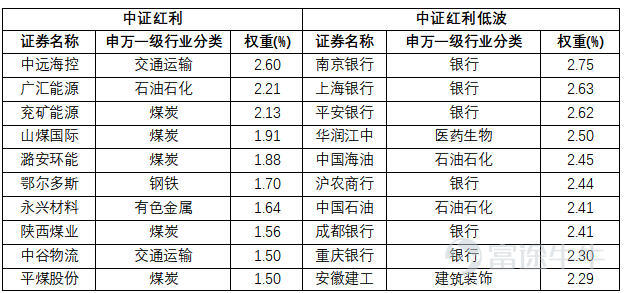
The Harvest CSI Dividend ETF (515180) tracks the CSI Dividend Index, which aims to select companies listed on the A-share market with high dividend yields and stable payout histories. It prioritizes higher dividend yields and has relatively broader sector coverage, including industries such as coal, nonferrous metals, and textiles and apparel—sectors not covered by the low-volatility version.
The Harvest CSI Dividend Low Volatility ETF (563020) tracks the CSI Dividend Low Volatility Index, which adds an extra screening layer: in addition to requiring high dividends and consistent payouts, it also evaluates how volatile a stock’s price has been over a recent period. Stocks with high dividends but highly erratic price movements are filtered out—in simple terms, this approach seeks both reliable dividends and calmer price behavior.
Table: Top 10 Index Constituents
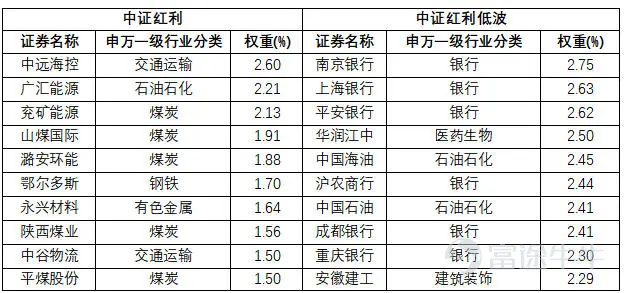
Note: Data sourced from Wind, as of May 20, 2026.
So, your choice depends on your preference: if you prioritize dividend yield above all, the CSI Dividend Index offers a more direct exposure—you can consider the Harvest CSI Dividend ETF (515180). If you want to balance dividends with a smoother holding experience, the low-volatility version adds that extra layer of stability—you can consider the Harvest CSI Dividend Low Volatility ETF (563020). Both funds charge a management fee of just 0.15% per year, the lowest tier available.
If you don’t have a brokerage account, you can purchase the corresponding feeder funds through banks, online platforms, or the 'e-Wallet' app: Harvest CSI Dividend ETF Feeder Fund (Class A/C: 009051 / 009052) and Harvest CSI Dividend Low Volatility ETF Feeder Fund (Class A/C: 020602 / 020603).
It is worth noting that if you have already opened a personal pension account, you may consider the pension Class Y shares of these two index funds (E Fund CSI Dividend ETF Link Y: 022925; E Fund CSI Dividend Low Volatility ETF Link Y: 027261), which allow you to benefit from the long-term returns of the underlying indices while also taking advantage of tax-deferred policy benefits.
Market ups and downs are normal. What makes dividend strategies worth watching isn’t any single day’s price movement, but rather the ability of these companies to deliver real, consistent cash dividends year after year. For household asset allocation, this 'tangible return' may be more valuable in a low-interest-rate environment than chasing short-term market momentum.
Disclaimer: This article is for reference only and does not constitute investment advice.
Risk Disclaimer: The above content only represents the author's view. It does not represent any position or investment advice of Futu. Futu makes no representation or warranty.Read more
Comments
to post a comment