
Zhipu AI's market cap surpasses HK$1 trillion! Is China's AI sector at a structural turning point?

From a sharp rally to a pullback, where does the Hong Kong semiconductor market stand now?
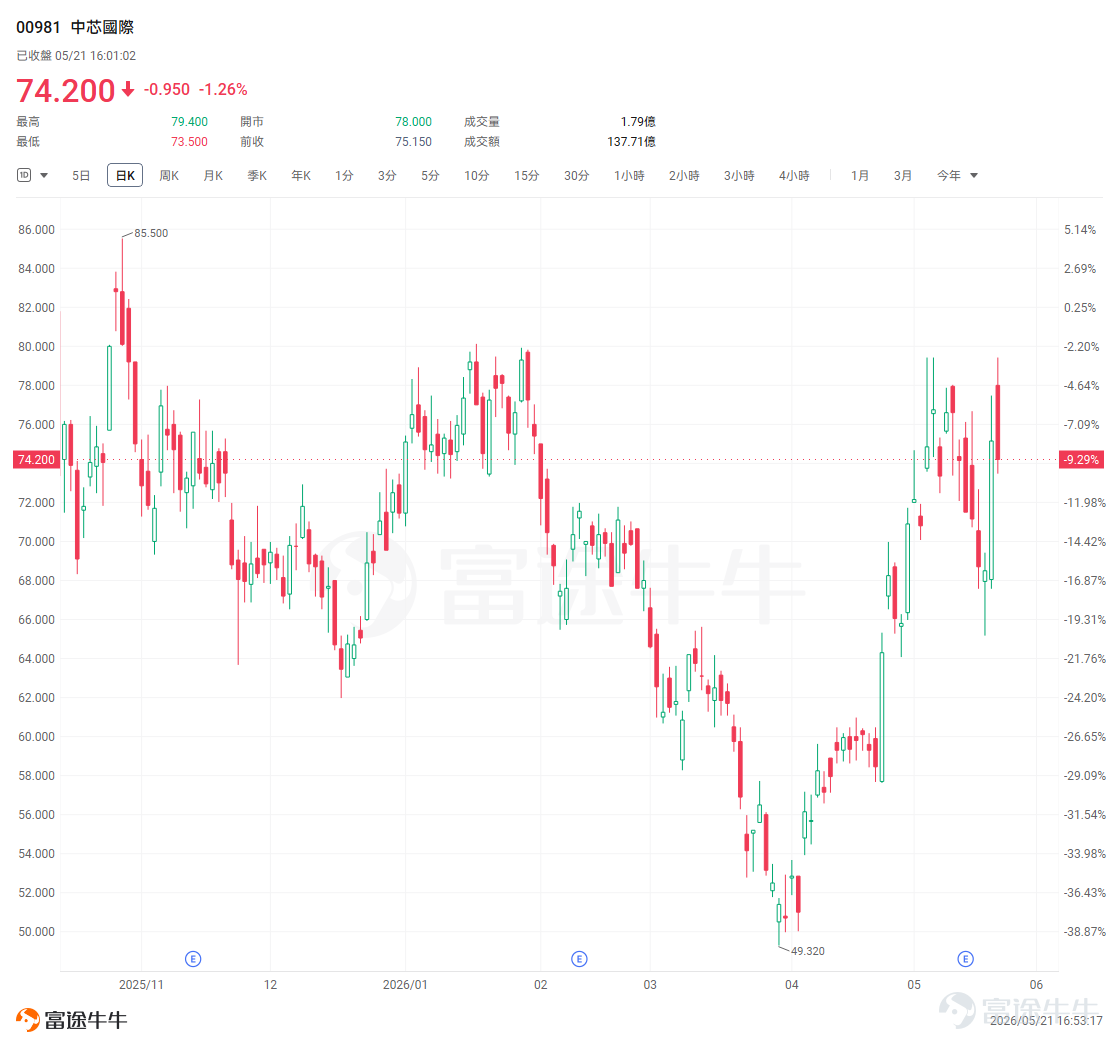
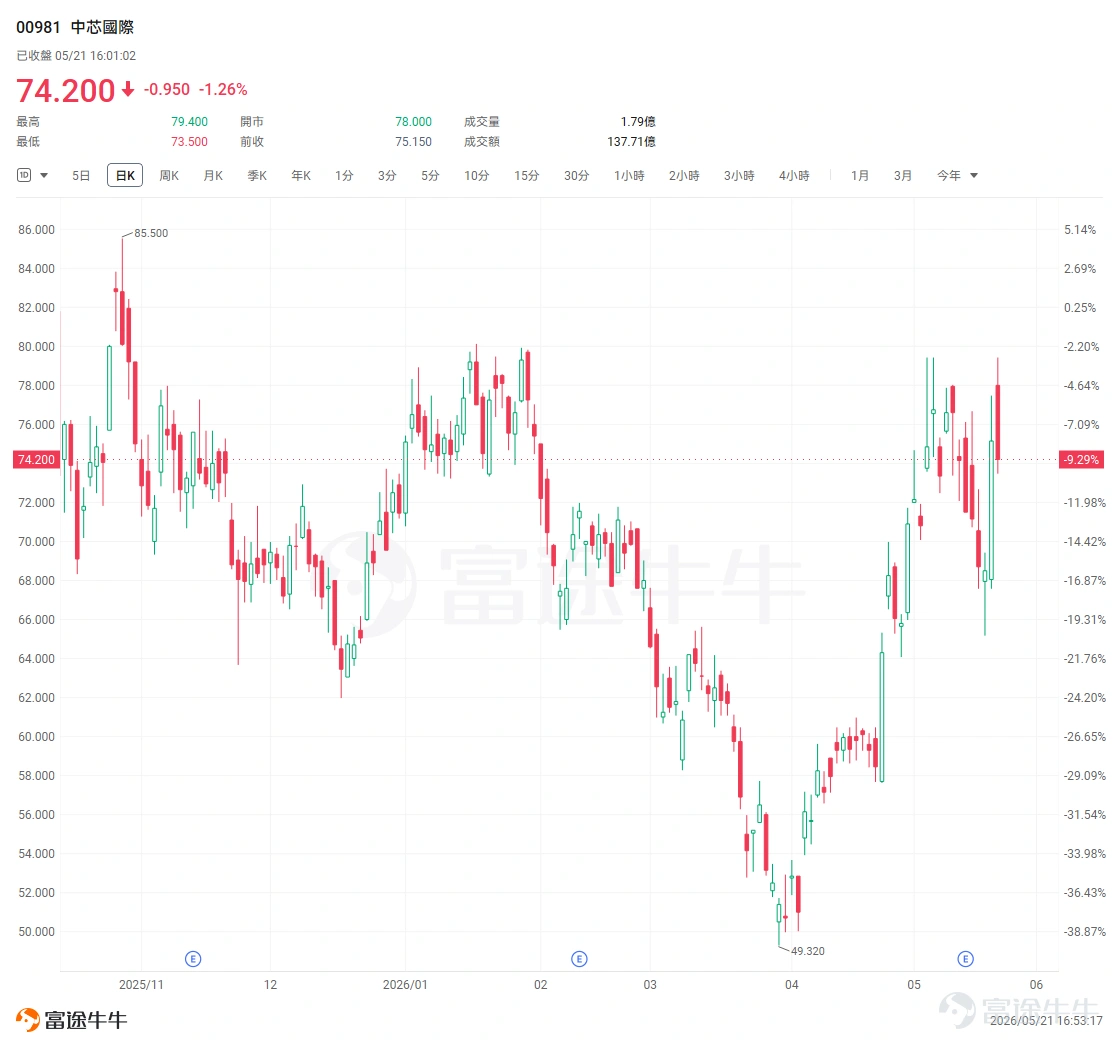
Both Hong Kong and A-share semiconductor sectors declined today. As of market close, $SMIC (00981.HK)$Down 1.26%,$HUA HONG GRACE (01347.HK)$ fell 3.61%.
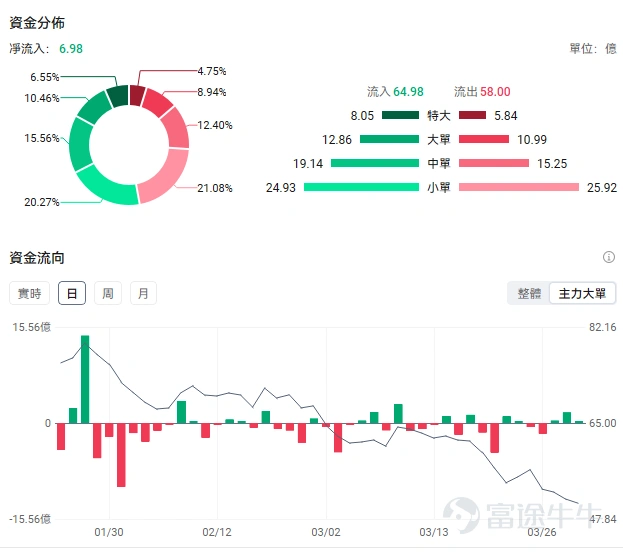
Since April, Hong Kong-listed semiconductor stocks have undergone a strong rally, which was strongly confirmed bysustained large net inflows from institutional investors.Recently, however, the sector has broadly pulled back due to macro factors such as elevated U.S. Treasury yields.
After the sharp rally, what’s next for the market? Has it reached a short-term peak or is it consolidating for another move upward?This article breaks down the underlying drivers behind the Hong Kong semiconductor sector’s rally, offering insights for investors.
Simultaneous improvements in utilization rates, pricing, and order visibility form the foundation.
SMIC reported first-quarter revenue of approximately USD 2.5 billion, up about 12% year-over-year, with a gross margin of 20.1% and capacity utilization at 93.1%. More importantly, the company provided second-quarter guidance for revenue to increase 14% to 16% quarter-over-quarter and a gross margin of 20% to 22%.The main drivers are higher average selling prices (ASP), an improved product mix, and tightness in certain capacity segments. In its report, Citi upgraded SMIC to a 'Buy' rating., raising its price target from HKD 75 to HKD 90, primarily based on simultaneous improvements in capacity utilization, pricing, and order visibility.
Hua Hong Semiconductor’s story, by contrast, leans more toward elasticity. According to the report, Hua Hong's China-region revenue grew 18.7% year-over-year, driven by growth across multiple product lines including MCUs, PMICs, embedded memory, discrete flash, IGBTs, and smart card chips.Management expects some tight platforms to have room for price increases, with average hikes of roughly 10% to 15%, and potentially higher for certain memory-related platforms.
Solid fundamentals from earnings and guidance must be established first before broader industry dynamics can play out.
The narrative around CPU shortages is boosting sentiment across the entire semiconductor sector.
In this market rally, the CPU thesis deserves separate attention.
At JPMorgan’s 54th Annual Global Technology, Media and Communications Conference, Intel CEO Lip-Bu Tan shared several key insights. According to Intel management, during the AI training phase, the CPU-to-GPU ratio is roughly 1:8; as systems move into the inference phase, this ratio may converge toward 1:4; and with the advancement of Agentic AI and multi-agent systems, the ratio could further shift toward 1:1—or even favor CPUs more heavily.
During the training phase, GPUs are the undisputed stars, while CPUs serve more as foundational infrastructure within servers. However, in the inference and Agentic AI phases, CPUs take on greater responsibilities for task scheduling, control, data orchestration, and general-purpose computing. The more complex the AI system becomes, the more likely the market is to reassess—and reprice—the importance of CPUs.Previously, the market focused on GPU shortages; now, it is beginning to recognize that the next phase may involve simultaneous demand for CPUs, ASICs, power management chips, connectivity chips, and mature-node capacity.
Additionally, TrendForce reported that Intel’s 18A process yield is improving by approximately 7% to 8% per month, with the company expecting more external customer commitments by the second half of 2026. Regarding 14A, Intel has already delivered version 0.5 of its PDK to customers and plans to continue rolling out subsequent versions.
If Intel continues to recover its advanced process capabilities, it signals a renewed dynamism in global wafer fabrication competition. Apple, cloud providers, and ASIC customers will all reassess their options beyond Taiwan Semiconductor.For SMIC and Hua Hong, this reinforces a major trend: global semiconductor customers are placing greater emphasis on supply chain diversification, and the strategic value of regionalized and localized manufacturing capacity is rising.
Expectations are strengthening that AI demand will spill over into mature-node processes.
Over the past two years, whenever the market discussed AI chips, attention was almost exclusively focused on GPUs, HBM, CoWoS, and advanced nodes. But as AI server deployments enter their build-out phase, demand will no longer center solely on a single GPU.
CPUs handle scheduling, PMICs manage power, connectivity chips handle data transmission, analog and control chips ensure stable operation, and specialty memory will also see increased demand.Many components do not require the most advanced process nodes but instead need mature-node and specialty-process capacity that is stable, controllable, and sustainably supplyable.
Morgan Stanley noted: AI demand is spilling over from leading-edge compute chips to mature-node supporting chips.Global wafer fabs and IDMs are prioritizing AI compute, HBM, and high-margin memory, tightening capacity for non-leading-edge products such as standard logic, networking chips, and specialty memory, prompting some orders to shift back to mainland China.
As overseas CPU lead times lengthen and prices rise, domestic cloud providers and government/enterprise customers are placing greater emphasis on domestically produced CPUs, servers, and local supply chains. SMIC and Hua Hong are benefiting primarily at two ends:One end is the manufacturing demand for domestic CPUs, SoCs, and ASICs—SMIC’s revenue from China reached 88.9% in Q1, reflecting accelerating localization trends. The other end is that as AI expands further into inference, edge computing, robotics, and industrial applications, demand for mature nodes and specialty processes becomes more visible again.
The rally has paused—what will drive the next phase of market performance?
The market is already pricing in AI spillover effects and a re-rating of CPUs,Short-term share price gains will inevitably be followed by volatility.This is especially true for highly watched names like SMIC and Hua Hong—once profit-taking occurs, their price swings will likely be larger than those of typical tech stocks. SMIC remains a core asset with relatively high certainty within the domestic semiconductor theme, but it is no longer appropriate to treat it as a low-base reversal play at current levels.
As of May 21, SMICTechnical Aspecthas entereda short-term overbought zone, coupled withValuation is at a historical high., significantly increasing the stock's volatility and downside risk at elevated levels. Fund flows have shown a structural pattern,with institutional investors maintaining a certain level of buying interest, while some retail and smaller accounts opted to take profits, leading to heightened market divergence.Future price action will hinge on whether institutional capital can sustain its momentum and how the stock performs around key technical support levels (e.g., the 20-day moving average).
In terms of institutional target prices, Citi assigned a HK$90 target for SMIC, while Morgan Stanley set its target at HK$85, implying upside potential closer to the low-to-mid double digits;Bernstein remains relatively cautious, with an H-share target price of HK$70.
Bernstein did not extrapolate the current improvement directly into a 'broad-based upcycle.' It notedthat Q2 was indeed strong—but driven by higher ASPs and structural supply tightness. To justify a higher valuation, broader demand recovery, more stable margins, and sustained absorption of depreciation pressures would be needed.
SMIC faces significant capital expenditure if it is to expand capacity, advance its process nodes, and maintain the scarcity of domestic advanced manufacturing. When demand is strong, depreciation can be offset by high utilization rates and average selling prices (ASP); however, when demand slows, margins come under pressure first. If smartphone demand falls short of expectations, it could drag down wafer fab utilization and ASP. Further escalation of sanctions could also impact SMIC’s capacity expansion and ongoing operations.
This divergence is highly informative:Bullish investors are buying into domestic substitution, AI spillover effects, improving ASP, and higher capacity utilization; cautious investors worry about depreciation pressure, demand that has yet to fully materialize, valuations that have already priced in future gains, and the difficulty of realizing margin improvements.
Therefore, whether the medium-term rally can continue hinges on the market transitioning from 're-rating based on logic' to 'validation through actual earnings.'
First, whether demand for CPUs and ASICs continues to be revised upward. Statements from Lip-Bu Tan, progress on Intel’s 18A/14A nodes, and NVIDIA’s Vera CPU expectations will all influence market sentiment and pricing along the CPU supply chain.
Second, whether price increases continue to spread. Hua Hong’s pricing uplift is primarily concentrated in tight segments like NOR Flash, while SMIC’s price improvements mainly stem from localized tightness in areas such as BCD, PMIC, and specialty memory. If price hikes expand from a few select products to more mature-process platforms, the rally would be more sustainable.
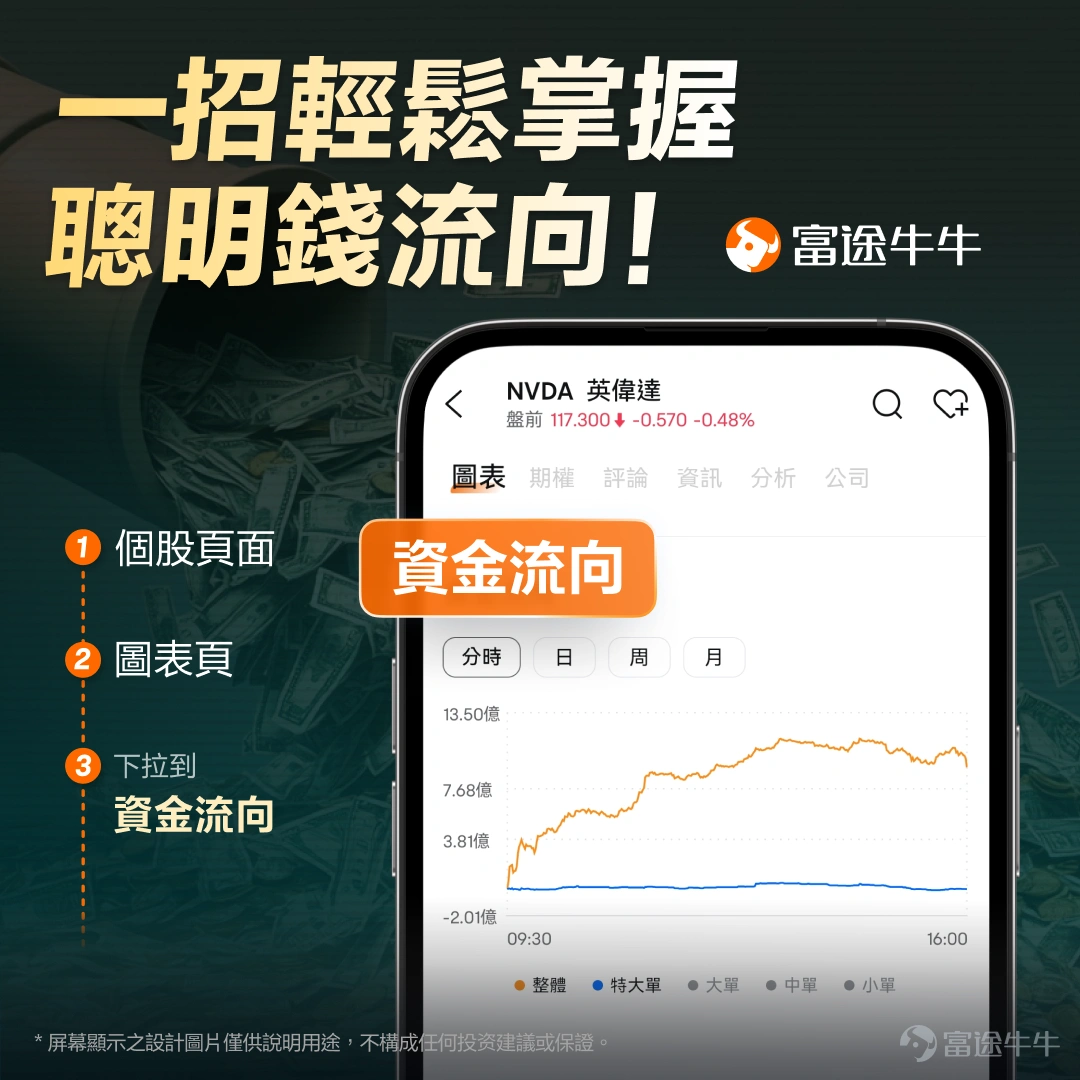
One simple trick to easily track smart money flows!
Risk Disclaimer: The above content only represents the author's view. It does not represent any position or investment advice of Futu. Futu makes no representation or warranty.Read more

Comments (4)
to post a comment
26
33