
Countdown to NVIDIA's conference: AI computing power and storage sectors may benefit—what to invest

Magical NVIDIA—no matter how stellar its earnings, the stock won't rise; no matter how aggressive the short sellers, it won't fall.

NVIDIA's Q1 FY2027 earnings are out, and unsurprisingly, they’re still blindingly impressive.
Revenue came in at $81.6 billion, up 85% year-over-year and 21% quarter-over-quarter. GAAP net income was $58.3 billion, surging 211% year-over-year; non-GAAP net income reached $45.5 billion, up 139% year-over-year. Gross margin was 74.9%, remaining stable within the 74%–75% range.
Data Center revenue totaled $75.2 billion, accounting for 92% of total revenue, up 92% year-over-year. Quarterly dividends jumped from $0.01 to $0.25 per share—a 2,400% increase. The company also announced a new $80 billion stock repurchase authorization.
During the earnings call, Jensen Huang stated, 'The construction of AI factories is accelerating at an astonishing pace—this is the largest infrastructure expansion in human history.'
However, NVIDIA’s stock price fell by 0.77% following the earnings release.
This marks the third consecutive quarter of a similar pattern: despite NVIDIA reporting revenue approximately $3.6 billion above the midpoint of its guidance, the stock declined after the earnings announcement.
Then again, 99% of those who tried shorting NVIDIA have lost heavily.
Michael Burry, the real-life inspiration behind 'The Big Short,' disclosed short positions in NVIDIA and Palantir put options in Q3 2025, amounting to roughly $1.1 billion in notional value according to his 13F filing.
He holds 1 million NVIDIA put options with a strike price of $110, expiring in 2027. As of May 8, 2026, NVIDIA’s stock price was around $215, significantly above the strike price of these put options.
Former OpenAI researcher Leopold Aschenbrenner took a more aggressive stance in Q1 2026.
His hedge fund, Situational Awareness, disclosed bearish options positions on NVIDIA, Broadcom, and others. Based on 13F notional values, the total exposure amounted to several billion dollars, with NVIDIA-related put options carrying a notional value of approximately $1.6 billion.
As a result, NVIDIA’s stock price rose about 15% from the end of Q1, leaving Leopold stuck in losing positions.
No matter how strong the earnings report, the stock won’t rise; no matter how aggressive the short sellers, it won’t fall. Isn’t that incredible?
01
The data center business continues its explosive growth.
The standout figure in NVIDIA’s latest earnings report is $75.2 billion in data center revenue, up 92% year-over-year and 21% quarter-over-quarter.
Breaking it down further: data center computing revenue reached $60.4 billion, up 77% year-over-year, while data center networking revenue hit $14.8 billion, surging 199% year-over-year and 35% quarter-over-quarter.
The data center networking segment is experiencing explosive growth.
This stems from the products themselves. Take the soon-to-be-mass-produced Vera Rubin system as an example: a single system contains 1.3 million components, including 72 Rubin GPUs and 36 Vera CPUs.
With so many chips needing to work together, vast amounts of high-speed networking equipment are required to connect them. As system scale expands, demand for networking hardware grows accordingly.
Vera Rubin is NVIDIA's AI supercomputer system launching in 2026, designed for training large AI models.
During the earnings call, Jensen Huang specifically noted that Vera Rubin had a 'very strong start' and is expected to be even more successful than Grace Blackwell.
"Our market share in inference is growing very rapidly, and the number of frontier model companies is increasing," he added. Jensen Huang also singled out Anthropic as a key new customer for NVIDIA this year, providing models for Microsoft Azure, Amazon AWS, and CoreWeave.

Jensen Huang also stated that he expects Vera Rubin to 'remain supply-constrained throughout its entire lifecycle.'
Grace Blackwell has already sold out, and Vera Rubin—before even beginning mass shipments—has already been fully booked. This is where NVIDIA’s primary growth engine now lies.
In stark contrast to the data center business is the gaming segment.
NVIDIA used to be a pure-play gaming company—anywhere gaming was involved, you’d almost certainly find NVIDIA. But today, NVIDIA has little to do with gaming—in fact, gaming might as well stay away from NVIDIA altogether.
In fiscal year 2020, gaming accounted for more than 50% of NVIDIA’s revenue, while data centers contributed just 27%. In just a few short years, that ratio has completely reversed: gaming now accounts for less than 8% of NVIDIA’s total revenue.
Additionally, NVIDIA’s edge computing division reported $6.4 billion in revenue, up 29% year-over-year and 10% quarter-over-quarter. This segment includes PCs, game consoles, workstations, AI-RAN base stations, robotics, and automotive.
02
NVIDIA urgently needs HBM: from HBM3E to HBM4
But now Jensen Huang faces a problem he can't solve: HBM.
Blackwell requires HBM3E, and the next-generation Rubin will need HBM4.
This is a type of memory made by stacking large numbers of DRAM chips, enabling fast temporary data storage that allows chips to run multiple tasks in parallel. It is a critical component of NVIDIA GPUs.
The issue is that nearly all global HBM production is controlled by SK Hynix, Samsung, and Micron.
Moreover, HBM cannot be manufactured on standard DRAM memory production lines; it requires specialized equipment, different processes, and dedicated capacity.
Kim Gi-tae, Head of HBM Sales and Marketing at SK Hynix, stated, 'Demand for HBM over the next three years far exceeds our supply capabilities.' Micron CEO Sanjay Mehrotra said, 'Our HBM capacity for 2025 and 2026 is already fully booked.'
In theory, HBM3 supply is growing by 50% to 60% annually, but the problem is that demand for HBM3—driven by rising NVIDIA GPU demand—is increasing by 80% to 100% per year.
Demand far outstrips supply, and the gap continues to widen.
SK Hynix is investing over $50 billion to build new HBM capacity, Samsung is investing $40 billion, and Micron is investing $33 billion—but it takes 18 to 24 months from groundbreaking to production for new semiconductor fabs.
And that’s not all: for an HBM fab to be profitable, its yield rate must exceed 85%. However, this yield rate isn’t achieved overnight—it must gradually ramp up over time.
The first half of the year is called the 'trial production phase,' during which the yield rate will increase from 30% to 60–70%. Around one year in, it enters the 'early mass production phase,' when the yield rate can finally reach 80%.
It will then take another year or so to achieve a yield rate above 90%.
In other words, NVIDIA still has a long way to go before it can alleviate the HBM3 shortage.

However, beyond capacity constraints, there are also some social issues involved.
In May 2026, Samsung Electronics faced its largest-ever strike crisis. Of over 66,000 union members, 93.1% voted in favor of striking. The union demanded the removal of the cap on performance-based bonuses, as Samsung’s rival SK Hynix had already eliminated such limits, with some employees receiving bonuses more than three times those at Samsung.
On the morning of May 20, labor-management negotiations broke down again, and the union announced a full-scale 18-day strike scheduled from May 21 to June 7. The Bank of Korea warned that if the strike persists, South Korea’s economic growth this year could be reduced by 0.5%. The government estimated that each day of shutdown would cause losses of approximately 1 trillion Korean won.
However, on the evening of May 20, during renewed negotiations that had resumed that afternoon, both sides reached a tentative agreement. The large-scale strike originally set to begin on May 21 was put on hold, and the union will hold an internal vote on the proposal, with further actions depending on the outcome.
South Korean institutions previously estimated that if Samsung’s strike is canceled and labor relations ease, HBM3 prices would rise by about 20–30%; if the strike resumes but is limited by court intervention, causing partial capacity disruptions, prices would increase by 40–50%; and if a full-scale strike halts operations at the Pyeongtaek campus, prices could surge by 80–100%.
The conclusion is that these lingering labor issues will inevitably be reflected in higher HBM3 prices.
In 2024, the price of HBM3E 36GB was around USD 500. Today, the same product costs USD 1,200—a 130% increase.
That’s not all—HBM contract prices rose 25%–30% quarter-over-quarter in Q1 2026, and are expected to increase another 30%–50% in Q2.
SK Hynix, Samsung, and Micron control the choke point of the supply chain—only these three companies produce HBM3—so NVIDIA’s pricing power no longer lies with Jensen Huang, but with memory manufacturers.
As data center revenue accounts for an increasingly large share of NVIDIA’s total revenue, HBM3 will directly determine NVIDIA’s fate.
03
OpenAI and Anthropic are the real major customers.
There’s another alarming figure in NVIDIA’s earnings report.
NVIDIA CFO Colette Kress stated that hyperscale cloud service providers account for 50% of its data center business.
Although she didn’t name names, we all know they refer to Microsoft, Amazon, Google, and Oracle.
This means that if any one of them cuts AI-related capital spending, NVIDIA’s growth trajectory would be immediately impacted.
Fortunately, however, Google, Amazon, Meta, and Microsoft together are expected to spend $725 billion on AI-related capital expenditures in 2026, a figure that could surpass $1 trillion in 2027.
However, if you take a closer look at these four companies’ businesses, you’ll uncover the following fact.They are not four companies—they are actually two: OpenAI and Anthropic.
Microsoft is OpenAI's largest cloud service provider, and nearly all of OpenAI's GPT model training and inference runs on Microsoft Azure.
Although Amazon AWS and Google both have their own custom-designed chips, to meet Anthropic's compute demands, they adopt hybrid solutions, with part of their capacity coming from NVIDIA GPUs they procure.
Oracle signed one of the largest cloud computing contracts in history with OpenAI, valued at $300 billion over approximately five years.
Oracle is also among the first customers to receive NVIDIA's Vera CPUs and plans to deploy hundreds of thousands of Vera CPUs starting in 2026, making it the first cloud service provider to commit to large-scale Vera deployment.
Even Elon Musk is now effectively a service provider to Anthropic: on May 6, 2026, Anthropic reached an agreement with SpaceX to lease the full computing capacity of SpaceX’s Colossus 1 data center in Memphis, Tennessee—including 220,000 NVIDIA GPUs (H100, H200, and GB200)—delivering 300 megawatts of compute power.
Thus, there is a subtle dynamic at play: both OpenAI and Anthropic are trying to reduce their reliance on NVIDIA.
In January 2026, OpenAI signed a $10 billion agreement with AI inference chip supplier Cerebras, securing 750 megawatts of computing capacity.
Just four months later, in May 2026, OpenAI made an additional investment, signing a three-year agreement with Cerebras worth over $20 billion. As part of the deal, OpenAI will acquire approximately 10%–11% equity in Cerebras and elevate their vendor relationship to a strategic alliance.
Cerebras completed its IPO on May 14, 2026, with a first-day market valuation approaching $100 billion.
Today, OpenAI and Cerebras are deeply intertwined. Altman was an early investor in Cerebras and holds millions of dollars’ worth of shares.
The situation with Anthropic is even more striking.
In April 2026, Amazon invested $33 billion in Anthropic, which committed to spending over $100 billion on AWS infrastructure over the next decade and securing up to 5 gigawatts of computing capacity, spanning Amazon’s Graviton CPUs and Trainium2 to Trainium4 AI chips.
Around the same time, Google pledged $40 billion worth of computing resources to Anthropic, including 3.5 gigawatts of next-generation TPU capacity.
More ironically, in 2026 NVIDIA invested $30 billion in OpenAI and $10 billion in Anthropic. By all rights, these two should be NVIDIA’s ‘junior partners.’
But in reality, NVIDIA’s major customers now have to follow the computing demands set by these two ‘junior partners.’
Moreover, these two ‘junior partners’ are now taking the lead.
On May 5, 2026, OpenAI jointly launched the MRC (Multipath Reliable Connection) protocol with NVIDIA, AMD, Broadcom, Intel, and Microsoft—a new Ethernet transport protocol specifically designed for AI data centers.
OpenAI is no longer just a chip buyer; it has become the industry leader. Chip giants like NVIDIA, Intel, and Broadcom now have to align their product designs with OpenAI’s technical standards.
Anthropic is even more direct on this front.
It’s not just using Amazon’s Trainium chips—it has already been deeply involved in the design of Trainium.
Anthropic closely collaborates with Amazon’s Annapurna Labs (Amazon’s in-house chip division), directly providing feedback data from Claude training workloads that influences architectural decisions for Trainium 3 and Trainium 4.
Amazon’s engineering teams and Anthropic communicate almost daily, and Anthropic has a say in everything from low-level optimizations to high-level architectural decisions.
In other words, these two companies—both backed by NVIDIA—one is defining networking standards for AI data centers, while the other is helping design a competitor’s chips. They’ve already gained significant influence.
Of course, NVIDIA remains the foundational infrastructure provider of the entire AI era. Its GPUs are still the gold standard for training large language models, and the lock-in effect of the CUDA ecosystem remains strong.

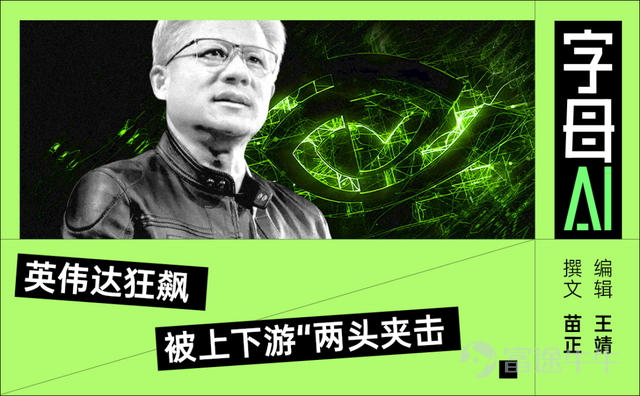
But the trend is clear: NVIDIA is being squeezed from both ends.
Looking upstream, no matter how powerful NVIDIA is, it simply cannot produce GPUs without HBM3—that’s an objective fact.
Looking downstream, OpenAI and Anthropic are slipping out of its control and gaining more influence.
Upstream players control your production capacity, while downstream customers control your market demand—leaving NVIDIA caught right in the middle.
NVIDIA remains the undisputed leader in the AI chip market, but the moat protecting its dominance is gradually being filled in—bit by bit—by its upstream suppliers and downstream customers. $NVIDIA (NVDA.US)$$GraniteShares 2x Long NVDA Daily ETF (NVDL.US)$$GraniteShares 2x Short NVDA Daily ETF (NVD.US)$$NVIDIA Portfolio (LIST20882.US)$$Virtual Reality (LIST2139.US)$$Metaverse (LIST2567.US)$$Semiconductors (LIST22912.HK)$$AI Chip (LIST2548.US)$$Amazon (AMZN.US)$$Star Tech Companies (LIST2518.US)$$Microsoft (MSFT.US)$$MICROSOFT-T (04338.HK)$$SK Hynix (000660.KR)$
Risk Disclaimer: The above content only represents the author's view. It does not represent any position or investment advice of Futu. Futu makes no representation or warranty.Read more
Comments
to post a comment
1