
Countdown to NVIDIA's conference: AI computing power and storage sectors may benefit—what to invest

Wall Street Brief (May 21): US equities rebounded on Wednesday, with risk appetite clearly recovering but not reaching euphoric levels; NVIDIA’s earnings extended the AI narrative. Oil prices plunged, small caps led gains, and gold/Bitcoin rose.
Summary: U.S. equities staged a broad-based rally on Wednesday, with the S&P 500 up 1.08%, the Nasdaq rising 1.54%, the Dow Jones gaining 1.31%, and the Russell 2000 surging 2.56%. The VIX declined to 17.44, down 3.43% on the day, indicating a clear recovery in risk appetite—though sentiment remains far from euphoric. What truly shifted market sentiment was the heightened expectation of a U.S.-Iran deal, as signs emerged of easing tensions around Strait of Hormuz shipping lanes. Crude oil plunged 4.76%, and inflation and interest rate concerns that had weighed on markets in prior days cooled simultaneously. In terms of sector performance, small-cap and high-beta segments led the rebound, with notable gains in homebuilding, biotechnology, semiconductors, and discretionary consumer stocks. After the close, NVIDIA reported earnings and guidance that exceeded expectations and announced an $80 billion share buyback, further validating robust demand for AI data centers. Across major asset classes, the dollar index fell 0.18%, gold rose 1.38%, crude oil dropped 4.76%, and Bitcoin gained 1.03%.
I. Major Events
1. US-Iran tensions ease, raising prospects for a deal
On Wednesday, market expectations that the US and Iran were nearing an agreement rose significantly. Meanwhile, shipping data showed two Chinese tankers exiting the Strait of Hormuz, signaling marginal relief in Gulf shipping pressures. The acute energy supply risks that had dominated recent days ceased escalating unidirectionally, allowing both bond and equity markets room to breathe as geopolitical risk premiums receded.
2. Fed FOMC minutes reveal widening hawkish divergence
The April Fed FOMC minutes indicated that more officials believe, if inflation remains persistently above target, the path forward may require preparing for rate hikes rather than cuts. The minutes also noted that energy price pressures from the Iran conflict and tariff impacts are amplifying policy disagreements within the Fed. This suggests the Fed is not on a one-way dovish trajectory ahead of Warsh’s potential appointment. For capital markets, long-end rates will remain a key constraint on risk asset valuations going forward.
3. NVIDIA’s earnings continue to validate AI demand
NVIDIA reported quarterly results after the market close, with revenue and earnings exceeding expectations and providing a stronger-than-anticipated revenue outlook for the next quarter. The company also announced an $80 billion share buyback, reinforcing the view that demand for AI data centers remains robust. The significance of this earnings report extends beyond the performance of a single company—it continues to serve as a barometer for the AI capital expenditure cycle. For capital markets, fundamental validation along the AI supply chain remains intact.
II. Major Trends
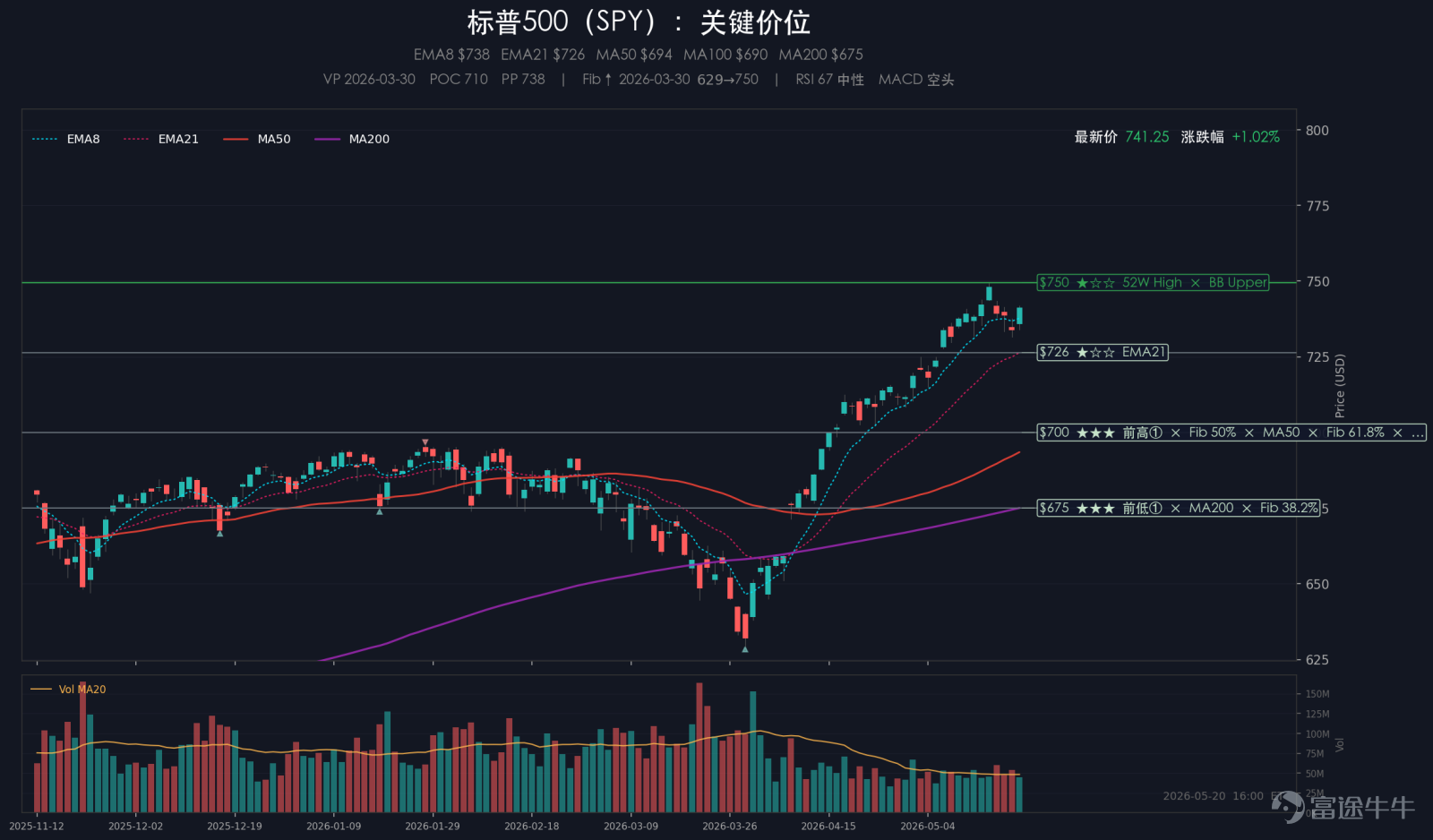
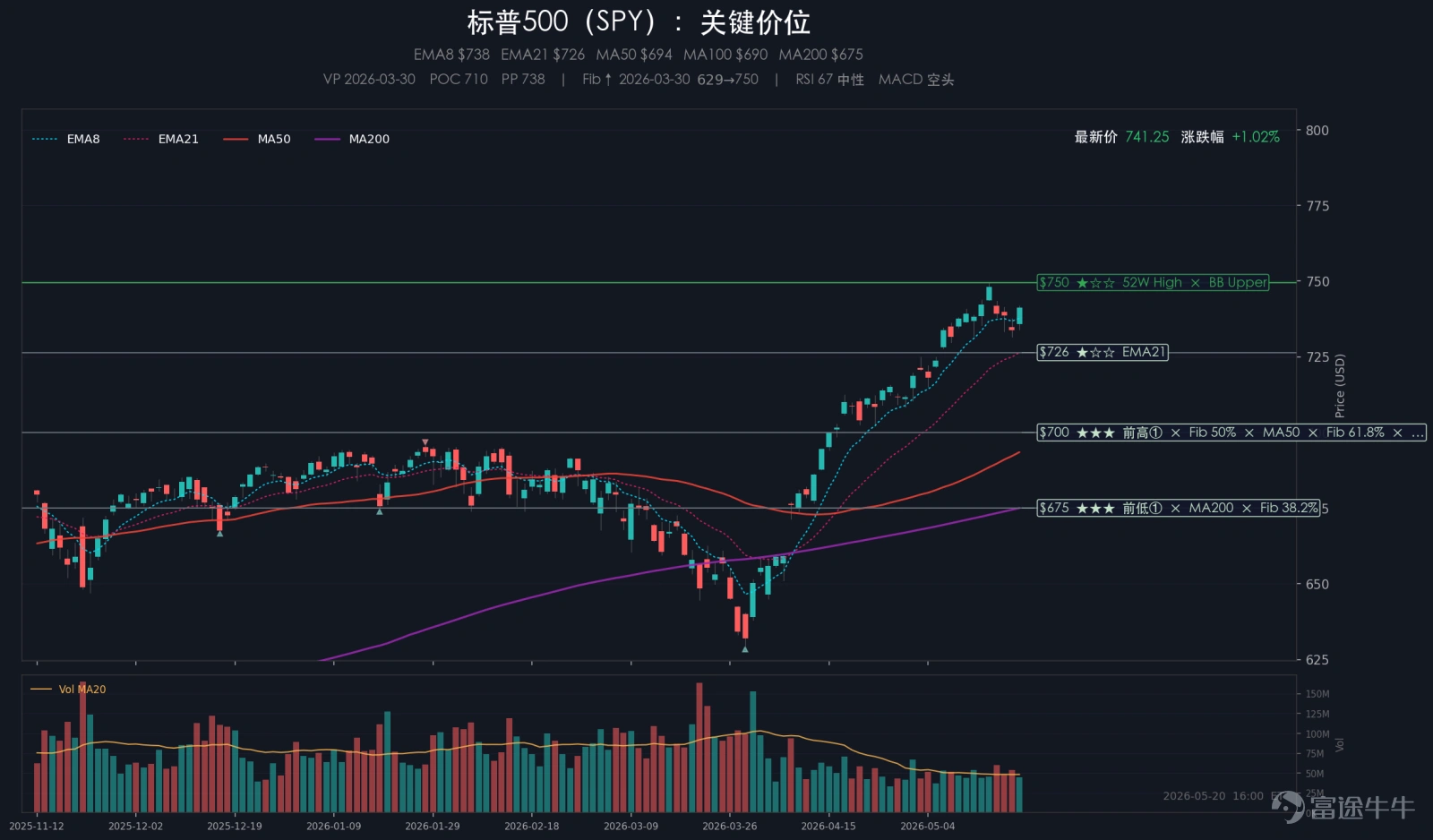
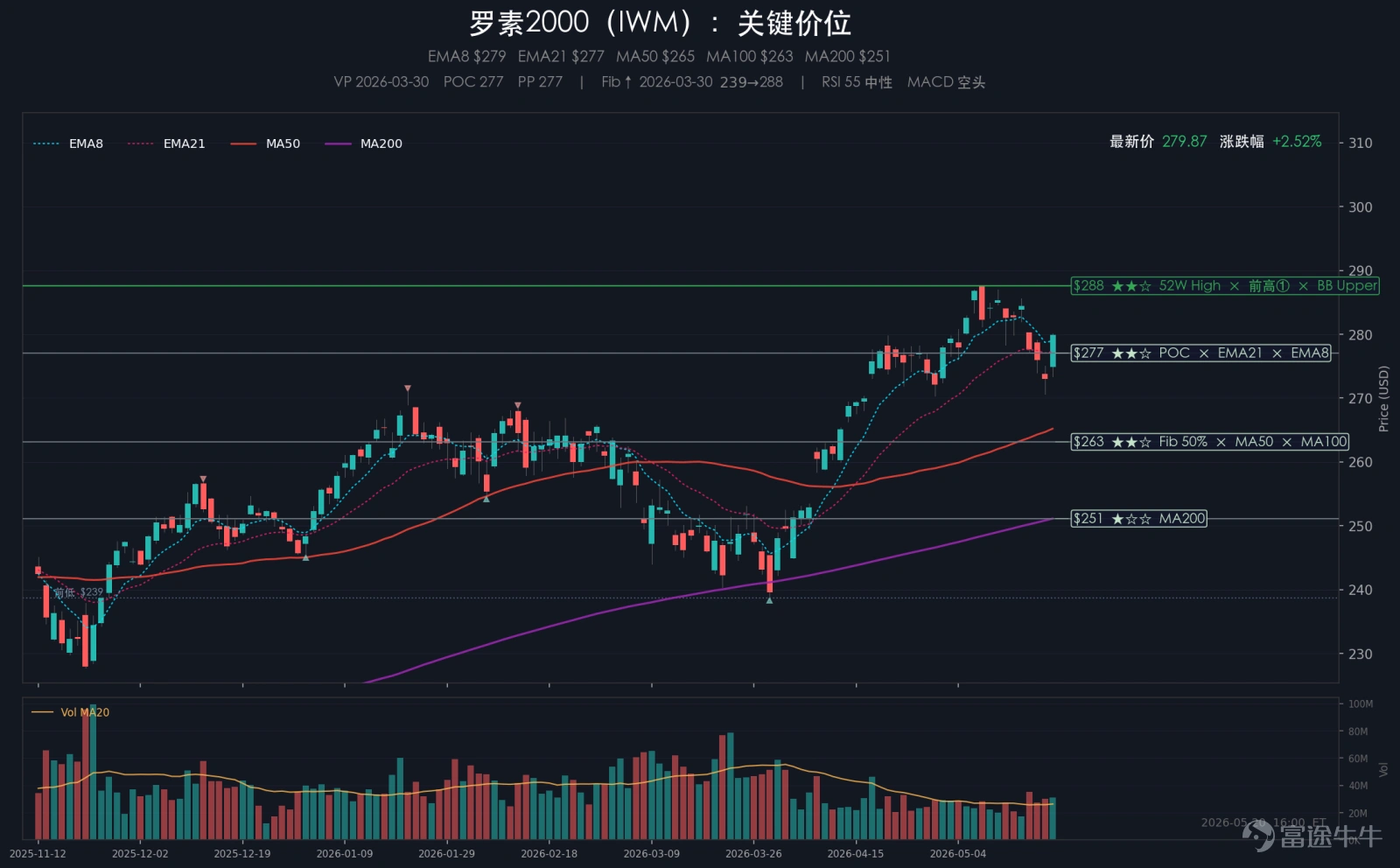
At the index level, Wednesday marked a relatively comprehensive risk repair session. The S&P 500 rose 1.08%, the Nasdaq gained 1.54%, the Dow Jones increased by 1.31%, and the Russell 2000 surged 2.56%. Among ETFs, IWM led with a 2.52% gain, followed by QQQ up 1.66%, DIA rising 1.27%, and SPY advancing 1.02%. The outperformance of small caps suggests capital is not only returning to large-cap tech but also reopening higher-beta risk exposures.
However, the medium-term structure has not been fully rewritten. Over a two-week horizon, QQQ rose 2.50%, SPY gained 1.01%, RSP declined 0.50%, and IWM fell 2.42%. Over three months, QQQ climbed 17.29%, SPY rose 7.81%, while RSP advanced just 0.30%. This indicates that Wednesday’s rebound improved short-term sentiment, but prior gains were still primarily driven by large-cap growth and market-cap weighting.
In terms of style, growth continues to outperform, with temporary signs of broadening. SPYG rose 12.68% over three months, significantly outpacing SPYV’s 2.46%. MAGS gained 11.01%, surpassing XMAG’s 4.54%. Wednesday’s shift was that high-beta segments began catching up, but whether this one-day bounce evolves into sustained broadening will depend on continued support from interest rates and energy-related risks.
III. Market Sentiment
The VIX closed at 17.44, down 3.43% on the day. Simultaneous rebounds across the four major indices and a drop in volatility indicate that recent risk tensions have clearly eased. Current sentiment reflects repair rather than extreme euphoria. The CNN Fear & Greed Index stood at 61, up from 59 previously, remaining in the ‘greed’ territory with a modest uptick. This level suggests the market is willing to take on more risk but has not yet entered a state of excessive optimism.
On the CBOE Put/Call front, the total put/call ratio was 0.65, the index options put/call ratio was 0.65, and the equity options put/call ratio was also 0.65. All three ratios are simultaneously low, signaling a notably stronger bullish bias in the options market. Combined with the VIX decline and the slight rise in the CNN index, Wednesday appears more like a reopening of risk budgets rather than defensive capital passively retreating.
IV. Market Scan
1. Index ETFs:All major index ETFs posted gains, led by the Russell 2000 ETF (IWM) up 2.52%, followed by the Nasdaq-100 ETF (QQQ) rising 1.66%, the Dow Jones ETF (DIA) gaining 1.27%, and the S&P 500 ETF (SPY) advancing 1.02%. The strongest elasticity in small caps indicates that sectors previously hit hardest by rates and risk aversion are leading the recovery.
2. Industry sectors:Among sectors, Consumer Discretionary (XLY) led with a 2.53% gain, followed by Technology (XLK) up 2.25%, Materials (XLB) rising 1.39%, Industrials (XLI) up 1.18%, Real Estate (XLRE) gaining 1.12%, and Financials (XLF) rising 1.10%. Energy (XLE) lagged, falling 2.43%. Declining oil prices alleviated pressure on non-energy sectors and prompted capital to rotate away from defensive energy positions back into risk assets.
At the sub-industry level, Homebuilders (XHB) jumped 4.28%, Biotechnology (XBI) rose 3.88%, Semiconductors (SMH) gained 3.81%, Copper Miners (COPX) advanced 3.70%, Solar (TAN) rose 3.20%, and Gold Miners (GDX) climbed 3.08%. Meanwhile, Oil & Gas Exploration (XOP) declined 2.14%. This pattern shows a broad-based rebound, with interest-rate-sensitive names, small-cap growth, and commodity-linked segments all recovering—though energy-related plays weakened amid a pullback in geopolitical risk premiums.
3. Seven major tech companies:Most of the Magnificent Seven tech stocks rose. Tesla led gains with a 3.25% increase, followed by NVIDIA up 1.30%, while Apple, Microsoft, and Meta also closed higher; Netflix declined 1.39%, lagging relatively. NVIDIA’s after-hours earnings report continued to provide fundamental support for the AI supply chain, but market reaction during regular trading will depend on investor positioning after Thursday's market open.
4. Chinese concept stocks:U.S.-listed Chinese stocks showed mixed performance. NetEase gained 2.04%, outperforming peers, while Bilibili dropped 8.50%, significantly underperforming. These stocks did not broadly rebound in line with the wider market; instead, individual fundamentals and investor preferences continued to drive divergence.
5. Cryptocurrencies:Bitcoin rose 1.03%, with the broader crypto-related sector generally strong. MARA surged 5.71%, MicroStrategy (MSTR) advanced 0.72%, Circle (CRCL) climbed 0.53%, while Coinbase (COIN) fell 1.12%. Capital favored highly elastic mining plays and Bitcoin proxies, while trading platform names showed relatively weaker reactions.
$S&P 500 Index (.SPX.US)$ $SPDR S&P 500 ETF (SPY.US)$ $NASDAQ 100 Index (.NDX.US)$ $Invesco QQQ Trust (QQQ.US)$ $Dow Jones Industrial Average (.DJI.US)$ $State Street® SPDR® Dow Jones Industrial Average® ETF Trust (DIA.US)$ $Russell 2000 Index (.RUT.US)$ $iShares Russell 2000 ETF (IWM.US)$ $Roundhill Magnificent Seven ETF (MAGS.US)$ $USD (USDindex.FX)$ $U.S. 10-Year Treasury Notes Yield (US10Y.BD)$ $iShares 20+ Year Treasury Bond ETF (TLT.US)$ $XAU/USD (XAUUSD.CFD)$ $SPDR Gold ETF (GLD.US)$ $CBOE Volatility S&P 500 Index (.VIX.US)$ $CME-Bitcoin RR Futures (JUL6) (BTCmain.US)$ $iShares Ethereum Trust ETF (ETHA.US)$ $NVIDIA (NVDA.US)$ $Tesla (TSLA.US)$ $Meta Platforms (META.US)$ $Amazon (AMZN.US)$ $Alphabet-C (GOOG.US)$ $Microsoft (MSFT.US)$ $Apple (AAPL.US)$
Risk Disclaimer: The above content only represents the author's view. It does not represent any position or investment advice of Futu. Futu makes no representation or warranty.Read more


Comments
to post a comment
6