
Hong Kong Market Barometer: CPO, PCB, and memory stocks rally in rotation! Are you on the right trai

SMIC Short-Term Analysis: Earnings and AI Drive Sharp Rally; Key Level After HK$74.4 to Test Momentum Sustainability
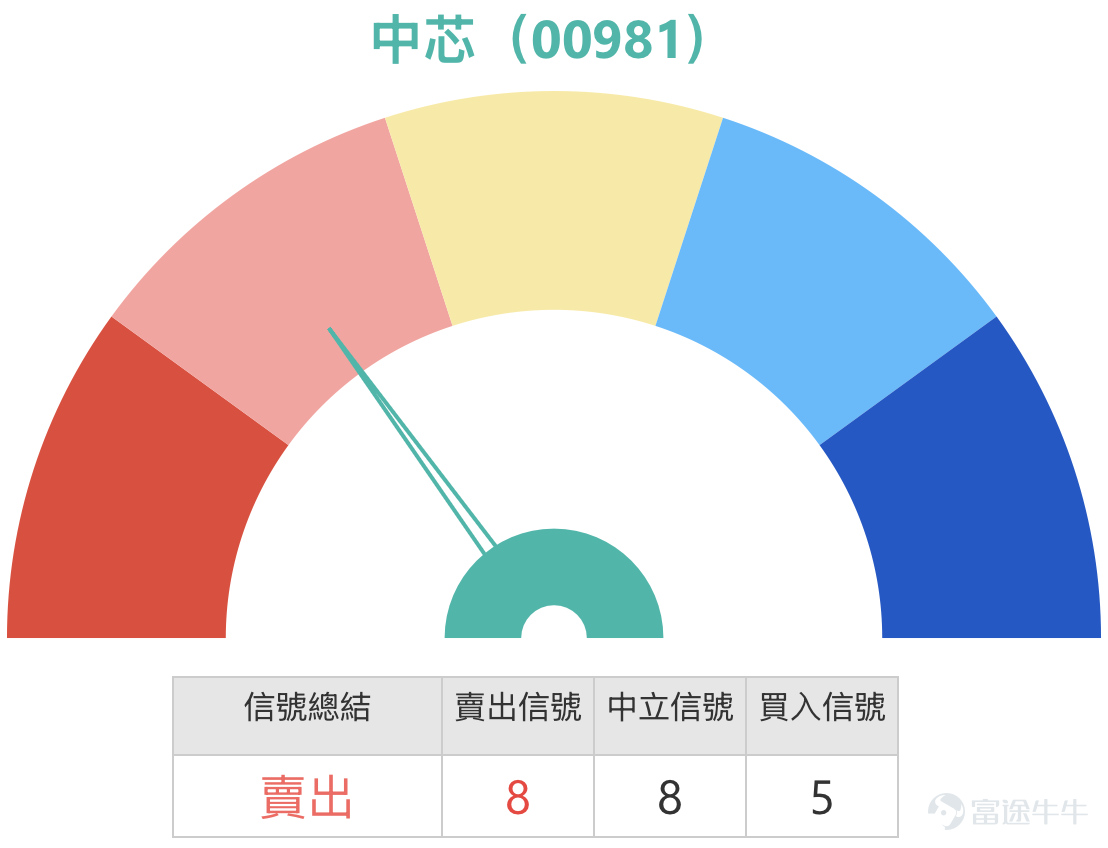
SMIC (0981.HK) showed significant strength on May 20, 2026, trading at HK$76.3, up 11.39%, with turnover surging to HK$14.546 billion. The share price reclaimed the 10-day moving average (MA) at HK$73.17 and the 30-day MA at HK$66.21, and rose further above the 60-day MA at HK$63.43, indicating a notably improved short-term technical structure. In terms of Bollinger Bands, the middle band is around HK$66.21, the upper band near HK$83.2, and the lower band at approximately HK$49.24. The current price has moved away from the lower band and is approaching the upper half of the band, signaling stabilized market sentiment, though still some distance from the upper band. The Relative Strength Index (RSI) has rebounded to 52, within the neutral zone—neither overbought nor oversold—suggesting room for further upside.
Among several oscillators, both the Williams %R and Stochastic Oscillator are in neutral territory. The Commodity Channel Index (CCI) and Bull/Bear Power indicators are generating buy signals, reflecting accumulating short-term buying momentum. The ADX remains neutral, indicating that trend strength has not yet fully solidified; thus, the near-term outlook should still be viewed as range-bound with a neutral bias. The MACD is issuing a buy signal, and the Ichimoku Cloud also gives a buy signal, although the Bollinger Bands remain neutral.
The strong price performance is supported by clear fundamental drivers. On May 15, SMIC held its earnings call, disclosing first-quarter 2026 revenue of RMB 17.617 billion, up 8.1% year-over-year, with a gross margin of 20.1%, exceeding the high end of prior guidance. For Q2, the company guided for sequential revenue growth of 14%–16% and a gross margin of 20%–22%. During the call, management highlighted robust demand for AI-related chips—including power management, data transmission, and data driving components—and noted it has already negotiated price increases with customers. These pricing effects began materializing in Q2 and will become more pronounced in Q3 and Q4. SMIC aims to achieve stable or slightly improving gross margins despite high depreciation pressure. This set of results provides a solid foundation for positive market expectations.
Major brokerages significantly revised their views on May 18 and 19, generally raising target prices or upgrading ratings. Goldman Sachs slightly increased its H-share target price from HK$134 to HK$135, maintaining a 'Buy' rating, citing five key drivers: AI-driven demand for analog/logic chips, global peers shifting focus to AI leading to sustained demand for mainstream products, ongoing capacity expansion, domestic clients increasing orders due to supply security concerns, and faster growth in high-margin products compared to traditional ones. Citi upgraded its rating from 'Neutral' to 'Buy' and raised its target price from HK$75 to HK$90, adding SMIC to its '90-Day Positive View' list, citing China’s localization push, AI-related demand, and SMIC’s leadership in advanced nodes among Chinese foundries as supporting a valuation re-rating. CICC maintained its 'Outperform' rating and HK$100 target price. CLSA raised its target to HK$94.1 while keeping an 'Outperform' rating. HSBC Research lowered its target price from HK$93 to HK$89 but retained a 'Buy' rating, forecasting 28% year-over-year revenue growth in 2026. JPMorgan upgraded its rating from 'Underweight' to 'Neutral' and lifted its target price from HK$57 to HK$67, reflecting broader price increases.
Fund flows provided direct support for the rally. On the morning of May 20, institutional investors recorded net buying of over HK$2.241 billion in SMIC, ranking first across the entire market, with the semiconductor sector as a whole seeing net inflows exceeding HK$10.9 billion. However, on May 19, institutional funds posted a net outflow of HK$378 million, reflecting short-term divergence ahead of the sharp rebound. Regarding southbound capital, net selling totaled 840,000 shares over the five days through May 19, indicating that the short-term trend has not yet fully solidified. Overall, fund flows have shifted from cautious to actively supportive, providing a positive tailwind for near-term price action.

Support and Resistance Level Analysis
On the downside, HK$67 is the first key support level. This level lies between the current price and the 30-day moving average at HK$66.21, making it a zone where short-term buying interest is likely to emerge during pullbacks. HK$64 serves as the second line of support, aligning with the area below the 30-day moving average. If the stock breaks below HK$67 and continues to decline, HK$64 will become a critical level to watch. The current price is about HK$8 above the 30-day moving average, indicating a significant short-term rally; thus, these two support levels will be essential reference points for assessing the nature of any profit-taking correction.
On the upside, HK$78.20 represents the most immediate resistance within the current technical framework, corresponding to a key resistance zone in the upper-middle region of the Bollinger Bands. HK$83.20 is the next resistance level, coinciding with the upper Bollinger Band. A breakout above HK$83.20 would signal further expansion of short-term momentum, potentially propelling the stock toward higher levels.
Notably, the stock surged sharply from a May 19 closing price of HK$68.50 to HK$74.40—a single-day gain exceeding 8.6%. While earnings results and guidance provide fundamental support, the pressure for consolidation at elevated levels should not be overlooked given the magnitude of the recent rally.
The SMIC warrants and callable bull/bear contracts (CBBCs) highlighted on May 18 posted significant gains over the two trading days through May 20. During this period, SMIC’s underlying share price rose by 8.30%. Among the four products, SG SMIC Bull Certificate (64611) delivered the strongest performance, surging 139%, demonstrating the high leverage elasticity typical of at-the-money bull certificates during sharp single-day rebounds in the underlying stock. UBS Group SMIC Bull Certificate (64257) followed closely with a 138% gain. Both products were structured with knock-out levels close to key support zones, enabling them to efficiently capture upward moves when the underlying stock rebounded from lows. Meanwhile, SG SMIC Call Warrant (26595) and BOC SMIC Call Warrant (27769) rose by 51% and 49%, respectively. Both warrants have exercise prices near HK$77.82 and HK$77.88—closely aligned with the first resistance level at HK$78.20. As the underlying stock broke strongly above multiple moving averages and approached this resistance zone, these call warrants exhibited moderate sensitivity to upward price movements. This data illustrates that, under the catalyst of better-than-expected earnings and AI-driven positive news, at-the-money call warrants effectively captured upward price action, while bull certificates offered more direct price responses during the initial rebound phase. $SG-SMIC@EC2609C.C (26595.HK)$$BI-SMIC@EC2609D.C (27769.HK)$$UB#SMIC RC2610K.C (64257.HK)$

Warrants and CBBC Deployment Recommendations
Given SMIC’s current technical positioning and market environment, investors may consider the following product terms based on their outlook for future price movement. Each product is linked to specific support or resistance levels.
For call warrants, consider SG Call Warrant (26595) $SG-SMIC@EC2609C.C (26595.HK)$ This warrant has an exercise price of HK$77.82 and an effective gearing of approximately 4.7x. Its key advantage lies in its balanced combination of gearing and implied volatility. With the exercise price set near the first resistance level at HK$78.20, this call warrant offers high price sensitivity if SMIC pulls back slightly and then successfully breaks above HK$78.20, thanks to the optimal proximity between the exercise price and the underlying share price. BOC Call Warrant (27769) has an exercise price of HK$77.88 and effective gearing of around 4.6x, also featuring a well-balanced profile in terms of gearing and implied volatility. Both warrants target the upper resistance zone and are suitable for investors who expect the stock to consolidate and then mount another strong challenge at HK$78.20, allowing participation in the potential breakout with moderate leverage.
For put warrants, consider HSBC Put Warrant (21090) $HS-SMIC@EP2607B.P (21090.HK)$ With a strike price of HK$62.81 and an effective leverage of approximately 10.1x, this put warrant features the lowest premium among comparable products, with both implied volatility and leverage positioning considered favorable. The strike price is set just below the second support level at HK$64. If SMIC’s share price fails to hold above the first support at HK$67 and declines further, this put warrant—due to its relatively high leverage—will exhibit significant price elasticity. UBS Group put warrant (28854) has a strike price of HK$62.58 and an effective leverage of around 4.1x, offering the lowest implied volatility while maintaining reasonable leverage. Both products have strike prices aligned with key downside support zones, making them suitable for investors who anticipate limited short-term upside momentum and expect the stock to retest support levels, allowing for appropriate defensive positioning.
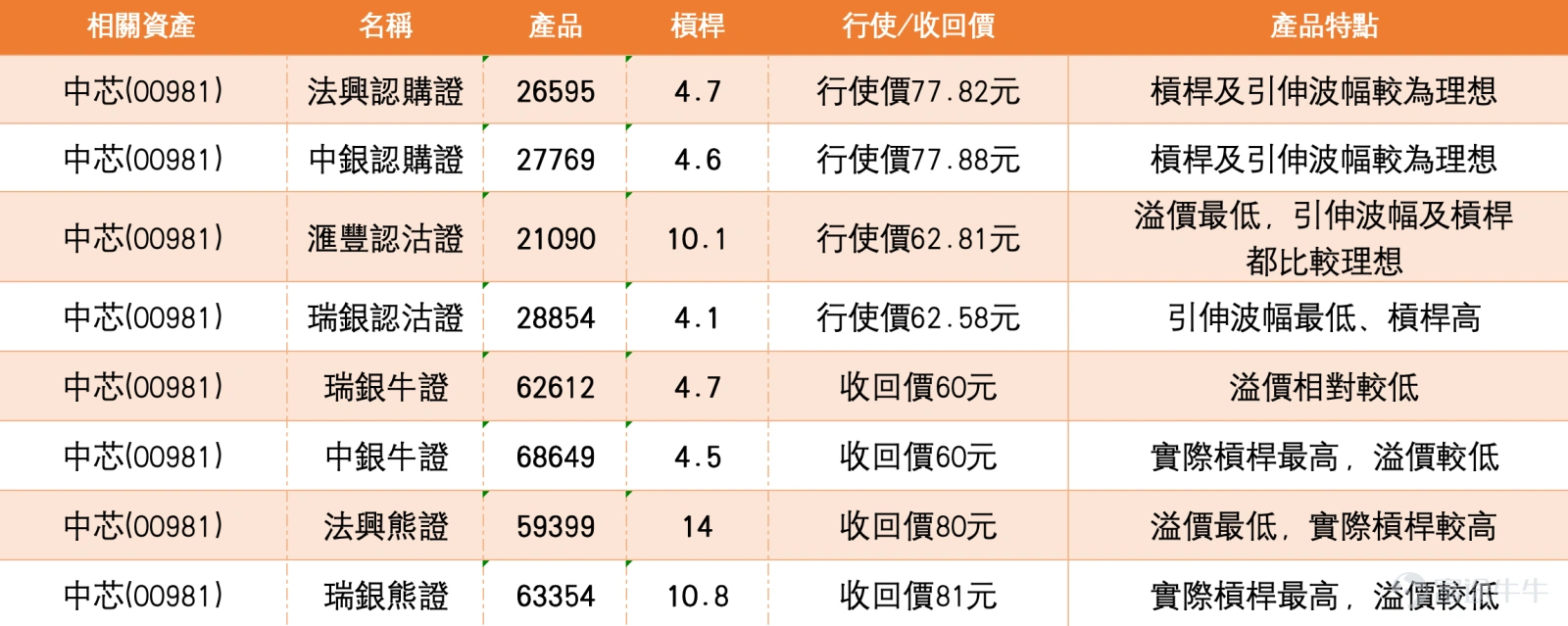
On the bull warrant side, UBS Group bull warrant (62612) has a call price of HK$60 and an effective leverage of approximately 4.7x, with a relatively low premium. The call price is set below the second support level at HK$64, providing a certain safety margin. It suits investors who expect SMIC’s share price to stabilize within the HK$67–HK$64 range and maintain its rebound trajectory. Should the stock successfully hold support and extend its rally, this bull warrant’s leverage effect can capture upward price movements, while its call price offers a clear risk reference point. Bank of China bull warrant (68649) also features a HK$60 call price and an effective leverage of about 4.5x, standing out with the highest effective leverage among similar products and a relatively low premium. Both bull warrants have similar terms, using lower call prices as buffers, and are ideal for investors with strong confidence in SMIC’s rebound trend who seek greater operational flexibility.
Regarding bear warrants, Société Générale bear warrant (59399) has a call price of HK$80 and an effective leverage of approximately 14x, featuring the lowest premium and relatively high effective leverage. The call price is set below the second resistance at HK$83.20 and maintains a comfortable distance from the first resistance at HK$78.20. If SMIC’s share price rebounds to around HK$78.20 and then retreats, this bear warrant can effectively reflect downward pressure on the underlying stock, serving as a tactical tool for short-term positioning in scenarios where resistance holds. UBS Group bear warrant (63354) has a call price of HK$81 and an effective leverage of around 10.8x, offering the highest effective leverage among peers and a relatively low premium. Both bear warrants set their call prices above key resistance zones, providing a buffer zone. They are suitable for investors expecting the stock to consolidate again after testing highs without achieving a breakout. Their high leverage characteristics deliver strong price elasticity during periods of heightened short-term volatility in the underlying stock.
Overall, SMIC’s current technical structure has shifted from previously weak conditions to short-term improvement. However, after a single-day sharp rally, near-term consolidation pressure cannot be ignored. The HK$67 level is critical to watch for signs of a healthy pullback, while HK$78.20 represents a key test for any potential upside extension. In the near term, the stock remains supported by positive factors such as AI-driven demand, better-than-expected earnings guidance, and upgrades from major brokerages. Nevertheless, profit-taking pressure following recent gains warrants attention. For short-term strategies, range-bound trading should be the primary approach: holding above HK$67 supports continuation of the rebound, while a breakout above HK$78.20 requires accompanying volume confirmation to validate further upside momentum. A break below HK$64 would necessitate a reassessment of risk. Selection of derivative products such as warrants, bull, and bear certificates should be based on individual risk tolerance and technical outlook, with strict position management.
Friendly reminder: This article does not constitute any investment advice. It is for reference only and does not constitute any form of investment recommendation. The market data, opinions, and analysis contained herein may change at any time without prior notice. We assume no responsibility for any loss or damage caused by reliance on the information in this article. Technical analysis only shows whether certain technical conditions are met; a comprehensive evaluation of asset performance should be conducted using additional data. Trading decisions should not be made solely based on this article. Please note that past performance is not indicative of future results. Follow Jenny's Warrants HKEX column for more professional insights.
Risk Disclaimer: The above content only represents the author's view. It does not represent any position or investment advice of Futu. Futu makes no representation or warranty.Read more

Comment (1)
to post a comment
2