
Hang Seng Tech continues to underperform—what should you do if you're not standing in the 'light'?
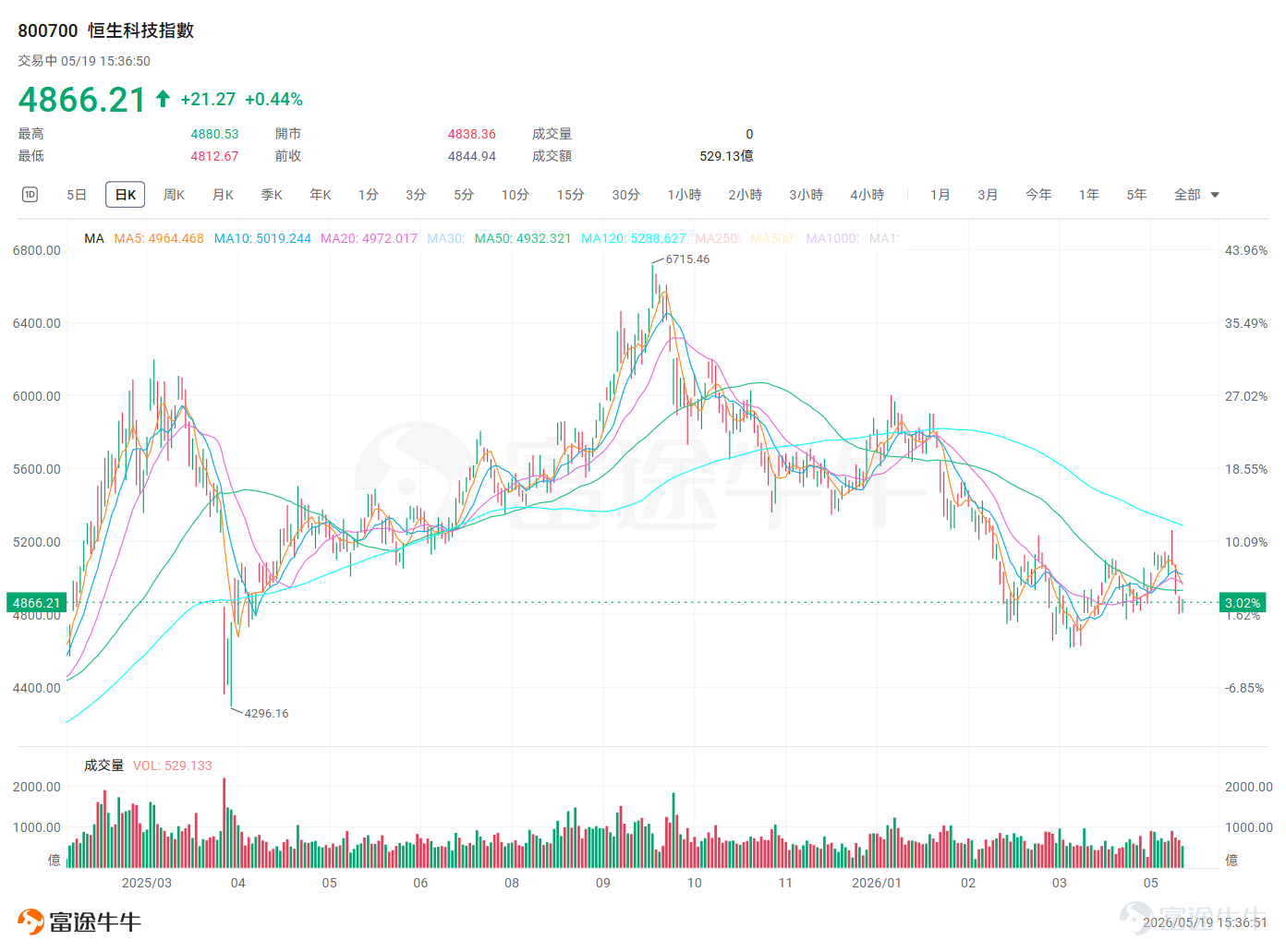
As you watch the numbers on your screen, $Hang Seng TECH Index (800700.HK)$ you might be experiencing a silent psychological storm. Market chatter fills your ears: 'It’s down again,' 'The bottom isn’t in yet.' And one even sharper phrase keeps hammering your nerves—'Tariff Day low.'
This level, seemingly weighted with historical significance and psychological dread, refers to the low struck on April 9, 2025.Even though the current index level remains above that low, the psychological pressure conveyed by the word 'approaching' weighs far more heavily than the numbers themselves.
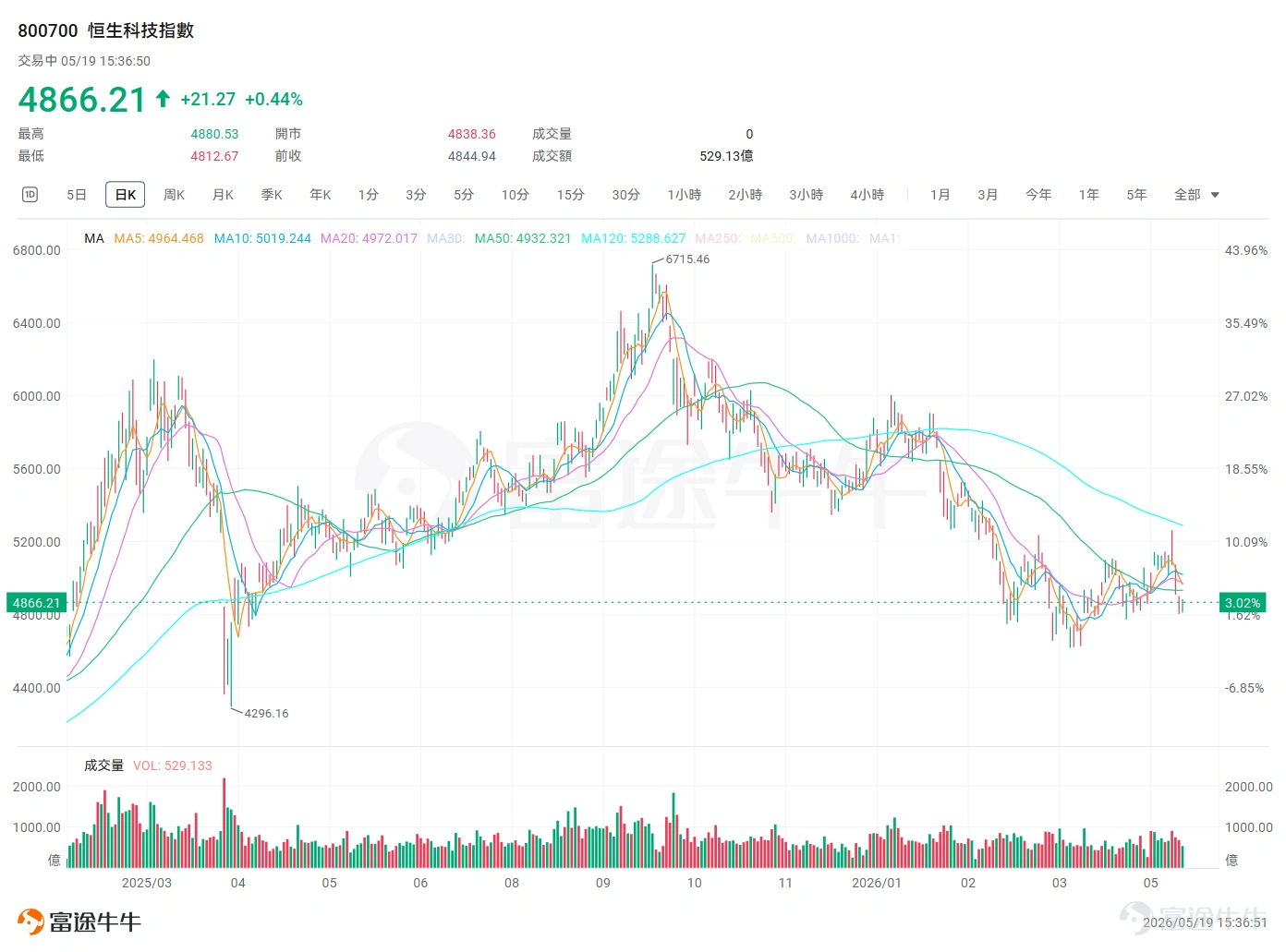
According to behavioral finance research, investors generally exhibit loss aversion—the pain of experiencing a loss far outweighs the pleasure derived from an equivalent gain. As the Hang Seng Tech Index slid from its peak and repeatedly tested and fluctuated just above the 'tariff floor,' each downward move has intensified this pain.
Last Wednesday $BABA-W (09988.HK)$ 、 $TENCENT (00700.HK)$ 's earnings report may have briefly reignited hope for many Hang Seng Tech holders, but on Thursday,the market delivered another classic 'gap-up open followed by a decline,'and then fell for three consecutive days under the influence of overseas markets, only showing signs of recovery today.
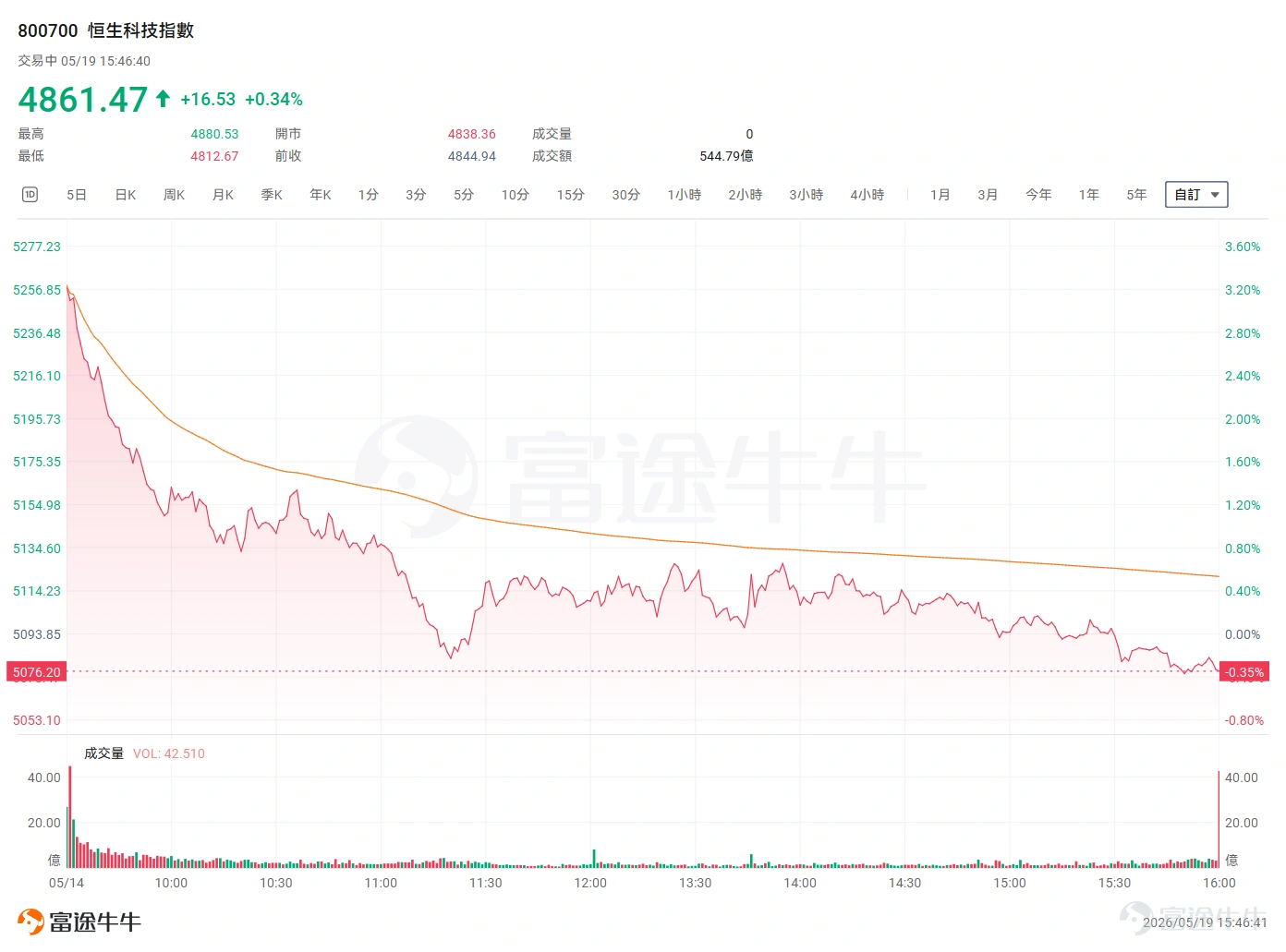
Hang Seng Tech Index performance on May 14: from a +3% opening gain to turning red
Why is it so weak?
The recent weakness in the Hang Seng Tech Index is not attributable to a single factor, but rathera confluence of pressures stemming from overseas liquidity, domestic fundamentals, AI-related narratives, funding conditions, and geopolitical risks.This stands in stark contrast to the resilience shown by other Hong Kong market segments, such as high-dividend stocks and hard-AI plays.
ConstantThe Hang Seng Tech Index's major constituents, especially internet platforms (Tencent, Alibaba, $MEITUAN-W (03690.HK)$etc.), have relatively high foreign ownership;whenever overseas liquidity tightens (a stronger dollar, rising U.S. Treasury yields) or geopolitical risks escalate, sectors where foreign investors hold pricing power are hit first and face significant net outflow pressure. In contrast, high-dividend stocks and hard-AI segments accessible via Stock Connect are priced by southbound capital (Chinese domestic funds) and are less affected.
U.S. April PPI rose 6% year-over-year (a three-year high), and the 30-year U.S. Treasury yield breached the critical psychological threshold of 5%, triggering global liquidity withdrawal—with Hong Kong equities bearing the brunt.Although markets expect Walsh (the new Fed Chair) to potentially implement a 'balance sheet runoff plus rate cuts' mix after taking office, the stronger-than-expected near-term PPI data has delayed rate-cut expectations and sharply increased the probability of further hikes, creating valuation headwinds.
Internet companies’ fundamentals are highly correlated with consumer sentiment. Consumer activity has remained persistently weak since the second half of 2025, leading to continuous downward revisions in earnings expectations for Hang Seng Tech constituents. Meanwhile, the AI investment narrative has shifted from large language models last year to bottleneck hardware components such as memory, optical modules, and CPUs, prompting market skepticism about the monetization capabilities of China’s major tech giants.
Meituan (food delivery subsidy wars), $LI AUTO-W (02015.HK)$ / $XPENG-W (09868.HK)$ / $NIO-SW (09866.HK)$ (intense competition in the new energy vehicle sector) and other heavyweight stocks have all faced core business pressures over the past year.When overall market risk appetite contracts (due to geopolitical risks, elevated oil prices, etc.), capital tends to flow toward low-volatility, high-dividend defensive assets; yet when risk appetite rebounds and investors embrace the AI narrative, these stocks struggle to attract capital.
Waters flow east for ten years, then west for ten years.
During the previous tech bull market in 2020–2021, the Hang Seng Tech Index was wildly popular among investors and briefly reached 11,000 points—an example of perfect timing with favorable macro conditions.
Why did it rise back then? Not because investors suddenly became smarter that year, but due to global liquidity glut (the Fed’s aggressive monetary easing) plus China’s internet sector spinning seemingly endless growth stories (electric vehicles, food delivery, cloud computing, etc.). What people were buying wasn’t the present—they were betting on expectations for the next decade.
However, the underlying industry trend hasn’t vanished—it’s simply shifting gears. The springtime for industries has never disappeared; it has merely moved from real estate and consumer internet to AI-driven hard tech.
The losses incurred by buying at the peak during 2020–2021 were essentially payments for that 'irrational exuberance.' This isn’t a reflection of your skill level—it’s the harsh reality of market cycles repeating themselves.The profits you now see others making in memory chips and optical modules have come only after the entire sector endured an equally long and painful downturn.
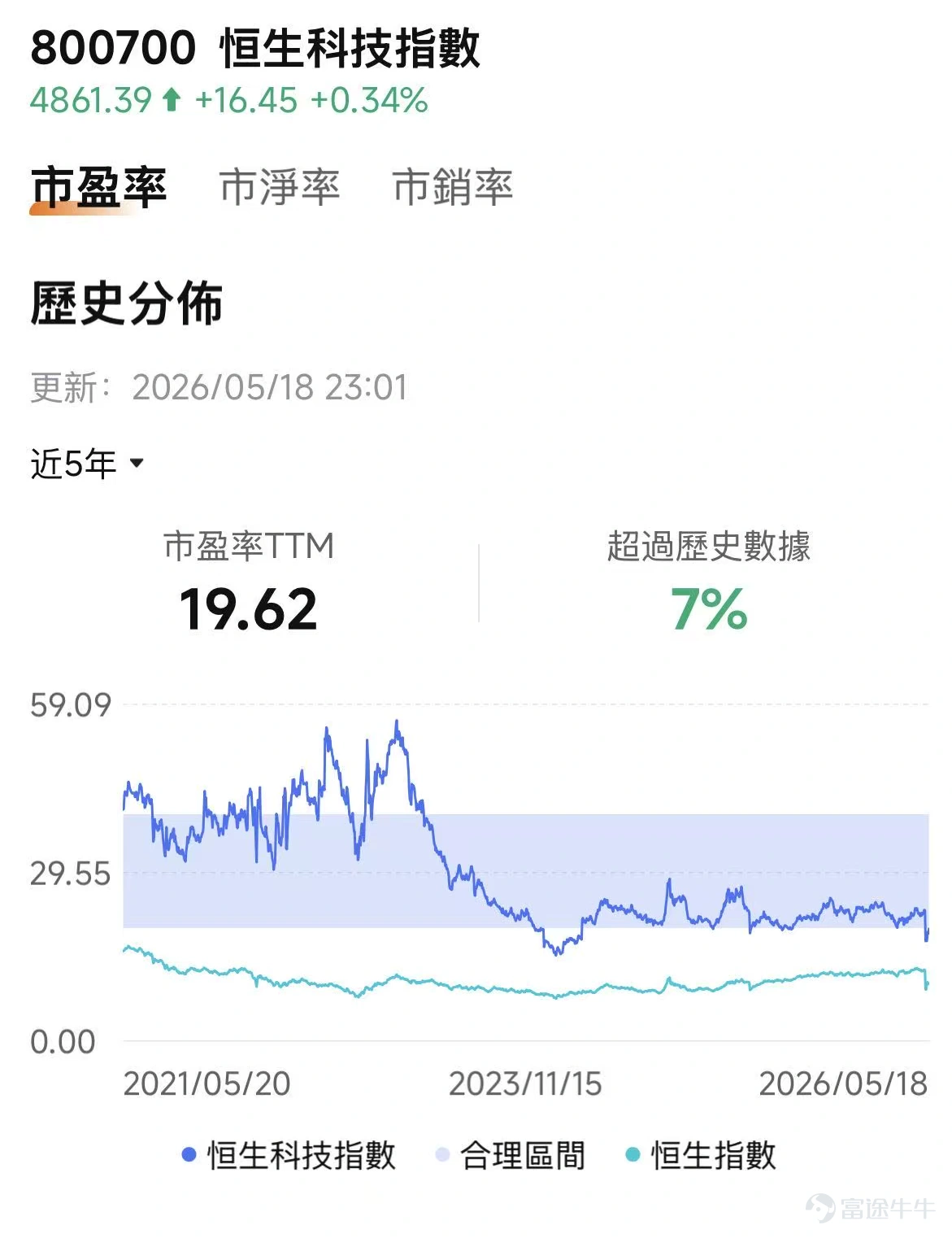
After a prolonged period of adjustment and valuation digestion, the Hang Seng Tech Index now trades at a price-to-earnings (PE) ratio of less than 20x, sitting at the 7th percentile of its valuation range over the past five years.
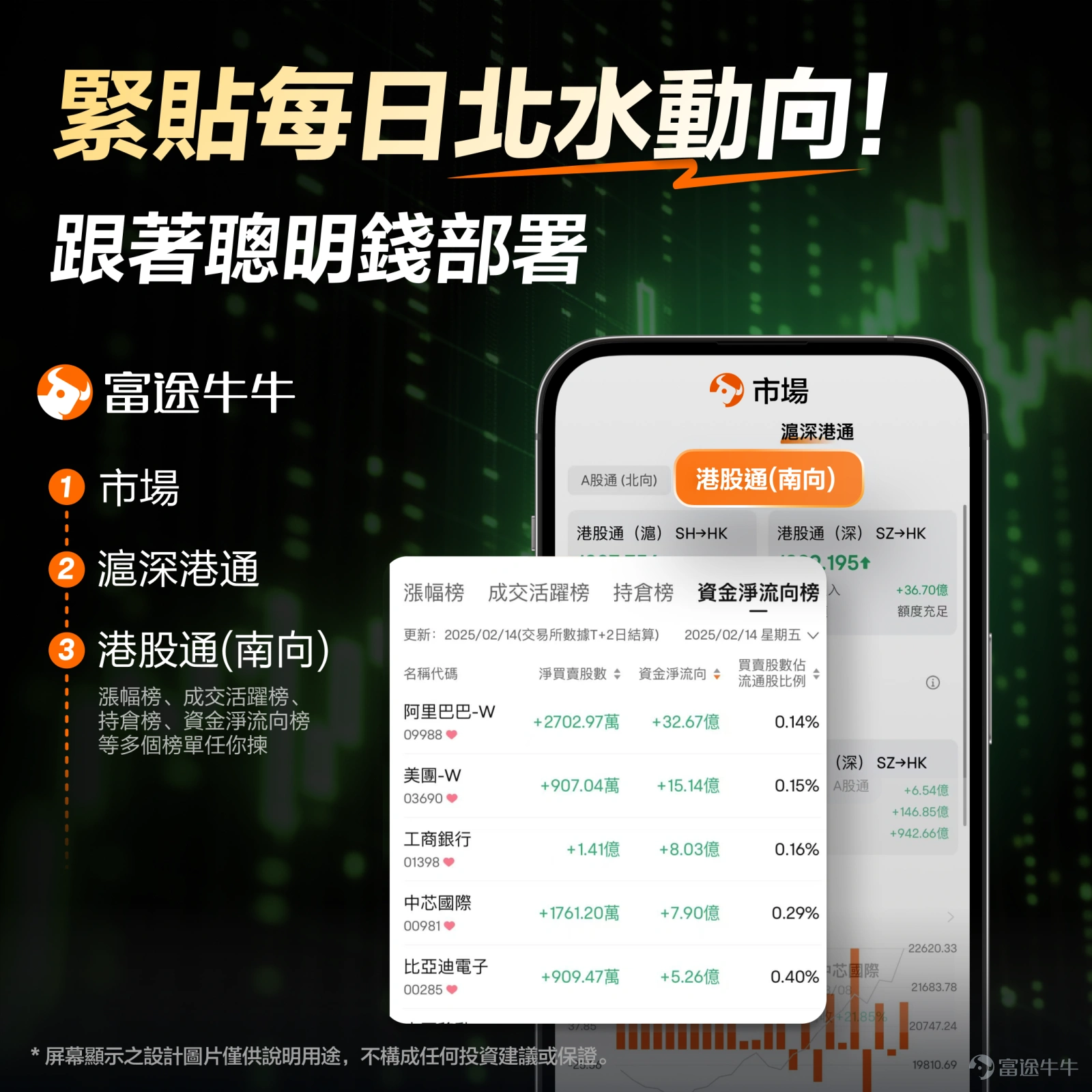
According to Futubull data, southbound capital prefers 'buying on dips' rather than 'chasing rallies'—since the start of 2024, net southbound buying volume has mostly shown a negative correlation with daily Hang Seng Index movements. In other words, professional investors are buying more aggressively as prices fall, and southbound capital’s pricing power continues to rise.
Chasing rallies and cutting losses prematurely—getting hit on both ends
Investors often fall into a common trap:They chase in when prices rise and sell at a loss when prices drop—repeating this cycle a few times can wipe out their principal entirely.
For example, during the recent period when the Hang Seng Tech Index kept falling, you watched your unrealized losses grow larger and felt anxious. In a moment of panic, you bit the bullet and sold at a loss—only to turn around and see $CSOP SK Hynix Daily (2x) Leveraged Product (07709.HK)$ this stock has performed well recently, backed by heavy assets and the HALO concept, so you chased it in.Then, just like these past couple of days, SK Hynix also pulled back, trapping you in a loss right after you entered—and now you’re even more nervous. If you cut your losses, you fear it’ll rebound immediately; if you hold on, you worry it’ll keep falling. Getting hit from both sides completely shatters your mindset. This kind of chasing highs and selling lows, constantly jumping in and out, is often the fastest way to lose money in a market cycle.
If you sold during the Hang Seng Tech Index’s decline because you were 'afraid it would keep falling' rather than because 'the underlying companies’ fundamentals had deteriorated,' then your selling decision was driven by emotion, not value. Similarly, did you buy into SK Hynix because 'it’s been rising lately,' or because 'its memory business genuinely holds long-term competitive advantages'? If it’s the former, then your buying logic is equally emotional.
True reflection means stripping away price volatility and returning to three core questions:
Has the fundamental outlook been impaired?Does the company you hold still maintain an irreplaceable position in its industry through its core products or technology? If the answer is 'yes,' then the stock’s decline reflects only market sentiment—not a collapse in intrinsic value.
Does the valuation offer a sufficient margin of safety?Has the stock price already priced in the most pessimistic expectations? What risks remain unpriced by the market?
Is the decline primarily driven by market sentiment and macroeconomic volatility? If the company’s fundamentals remain solid and its business is still on a growth trajectory, but its share price has declined primarily due to broad weakness in the Hang Seng Index, foreign capital outflows, or short-term negative rumors, then you are likely experiencing an 'emotional overreaction.'Historically, due to its offshore market characteristics, Hong Kong’s high-quality assets have frequently been 'overpriced' by sentiment.,This may precisely create an opportunity.
Before making a decision, ask yourself a tough question:If I buy (or hold) and the stock price immediately drops another 20% or even 30%, can I face that calmly? Will my life and mental state collapse?This test instantly reveals your true risk tolerance and whether your position size is appropriate. If the answer is no, it means your position has already exceeded your psychological comfort zone, and your top priority should not be seeking opportunities, but ratherreducing your position to a level where you can sleep soundly at night. A light position is the most critical safeguard for maintaining rationality and avoiding panic selling at the bottom.
The Hang Seng Tech Index continues to trade sideways around the 5,000 mark, approaching its recent tariff-related low. Market sentiment remains pessimistic, and the divergence between bulls and bears keeps widening. The broader Hong Kong market is stuck in a phase of 'valuation floor but constrained by external liquidity,' lacking momentum for a sustained near-term reversal.
First-quarter results from internet leaders have sent positive signals—Alibaba, Tencent, and JD.com are ramping up capital expenditures, cloud revenue growth expectations are strong, and Baidu’s AI-related revenue now accounts for more than half of its total.However, the Hang Seng Tech Index has not yet seen a material upward revision in its overall earnings outlook and remains in a stabilization phase.
Market bottoming is a prolonged process of repeatedly digesting floating supply and repairing sentiment. In the near term, sideways consolidation is most likely. Trade time for space—patiently wait for market sentiment to recover and corporate fundamentals to materialize, and generate steady returns through valuation recovery and earnings growth.
Risk Disclaimer: The above content only represents the author's view. It does not represent any position or investment advice of Futu. Futu makes no representation or warranty.Read more


Comments (34)
to post a comment
77
158