
English
Back
Open Account
华尔街见闻
wrote a post · May 15 18:43

Laifen wants to answer the next question for China's small home appliance sector

In recent years, the 'cross-scenario expansion' of consumer brands has almost become a collective move.
Mobile phone brands are making cars, imaging brands are producing robotic vacuums, and home appliance brands are entering the beauty device market. More and more companies are trying to shed their original labels and enter broader consumer scenarios.
This is mainly due to the limited growth space for single product categories nearing its ceiling. Taking smartphones as an example, IDC data shows that China’s smartphone market shipments will be about 285 million units in 2025, representing a slight year-on-year decrease of 0.6%.
For consumer brands, 'moving upward' cannot rely solely on a single hit product; they must also increase the customer lifetime value by creating synergies in more life scenarios.
This is similar to the logic behind the later stages of internet industry development. When the dividend from a single entry point reaches its peak, enterprises must transition from standalone products to platform capabilities, moving from one-time transactions to longer-term customer relationships.
However, whether the boundary expansion will succeed depends on whether the new products can meet consumers' expectations based on the brand’s original experience standards.
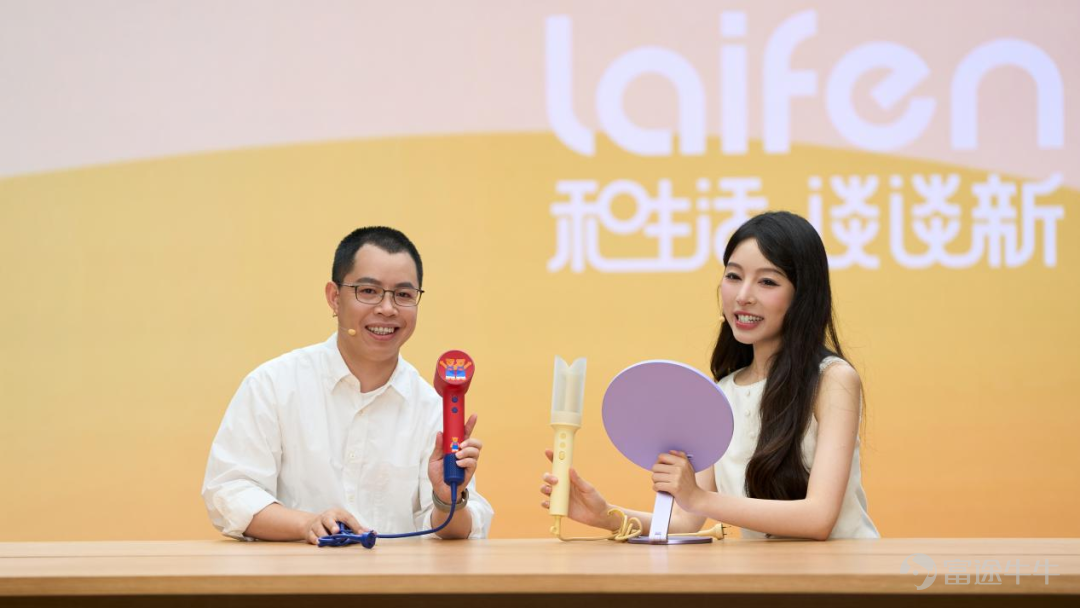
Recently, Laifen launched a series of new products including the T2 Pro shaver, portable foldable fan, makeup mirror, curling iron, children's oscillating electric toothbrush, and floor-standing eye protection lamp.
In recent years, the 'cross-scenario expansion' of consumer brands has almost become a collective move. Mobile phone brands are making cars, imaging brands are producing robotic vacuums, and home appliance brands are entering the beauty device market. More and more companies are trying to shed their original labels and enter broader consumer scenarios. This is mainly due to the limited growth space for single product categories nearing its ceiling. Taking smartphones as an example, IDC data shows that China’s smartphone market shipments will be about 285 million units in 2025, representing a slight year-on-year decrease of 0.6%. For consumer brands, 'moving upward' cannot rely solely on a single hit product; they must also increase the customer lifetime value by creating synergies in more life scenarios. This is similar to the logic behind the later stages of internet industry development. When the dividend from a single entry point reaches its peak, enterprises must transition from standalone products to platform capabilities, moving from one-time transactions to longer-term customer relationships. However, whether the boundary expansion will succeed depends on whether the new products can meet consumers' expectations based on the brand’s original experience standards. Recently, Laifen launched a series of new products including the T2 Pro shaver, portable foldable fan, makeup mirror, curling iron, children's oscillating electric toothbrush, and floor-standing eye protection lamp. (Laifen founder Ye Hongxin showcases new products such as hair dryers, curling irons, and makeup mirrors) This is the first time in its seven-year history that Laifen has launched new products using a multi-category matrix approach. This naturally raises questions: Is Laifen methodically expanding its boundaries, or is this an aggressive category expansion? In fact, this is also a growth proposition faced by Chinese small home appliance brands after their breakout hits. When 'single product dominance' fades...
(Laifen founder Ye Hongxin showcases new products such as hair dryers, curling irons, and makeup mirrors)
This is the first time in its seven-year history that Laifen has launched new products using a multi-category matrix approach.
This naturally raises questions: Is Laifen methodically expanding its boundaries, or is this an aggressive category expansion?
In fact, this is also a growth proposition faced by Chinese small home appliance brands after their blockbuster hits. As the dividends of relying on 'single-product dominance' gradually fade, transitioning to building an all-scenario product matrix has become a necessary step to cross cycles. iRobot, the pioneer of robotic vacuum cleaners, serves as a typical case study, as it eventually had to file for bankruptcy due to long-term reliance on a single main business and pressure from intensified competition.
Whether Laifen can contribute a reference model for Chinese small home appliance brands to break through the growth ceiling is highly anticipated.
In recent years, the 'cross-scenario expansion' of consumer brands has almost become a collective move. Mobile phone brands are making cars, imaging brands are producing robotic vacuums, and home appliance brands are entering the beauty device market. More and more companies are trying to shed their original labels and enter broader consumer scenarios. This is mainly due to the limited growth space for single product categories nearing its ceiling. Taking smartphones as an example, IDC data shows that China’s smartphone market shipments will be about 285 million units in 2025, representing a slight year-on-year decrease of 0.6%. For consumer brands, 'moving upward' cannot rely solely on a single hit product; they must also increase the customer lifetime value by creating synergies in more life scenarios. This is similar to the logic behind the later stages of internet industry development. When the dividend from a single entry point reaches its peak, enterprises must transition from standalone products to platform capabilities, moving from one-time transactions to longer-term customer relationships. However, whether the boundary expansion will succeed depends on whether the new products can meet consumers' expectations based on the brand’s original experience standards. Recently, Laifen launched a series of new products including the T2 Pro shaver, portable foldable fan, makeup mirror, curling iron, children's oscillating electric toothbrush, and floor-standing eye protection lamp. (Laifen founder Ye Hongxin showcases new products such as hair dryers, curling irons, and makeup mirrors) This is the first time in its seven-year history that Laifen has launched new products using a multi-category matrix approach. This naturally raises questions: Is Laifen methodically expanding its boundaries, or is this an aggressive category expansion? In fact, this is also a growth proposition faced by Chinese small home appliance brands after their breakout hits. When 'single product dominance' fades...
What’s rare is being 'both functional and accessible'
The Chinese market is never short of cheap or high-priced products.
With a highly mature supply chain and fierce competition, whether it's hairdryers, shavers, handheld fans, vanity mirrors, or curling irons, consumers can easily find affordable options on e-commerce platforms.
The Chinese market is also not lacking in premium products. Consumer choices include high-end offerings that command a premium based on brand heritage, technological barriers, and superior experience, as well as products that inflate prices through conceptual packaging, marketing narratives, and information asymmetry.
What is truly scarce is the third type of product: high quality, excellent experience, good design, with a cost structure that isn't low but priced just right for ordinary consumers to afford.
Products that meet these characteristics are rare. Precisely because of this, once such products appear on the market, they often become blockbusters.
Over the past few years, the rapid market recognition of Laifen’s high-speed hairdryer essentially followed this path.
In 2025, Laifen's high-speed hairdryer officially topped the global sales charts for its category, ranking first in the domestic market for three consecutive years with cumulative sales exceeding 20 million units.
In recent years, the 'cross-scenario expansion' of consumer brands has almost become a collective move. Mobile phone brands are making cars, imaging brands are producing robotic vacuums, and home appliance brands are entering the beauty device market. More and more companies are trying to shed their original labels and enter broader consumer scenarios. This is mainly due to the limited growth space for single product categories nearing its ceiling. Taking smartphones as an example, IDC data shows that China’s smartphone market shipments will be about 285 million units in 2025, representing a slight year-on-year decrease of 0.6%. For consumer brands, 'moving upward' cannot rely solely on a single hit product; they must also increase the customer lifetime value by creating synergies in more life scenarios. This is similar to the logic behind the later stages of internet industry development. When the dividend from a single entry point reaches its peak, enterprises must transition from standalone products to platform capabilities, moving from one-time transactions to longer-term customer relationships. However, whether the boundary expansion will succeed depends on whether the new products can meet consumers' expectations based on the brand’s original experience standards. Recently, Laifen launched a series of new products including the T2 Pro shaver, portable foldable fan, makeup mirror, curling iron, children's oscillating electric toothbrush, and floor-standing eye protection lamp. (Laifen founder Ye Hongxin showcases new products such as hair dryers, curling irons, and makeup mirrors) This is the first time in its seven-year history that Laifen has launched new products using a multi-category matrix approach. This naturally raises questions: Is Laifen methodically expanding its boundaries, or is this an aggressive category expansion? In fact, this is also a growth proposition faced by Chinese small home appliance brands after their breakout hits. When 'single product dominance' fades...
(Laifen's hairdryers and electric shavers have both gained a solid foothold)
This also served as an inspiration for Laifen itself: even in a mature small appliance category like hairdryers, by re-engineering technology, design, and user experience, it is still possible to create a blockbuster product.
In recent years, the 'cross-scenario expansion' of consumer brands has almost become a collective move. Mobile phone brands are making cars, imaging brands are producing robotic vacuums, and home appliance brands are entering the beauty device market. More and more companies are trying to shed their original labels and enter broader consumer scenarios. This is mainly due to the limited growth space for single product categories nearing its ceiling. Taking smartphones as an example, IDC data shows that China’s smartphone market shipments will be about 285 million units in 2025, representing a slight year-on-year decrease of 0.6%. For consumer brands, 'moving upward' cannot rely solely on a single hit product; they must also increase the customer lifetime value by creating synergies in more life scenarios. This is similar to the logic behind the later stages of internet industry development. When the dividend from a single entry point reaches its peak, enterprises must transition from standalone products to platform capabilities, moving from one-time transactions to longer-term customer relationships. However, whether the boundary expansion will succeed depends on whether the new products can meet consumers' expectations based on the brand’s original experience standards. Recently, Laifen launched a series of new products including the T2 Pro shaver, portable foldable fan, makeup mirror, curling iron, children's oscillating electric toothbrush, and floor-standing eye protection lamp. (Laifen founder Ye Hongxin showcases new products such as hair dryers, curling irons, and makeup mirrors) This is the first time in its seven-year history that Laifen has launched new products using a multi-category matrix approach. This naturally raises questions: Is Laifen methodically expanding its boundaries, or is this an aggressive category expansion? In fact, this is also a growth proposition faced by Chinese small home appliance brands after their breakout hits. When 'single product dominance' fades...
China's small appliance industry needs a 'blockbuster production line.'
It must be admitted that over the past few years, what left the deepest impression on outsiders about Laifen was indeed its image as an emerging brand that rapidly broke through with a star product.
The advantage of this approach is clear: concentrated resources, high efficiency, and greater ease in quickly building recognition in highly competitive markets.
However, the logic behind blockbusters has inherent limitations.
If a company becomes too deeply associated with a single product category for a long time, it may conversely limit consumer perception of its ability in new categories. The brand must first address external skepticism: you excel at category A, but can you do well in category B?
Looking back at Laifen's exploration into multiple product categories, it did not start with the current wave of rapid new product releases.
As early as 2023, Laifen attempted to enter the electric toothbrush market with the concept of 'integrated sweeping and vibration.' Due to the high compatibility between sweeping and vibration technology and the Bass brushing method, research institutions like 36Kr Research predicted that it could smoothly replicate the growth trajectory of its hairdryer. However, when the product was widely introduced into real-life scenarios, experience issues related to brush heads, charging, and other details gradually surfaced, causing a noticeable fluctuation in the category's reputation.
By 2025, after four years of development, the company launched its razor with a fully CNC aluminum alloy body, stunning the entire industry with its industrial design, but faced initial production capacity constraints upon release.
These two attempts demonstrated that Laifen is not short on the insight or ability to find new product categories and redefine products. However, turning 'innovation in the lab' into 'high-quality supply in the market' consistently still requires improvements in its systematic engineering capabilities. After all, creatinghigh-quality, great experience, well-designed, and affordableproducts is no easy feat.
Therefore, the past two years (2024-2025) have been a painful period of 'catching up' and system rebuilding for Laifen, learning how to unify R&D, manufacturing, validation, sales, and organizational processes under one cohesive system.
In recent years, the 'cross-scenario expansion' of consumer brands has almost become a collective move. Mobile phone brands are making cars, imaging brands are producing robotic vacuums, and home appliance brands are entering the beauty device market. More and more companies are trying to shed their original labels and enter broader consumer scenarios. This is mainly due to the limited growth space for single product categories nearing its ceiling. Taking smartphones as an example, IDC data shows that China’s smartphone market shipments will be about 285 million units in 2025, representing a slight year-on-year decrease of 0.6%. For consumer brands, 'moving upward' cannot rely solely on a single hit product; they must also increase the customer lifetime value by creating synergies in more life scenarios. This is similar to the logic behind the later stages of internet industry development. When the dividend from a single entry point reaches its peak, enterprises must transition from standalone products to platform capabilities, moving from one-time transactions to longer-term customer relationships. However, whether the boundary expansion will succeed depends on whether the new products can meet consumers' expectations based on the brand’s original experience standards. Recently, Laifen launched a series of new products including the T2 Pro shaver, portable foldable fan, makeup mirror, curling iron, children's oscillating electric toothbrush, and floor-standing eye protection lamp. (Laifen founder Ye Hongxin showcases new products such as hair dryers, curling irons, and makeup mirrors) This is the first time in its seven-year history that Laifen has launched new products using a multi-category matrix approach. This naturally raises questions: Is Laifen methodically expanding its boundaries, or is this an aggressive category expansion? In fact, this is also a growth proposition faced by Chinese small home appliance brands after their breakout hits. When 'single product dominance' fades...
Expansion Confidence: In-House R&D and Production
Beyond technological innovation, manufacturing capability determines whether such transformations can be stably implemented. Especially during the multi-category expansion phase, more categories mean higher supply chain complexity, making risks to product consistency and quality stability more likely to be amplified.
The mega-factory that Laifen heavily invested in over the past two years and started operations in August last year is aimed at strengthening its manufacturing capabilities.
Leifeng's super factory currently boasts 200,000 square meters of factory space, equipped with production lines for motors, molding, spraying, and assembly. The self-sufficiency rate of its product components is close to 90%, truly keeping the critical manufacturing processes under its own control.
In recent years, the 'cross-scenario expansion' of consumer brands has almost become a collective move. Mobile phone brands are making cars, imaging brands are producing robotic vacuums, and home appliance brands are entering the beauty device market. More and more companies are trying to shed their original labels and enter broader consumer scenarios. This is mainly due to the limited growth space for single product categories nearing its ceiling. Taking smartphones as an example, IDC data shows that China’s smartphone market shipments will be about 285 million units in 2025, representing a slight year-on-year decrease of 0.6%. For consumer brands, 'moving upward' cannot rely solely on a single hit product; they must also increase the customer lifetime value by creating synergies in more life scenarios. This is similar to the logic behind the later stages of internet industry development. When the dividend from a single entry point reaches its peak, enterprises must transition from standalone products to platform capabilities, moving from one-time transactions to longer-term customer relationships. However, whether the boundary expansion will succeed depends on whether the new products can meet consumers' expectations based on the brand’s original experience standards. Recently, Laifen launched a series of new products including the T2 Pro shaver, portable foldable fan, makeup mirror, curling iron, children's oscillating electric toothbrush, and floor-standing eye protection lamp. (Laifen founder Ye Hongxin showcases new products such as hair dryers, curling irons, and makeup mirrors) This is the first time in its seven-year history that Laifen has launched new products using a multi-category matrix approach. This naturally raises questions: Is Laifen methodically expanding its boundaries, or is this an aggressive category expansion? In fact, this is also a growth proposition faced by Chinese small home appliance brands after their breakout hits. When 'single product dominance' fades...
(Laifen Super Factory Production Line)
Complementing its manufacturing capabilities is a verification system. Although small home appliances may seem to have low barriers to entry, frequent use makes consumers highly sensitive to details like safety, durability, feel, noise, heat, and battery life.
To this end, Leifeng invested 50 million yuan in building a reliability lab capable of supporting over 100 testing items. Each new product must pass at least 30 reliability tests before hitting the market.
In recent years, the 'cross-scenario expansion' of consumer brands has almost become a collective move. Mobile phone brands are making cars, imaging brands are producing robotic vacuums, and home appliance brands are entering the beauty device market. More and more companies are trying to shed their original labels and enter broader consumer scenarios. This is mainly due to the limited growth space for single product categories nearing its ceiling. Taking smartphones as an example, IDC data shows that China’s smartphone market shipments will be about 285 million units in 2025, representing a slight year-on-year decrease of 0.6%. For consumer brands, 'moving upward' cannot rely solely on a single hit product; they must also increase the customer lifetime value by creating synergies in more life scenarios. This is similar to the logic behind the later stages of internet industry development. When the dividend from a single entry point reaches its peak, enterprises must transition from standalone products to platform capabilities, moving from one-time transactions to longer-term customer relationships. However, whether the boundary expansion will succeed depends on whether the new products can meet consumers' expectations based on the brand’s original experience standards. Recently, Laifen launched a series of new products including the T2 Pro shaver, portable foldable fan, makeup mirror, curling iron, children's oscillating electric toothbrush, and floor-standing eye protection lamp. (Laifen founder Ye Hongxin showcases new products such as hair dryers, curling irons, and makeup mirrors) This is the first time in its seven-year history that Laifen has launched new products using a multi-category matrix approach. This naturally raises questions: Is Laifen methodically expanding its boundaries, or is this an aggressive category expansion? In fact, this is also a growth proposition faced by Chinese small home appliance brands after their breakout hits. When 'single product dominance' fades...
(Laifen Reliability Laboratory)
Although such investments do not directly translate into marketing buzz in the short term, they determine whether a brand can maintain its product quality and reputation over a longer period.
Deeper changes are happening within the organization. Since 2024, Leifeng has been building systems for research and development, manufacturing, design, and management, introducing technical and managerial talent from companies like DJI, Huawei, Midea, and Gree, while also upgrading internal teams and rebuilding process standards.
Though this process has not been easy—team transitions, integration, and standard upgrades have brought some growing pains—it has forged Leifeng’s ability to 'consistently produce through an organizational system.'
It is precisely because of completing a series of transformations in smart manufacturing, validation safeguards, team processes, and standards that Leifeng has the confidence to roll out a range of products, including handheld fans, into the market in 2026.
This product launch week by Leifeng is, in a sense, a landmark moment: transitioning from a single-product logic to a systematic approach.
However, while the ability to 'scale production' is in place, whether market recognition can be achieved ultimately depends on the reconstruction of product functionality and user experience. Can Laifen continue to innovate with products like high-speed brushless motors, integrated sweeping and vibration technology, and linear reciprocating shavers?
We need to start with a phrase that Ye Hongxin, the founder of Laifen, often mentions — first principles.
Take, for example, the handheld foldable fan AirFold recently launched by Laifen. Laifen realized that it wasn't addressing the issue of 'quick drying' as with hair dryers, but rather the need for long-lasting, stable, and comfortable airflow, placing greater emphasis on continuous airflow, low noise, portability, and battery performance.
In recent years, the 'cross-scenario expansion' of consumer brands has almost become a collective move. Mobile phone brands are making cars, imaging brands are producing robotic vacuums, and home appliance brands are entering the beauty device market. More and more companies are trying to shed their original labels and enter broader consumer scenarios. This is mainly due to the limited growth space for single product categories nearing its ceiling. Taking smartphones as an example, IDC data shows that China’s smartphone market shipments will be about 285 million units in 2025, representing a slight year-on-year decrease of 0.6%. For consumer brands, 'moving upward' cannot rely solely on a single hit product; they must also increase the customer lifetime value by creating synergies in more life scenarios. This is similar to the logic behind the later stages of internet industry development. When the dividend from a single entry point reaches its peak, enterprises must transition from standalone products to platform capabilities, moving from one-time transactions to longer-term customer relationships. However, whether the boundary expansion will succeed depends on whether the new products can meet consumers' expectations based on the brand’s original experience standards. Recently, Laifen launched a series of new products including the T2 Pro shaver, portable foldable fan, makeup mirror, curling iron, children's oscillating electric toothbrush, and floor-standing eye protection lamp. (Laifen founder Ye Hongxin showcases new products such as hair dryers, curling irons, and makeup mirrors) This is the first time in its seven-year history that Laifen has launched new products using a multi-category matrix approach. This naturally raises questions: Is Laifen methodically expanding its boundaries, or is this an aggressive category expansion? In fact, this is also a growth proposition faced by Chinese small home appliance brands after their breakout hits. When 'single product dominance' fades...
(Experimental demonstration of "natural airflow" at the Leifen launch event)
Different needs call for different technical solutions. As such, Laifen abandoned the mature high-speed motor technology used in hair dryers and adopted an entirely new axial flux motor design, resulting in a new product form that balances a folding structure, airflow, battery life, and comfort within a limited volume.
Although the technology was not simply reused, capabilities can be transferred across product categories.
For instance, the electric toothbrush and curling iron released by Laifen this time, though vastly different in application scenarios, both impose strict requirements on the precision of movement and intelligent control of the devices, which has led to the application of servo motor technology.
Similar 'common capabilities' are reflected in more details. The skin-friendly materials used in the curling iron and the SE 2 hair dryer demonstrate Laifen's long-term expertise in tactile sensation and surface treatment; the aluminum alloy bodies of the vanity mirror and shaver continue the tradition of high-end craftsmanship and precision machining; and both the vanity mirror and eye-care lamp emphasize high color-rendering index lighting, reflecting Laifen's systematic understanding of light quality and usage scenarios.
If one only looks at the product list — shavers, small fans, vanity mirrors, curling irons, children’s toothbrushes, and eye-care lamps — it might seem like an expansion in multiple directions, easily interpreted as uncontrolled boundary expansion.
But if we return to the underlying capabilities, these categories are not entirely unrelated: motors, structures, materials, craftsmanship, light sources, temperature control, surface treatment, and human-machine interaction form the common foundation among these products.
For many new consumer brands, expanding product categories can easily lead to two extremes.
One is complete reliance on supply chain selection, rapidly piling up SKUs, but lacking a unified experience among products; the other is an excessive focus on conceptual packaging, making long-term repurchase and reputation hard to build.
Laifen has adopted a self-research and self-production approach, leveraging its accumulated technology and manufacturing capabilities as a safety net. Through motor technology and industrial design expertise, it redefines a range of 'seemingly familiar but still experientially improvable' products.
If this system can be validated across more categories, Laifen could demonstrate to the market that Chinese small appliance brands are not limited to producing just one successful single product. Instead, they can grow into true century-old brands by relying on systematic capabilities in R&D, manufacturing, design, and distribution channels.
In recent years, the 'cross-scenario expansion' of consumer brands has almost become a collective move. Mobile phone brands are making cars, imaging brands are producing robotic vacuums, and home appliance brands are entering the beauty device market. More and more companies are trying to shed their original labels and enter broader consumer scenarios. This is mainly due to the limited growth space for single product categories nearing its ceiling. Taking smartphones as an example, IDC data shows that China’s smartphone market shipments will be about 285 million units in 2025, representing a slight year-on-year decrease of 0.6%. For consumer brands, 'moving upward' cannot rely solely on a single hit product; they must also increase the customer lifetime value by creating synergies in more life scenarios. This is similar to the logic behind the later stages of internet industry development. When the dividend from a single entry point reaches its peak, enterprises must transition from standalone products to platform capabilities, moving from one-time transactions to longer-term customer relationships. However, whether the boundary expansion will succeed depends on whether the new products can meet consumers' expectations based on the brand’s original experience standards. Recently, Laifen launched a series of new products including the T2 Pro shaver, portable foldable fan, makeup mirror, curling iron, children's oscillating electric toothbrush, and floor-standing eye protection lamp. (Laifen founder Ye Hongxin showcases new products such as hair dryers, curling irons, and makeup mirrors) This is the first time in its seven-year history that Laifen has launched new products using a multi-category matrix approach. This naturally raises questions: Is Laifen methodically expanding its boundaries, or is this an aggressive category expansion? In fact, this is also a growth proposition faced by Chinese small home appliance brands after their breakout hits. When 'single product dominance' fades...
(Laifen has achieved a 'grand slam' of world industrial design awards)
In fact, looking at the history of global consumer brand development, companies that truly grow into century-old brands are often not sustained by a single blockbuster product. Instead, they continuously expand their product categories based on a clear foundation of core competencies.
Take Sony, for example. It initially entered the market with magnetic tape recorders and then expanded into multiple categories such as displays, imaging, and computers. By building foundational capabilities in areas like transistors, industrial design, and audio-video signal processing, it achieved comprehensive coverage of consumer lifestyle scenarios.
In recent years, the 'cross-scenario expansion' of consumer brands has almost become a collective move. Mobile phone brands are making cars, imaging brands are producing robotic vacuums, and home appliance brands are entering the beauty device market. More and more companies are trying to shed their original labels and enter broader consumer scenarios. This is mainly due to the limited growth space for single product categories nearing its ceiling. Taking smartphones as an example, IDC data shows that China’s smartphone market shipments will be about 285 million units in 2025, representing a slight year-on-year decrease of 0.6%. For consumer brands, 'moving upward' cannot rely solely on a single hit product; they must also increase the customer lifetime value by creating synergies in more life scenarios. This is similar to the logic behind the later stages of internet industry development. When the dividend from a single entry point reaches its peak, enterprises must transition from standalone products to platform capabilities, moving from one-time transactions to longer-term customer relationships. However, whether the boundary expansion will succeed depends on whether the new products can meet consumers' expectations based on the brand’s original experience standards. Recently, Laifen launched a series of new products including the T2 Pro shaver, portable foldable fan, makeup mirror, curling iron, children's oscillating electric toothbrush, and floor-standing eye protection lamp. (Laifen founder Ye Hongxin showcases new products such as hair dryers, curling irons, and makeup mirrors) This is the first time in its seven-year history that Laifen has launched new products using a multi-category matrix approach. This naturally raises questions: Is Laifen methodically expanding its boundaries, or is this an aggressive category expansion? In fact, this is also a growth proposition faced by Chinese small home appliance brands after their breakout hits. When 'single product dominance' fades...
Be a 'Clock Builder'
In 'Built to Last,' there is a classic assertion: Great companies do not become 'time-tellers'; they must become 'clock builders.'
In the consumer sector, creating a hit product is merely accomplishing a precise 'time-telling' moment. However, over the long lifecycle, enterprises must transform their one-time breakout capabilities into reusable R&D, supply chain, and organizational capacities to build a continuously running 'clock.'
This is precisely the next challenge for China's small home appliance industry.
In the past, relying on ultra-efficient supply chains and traffic dividends, Chinese small home appliance brands made the leap from being 'white-label OEMs' to consistently producing hit products. However, by looking at the growth of global consumer brands over the past century, it becomes clear that long-term success has never depended solely on a single product; it requires building capabilities in core underlying technologies, systematic approaches, and unique product philosophies across the board.
If Laifen was once a representative example of China’s small home appliance hit-making era, the more difficult question Laifen now needs to answer is whether it can turn its ability to create hit products into a transferable, replicable, and sustainable system.
Hit products get a brand noticed, but only a robust system can ensure a brand endures.
The market is looking forward to Laifen providing a reference model for China’s small home appliance industry as it transitions from 'producing frequent hits' to achieving true 'long-term prosperity.'
Risk Disclaimer: The above content only represents the author's view. It does not represent any position or investment advice of Futu. Futu makes no representation or warranty.Read more
1578 Views
Report
Comments
Write a Comment...