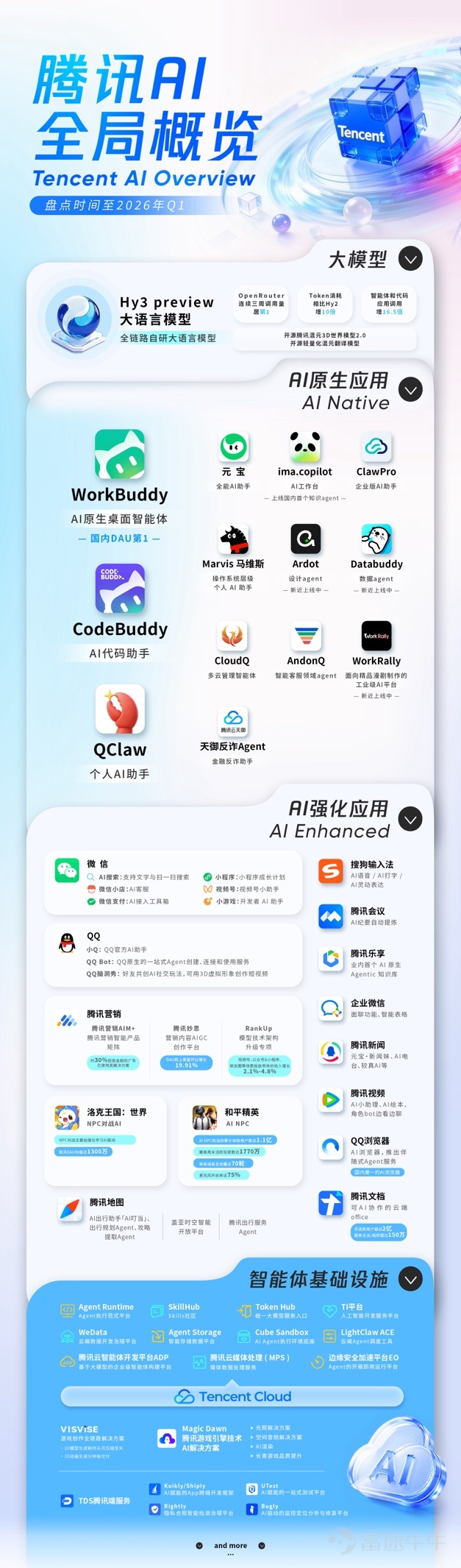

Tencent AI achieves full acceleration: Hy3 preview usage ranks first on OpenRouter weekly list for three consecutive weeks, WorkBuddy tops daily active users
On May 13, Tencent (00700.HK) released its Q1 financial report, showing a comprehensive acceleration in AI development: model reconstruction and release, new cloud launches, the introduction of an Agent product matrix, and AI integration into existing products have all advanced simultaneously. In just a few months, Tencent has achieved dozens of significant updates and releases in AI, primarily focused on the Agent ecosystem and cloud-based infrastructure.
Ma Huateng, Chairman of the Board and Chief Executive Officer of Tencent, stated: 'We have made remarkable breakthroughs in new AI products and continue to empower core business growth with AI. The reorganized AI R&D team has rebuilt our AI infrastructure and developed the Hy3 preview model, which leads in performance among models of similar parameter scale while offering both practicality and cost-effectiveness. Since April 28, it has consistently ranked at the top of OpenRouter’s token consumption list. Our AI efficiency agent solutions are already showing results, with WorkBuddy currently being the most widely used AI efficiency agent service in China. Meanwhile, our core businesses continue to grow in user stickiness, revenue, and profitability, providing ample cash flow support for AI investment and laying a rich foundation for AI application scenarios.'
Benefiting from the accelerated AI strategy, Tencent's Q1 revenue reached 196.46 billion yuan, a year-on-year increase of 9%; Non-IFRS operating profit was 75.63 billion yuan, a year-on-year increase of 9%. Excluding the revenue, costs, and expenses impact of new AI products (Hy, Yuanbao, CodeBuddy, WorkBuddy, and QClaw), Non-IFRS operating profit increased by 17% year-on-year to 84.4 billion yuan. Additionally, Tencent's free cash flow in Q1 reached 56.7 billion yuan, with stable operating cash flow maintained.
HunYuan completed its reconstruction in less than three months, with Hy3 preview's call volume firmly ranking at the top of OpenRouter, and cloud revenue significantly increased
Hy3 preview, released and open-sourced in April, provided an interim answer to the capability enhancement of the HunYuan model. After going live, its call volume rapidly expanded and accelerated integration into multiple Tencent product scenarios
Data shows that the total token call volume of Hy3 preview has exceeded ten times that of the previous generation model, with particularly notable growth in coding and agent scenarios — in Tencent applications such as WorkBuddy, CodeBuddy, and QClaw, the relevant token call volume has grown by over 16.5 times
OpenRouter data also confirms this growth. Even after Hy3 preview ended its free trial period, daily and weekly token usage remained at the top; from April 27 to May 11, it ranked first on the OpenRouter weekly overall chart for three consecutive weeks. Currently, tool invocation and programming are ranked first and second respectively in specific scenarios
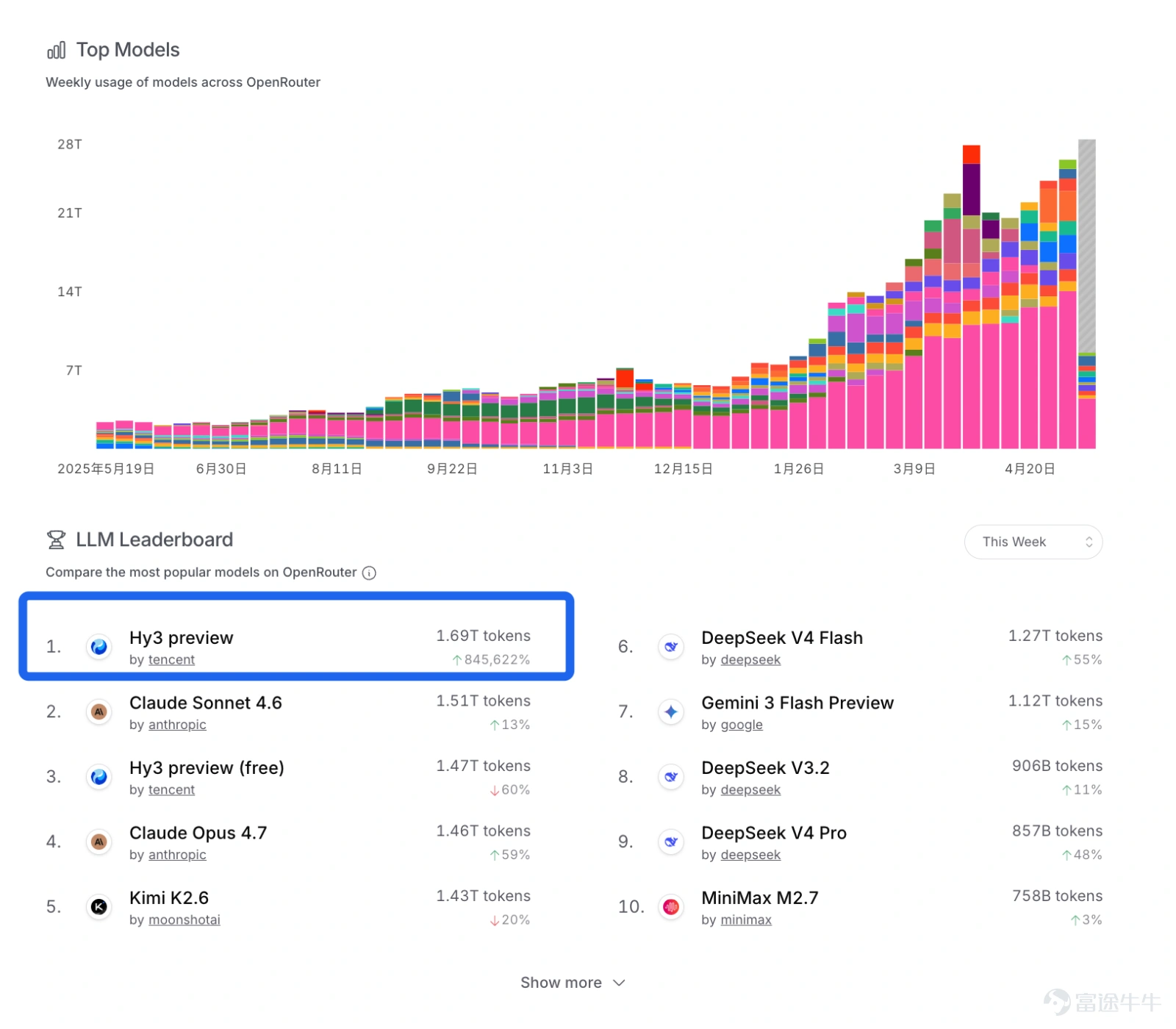
Figure 1: Weekly Ranking of OpenRouter Model Calls (May 11)
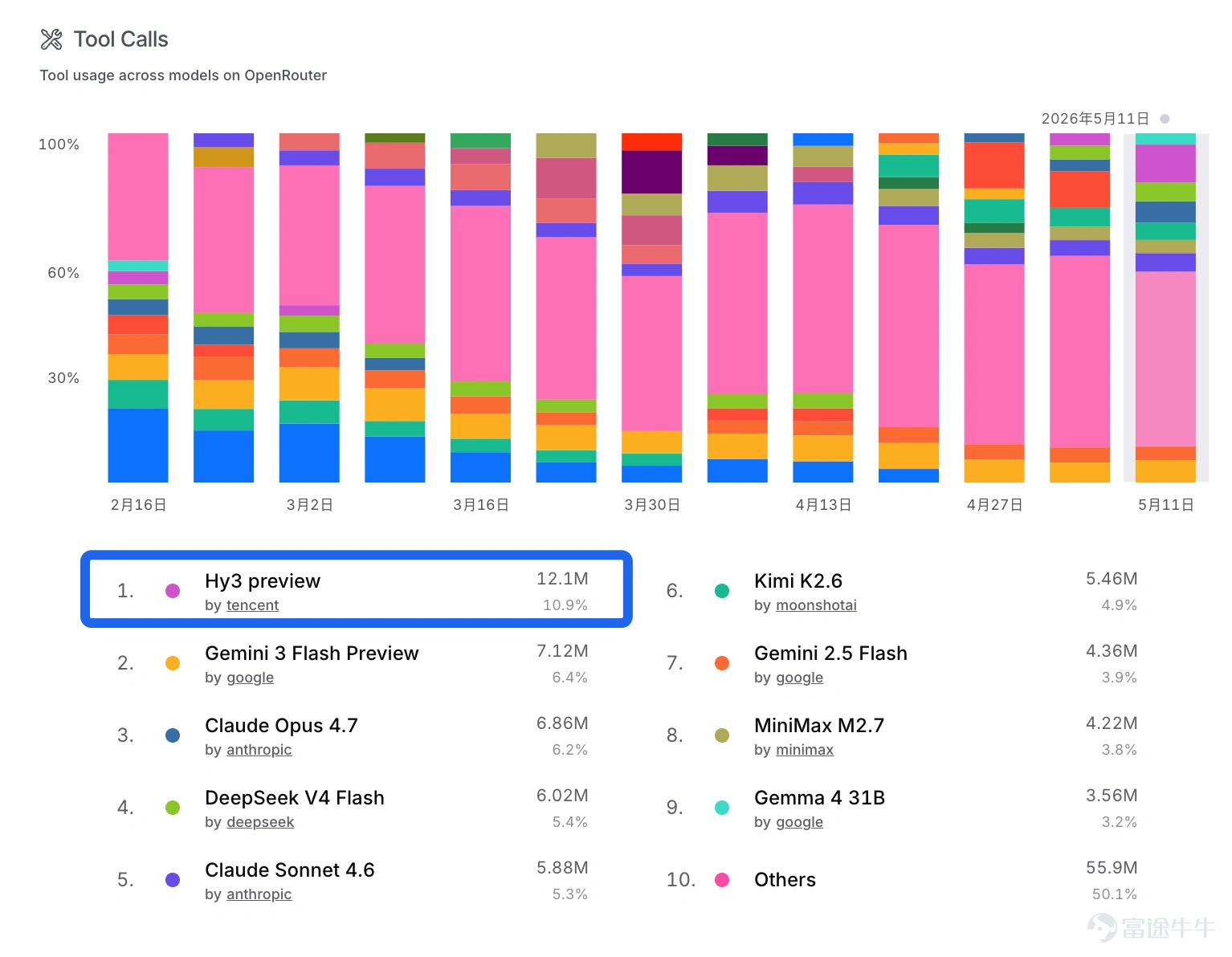
Figure 2: Weekly Ranking of OpenRouter Tool Calls (May 11)
The efficiency improvement of Hy3 preview in practical business applications has been validated. Tencent's internal testing results show that in agent applications such as CodeBuddy and WorkBuddy, Hy3 preview's initial response speed improved by 54%, average task completion time reduced by 47%, and task success rate remained at 99.99%; in Tencent Docs' AI PPT feature, the generation success rate increased by 20% compared to the previous generation
Hy3 preview emphasizes 'practicality', with a total parameter count of 295 billion and an active parameter count of 21 billion, ranking among the top domestic models of similar parameter scale in reasoning, coding, and agent capabilities. Since its launch, Hy3 preview has been applied to products such as Tencent Yuanbao, Ima, QQ Browser, WeChat Reading, and Sogou Input Method, and is open to industries and developers through Tencent Cloud Token Plan
With the full-scale explosion of large model inference, agent operation, AI-native applications, and industry client projects, demand for cloud services such as computing power, storage, and API calls has been fully ignited, providing Tencent Cloud with growth opportunities in the AI era
Financial reports disclose that after achieving scale profitability last year, Tencent Cloud maintained high-quality growth in the first quarter. Revenue from fintech and enterprise services grew by 9% year-over-year to 59.9 billion yuan, with enterprise service revenue increasing by 20%. This growth was driven by rising domestic and overseas market demands (including AI-related services) and a more favorable pricing environment, which boosted cloud service revenue, and increased merchant technical service fees due to higher transaction volumes on WeChat Shops
To support model iteration and AI infrastructure development, Tencent's R&D investment this quarter reached 22.54 billion yuan, a year-on-year increase of 19%; capital expenditure was 31.94 billion yuan, up 16% year-on-year.
AI applications are being rolled out intensively, with WorkBuddy leading in daily active users, and existing products accelerating their AI transformation.
In parallel with model reconstruction, Tencent is speeding up the rollout of new AI applications, with the 'Lobster' system becoming the focus of this round of product launches. Since the first quarter, multiple Agent products targeting enterprises and different user groups have been unveiled under Tencent, including WorkBuddy, QClaw, ClawPro, and Marvis.
WorkBuddy, the mainstay of the 'Lobster' series for workplace scenarios, saw an emergency tenfold expansion in computing power on its launch day due to a surge in users. Subsequently, it integrated with Tencent Lexiang Knowledge Base and Tencent Docs. The earnings report noted that Tencent Cloud's efficiency AI agent solutions achieved rapid growth and healthy retention rates. In terms of daily active accounts, WorkBuddy has become the most popular AI efficiency agent service in the country; third-party reports also indicate that its monthly visits and month-on-month growth rate top the domestic PC-end AI-native office agent market. QClaw, designed for general users with a 'scan-to-use' feature, has been connected to DS-V4 and Hy3 preview, supporting Hermes-type Agents. Its newly launched 'File Space' function enables one-stop integration of local files, Tencent Docs, and ima knowledge base.
AI-native applications like Yuanbao and ima are further strengthening their connection with the 'Lobster' system. Yuanbao launched a PC version and allows users to create or access 'Lobster' via Yuanbao Pie, extending Agent capabilities to community collaboration. Ima introduced exclusive Skills and Knowledge Agent Copilot, enabling users to build personal knowledge agents.
The AI transformation of existing products is also accelerating comprehensively. QQ Browser has introduced an accompanying Agent service integrated into various browser scenarios, supporting complex tasks such as cross-software operations, multi-webpage information consolidation, and file processing. Users can effortlessly utilize OpenClaw. Sogou Input Method upgraded its 'AI Voice Large Model' and 'AI Typing Large Model,' and launched 'AI Dynamic Expression.' Tencent Meeting Skill officially went live, allowing users to summon 'Lobster' as a dedicated meeting assistant.
This wave of application rollouts is not a single-point trial but has formed a complete AI ecosystem chain. Behind this lies Tencent’s engineering capability to quickly integrate models, Agent frameworks, product entry points, and application scenarios, reflecting Tencent’s advantage in high-frequency scenario access points. As of the earnings report release, Tencent has launched dozens of Agents and AI-native products within the year.
AI drives core business efficiency and conversion, with the average DAU of 'Rock Kingdom: World' reaching 13 million in its first month.
This quarter, Tencent's AI commercialization pace continued to accelerate. In the first quarter, Tencent's marketing service revenue reached 38.17 billion yuan, a year-on-year increase of 20%, primarily driven by the WeChat ecosystem traffic and ad model upgrades. Tencent Marketing's ad recommendation model continued to evolve and was fully deployed in ad conversion rate estimation tasks, boosting transaction volumes significantly across Video Accounts, Official Accounts, Mini Programs, and Moments. The intelligent ad placement product matrix Tencent Marketing AIM+ empowered approximately 30% of advertisers’ marketing service spending, with the 'Content Amy' product tailored for content consumption scenarios achieving a 40% penetration rate in the mini-game industry.
In terms of gaming, AI has entered both the R&D and experience pipeline, covering areas such as 3D assets, image quality, and NPC interaction. The newly released game 'Rock Kingdom: World' uses reinforcement learning AI for NPC battles, surpassing 30 million new users on its ninth day and averaging 13 million DAUs in its first month. From 'Delta Action' in 2024 to 'Valorant: Source Operation' in 2025, and now 'Rock Kingdom: World,' these successive releases continue to validate Tencent Games' product capabilities.
The domestic market gaming revenue grew by more than ten percentage points year-over-year, with evergreen titles like Honor of Kings, Peacekeeper Elite, and Delta Force delivering robust performance and setting new revenue records. However, due to the later timing of the Lunar New Year holiday in 2026 compared to 2025, some revenue recognition has been deferred to subsequent quarters. Overseas market revenue increased by 13% year-over-year to RMB 18.8 billion. Mature products such as Clash Royale and Valorant continued to maintain a stable user base and revenue contribution through ongoing content updates and refined operations. Meanwhile, new products like Echoes of Retribution delivered significant user and revenue growth, jointly supporting steady international expansion.
On the WeChat ecosystem front, Video Accounts expanded the scale of content recommendation model parameters and optimized algorithms, driving overall user engagement time to grow year-over-year. Overall search volume on WeChat Search trended upward. Mini Programs upgraded their underlying architecture, enabling developers to better leverage tools like CodeBuddy for app development. Since the launch of the AI Mini Program Growth Initiative, over 27,000 AI-powered mini programs have emerged within the ecosystem. WeChat Shops continue to enhance AI capabilities, helping merchants improve operational efficiency. For the upcoming 618 sales event, WeChat Shops will introduce 'spending threshold discounts,' significantly boosting platform incentives, with individual accounts eligible to receive up to 2 million e-commerce growth credits. This quarter, the combined monthly active users of WeChat and WeChat international grew further to 1.432 billion.
Risk Disclaimer: The above content only represents the author's view. It does not represent any position or investment advice of Futu. Futu makes no representation or warranty.Read more


Comments (3)
to post a comment
15
14