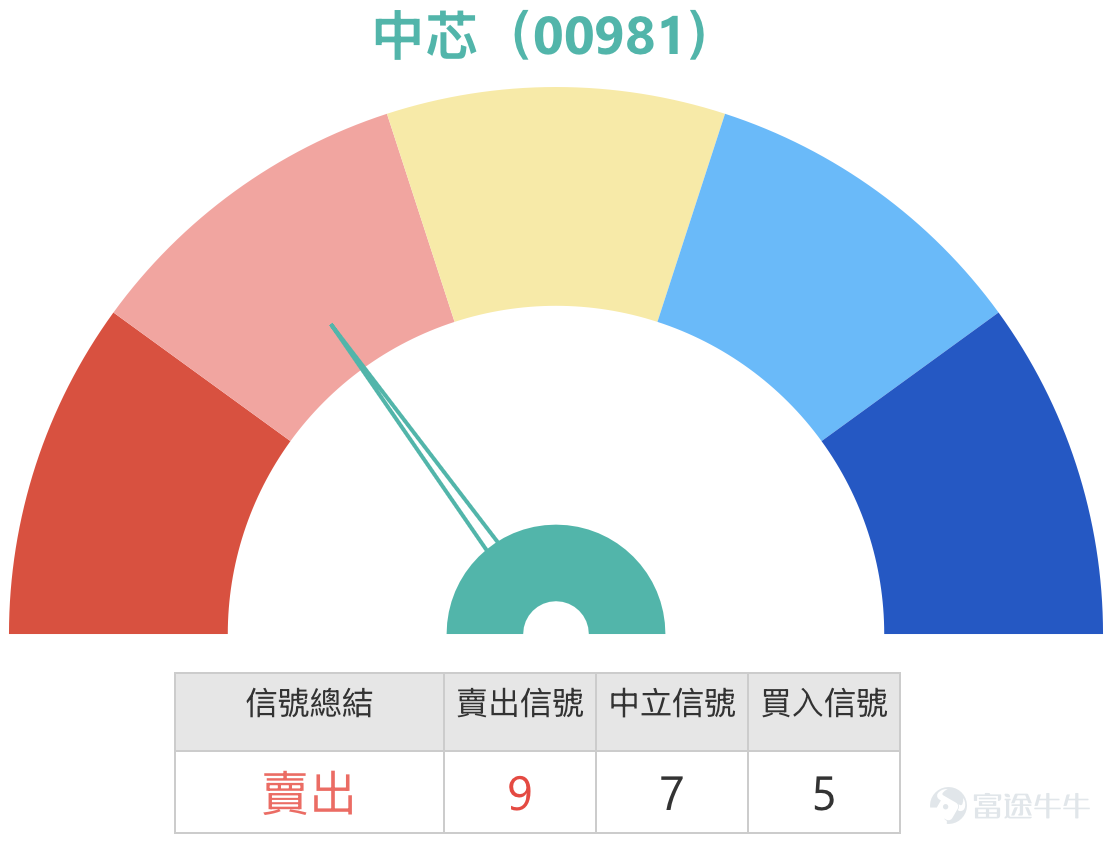

SMIC has a 51% probability of rising, with the key being whether it can break through 78.4 yuan in the short term
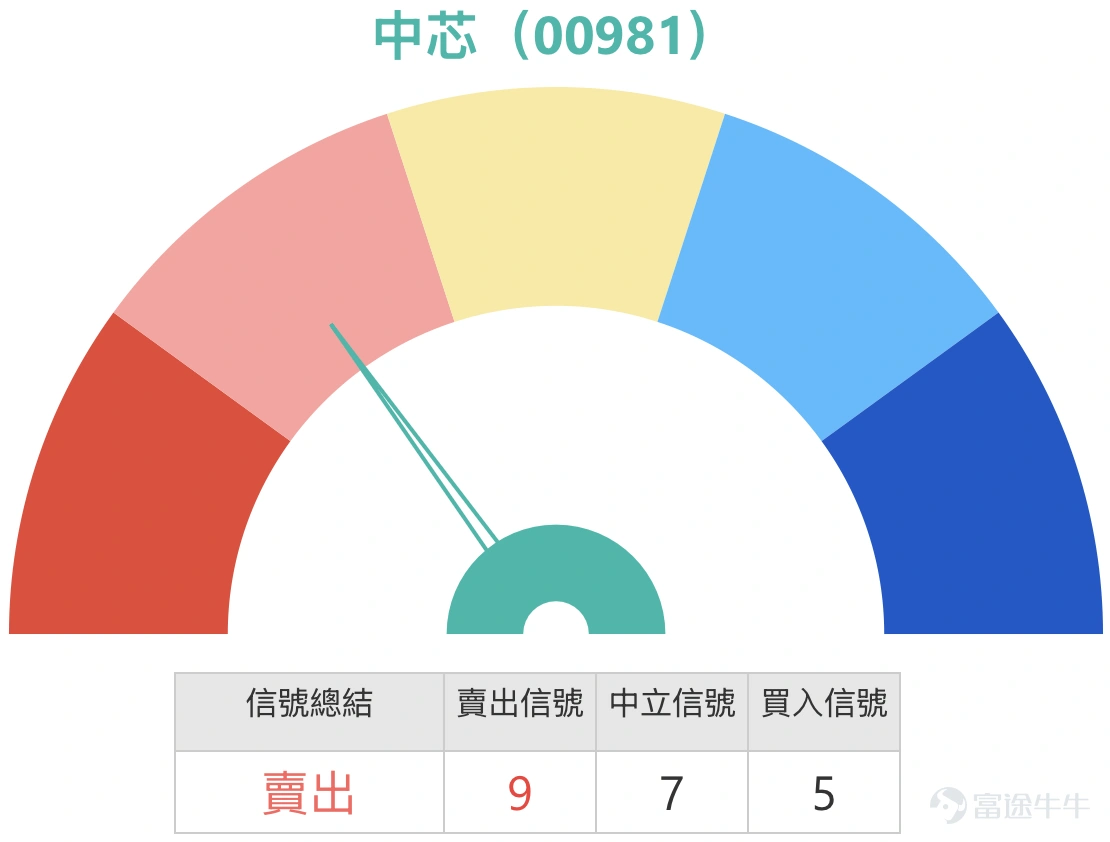
As of May 13, 2026, SMIC (00981.HK) closed at 74.65 yuan, down 2.55%, with a 5-day volatility of 9.8%, indicating significantly increased short-term fluctuations. In terms of technical indicators, MA10, MA30, and MA60 are located at 73.25 yuan, 63.03 yuan, and 63.40 yuan respectively. The current stock price remains above MA30 and MA60 but has fallen below MA10, reflecting a slowdown in the short-term upward trend. The Relative Strength Index (RSI) is at 62, which is in the neutral-to-strong region and not yet in overbought territory. However, the overall technical indicator summary signal is 'sell' with an intensity rating of 9, primarily due to significant divergence among multiple indicators – stochastic oscillators issue a sell signal, momentum oscillators also indicate sell, and the VR trading ratio shows a sell signal. However, bullish-bearish power indicators, Ichimoku Cloud, and MACD signals all suggest buy, while Bollinger Bands also issue a buy signal. This divergence in technical signals is common after a rapid stock price increase entering a consolidation phase; although there is still short-term upward momentum, downward pressure is accumulating.
In terms of support and resistance levels, SMIC’s short-term supports are sequentially set at 67.2 yuan and 61.3 yuan, while resistances are at 78.4 yuan and 88.1 yuan. The probability of an upward movement calculated based on technical conditions is 51%, showing that the forces of buyers and sellers are nearly balanced. The closing price on May 13 was 74.55 yuan, above Support 1 and below Resistance 1, leaving a gap of approximately 3.85 yuan to the first resistance level at 78.4 yuan, while the first support level at 67.2 yuan provides a buffer of about 7.35 yuan.
On the brokerage side, Goldman Sachs and Morgan Stanley have maintained their 'buy' and 'overweight' ratings for SMIC, with target prices of 85 HKD and 90 HKD respectively, citing higher visibility in mature process orders. This news aligns with the stock's rebound from around 68 yuan at the early-May low to near 78 yuan on May 12, followed by a pullback to 74.55 yuan – market expectations on earnings and policy drove the short-term rebound, but profit-taking pressures emerged near the technical resistance level of 78.4 yuan, resulting in a 2.68% correction on May 13.
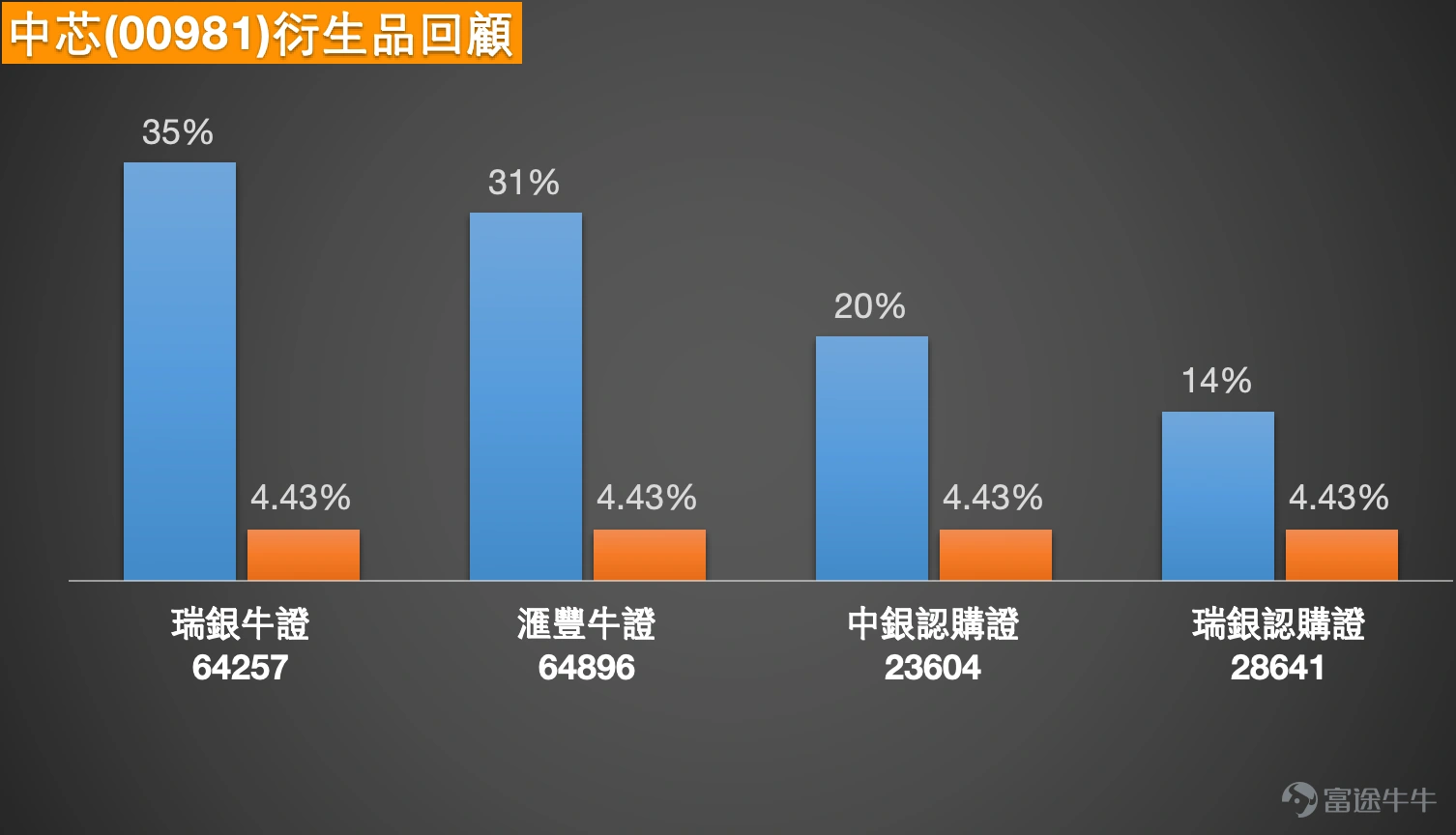
Reviewing the performance of the four SMIC-related callable bull/bear contracts mentioned on May 8 over the two trading days following the mention. HSBC Bull (64896) $HS#SMIC RC2611F.C (64896.HK)$ Recorded a 31% increase two days later, UBS Bull (64257) $UB#SMIC RC2610K.C (64257.HK)$ Recorded a 35% increase, UBS Warrant (28641) $UB-SMIC@EC2611A.C (28641.HK)$ Recording a 14% increase, the BOC call warrant (23604) gained 20%, while the underlying stock only rose by 4.43% during the same period. The significant rise in these products compared to the underlying stock reflects the amplification effect of bull certificates and call warrants during the rebound of the underlying stock.
Based on current technical conditions and market information, the following provides investors with detailed terms analysis of eight callable bull/bear contracts (CBBC) products, each associated with SMIC's support and resistance levels:
In terms of call warrants, the UBS call warrant (28641) has an exercise price of 83.93 yuan and leverage of about 4 times. The advantage of this product is that its leverage is the highest among similar products, and it has lower implied volatility. The exercise price of 83.93 yuan is higher than the first resistance level of 78.4 yuan and the second resistance level of 88.1 yuan, making it an out-of-the-money product. If SMIC can break through 78.4 yuan and further advance towards 88.1 yuan, the potential elasticity of this warrant will be quite promising. Lower implied volatility helps reduce time decay, making it suitable for investors optimistic about a breakout. The BOC call warrant (23604) has an exercise price of 83.88 yuan, also with leverage of about 4 times. Its advantage lies in having the lowest implied volatility among similar products. Its terms are similar to those of the UBS product but with even lower implied volatility, meaning less option premium in the purchase cost, making it suitable for strategies sensitive to volatility and aiming to lower holding costs.
For put warrants, the HSBC put warrant (28738) has an exercise price of 63.81 yuan and leverage of about 3.6 times. The advantage of this product is its relatively ideal leverage and implied volatility, making it a balanced choice. The exercise price of 63.81 yuan is slightly below the first support level of 67.2 yuan but above the second support level of 61.3 yuan, placing it at or near at-the-money status. If the stock price pulls back and falls below 67.2 yuan, the intrinsic value of this warrant will significantly increase, making it suitable for investors expecting the stock price to approach the support area.
Another HSBC put warrant (21090) has an exercise price of 62.81 yuan and leverage as high as 9.8 times. Its advantage lies in having the lowest premium and implied volatility. Higher leverage means greater theoretical upside elasticity when the stock price falls below the support level. The exercise price of 62.81 yuan is close to the second support level of 61.3 yuan, making it a deeply in-the-money put warrant. This product is suitable for investors who believe the stock price will retreat significantly to 62 yuan or even lower levels, but note that high leverage comes with higher price sensitivity.
For bull contracts, the UBS bull contract (64257) has a recovery price of 65 yuan and leverage of about 6.7 times. Its advantage lies in high effective leverage and low premium. The recovery price of 65 yuan is between the second support level of 61.3 yuan and the first support level of 67.2 yuan, providing ample buffer space—approximately 9.55 yuan away from the current price of 74.55 yuan. Even if the stock price retreats to the first support level of 67.2 yuan, it will not be forcibly recovered. This product is suitable for investors who believe the stock price can hold steady at 67.2 yuan and retest the resistance level of 78.4 yuan.
The HSBC bull contract (64896) has a recovery price of 64 yuan and leverage of about 6.1 times. Its advantage is the highest effective leverage among similar products, with relatively low premium. The recovery price of 64 yuan is also within the support range, more conservative than the UBS bull contract, but with higher effective leverage, offering greater elasticity when the stock price rebounds. Investors can choose an appropriate recovery price based on their judgment of the depth of the pullback.
For bear contracts, the UBS bear contract (63354) has a recovery price of 81 yuan and leverage of about 11.7 times. Its advantage is the highest effective leverage among similar products, with low premium. The recovery price of 81 yuan is higher than the first resistance level of 78.4 yuan, situated between resistance levels 1 and 2. If the stock price faces pressure near 78.4 yuan and pulls back, this product can capture the downtrend. The high leverage makes it responsive even to small declines in the stock price.
The Societe Generale bear contract (59399) has a recovery price of 80 yuan and leverage of about 14.9 times. Its advantage is the lowest premium and relatively high effective leverage. The recovery price of 80 yuan is also higher than 78.4 yuan but closer to the resistance level, thus offering higher leverage. This product is suitable for short-term operations where investors judge that the stock price cannot break through 78.4 yuan and will quickly pull back, but note that the recovery price is only about 5.45 yuan away from the current price; if the stock price unexpectedly breaks through the resistance zone, there is a risk of being recovered.
Overall, SMIC is currently at a key node in the short-term resistance range, with diverging technical indicators showing that the market direction remains unclear. Investors can choose corresponding call warrants, put warrants, bull contracts, or bear contracts based on whether they expect the stock price to break through 78.4 yuan or fall below 67.2 yuan. The terms of each product are closely linked to support and resistance levels, and investors should make choices based on their own risk tolerance.
Warm Reminder: This article does not constitute any investment advice. It is for reference only and does not constitute any investment advice. The market data, opinions, and analysis contained herein may change at any time without prior notice. We are not responsible for any loss or damage caused by reliance on the information in this article. Technical analysis only shows whether certain technical conditions are met; a comprehensive evaluation of asset performance should be made using other data, and trading decisions should not be based solely on this article. Please note that past performance is not indicative of future results. Follow HK Stocks Warrants Jenny for more professional insights.
Risk Disclaimer: The above content only represents the author's view. It does not represent any position or investment advice of Futu. Futu makes no representation or warranty.Read more

Comments
to post a comment
1