
HSBC's rebound requires trading volume support; a stable hold above 140 indicates strengthening
Today (May 11), HSBC's stock price closed at 139.7, rebounding approximately 2.3% from the previous day, with trading volume recovering to about 386 million, indicating improved short-term buying support. Over the past five trading days, the stock price has fluctuated between 135 and 141, with a range of approximately 6.3%, reflecting a post-earnings consolidation phase. The recent recovery from around 136 shows that the market is nearing the end of digesting the earnings news, with capital beginning to refocus on its dividend and buyback value.
In terms of technical structure, HSBC's current price of 139.7 has reclaimed the 10-day moving average at approximately 136.83 and is gradually approaching the 5-day line at around 140.37, though it remains slightly below that level. The stock price is also holding steady above the 30-day line at 135.29 and the 60-day line at approximately 133.00, with multiple moving averages forming a support zone near 135, indicating that the short-term defensive foundation still exists. The first support level is set at 134.8, the second support at 130.6; the first resistance is at 142.7, the second resistance at 146.8, with a 53% probability of an upward move.
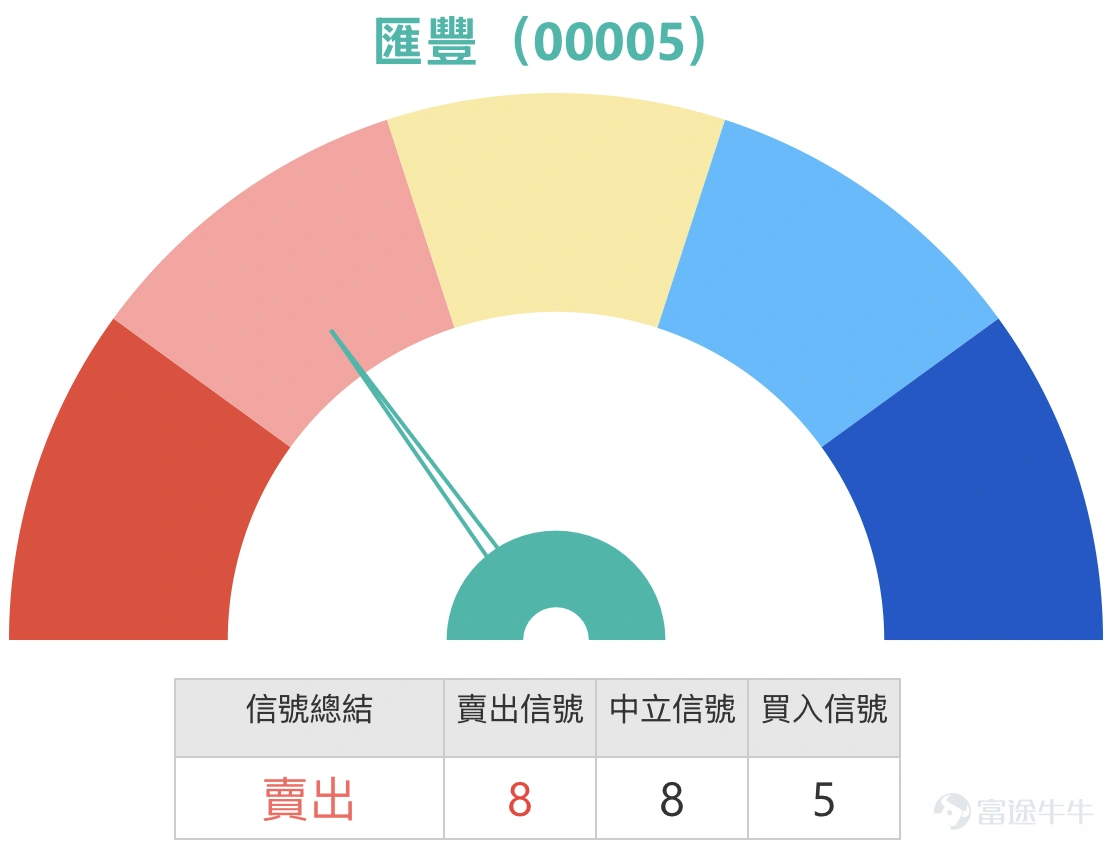
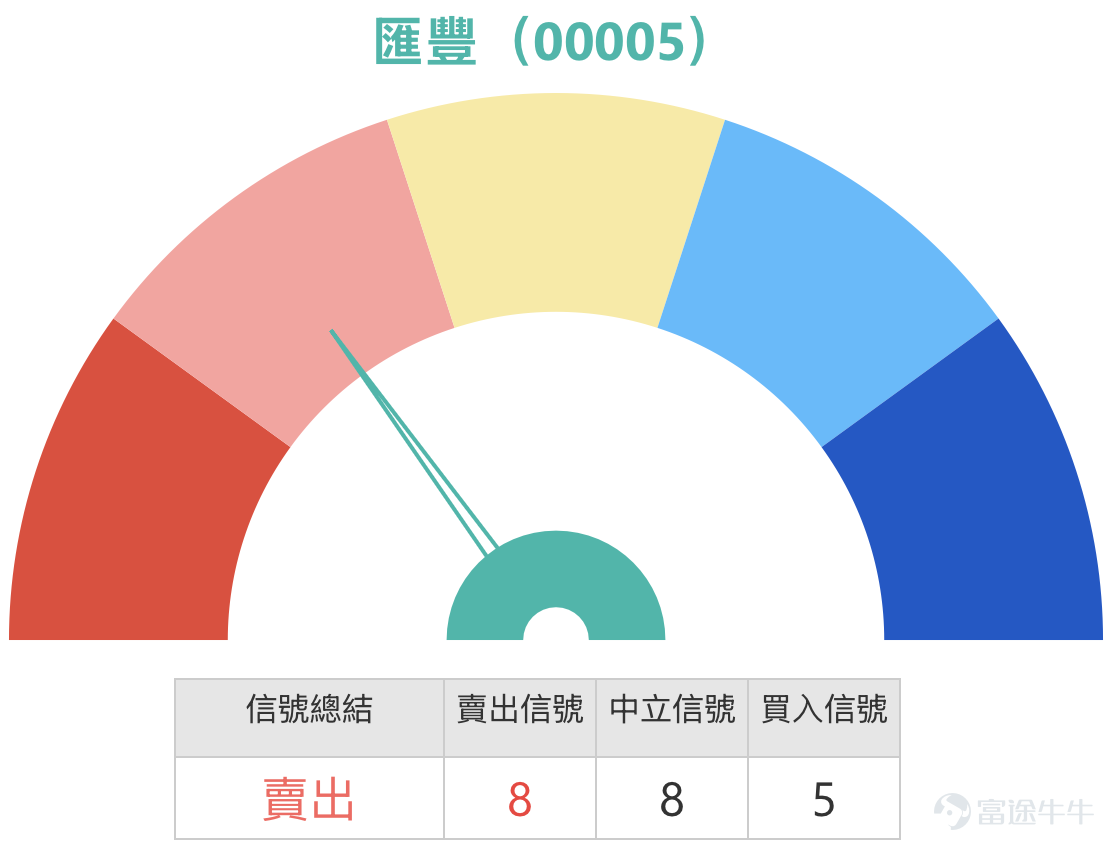
The Relative Strength Index (RSI) has recovered to around 55, improving from a previously neutral-low position to a moderately strong-neutral level, showing better short-term momentum. In terms of Bollinger Bands, the current price is gradually advancing from the lower band towards the middle band at approximately 140.23; whether it can break back above the middle band will be an early signal of short-term strengthening. The overall technical indicator signal is 'Sell,' but the bull-bear power indicator has turned neutral, while the Ichimoku Cloud maintains a buy signal, indicating that downward pressure is easing, though full confirmation of strength is still needed.
The recent stock price decline was mainly influenced by the earnings announcement on May 5. HSBC’s Q1 2026 reported pre-tax profit was $9.38 billion, slightly below market expectations, down approximately 1% year-on-year, with expected credit losses increasing 48% year-on-year to $1.3 billion, higher than expected. Several major banks issued reports after the earnings, stating that the market reaction was excessive. Morgan Stanley raised its target price from 149 to 150.5, maintaining an 'Overweight' rating, and expects HSBC to conduct a share buyback in Q2. JPMorgan slightly increased its target price to 182, maintaining an 'Overweight' rating, while Citi also maintained a 'Buy' rating. The average target price over the last 90 days is approximately 172.8, leaving a gap of about 24% between the current stock price and the average target. Fundamentals have not systemically worsened due to one-time provisions, and initial support seen around 135 reflects the market's re-evaluation.
For short-term judgment, HSBC is currently in a critical tug-of-war zone between 135 and 142, with direction depending on whether it can break through 142.7. If it holds above 134.8 and breaks through 142.7, the rebound could extend to 146.8; conversely, if it fails to hold 134.8 again, a retest of support at 130.6 will be necessary. Considering the RSI has recovered to 55, along with slightly higher trading volume, the short-term risk-reward ratio has improved from low to neutral. A more prudent strategy would be to wait for the stock price to clearly stabilize above 140.37 before making trend-following moves.
Review of Warrant Products
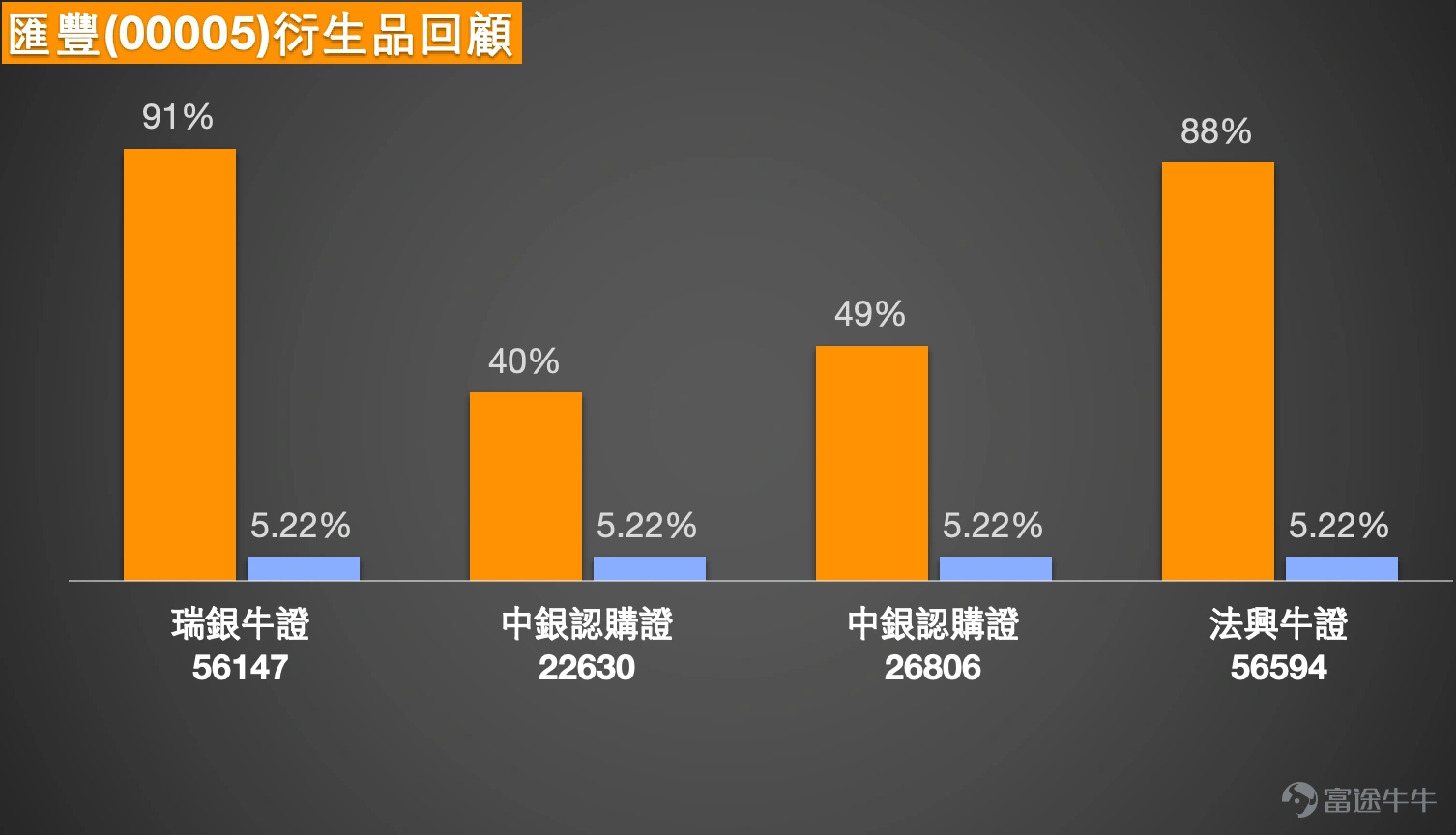
Reviewing the warrant products mentioned on May 5, below are the gains recorded within two trading days after the mentioned date (up to May 7). Societe Generale bull certificate (56594) $SG#HSBC RC2803H.C (56594.HK)$ recorded an 88% increase, while the underlying stock rose by 5.22% during the same period; UBS Group bull certificate (56147) surged 91%, showing even stronger performance; BOC call warrants (26806) and another BOC call warrant (22630) $BI-HSBC@EC2609B.C (22630.HK)$ rose 49% and 40%, respectively, both significantly outperforming the underlying stock.
Warrant Product Recommendations
The following products are analyzed based on today's HSBC share price of 139.7 and their correlation with support and resistance levels.
For bullish outlook, if HSBC can hold above 134.8 and break through the resistance at 142.7, two call warrants can be considered. BOC call warrant (26308), with a strike price of 159.38, offers effective leverage of 8.3 times and has relatively low implied volatility. The strike price is above the second resistance level at 146.8, making it suitable for expecting further upward movement after breaking through the resistance zone. Low implied volatility helps reduce the impact of market sentiment fluctuations on product prices. BNP Paribas call warrant (26250), with a strike price of 159.38, provides effective leverage of 8.7 times, with the lowest premium and implied volatility in its category, offering more direct tracking of underlying stock changes, ideal for short-term investors seeking faster-paced opportunities.
For bearish outlook, if HSBC faces resistance around 142.7 or falls below 134.8, two put warrants can be considered. BOC put warrant (25733), with a strike price of 126.56, offers effective leverage of 12.4 times and relatively low implied volatility, suitable for capturing short-term downward momentum after breaking support. UBS Group put warrant (25460), with a strike price of 126.56, offers effective leverage of 12.1 times, also with relatively low implied volatility and similar terms, allowing selection based on issuer preference.
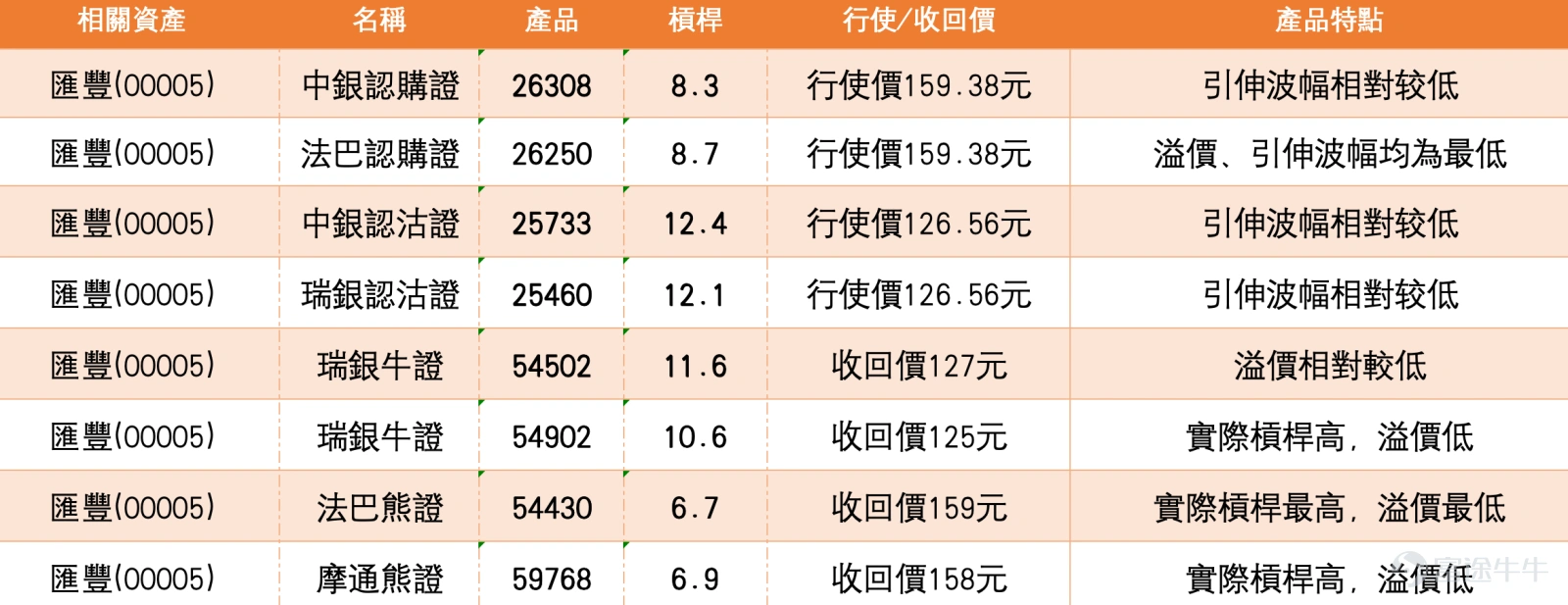
Regarding bull and bear certificates, for bullish positions, UBS Group bull certificate (54502) can be considered, with a stop-loss price of 127, effective leverage of 11.6 times, and relatively low premium. The stop-loss price is below the second support level at 130.6, providing a safety buffer while maintaining high leverage. Another UBS Group bull certificate (54902) has a stop-loss price of 125, effective leverage of 10.6 times, higher actual leverage, lower premium, and a larger safety buffer. For bearish positions, BNP Paribas bear certificate (54430) can be chosen, with a stop-loss price of 159, effective leverage of 6.7 times, the highest actual leverage in its category, and the lowest premium, suitable for capturing pullbacks when resistance is encountered. JPMorgan bear certificate (59768), with a stop-loss price of 158, offers effective leverage of 6.9 times, also with high actual leverage and low premium, with similar terms.
Feel free to leave a comment and share your thoughts! Follow Jenny's HKEX Warrants for more professional analysis.
Warm Reminder: This article does not constitute any investment advice. It is for reference only and does not constitute any investment advice. The market data, opinions, and analysis contained herein may change at any time without prior notice. We are not responsible for any loss or damage caused by reliance on the information in this article. Technical analysis only shows whether certain technical conditions are met; a comprehensive evaluation of asset performance should be made using other data, and trading decisions should not be based solely on this article. Please note that past performance is not indicative of future results. Follow HK Stocks Warrants Jenny for more professional insights.
Risk Disclaimer: The above content only represents the author's view. It does not represent any position or investment advice of Futu. Futu makes no representation or warranty.Read more


Comments
to post a comment
2