
NVIDIA's earnings report is out! Can it reignite the AI rally?

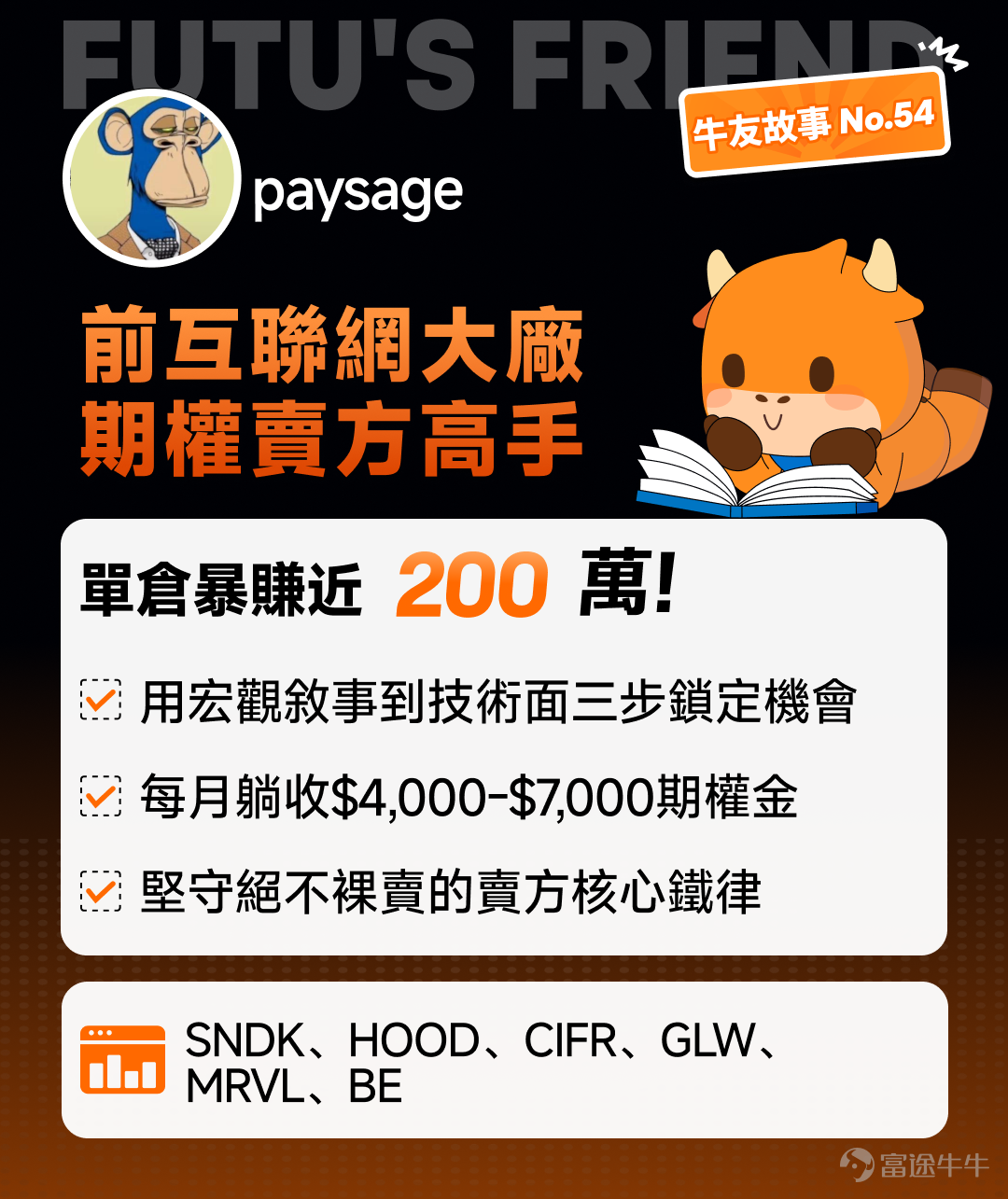
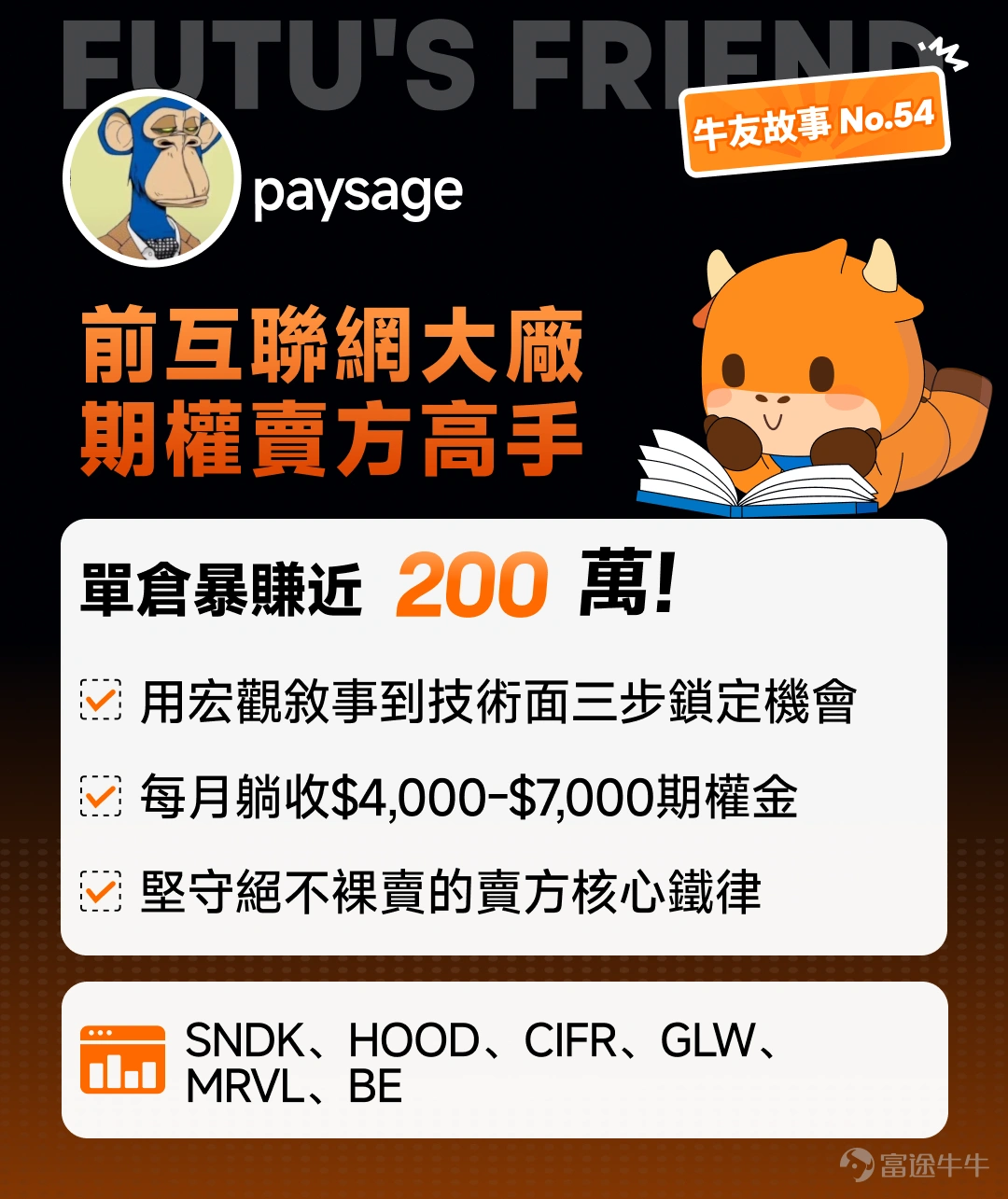
[Investor Story] A single position netted nearly 2 million! He uses Covered Calls to consistently earn $7,000 per month!
How can you use the covered call strategy to consistently earn $4,000–$7,000 in option premiums each month—and even rake in nearly $2 million from a single position? How do you employ a three-tier screening process—macro narrative, fundamentals, and technical analysis—to strike decisively only when certainty is at its highest? From Tencent engineer to on-chain entrepreneur and now a master options seller in U.S. equities—how far has this cross-industry evolutionary journey taken you?
This issue of the "Investor Story" features a seasoned U.S. stock options trader who comes from a programming background and has previously worked at Tencent and ByteDance.@paysage(hereinafter referred to as paysage), shares its four-year-earned "certainty-based trading" mindset and prudent seller philosophy!
Friendly Reminder: This article is quite long, so we recommend liking and saving it before reading it carefully. There's a surprise waiting for you in the comments at the end!
I. From Tencent Engineer to On-Chain Veteran, Then to Options-Selling Expert: paysage's "Omnivorous Evolution" Journey
Q: paysage, could you start by sharing a bit about your personal background? How did you gradually make your way into the U.S. equity options space?
A: I come from a programming background and got involved with cryptocurrencies relatively early on, which has always fascinated me. I previously worked at Tencent and later joined ByteDance. After leaving ByteDance in 2022, I embarked on on-chain entrepreneurship. Along the way, I've dabbled in everything—Bitcoin, quantitative trading, spot markets, futures contracts, DeFi—and even "taken on the big dogs." In short, I've tried just about every type of trading strategy before gradually shifting my focus to U.S. stocks and options. Since 2022, I've accumulated roughly four years of options trading experience. Throughout this journey, it's been a process of constant experimentation and learning from mistakes that has gradually allowed me to build my own trading system.
Q: Over the past four years in the options space, which investment targets have left the most lasting impression on you and are most representative?
A: There are two that are particularly representative.
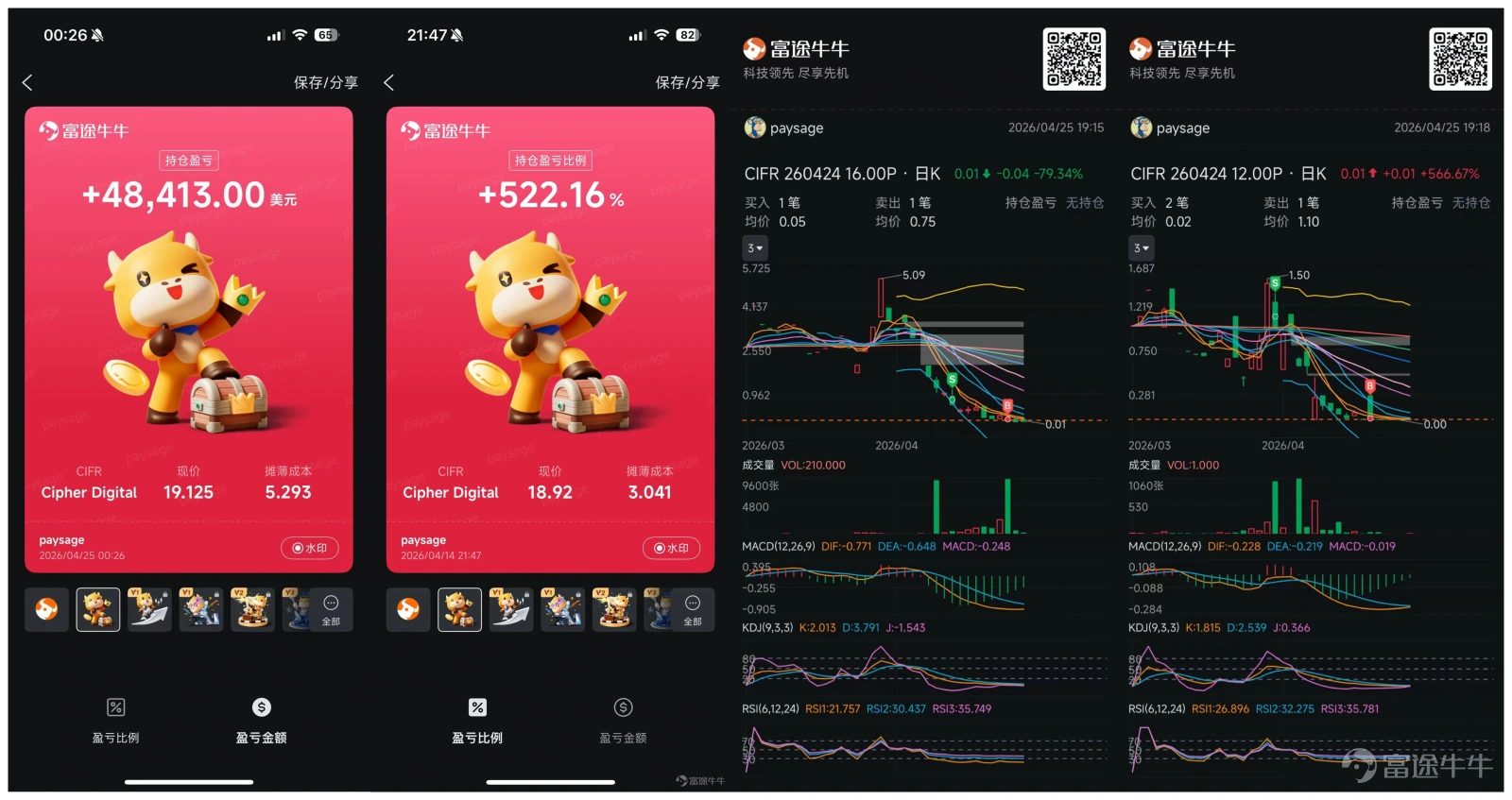
The first is$Robinhood (HOOD.US)$This stock was once the single investment with the highest profit in my portfolio.Profits approached RMB 2 million during the peak period., of course, it has since retraced quite a bit. This stock is fairly representative because whether it succeeds or fails, it's all tied to cryptocurrency—however,I remain long-term bullish on it.—It is gradually shaking off the impact of cryptocurrency volatility, IWe are relatively optimistic about its deployment in the prediction market.With the World Cup just around the corner this June and its North American operations continuing to expand, the company's fundamentals are gradually improving. This is a classic "theme-trade" rationale: identify a clear macro narrative, hold the position, and wait for market recognition.
The second is$Cipher Digital (CIFR.US)$This investment target. Here, I'm using what I call…The "steady, long-term" strategy—rather than trying to profit from price differentials—relies on holding the underlying stock for the long term while writing short puts or covered calls each month, now generating a stable monthly options premium income of $4,000 to $7,000.Then gradually roll out the positions—this, in my view, is the most sustainable approach to options trading.
II. A Comprehensive Guide to Options Tools: Covered Calls, Selling Puts to Enter Positions, LEAPS, and the Core Iron Rule of "Never Sell Naked"
Q: You use both options and leveraged ETFs. Could you share the rationale behind your use of these two instruments, as well as your typical options trading framework?
A: First of all, these are all money-making tools, so you must thoroughly understand the strengths and weaknesses of each before using them in order to deploy them effectively.
Leveraged ETFs can amplify gains when the trend is clearly upward, but they dread sideways or choppy markets—holding them for the long term can erode principal, so they're not suited for buy-and-hold strategies. As for near-expiry options, I personally don't recommend them, because their margin of error is extremely narrow; even a slight misstep can result in losses on both fronts. These days I rarely trade them, using them mainly as hedges to protect my positions and guard against black-swan events.
When it comes to the specific execution of options, I typically start by determining whether or not I currently hold a position:
① When no position is held: Enter the market by first selling a single-leg put to take delivery and establish a base position;
② When you already hold a position: Consider writing covered calls, depending on the situation;
③ Based on price trends or technical indicators: further determine, as appropriate, whether to add legs or unwind legs—for example, by entering a long call or a long put position to construct an options strategy.
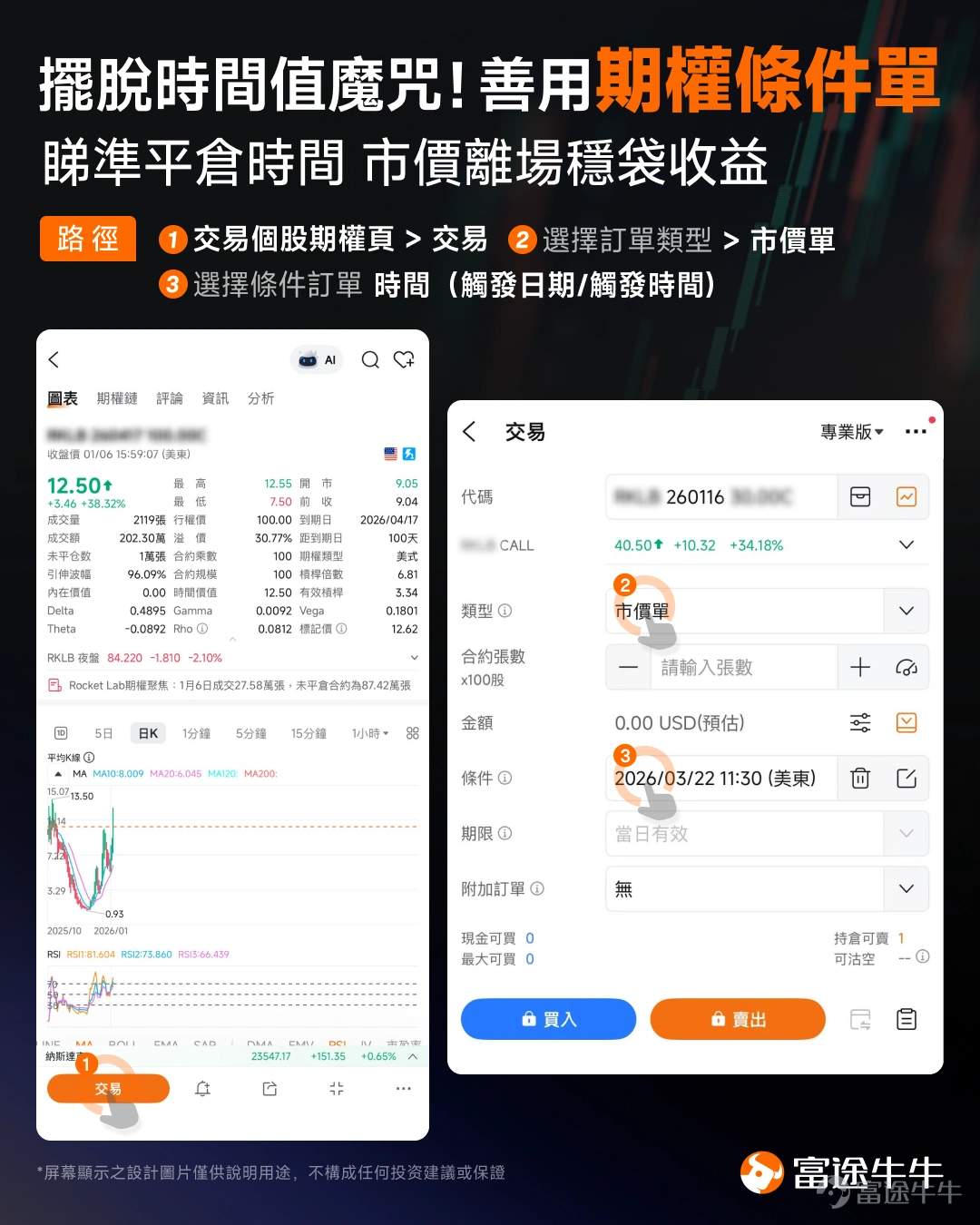
In addition, you should make good use of some useful features—for example, sometimes I…With the "Options Conditional Order" feature, after buying a call option, simply set the trigger date, time, and market order, and you can easily lock in your profits at expiration., without being overwhelmed by the passage of time.
A reminder to everyone: the key is to manage your position size effectively and control risk.
There's one principle I never break: never short sell naked.The potential risk of writing naked options is theoretically unlimited; therefore, it is essential to have corresponding stock holdings or margin collateral as protection.
With$SanDisk (SNDK.US)$For example: I entered the trade around $200, and it has now risen above $1,400. The trading strategy isHold the underlying stock, sell covered calls each month to collect option premiums, and then use the proceeds to buy LEAPS.During a sustained uptrend in the stock market, two strategies can generate profits simultaneously, creating a virtuous cycle. This is merely a conceptual demonstration; the specific implementation should be tailored to individual circumstances.
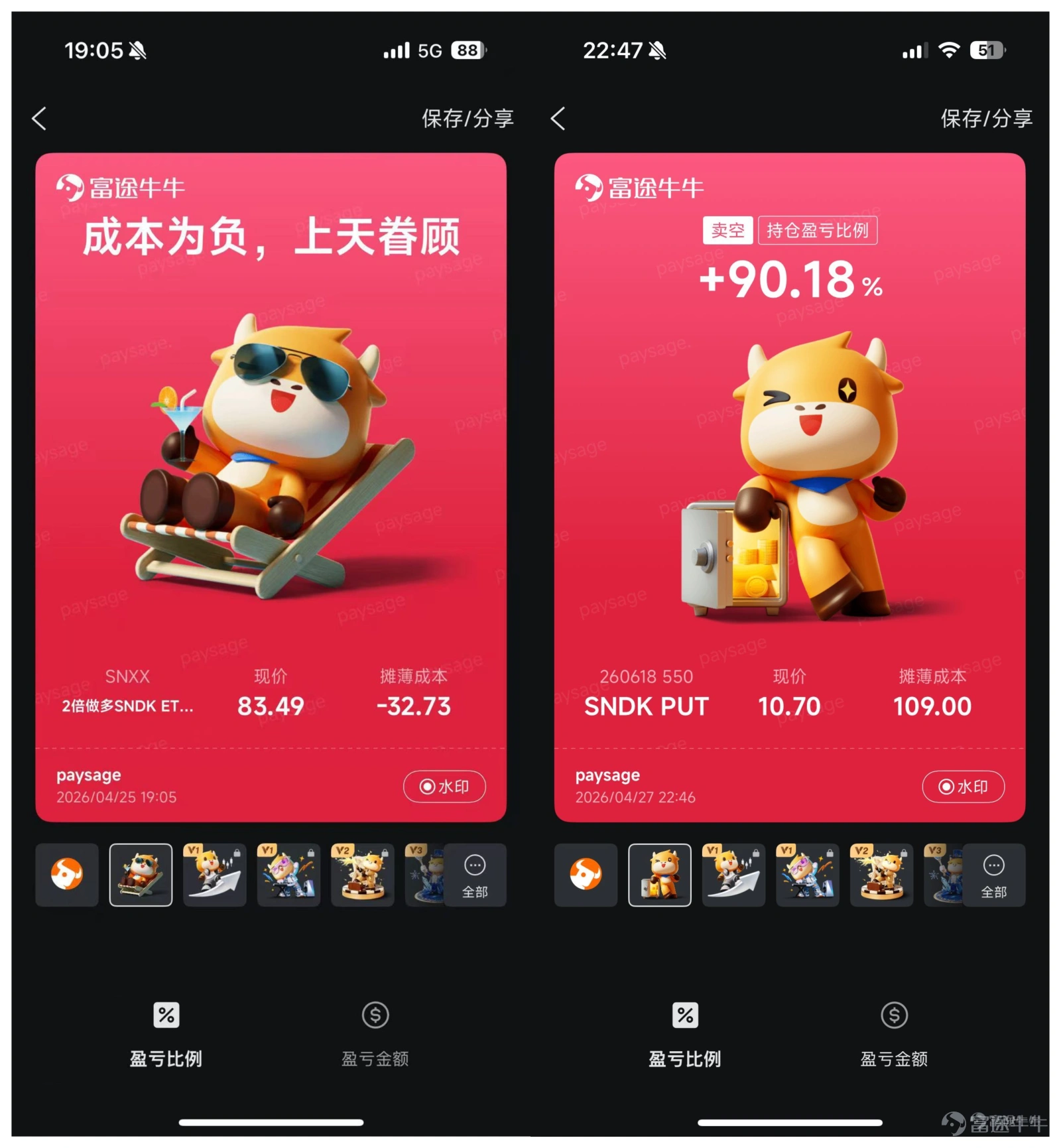
It's a pity that the screenshot of the Covered Call wasn't saved.
Q: What unique framework do you employ for overall position management and capital allocation?
A: This approach works well for me, but it may not be suitable for everyone. As someone with a background in selling, I have fairly strict requirements when it comes to margin deposits. Overall, I structure my position management into three tiers:
Configuration logic: Maintain a floor at the cash level + secure certainty from core holdings + leverage explosive positions for upside potential = ready to attack when opportunities arise, defend when conditions turn unfavorable, and retain firepower.
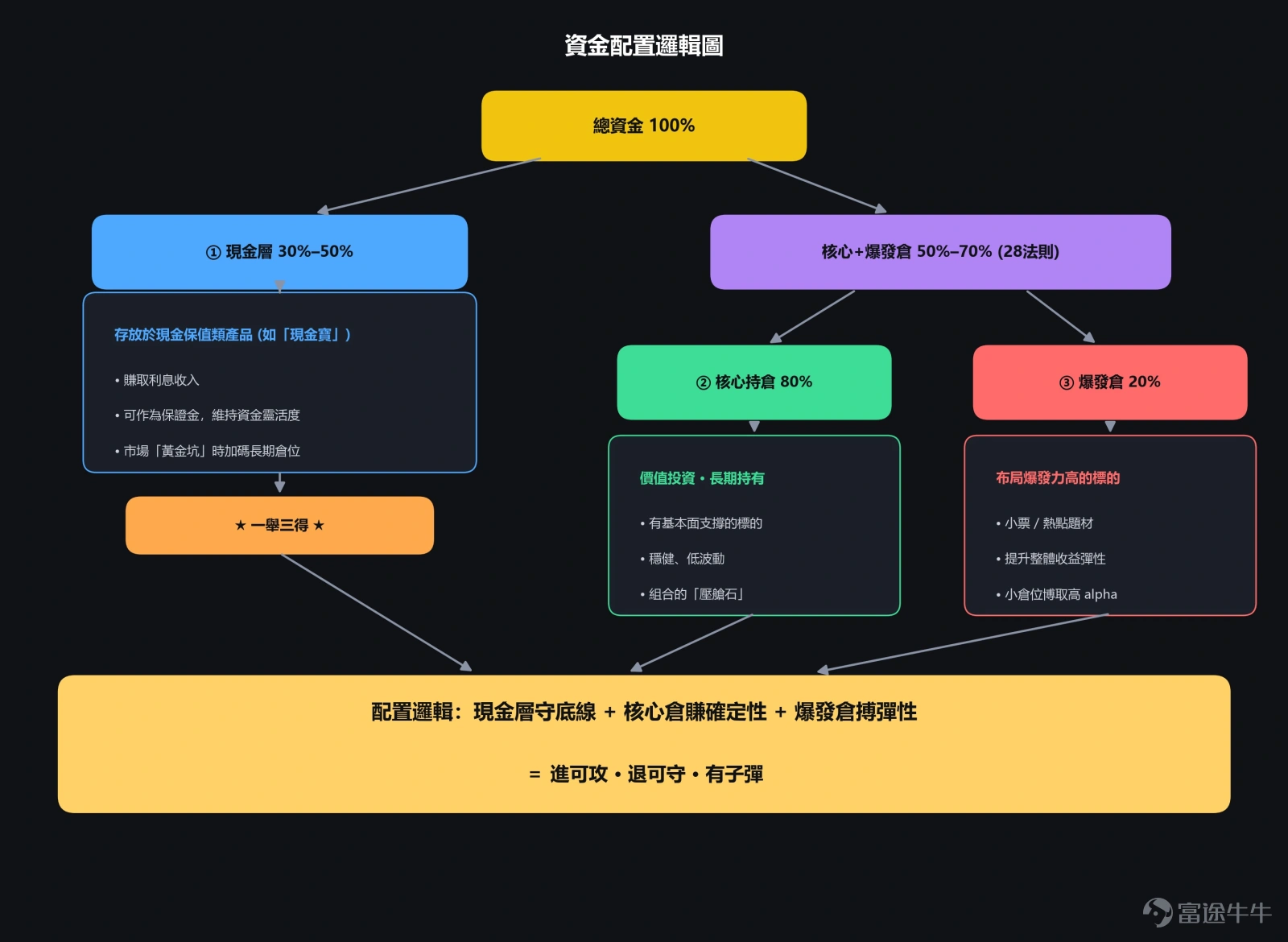
① Cash reserve (30%-50% reserved): Allocate funds to cash-preserving products, such as Cash Treasure. This approach generates interest income while maintaining liquidity as margin collateral; moreover, should a "golden pit" emerge in the market, you can promptly deploy these funds to increase long-term positions—making it a threefold win.
The remaining 50%–70% follows the 80/20 rule:
② Core holdings (80%): Pursue value investingHold investment targets with fundamental support for the long term.
③ Explosive-position allocation (20%): Allocate to small-cap stocks or hot picks with high explosive potential., thereby enhancing the overall portfolio's earnings elasticity.
Another very important point is:Avoid over-concentrating your positions; at the same time, don't spread them too thinly. By focusing on investment targets you are confident in, you can truly manage risk effectively.
III. Prioritizing Certainty—A Three-Layer Screening Process: "Macro Narrative → Fundamentals → Technical Trends"—Only Act When You Are Confident
Q: You have repeatedly emphasized "pursuing opportunities with relatively high certainty." How do you define "certainty," and how do you apply this concept in your stock-picking process?
A: I'm a fairly typical theme trader. Market hype always revolves around specific themes and follows distinct cycles—some long, some short.
By "certainty," I mean assessing opportunities in the following order: start with the macro narrative, then drill down to fundamentals, and finally examine the technical setup. Only after rigorous, step-by-step filtering do I confirm a clear entry opportunity and act decisively to enter the market.
This ordering is crucial—any technical indicator can become distorted in the face of a powerful macro narrative. That's why I always proceed according to"Macro Narrative → Fundamentals → Technical Trends"Logically screen for investment targets with high certainty.
Take the storage sector as an example: I already judged at the end of last year and the beginning of this year that its prospects were highly certain, and looking back, the gains have indeed been substantial. But as I've said before: every hot trend is cyclical. If it were me, right now…We are more inclined to seek valuation-advantaged opportunities within the AI infrastructure value chain, rather than chasing sectors that have already seen substantial gains.
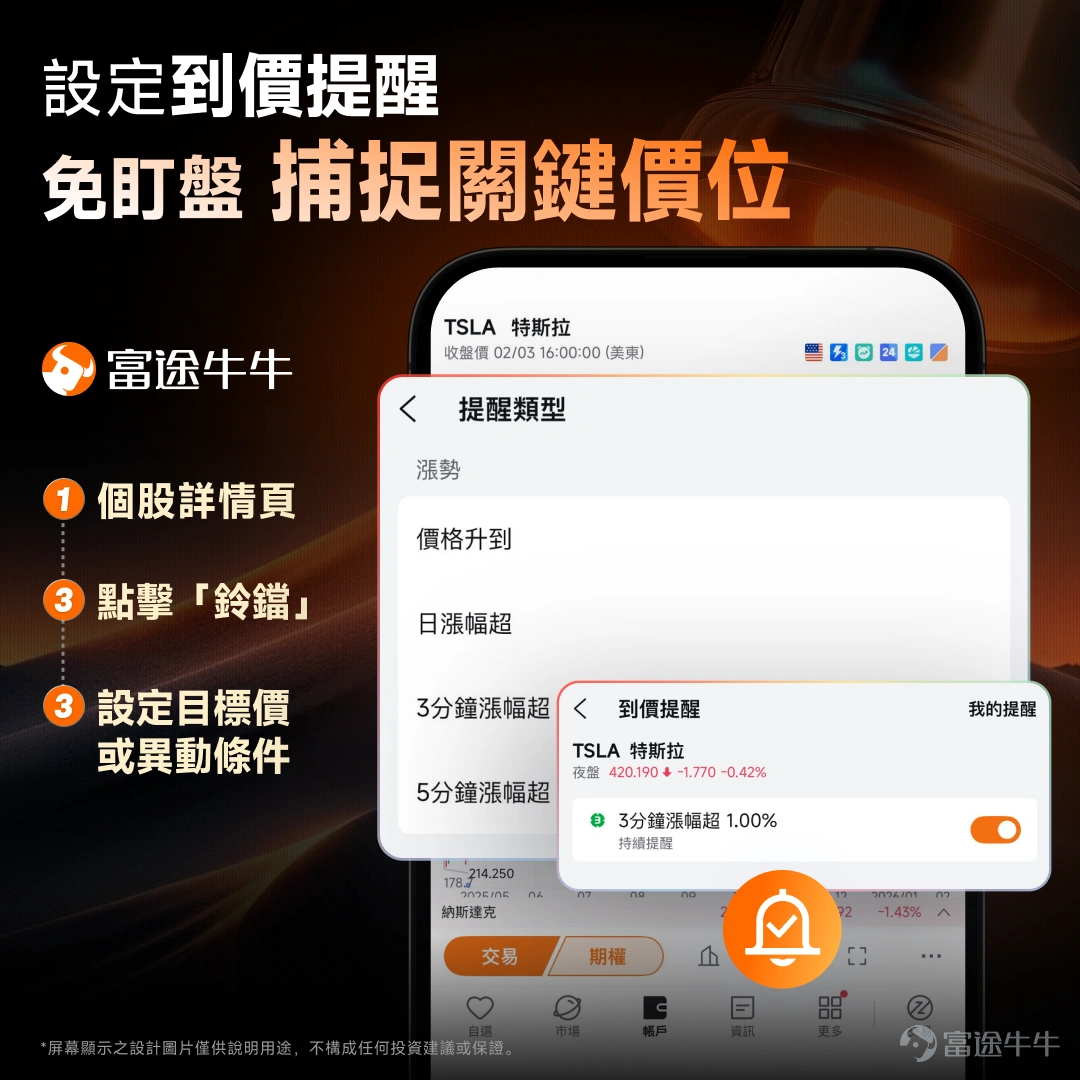
Recently, the AI sector has been booming, and I tend to favorThe "Price Alert" feature lets you set your ideal price, and it will notify you as soon as that price is reached, so you can act quickly.
Q: Under this "certainty" framework, how do you currently view the overall market trend? Which sectors or individual stocks are you most bullish on in the near term?
A: I believe the issue of the AI bubble is subjective; after two years of development, it's actually become much less apparent.From a macro-narrative perspective, the hottest trend at present remains AI infrastructure development.
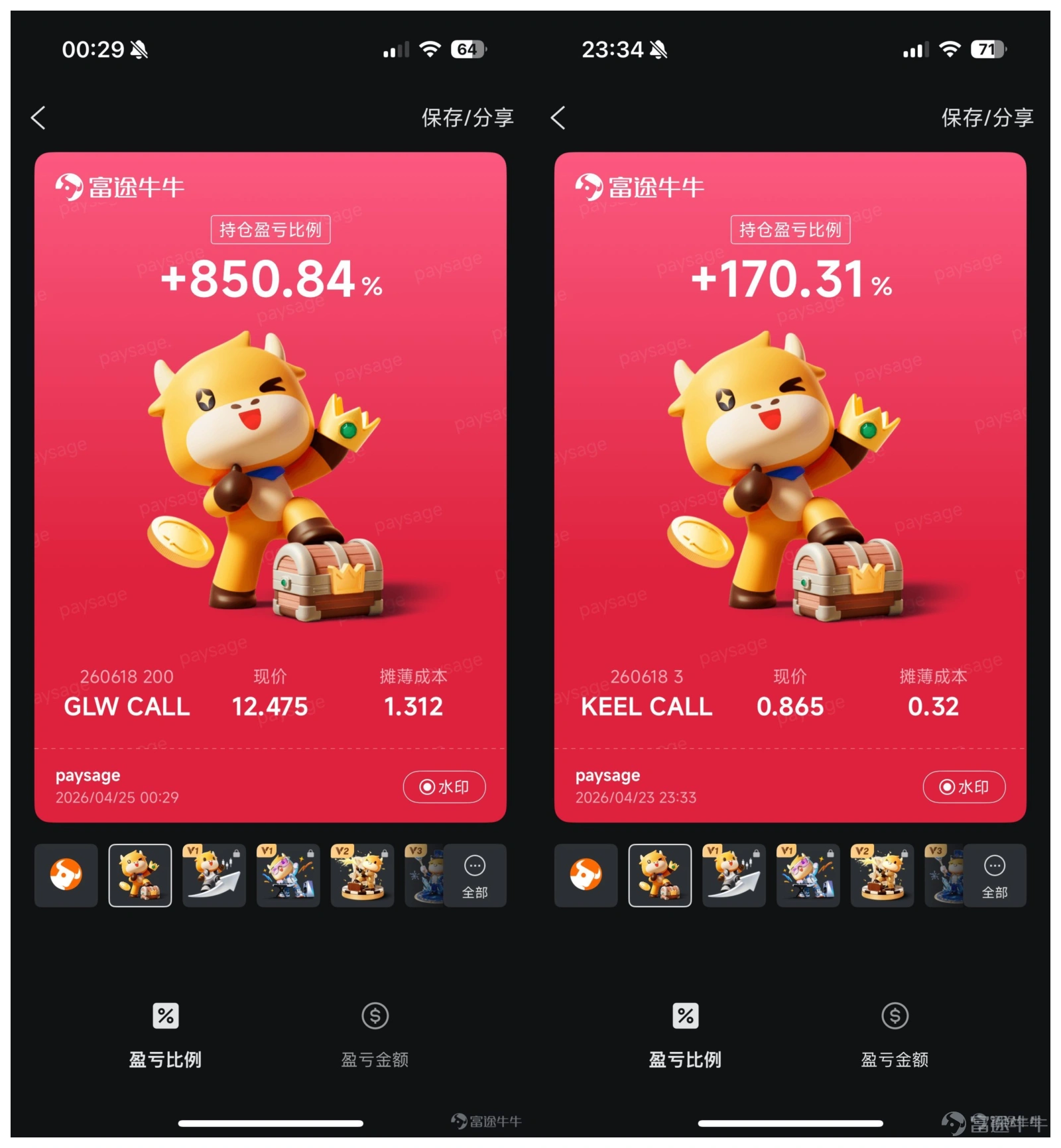
However, the opportunity has evolved from isolated breakthroughs in early-stage GPUs and chips to a rotational dynamic across the entire industry chain—CPU, storage, liquid cooling, computing power, optical modulesEach link in the chain—and each stage—presents distinct windows of opportunity. As for mining companies, my core thesis is this: the AI narrative has spurred massive demand for data-center sites and energy, making mining infrastructure a natural fit for data centers; meanwhile, the time and resource costs of large tech firms building their own data centers are prohibitively high, so partnering with mining companies is currently the optimal solution.
Recently, I am more optimistic about$Marvell Technology (MRVL.US)$ 、 $Bloom Energy (BE.US)$ 、 $Keel Infrastructure (KEEL.US)$(Not investment advice, just so you know.)
IV. Hong Kong Stock Market Insights and Tool Recommendations — Liquidity Remains the Biggest Obstacle, While AI-Based Stock Selection Enhances Efficiency Significantly
Q: Have you been following the Hong Kong stock market? Recently, Hong Kong stocks have surged, and AI-related stocks have become extremely popular. What's your take on this?
A: I'm bullish on Hong Kong stocks and am keeping an eye on…$Hang Seng Index (800000.HK)$, but the problem is obvious: liquidity is too poor; look at$Hang Seng TECH Index (800700.HK)$As expected, the gap compared with U.S. stocks is obvious, and options are even harder to trade.
In the long run, I remain optimistic. IfSelecting Investment Targets in the Hong Kong Stock Market, I believe the following categories may have opportunities:
① Domestic substitution-related technology stocks;
② Stocks related to AI infrastructure; for example,
However, my level of involvement is currently quite low—partly due to liquidity issues and partly because my familiarity with this market is limited. Previously, I held positions...$XIAOMI-W (01810.HK)$and$MEITUAN-W (03690.HK)$It's been quite a long stretch, but the sharp 50% drop from the peak has definitely shaken my confidence in Hong Kong stocks—haha.
Q: As a long-time Futu user, what features do you find particularly useful?
A:I only use$Futu Holdings Ltd (FUTU.US)$。On the one hand, it's because I left Tencent,I naturally have a good impression of Futu.On the other hand, objectively speaking, domestic companies excel in product user experience and enjoy a competitive edge over some foreign software.I think Futu's user experience is excellent!
There are two features that have been most helpful to me recently:
①Futubull AI
It can quickly integrate fundamental data, financial report summaries, market sentiment, and other information for individual stocks, saving me a great deal of time on manual research and organization when conducting investment analysis. Especially when I need to rapidly screen multiple potential investment targets, Futubull AI's efficiency advantage is very obvious, enabling me to make preliminary judgments and comparisons in a short period of time.

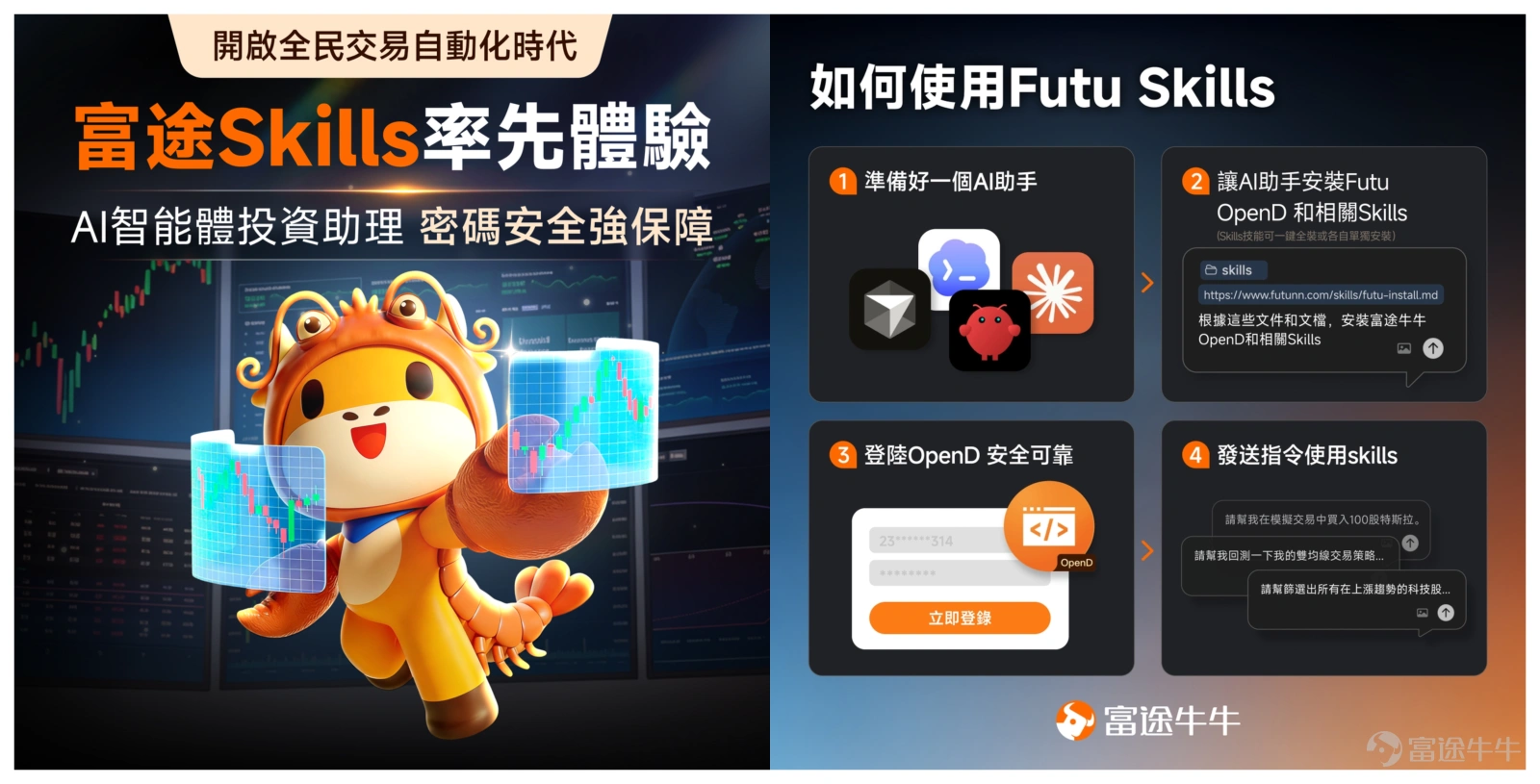
②Skills Tools
Another tool I frequently use is Skills, primarily as a decision-support aid for position allocation and risk management. For instance, when adjusting portfolio weightings or assessing profit-and-loss distributions under different scenarios, Skills offers a highly intuitive reference.
Investing involves risks; this material is for reference only and does not constitute investment advice. Investors should make decisions based on their own risk tolerance and use AI-related tools with caution.
As forI'm still figuring out the quantitative tools.Options themselves are nonlinear products, so a purely quantitative approach may not always be the best fit; however, I will continue to explore whether I can effectively integrate them with my own trading strategies.

V. Honest Advice for Beginners: Pace Matters More Than Bravery—The Options Trading Philosophy of "Slow Is Fast"
Q: There are many novice investors on the platform who are interested in options. What advice would you like to share?
A: First,It is essential to implement proper position management and risk management.This is the most fundamental premise: trading itself is a form of spiritual cultivation.
Investing is counterintuitive; the market constantly tests our greed and fear.We should learn from outstanding people., while also learning to filter out market noise and distill a investment system that suits you,Do not follow the trend blindly.. Rhythm is more important than courage—When the timing is not right, it's better to hold your ground than to force a move.
Regarding getting started with options, there are a few points I'd like to make:
①I sincerely advise beginners against trading end-of-day options.It may seem cheap, but it has extremely low fault tolerance—any slight deviation and you'll be hit on both ends. As the saying goes:When trading options, sometimes "slow is fast.". If doingFor a long call, you should choose a longer expiration date.Only then is there sufficient fault tolerance and room for adjustment.
② If you're going to be the seller, never sell short.The seller's potential profit is limited, but the theoretical risk is unlimited. Whether selling Calls or Puts, one mustIn conjunction with the corresponding shareholding or margin.Otherwise, if you encounter a sharp, one-sided market move—whether a rapid surge or a steep plunge—you could easily be liquidated.
③ Effectively manage risk and let time work in your favor. The fundamental logic of being a seller is to "trade time for space"—while holding the underlying stock, you sell call options to capture the time value.When faced with extreme market conditions such as black-swan events, traders can choose to roll positions or add legs to convert options into longer-term combination strategies, leveraging time to their advantage, gradually reducing costs, and increasing the probability of success.
Well, that's all for today's sharing. Once again, thank you, paysage, for taking the time to participate in this interview. We look forward to hearing more of your fascinating trading stories and insightful market insights in future posts on the Niuniu Circle!
[Rewarded Interaction]
The first 150 fellow investors who share their insights on this article in the comment section, with more than 30 words and reasonable arguments, will each receive 66 points.
If you find this article inspiring for your investing, feel free to tag your friends and invite them to read it too!
Event deadline: From now until May 15, 2026.
If you have more suggestions for our column, feel free to leave a message in the comments! Follow @Investor Story, and you won't miss the next episode of [Investor Story]!
Disclaimer: The content of this article is provided by@paysageAccept@牛友有料到Compiled from the interview, with images in the text provided by@paysageProvided and authorized for use. The articles and case studies are for reference only and do not constitute any investment advice; the information contained herein does not amount to any industry or metric recommendations. Any stock-specific information and descriptions provided represent solely the personal views of the user and do not constitute any stock recommendations. Past performance of individual stocks is not indicative of future results, and the stock market involves risks—investors should proceed with caution.
Risk Disclaimer: The above content only represents the author's view. It does not represent any position or investment advice of Futu. Futu makes no representation or warranty.Read more


Comments (242)
to post a comment
493
535