
PDD Holdings reported Q1 revenue of RMB 106.2 billion—has its share price already hit bottom?

The New Era of AI Investment: From Dialogue to Execution, How to Seize Global AI Opportunities? — Expansion of ETF Connect
The New Era of AI Investment: From Dialogue to Execution, How to Seize Global AI Opportunities? —— Further Expansion of ETF Connect
1. The Time for AI Investment is Now: From 'Dialogue' to 'Execution,' the Business Model Loop is Complete
You may still be stuck with the impression that 'AI can only chat, burn money, and not make profits.' However, in the spring of 2026, a landmark event changed all of this: OpenClaw, the open-source project from Austria — nicknamed 'Lobster' — equipped large models with hands and feet, enabling AI to not only answer questions but also directly operate computers, organize files, publish content, and execute tasks. Within just three months, this 'Lobster' swept through China and is about to integrate into the WeChat and QQ ecosystems, allowing Agents to reach billions of users (Source: Public market information as of April 2026). 2026 is precisely when AIApplication Layermade the key transition from the 'Dialogue Era' to the 'Execution Era'.
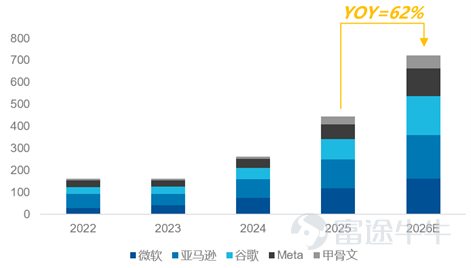
Meanwhile, the commercialization loop of AI was officially completed. In April, Anthropic’s annual recurring revenue (ARR) exceeded $30 billion, surpassing OpenAI, proving that AI can not only change lives but also generate real profits (Source: Company announcement, April 2026).Model Layeralso made significant progress: Anthropic released the new generation Claude Mythos Preview, with code capabilities, multi-modal processing, and end-to-end Agent execution surpassing previous versions (Source: Anthropic official, April 2026).Hardware and Infrastructure Layerbrought even more good news: $Tesla (TSLA.US)$ Tesla's AI 5.0 chip successfully taped out, with a 40x performance improvement, set to drive humanoid robots, autonomous driving, and data centers (Source: Tesla, March 2026); the top five global cloud vendors' capital expenditure is expected to grow 62% year-over-year in 2026, with money continuously flowing into NVIDIA $NVIDIA (NVDA.US)$ 's GPUs, Broadcom $Broadcom (AVGO.US)$ 's switches, Arista $Arista Networks (ANET.US)$ 's high-speed networking—they are the "toolmakers" of the AI era and beneficiaries of computational expansion (Source: Companies' financial reports and market forecasts, as of March 31, 2026).
Continuous expansion of capital expenditure by the top five cloud vendors (in billion USD)

Source: Companies' financial reports, as of March 31, 2026
The industrial drivers of artificial intelligence have gradually completed the construction of a profit flywheel: better applications attract more users, more users generate more data, better models drive stronger computational demand, and stronger computing power feeds back into cheaper applications—this is not linear growth but exponential acceleration. For ordinary investors, you don't need to choose between betting on models or hardware.
2. The dilemma and solution for global AI allocation: A dual-pole strategy of US and Hong Kong stocks
There's a dilemma in investing in AI: If you only invest in A-shares or Hong Kong stocks, you'll never access overseas computational leaders—the "hearts" that drive every model training and inference, with a significant portion of global AI infrastructure capital expenditure flowing into their pockets. But if you only invest in US QDII? You may miss the unique dividend of China’s AI application implementation—from Agents within the WeChat ecosystem reaching nearly a billion users to the rapid penetration of domestic autonomous driving chips—China is forging its own path.
Most AI or technology-themed indices force you to make a single choice, while a global AI index that integrates Hong Kong and US stocks allows you to avoid choosing. Take the "FTSE Global Artificial Intelligence Select Index" as an example, which blends Hong Kong and US stocks at approximately a 65:35 weight (Source: FTSE, as of March 31, 2026). US stocks gather global cloud giants and computational cornerstones; these "toolmakers" benefit from computational expansion. Meanwhile, Hong Kong stocks focus on hardcore technology and application scenarios—domestic semiconductor manufacturing, autonomous driving chips, large model application ecosystems—all are included.
FTSE Global Artificial Intelligence Select Index Methodology

Source: FTSE, data as of March 31, 2026
Top 10 Constituents

Source: FTSE, data as of March 31, 2026
3. HK Stock Picks: Higher AI purity, lower consumer exposure
The industry structure of the FTSE Global Artificial Intelligence Select Index focuses more on AI hard technology, forming a differentiated complement to the Hang Seng Tech Index. Comparing the two indices’ sector maps, the Hong Kong stock components of the FTSE index are dominated by three key sectors—digital services, biotechnology, and semiconductors—which together account for half of the index, showcasing a purely technological focus. On the other hand, the Hang Seng Tech Index $Hang Seng TECH Index (800700.HK)$ allocates more weight toward consumer-oriented sectors such as automobiles and interactive media (Source: Wind, Hang Seng tertiary industry classification, data as of March 31, 2026). One index dives deep into upstream computing power and algorithms, while the other expands horizontally across vast digital consumer landscapes—each has its own emphasis. However, if you’re looking for core assets within the true artificial intelligence industrial chain, the former offers a clearer direction.
Hang Seng Industry Classification Comparison
(Left: FTSE Global Artificial Intelligence, Right: Hang Seng Tech)

Source: Wind, Hang Seng tertiary industry classification, data as of March 31, 2026
Measured by the proportion of revenue from C-end customers, the consumer attribute weight of the FTSE Index’s Hong Kong stock portion is approximately 32.9%, while that of the Hang Seng Tech Index is as high as 75.3% (Source: Wind, FTSE, data as of March 31, 2026; a consumer attribute is defined as a company whose main source of primary business revenue comes from C-end customers, assuming 100% Hong Kong stock representation in the FTSE Global AI index for comparison). This means that the constituent stocks of the FTSE Index are more oriented toward enterprise clients and upstream segments of the industry chain, and are relatively less affected by risks such as price wars, subsidy reductions, and slowing consumption growth. For investors seeking to reduce cyclical volatility in their Hong Kong tech portfolio, this type of index offers an alternative with higher 'AI purity' and significantly lower dependence on consumer cycles.
Consumer attribute weight

Source: Wind, FTSE, data as of March 31, 2026; A consumer attribute is defined as a company whose main source of primary business revenue comes from C-end customers, assuming 100% Hong Kong stock representation in the FTSE Global AI index for comparison.
4. Portfolio performance: The effectiveness of 1+1>2 has been validated
Since the base date of September 2022, the cumulative return of the FTSE Global AI Select Index has significantly outperformed the Hang Seng Tech Index, with lower volatility (Source: Bloomberg, FTSE, data as of March 31, 2026, denominated in USD, all indices are net return indices). Leading US-listed computing power companies have contributed substantial excess returns, while Hong Kong-listed hard tech components have provided valuation flexibility. The portfolio effect of 1+1>2 has been validated through historical performance.
Historical performance comparison

Source: Bloomberg, FTSE, data as of March 31, 2026, performance comparison base date is September 16, 2022, denominated in USD, all indices are net return indices
5. Stock Connect mechanism: Does not consume QDII quota, enabling more flexible global allocation
Traditional cross-border investment channels—QDII funds—have long faced quota shortages, often imposing purchase restrictions or suspending subscriptions during periods of high market activity. In contrast, ETF Stock Connect uses an independent cross-border trading mechanism, allowing eligible investors to purchase relevant ETFs without consuming individual or institutional QDII quotas. Additionally, the risk of premium/discount is mitigated, with ETF trading prices closely tracking net asset value (Source: Regulatory authorities and exchange rules, as of April 2026).
Since its inception, the ETF Connect has become an important bridge for mainland investors to allocate Hong Kong and overseas assets. In April 2026, the ETF Connect list is set to expand once again. The 'E Fund (Hong Kong) FTSE AI Select Index ETF (3489)', listed on the Hong Kong Stock Exchange for more than six months, has officially announced that it will become an investable target under the ETF Connect. E Fund (Hong Kong) FTSE AI Select Index ETF (3489) $E Fund (HK) FTSE AI Select Index ETF (03489.HK)$ Focuses on global AI core assets, covering leading U.S.-listed computing power stocks as well as Hong Kong-listed hard tech and application scenarios.
Important Information:
The E Fund (Hong Kong) FTSE AI Select Index ETF ('Sub-Fund') is a sub-fund under the E Fund ETF Trust. The E Fund ETF Trust is an umbrella unit trust established under Hong Kong law. The Sub-Fund is classified as a passively managed ETF under Chapter 8.6 of the Securities and Futures Commission's ('SFC') Code on Unit Trusts and Mutual Funds. Units of the Sub-Fund ('Units') are traded on the Hong Kong Stock Exchange ('HKEX') like stocks. Its investment objective is to provide investment returns that closely track the performance of the FTSE Custom Global AI Select Index ('Index') (before deduction of fees and expenses).
The constituent stocks of the index (and thus the investment targets of this Sub-Fund) may be concentrated in the technology sector and two geographic regions/countries (China and the United States). Compared to funds with more diversified portfolios, the value fluctuations of this Sub-Fund may be more pronounced and more susceptible to adverse economic, political, policy, foreign exchange, liquidity, tax, legal, or regulatory events related to the relevant industries.
This content is issued by E Fund Management (Hong Kong) Co., Ltd. This content does not constitute an invitation or recommendation to invest in fund units. Investment involves risks, and fund prices can go up or down. Before investing, investors should carefully read the fund prospectus (including the 'Risk Factors' section) to understand the investment risks associated with the fund. This content has not been reviewed by the SFC. For detailed important notices and disclaimers regarding the above fund, please visit the E Fund Hong Kong website: E Fund (Hong Kong) FTSE AI Select Index ETF (3489) https://www.efunds.com.hk/tc/products/48/important/.
Risk Disclaimer: The above content only represents the author's view. It does not represent any position or investment advice of Futu. Futu makes no representation or warranty.Read more


Comments
to post a comment
2
1