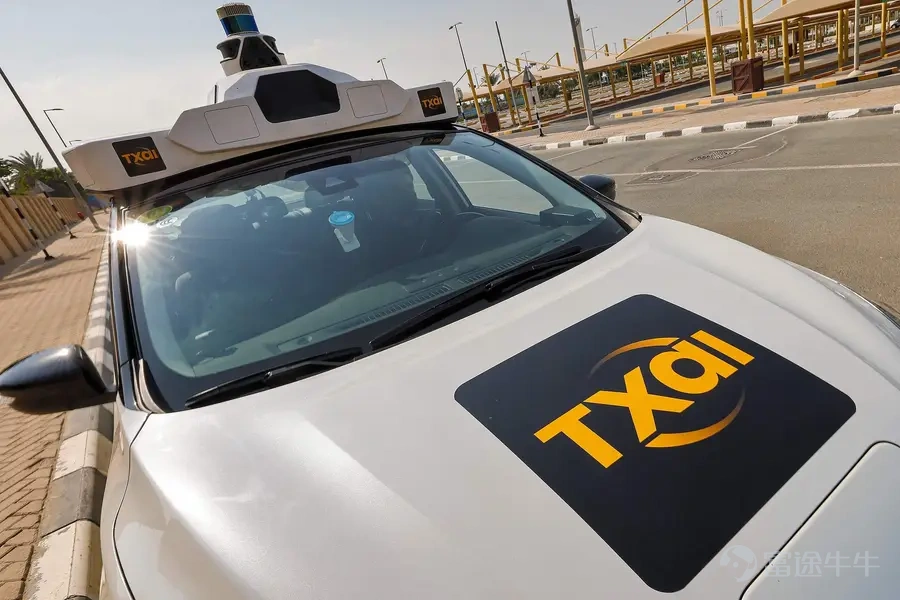

Growing safety concerns bring autonomous ride-hailing to a sudden halt
Baidu's service disruption in Wuhan, the injury incident involving Hello in Zhuzhou, and reports of a suspension on new license issuance indicate that China’s autonomous ride-hailing development is shifting its focus towards safety

Key points:
* Following two recent incidents, the narrative around China's autonomous ride-hailing development is transitioning from an emphasis on order volume, city coverage, and vehicle costs to one centered on safety
Baidu remains the largest player in China, but Pony AI, WeRide, XPeng Motors, Cao Cao Mobility, as well as U.S. rivals like Waymo and Tesla, are heating up the competition in autonomous ride-hailing, creating a crowded global race.
By Hu Minghe
After years of testing, operators were preparing to put more vehicles on the road, with China’s autonomous ride-hailing industry previously seen as on the verge of scaling up. However, what has arrived instead is a safety review, which some view as long overdue.
A report released by the China Academy of Information and Communications Technology (CAICT) in February pointed out that as autonomous ride-hailing vehicles and automated delivery vehicles move from pilot projects to commercialization, 2025 will be a turning point for autonomous driving development. The report positions autonomous driving as an important strategic area in global technology competition, rather than merely a transportation business.
However, following several recent incidents, China has reportedly hit the brakes on its autonomous ride-hailing plans, a key component of autonomous driving technology development. In one incident, multiple autonomous taxis stalled on a major city street, causing traffic disruptions. This pause could delay China's autonomous ride-hailing progress by up to a year or longer. However, in the long run, this move may also help build public trust in the system, as the technology still feels unfamiliar and unsettling to many ordinary passengers.
From vehicle safety to system safety
On March 31, $Baidu (BIDU.US)$under the umbrella ofRadish ExpressMultiple autonomous taxis in Baidu’s Apollo Go fleet suddenly stopped operating on the roads of Wuhan, the capital of central China’s Hubei Province. Local police preliminarily attributed the cause to a system malfunction, with no reports of casualties. Reuters reported that at least 100 vehicles were affected; local media noted that some passengers were trapped inside the stranded vehicles for nearly two hours.
What makes this incident noteworthy is that it was not a single-vehicle malfunction like in the past, but rather a fleet-level failure. A malfunction in one autonomous taxi is a product issue, but when hundreds of vehicles simultaneously stall on the road, the problem shifts to the nature of infrastructure-level issues.
According to multipleForeign media reportsFollowing this shutdown incident, China has suspended the issuance of new autonomous vehicle licenses, a move that will slow down the progress of new pilot projects and fleet expansion. On April 14, three ministries also requested nationwide self-inspections and strengthened emergency response supervision for road tests of intelligent connected vehicles. Reports indicate that in Dongguan, Luobu Kuaipao is conducting safety drills and vehicle inspections, and operations will gradually resume after the completion of related work.
The Wuhan incident is the biggest setback the industry has faced so far, but not the first warning. In December last year, a Hello autonomous vehicle in Zhuzhou, Hunan province, was involved in an accident, reportedly injuring two people and causing a temporary suspension of local services.
For any new technology, public trust is key to its widespread adoption; this is especially true for autonomous taxis as they can cause physical harm and trigger serious traffic issues. Passengers affected by the Wuhan shutdown not only complained about being trapped in stationary vehicles but also criticized the insufficient SOS support. In Dongguan, some users expressed dissatisfaction with Luobu Kuaipao’s sudden suspension of operations. If prices are low and convenience is high, passengers might tolerate slow journeys or less-than-smooth experiences, but once stuck en route or facing safety threats, reactions tend to be extremely strong.
The scale of Baidu's shutdown this time is largely due to its leading position in China’s driverless taxi race. The company does not separately disclose Luobu Kuaipao’s revenue or profit in its financial reports, but it does provide data on service scale. Baidu stated that Luobu Kuaipao completed 3.4 million fully driverless orders in the fourth quarter of last year, with weekly order peaks exceeding 300,000, serving 26 cities.
Numerous competitors
Baidu was one of the earliest companies in China to invest in autonomous taxis, but since then, more enterprises have joined, making the field increasingly crowded. $Pony AI (PONY.US)$ signed a 1.2 GW fuel cell power contract with $WeRide (WRD.US)$ They have been competing in China and other global markets, with rapid growth in autonomous taxi revenues, but the high costs of fleet expansion are also evident. Pony AI’s current fleet size exceeds 1,400 vehicles, while WeRide disclosed triple-digit growth in autonomous taxi revenues. However, both companies are still operating at a loss.
Apart from these leading companies, $XPeng (XPEV.US)$ XPeng Motors stated that autonomous taxis equipped with VLA 2.0 have begun public road testing and plans to commence trial operations later this year. Geely’s mobility platform $CAOCAO INC (02643.HK)$ indicated plans to deploy thousands of purpose-built autonomous taxis globally by 2027, aiming for 100,000 by 2030.
Outside of China, Waymo, backed by Alphabet, and $Tesla (TSLA.US)$other companies are leading the way; $Uber Technologies (UBER.US)$companies such as Tesla are placing bets on direct operators like Pony AI and WeRide through investments and partnerships.
Analysts predict that the scale of China's autonomous taxi fleets may nearly double this year, although these forecasts were likely made prior to Baidu’s suspension and the latest safety-related pause. Meanwhile, there are projections indicating that as more vehicles move out of testing and into mainstream taxi markets, the global autonomous taxi service market could become a multi-billion-dollar industry by 2035.
Geopolitical factors
Geopolitics is increasingly becoming part of the narrative for the development of global autonomous taxis. China has sold millions of new passenger cars equipped with Level 2 (L2) driver-assistance functions and opened tens of thousands of kilometers of test roads in pilot cities under the “integrated vehicle-road-cloud” initiative. In March, XPeng Motors chairman He Xiaopeng advocated that China should accelerate the transition from L2 to Level 4 (L4) vehicles; within the six-tier classification system for driver assistance ranging from L0 to L5, L4 is considered the minimum level for full autonomy.
Notably, despite China’s vast market potential, no foreign company has yet entered the country’s autonomous taxi market. While no company has commented on this decision, many firms may be concerned about strict regulations and overheated competition, similar to Uber's experience of investing billions of dollars in China during the early 2010s before eventually exiting the market.
In the United States, autonomous driving is increasingly being scrutinized from a national security perspective, with new rules restricting certain vehicle-to-everything systems and autonomous driving software linked to China and Russia.
China does have advantages thanks to lower electric vehicle costs, dense urban pilots, and local government support. However, as the Baidu incident shows, safety concerns are an equally critical factor as companies expand operations. Investors have begun reflecting this risk in valuations. Following reports of the suspension of license issuance, Baidu's Hong Kong shares fell by 2.8%, while Pony AI and WeRide dropped by 5.5% and 4.7%, respectively.
While this suspension represents a setback, the race for autonomous taxis in China is clearly not over. On the contrary, it is entering a new round of qualifying stages. The eventual winner may not necessarily be the company covering the most cities, having the lowest vehicle costs, or processing the highest order volumes, but rather those that can demonstrate their autonomous fleets operating like public infrastructure—providing effective services under normal conditions, maintaining safety during malfunctions, and quickly resuming operations afterward.
Risk Disclaimer: The above content only represents the author's view. It does not represent any position or investment advice of Futu. Futu makes no representation or warranty.Read more

Comments
to post a comment
2