

VIVA Perspective | Dr. Bing Xia, V-DEL Platform Expert at Viva Biotech, Shares Cutting-Edge Practices on AI-Driven DEL Screening for GPCR Targets

Recently, the 2026 China Innovative Drug Discovery Technologies Conference was held in Chengdu, gathering numerous scholars, experts, and industry representatives in the field of drug research and development to discuss pathways to breakthroughs in China's innovative drug discovery. Viva Biotech attended the conference and set up a booth.Xia Bing, Vice President of Viva Biotech and Head of the Early Drug Discovery DEL PlatformAs an invited guest, delivered a presentation titled"AI-Powered DNA-Encoded Chemical Library Screening Against Cell-Surface GPCRs: Unlocking an Intractable Target Class", systematically sharing the company’s cutting-edge practices and research achievements in the field of GPCR drug discovery, including those related to DEL.
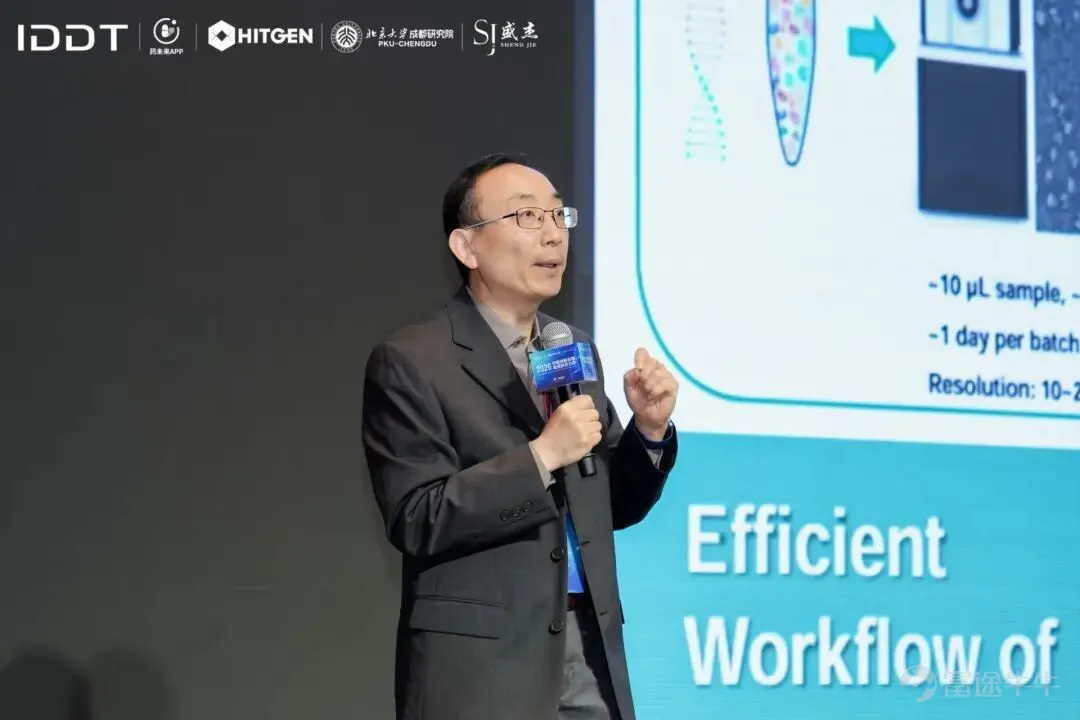
Dr. Xia Bing, Vice President of Viva Biotech and Head of the Early Drug Discovery DEL Platform
GPCR Targets: A Vast Landscape with Significant Challenges
GPCRs represent the largest family of membrane proteins, playing a crucial regulatory role in various bodily functions, and are among the most important types of drug targets today. Data shows that approximately 34% of FDA-approved drugs target GPCRs, yet these drugs only cover about 25% of the GPCR family members,with a large number of other targets still largely untapped, demonstrating significant potential for drug development and exploration.
However, GPCRs are also widely acknowledged as one of the toughest challenges in drug discovery.At the screening level, whether it’scell-based (at the cellular level)orprotein-based (at the purified protein level), each approach faces its own technical hurdles – the former preserves the natural conformation of the membrane protein but results in extremely high background noise; the latter offers better concentration control but risks disrupting the natural conformation of GPCRs. How to accurately identify effective lead compounds amidst complex backgrounds has long been a core challenge in the industry.
Leveraging Multiple Platforms to Build Differentiated Advantages in GPCR Screening
In response to these challenges, Dr. Xia focused on introducingViva Biotech's systematic layout and differentiated capabilities in the GPCR screening field. Since 2012, the company has been developing a screening and membrane protein platform. After more than a decade of in-depth efforts, it has built a GPCR drug discovery system centered on protein production and structural research, integrating multi-platform collaboration such as V-DEL screening, ASMS validation, and AI data analysis.
In terms of screening strategy, Viva Biotech adheres toan approach oriented towards industrial scalability, repeatability, and versatility, utilizing standardized DNA-encoded compound libraries without deliberately pursuing specialized library designs for single targets,aiming to create mature solutions that can be broadly applicable to different GPCR targets.
AI algorithms overcome high noise challenges
Addressing the significant challenge of background noise in GPCR screening on cell membranes,Viva Biotech's AI team, in collaboration with its mathematical modeling team, developed a data processing method based on continuous distribution analysis:Compounds with similar structures are grouped into models, using distribution curves instead of traditional isolated data points for evaluation. Distribution models are established separately for positive and negative data, and the two are cross-validated, significantly reducing false-positive rates and enhancing the ability to identify true lead compounds in high-noise environments.
Based on this methodology, in a cellular-level screening case targetingorphan GPCR targets, Viva Biotech identified two series of lead compounds and advanced the synthesis of 25 compounds for validation, with five confirmed.Notably,The validation process adopted a technical pathway featuring membrane capture combined with ASMS, characteristic of Viva Biotech.By analyzing GPCRs together with surrounding membrane fragments, the validation conditions are highly consistent with the cell screening environment, significantly reducing the 'translation gap' between screening and validation, and accelerating iteration speed.
Dual-track approach combining Cell-based and Protein-based methods.
In addition to cell-level screening, Dr. Xia also introducedViva Biotech’s rich experience in GPCR screening at the purified protein level,covering protein construct design, high-throughput screening validation, various solubilization and purification methods, as well as successful practices of rapidly obtaining stable protein conformations using the Cryo-EM platform to assist in screening.

Dr. Xia concluded by emphasizingthat the core advantage of the DEL platform lies in its flexibility.Unlike high-throughput screening, which requires starting from scratch at a high cost, DEL only needs to add screening conditions to simultaneously conduct multi-dimensional exploration.Therefore, the team chose to advance cell-level and protein-level screening in parallel, cross-validating the data to obtain results with higher confidence.In addition, Viva Biotech is exploring the construction of biased and antagonist-enriched compound libraries based on published GPCR activity data, combined with internally developed similarity factor analysis, to further enhance the targeting and efficiency of GPCR screening.

Viva Biotech (01873.HK), founded in 2008, provides one-stop comprehensive services to global innovative drug development enterprises, ranging from early structure-based drug discovery to commercial drug production. Leveraging our leading position in structure-based drug discovery (SBDD) technologies, we offer CRO services during the new drug research phase to global partners, utilizing advanced platforms such as X-ray protein crystallography, cryo-electron microscopy (Cryo-EM), DNA-encoded library technology (DEL), affinity mass spectrometry screening (ASMS), surface plasmon resonance (SPR), hydrogen-deuterium exchange mass spectrometry (HDX-MS), and AIDD/CADD. Our team, led by senior medicinal chemists and drug discovery biology experts, provides services including drug design, medicinal chemistry (H2L, LO), compound synthesis, chemical analysis and purification, kilogram-scale amplification, peptide synthesis, and corresponding bioactivity testing. Through our subsidiary, Longhua Pharmaceutical, we deliver end-to-end CMC/CDMO solutions from preclinical development to commercial production. Additionally, we focus on discovering and investing in high-potential biopharmaceutical startups, using a unique equity-for-service (EFS) business model to address unmet clinical needs.
Contact us: info@vivabiotech.com
Risk Disclaimer: The above content only represents the author's view. It does not represent any position or investment advice of Futu. Futu makes no representation or warranty.Read more
Comments
to post a comment