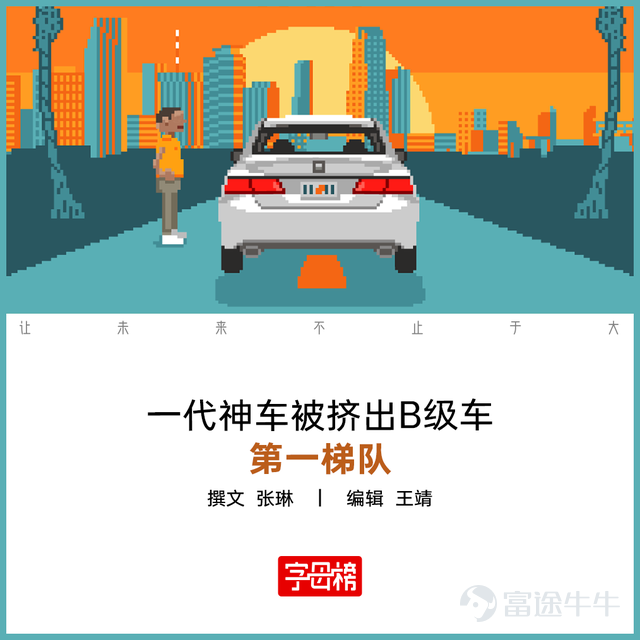

Accord has exhausted the 'ride-hailing bonus'

“In the past, out of ten ride-hailing cars, seven or eight were Accords, but now they are mostly new energy vehicles.” Chen Feng, 38, was one of Didi's earliest group of premium ride-hailing drivers. In 2015, the first car he picked up from a leasing company was a black ninth-generation Accord.
He once witnessed the peak period of Accord in the premium ride-hailing market: “Fuel efficiency is Accord’s biggest advantage; with a thousand yuan worth of fuel, it could generate three thousand yuan in revenue.” In Chen Feng’s memory, the ninth-generation Accord almost became synonymous with ‘premium ride-hailing.’ “Not only did platforms purchase them in bulk, but many drivers also bought Accords out of their own pockets to drive as premium taxis.”
But as the ride-hailing market becomes saturated, the income of dedicated drivers has gradually decreased. Chen Feng also switched to a job at a company opened by a friend. Until three years ago, when he returned to driving for hire again, he found that the once 'king of dedicated cars,' the Accord, had lost its former glory. 'There are more choices now, such as the Aion AION S, BYD Qin PLUS EV, and Camry Hybrid, etc., and the platform prioritizes orders for these vehicles offering better riding experiences.'
Rewinding back to 1999, the first domestically produced sixth-generation Accord rolled off Guangzhou Honda’s production line. The Accord was not only Honda's first locally manufactured model in China but also the first truly globally synchronized B-segment car in the Chinese auto market.
For the first time, Chinese consumers no longer had to buy models that were phased out abroad years ago. With its European-style minimalist design and 2.3L VTEC engine, even though the price of nearly 300,000 yuan could have bought a two-bedroom apartment in downtown Guangzhou at the time, this car still sold like hotcakes.
In 2000, the domestically produced Accord, which had been on the market for only one year, sold 32,000 units. Many people even paid an additional premium of 30,000 to 50,000 yuan to purchase it. Over three years, cumulative sales reached 138,000 units, which was absolutely a sales miracle at the time.
As a result, in the memories of many people born in the 70s and 80s, the Accord is deeply associated with labels like the 'car for old money from Guangdong' or 'the essential car for middle-aged men.'
From being the boss’s ride to becoming the standard for dedicated cars, the Accord rode the wave of the expanding ride-hailing market all the way to the top. In 2019, the Accord sold 223,000 units, surpassing the Passat and Magotan to claim the title of best-selling B-segment car of the year.
But by 2025, this figure dropped to 171,200 units, shrinking by nearly a quarter, even after resorting to price cuts to survive.
The dedicated car market boom has faded, its own model change failed, and the transition to electrification lagged behind. Nowadays, the terminal price of the Accord has plummeted significantly, with its residual value rate declining, falling out of the top tier of B-segment car sales.
Entering 2026, the sales pressure on the Accord continues. Only 13,800 units were sold in January, a sharp 27% drop from the previous month; February sales figures further fell to less than 5,000 units; on the March B-segment car sales ranking list, the Accord even dropped out of the top ten, ranking 11th.
From a middle-class dream car costing 300,000 yuan per unit to its current fall into the dedicated car category, the Accord has yet to find a suitable transformation path.
A
The domestic auto market in 1999 was a completely different landscape compared to today. The entry-level family car segment was largely dominated by the 'old trio' – Santana, Jetta, and Fukang – with a combined market share that once reached as high as 70%. However, these models were mostly outdated vehicles from overseas, sold exclusively in China without updates for years, lagging far behind global technological standards.
Consumers looking for better mid-to-high-end cars had limited choices: either outdated and gas-guzzling official cars like the Audi 100, the old Red Flag, or Shanghai sedans, or they could shell out exorbitant amounts for imported vehicles. At that time, the Camry had not yet been localized in China, and a Toyota Camry (the predecessor of the current model) would cost 350,000-400,000 yuan after taxes—equivalent to nearly 50 years of salary for an average worker.
At this turning point, the first locally produced sixth-generation Accord rolled off the Guangzhou Honda assembly line, less than a year after the global debut of the sixth-generation Accord. This marked the first time Chinese consumers were no longer buying outdated models that had been discarded by foreign markets years earlier, but instead getting access to a truly synchronized global product.
So when the sixth-generation Accord, bearing the 'Guangzhou Honda' badge, appeared on the streets, the impact was tremendous.
In terms of design, its European minimalist styling eliminated the boxy and bulky feel of traditional official cars, while its length of nearly 4.8 meters satisfied the domestic preference for larger vehicles. In terms of features, it was equipped with a 2.3L VTEC engine, which was considered 'cutting-edge technology' at the time, offering consumers their first experience of 'high performance with low fuel consumption.'
Of course, it wasn't cheap, with prices ranging from 260,000 to 330,000 yuan. For context, in 1999, the average price of commercial housing in Guangzhou was around 4,000-5,000 yuan per square meter, meaning this amount could buy a two-bedroom apartment in the city center.
Even at such a high price point, the vehicle was a massive hit. In 2000, only a year after its localization, Accord sold 32,000 units. Many buyers even paid premiums of 30,000-50,000 yuan to secure one, and within three years, cumulative sales reached 138,000 units.
By May 2017, Accord had achieved the milestone of 2 million units sold. Five years later, that figure rose to 3 million. Accord became the fastest Japanese mid-to-high-end car to reach 3 million user deliveries.
The sales growth curve of Accord also overlaps significantly with the expansion of ride-hailing services in China.
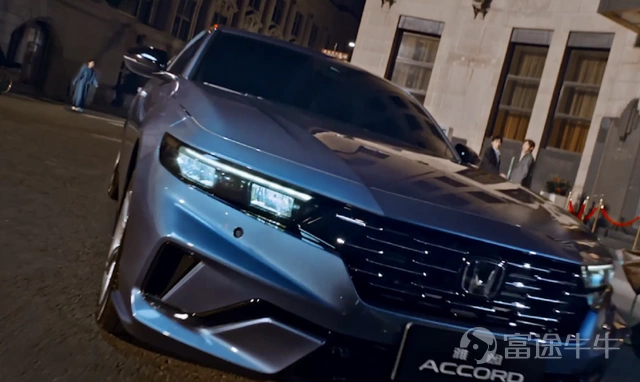
As the ride-hailing industry experienced explosive growth, platforms like Didi heavily invested in premium car services. The Accord's spacious interior, low fuel consumption, and durability perfectly matched the requirements for a B-segment car in the premium ride-hailing market.
In 2015, at the age of 27, Chen Feng quit his stable job as a warehouse manager at a state-owned enterprise and became a chauffeur. At that time, he did not own a car, so he approached a car rental company in Beijing and joined a platform under a labor dispatch model through a four-party agreement framework. Not only did he have to pay a deposit of 10,000 yuan, but he also had to hand over 180 yuan daily as a 'car rental fee' and split earnings from each ride with the company on a 70-30 basis.
Even so, thanks to the Accord's positioning as a high-end chauffeur vehicle and an abundance of premium airport business orders, Chen Feng’s net income in the first month reached 12,000 yuan. 'Back then, I drove for about 12 hours a day, but I wasn’t the hardest-working driver—chauffeurs earning over 10,000 yuan per month was quite common.'
Later, the platform gradually scaled back its self-operated car allocation model and encouraged drivers to purchase their own vehicles to join the platform. Many individual drivers began buying Accords to work as chauffeurs.
As they became more visible on the roads, the Accord's reputation for being 'durable and reliable' grew increasingly ingrained, making it a popular choice for family car purchases.
From its early days as a boss's ride to later capitalizing on the Didi Chuxing chauffeur service boom, and eventually becoming a top choice for both commercial and personal transportation, the Accord hit its sales peak two decades after entering the Chinese market. In 2019, it sold 223,000 units, decisively surpassing the Passat and Magotan to end years of dominance by German brands, claiming the title of best-selling midsize sedan of the year.
B
However, after reaching this peak, the Accord's sales in China declined over the next five years. By 2025, its annual retail sales totaled just 171,200 units, nearly a quarter less than its 2019 peak.
The chauffeur service dividends that once propelled the Accord’s success began to fade.After 2020, the ride-hailing market became saturated, with platforms increasing commission rates and lowering order prices, causing chauffeurs' incomes to drop significantly.
At the same time, China's auto industry entered a phase of rapid new energy vehicle growth. Models like the BYD Qin PLUS and Aion S flooded the ride-hailing market, with per-kilometer costs of just a few cents instantly eroding the Accord's proud 'fuel efficiency' advantage.
‘It’s true that the Accord is fuel-efficient, but no matter how efficient, it can’t compete with electric.’ Zhao Chen, an 80s-born Guangzhou native who worked as a chauffeur for six years, sold his ninth-generation Accord—which he had driven for four years and initially purchased for nearly 190,000 yuan—in 2023 for only 100,000 yuan. He replaced it with a BYD Han EV.

What made him decide to switch from fuel to electric was the cost calculation: 'Three hundred kilometers a day, just the fuel cost is nearly 100 yuan, and with the rise in oil prices, the fuel cost has almost doubled. After switching to new energy, the daily electricity cost is only about 20 yuan.' In Zhao Chen's view, driving a ride-hailing car is all about meticulous calculations. 'Just this one change saves nearly 50,000 yuan a year.'
As the label of being a 'ride-hailing standard' gradually fades, Accord's reputation in the family car market has also begun to waver.
A model redesign is undoubtedly a major test. In May 2023, the eleventh-generation Accord officially launched, but this model, which carried hopes of 'saving the market,' faced consumer complaints right from its debut.
Those familiar with the Accord know that the tenth-generation model temporarily stabilized sales by capturing the preferences of young people with its youthful and sporty fastback design and exaggerated chrome grille. However, the eleventh-generation Accord suddenly reverted to a retro style, with a flattened front end, narrow light clusters, and restrained chrome accents, leading netizens to criticize it as becoming increasingly outdated.
The controversy over its appearance is only one aspect; the decline in product competitiveness is even harder for consumers to accept. The gasoline version continues to use the same 1.5T+CVT powertrain (192 horsepower) as the tenth generation, without any performance improvements. In fact, during the tenth-generation Accord period, overseas versions offered a high-performance 2.0T+10AT (252 horsepower) variant, but Honda globally discontinued this powertrain in the eleventh generation.
The sales figures post-redesign provide the most honest market feedback. In June 2023, the first month after the eleventh-generation Accord went on sale, only 9,008 units were sold, compared to 25,590 units before the redesign.
Aside from internal redesign failures, externally, the Accord also faces fierce competition from new energy vehicles and domestic models. In the 200,000-yuan price range, new energy models like BYD Han DM-i, Zeekr 007, and XPeng P7+ not only have lower operating costs but also boast stronger power, smarter cabins, and longer ranges. Coupled with the advantage of green license plates exempting purchase tax, these models deliver a crushing blow to the Accord.
The Accord has not been without countermeasures. In an aggressive move to obtain green license plates, GAC Honda eliminated hybrid electric vehicles (HEVs) and introduced the e:PHEV plug-in hybrid version. However, this model, based on a fuel platform converted to electric, had no space for the battery, resulting in a large trapezoidal bulge in the center of the trunk floor, humorously dubbed the 'trunk tumor' by netizens. More awkwardly, it lacks a fast-charging port, offering only 82 kilometers of electric range, and takes three and a half hours to fully charge with slow charging.
A plug-in hybrid car without fast charging, with compromised space, priced three to four ten thousand yuan higher than the gasoline version, naturally fails to attract buyers. Only about 176 units were sold in its first month on the market, and subsequent monthly sales have struggled at several hundred units, unable to compete with domestic new energy vehicles even with significant price cuts.
Meanwhile, the declining quality control and frequent recalls of the Accord have also shaken the reputation of 'Technical Honda.' From 2023 to date, due to engine defects, transmission risks, electronic system failures, and other issues, the Accord has initiated multiple large-scale recalls, each involving more than 100,000 units.
Once a highly sought-after model that commanded premium prices, it has now been pushed out of the top tier of B-segment cars, with monthly sales consistently surpassed by the Camry, Passat, and BYD Han.
C
Just ten days ago, media reports indicated that Honda decided to shut down its GAC Honda petrol vehicle plant located in the Guangzhou Development Zone (Huangpu District), with plans for an official halt in production by June 2026. This is where the first domestically produced Accord was born.
GAC Honda responded, emphasizing that the Huangpu plant was originally an older production line and that this was a reasonable upgrade and optimization.
However, from an external perspective, this is clearly a sign of strategic contraction.
Behind the news of the plant closure lies the Accord's ongoing struggle of 'sacrificing price for volume.'Starting from 2024, the terminal price of the Accord began visibly 'collapsing,' and by now, comprehensive discounts on the 11th generation Accord petrol version have generally reached 55,000 yuan, with some older inventory models even negotiable to over 60,000 yuan off.
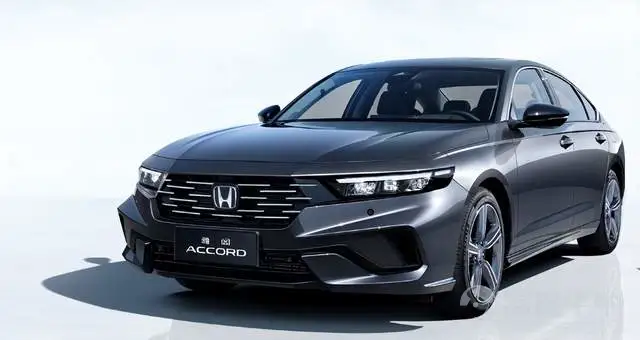
The once nearly 200,000-yuan 1.5T luxury version now sees its car price plummet to 124,800 yuan, directly dropping into the compact car price range, attempting to regain market momentum through price cuts.
The effect of the price reduction was immediate. For the full year of 2025, the Accord recorded terminal sales of 171,200 units, a slight year-over-year increase of 0.3%, halting the previous two years of cliff-like declines.
However, this did not translate into sustained market enthusiasm, and as of this year, the Accord's sales are under pressure once again.
Consumers now walk into the store and ask right away, 'How much cheaper can it get?' You tell them it’s bottomed out, but they don’t believe you and just leave. A salesperson at a GAC Honda 4S store told Alphabetic List, 'In the fourth quarter of last year, there was a wave of special discounts for the Accord in the channel, with the car price dropping by 70,000 yuan outright. Many old owners were dissatisfied and came to the store demanding explanations, but new customers felt, ‘Is it going to drop further?’ and continued to wait and see.'
The collapse of the pricing system has plunged Accord into a vicious cycle: the more it cuts prices, the less consumers dare to buy; the fewer buyers there are, the more dealers have to slash prices to clear inventory.
In the used car market, the myth of Accord 'losing the equivalent of taxes after three years of use' has faded. Data from the China Automobile Dealers Association shows that its three-year resale value has dropped from 77.77% in 2021 to 59.97% in 2025. Despite still ranking at the top for resale value among mid-sized joint-venture cars in 2025, the nearly 18 percentage point decline reflects the weakening of its brand halo under the impact of new energy vehicles.
Accord’s plight is just the tip of the iceberg of Honda's crisis.In March this year, Honda issued its first annual loss forecast since its listing: operating profit is expected to be a loss of 270 billion to 570 billion yen.
The massive loss stems from halting the development of three all-electric models in North America, with a one-time provision of up to 2.5 trillion yen. The cooling of electrification in North America makes halting development and cutting losses understandable, but Honda's real strategic misstep was betting on electrification in North America, where there is little enthusiasm for EVs, while taking a long-term conservative approach to China, the world’s largest new energy vehicle market.
Reviewing Honda’s electrification path over the past five years, we can clearly see a trajectory of 'starting early but arriving late.'
As early as 2021, Honda launched the e:N all-electric brand, but the first models, e:NS1 and e:NP1, were widely criticized as 'oil-to-electric conversions,' with platforms highly similar to fuel vehicles, mediocre range, and average intelligence, missing the 2021–2023 new energy explosion window.
Subsequently, Honda introduced an exclusive all-electric brand for China, '烨,' with Dongfeng Honda S7 priced starting at 259,900 yuan and GAC Honda P7 starting at 199,900 yuan, attempting to demonstrate its determination towards electrification.
However, the intelligent configuration and range performance of these two models held no advantage when facing competitors like BYD Tang EV and Tesla Model Y at the same price point. Only six months after launch, they had to resort to significant price cuts to survive.
With products failing to gain traction, Honda shifted the strategic focus of electrification to North America.
Not until 2025 does Honda finally collaborate with the local supply chain, partnering with Momenta to develop intelligent driving technology, integrating the DeepSeek large model, and working with CATL to create lithium iron phosphate batteries and CTB technology. However, the market window period waits for no one.
Didi's orders alone cannot sustain a brand's future, let alone save a once-iconic car that has been left behind by the times. $Honda Motor (HMC.US)$$Joyful Honda (3191.JP)$$Honda Motor (7267.JP)$$Automobiles (LIST1040.HK)$$DiDi Global Inc (DIDIY.US)$$Electric Vehicles (LIST2568.US)$$Electric Vehicles (LIST21074.JP)$
Risk Disclaimer: The above content only represents the author's view. It does not represent any position or investment advice of Futu. Futu makes no representation or warranty.Read more

Comments
to post a comment
2