
Micron's market cap surpasses $1 trillion—has the memory sector's 'cyclical curse' been overturned?

Option Sir Breaks Down Hot Topics | Seagate's explosive earnings soar nearly 20%, is storage set for another big market move? What’s next for SanDisk and DRAM ETFs?
The massive surge in demand brought on by AI has driven upthe major cycle for storage continues to unfold。
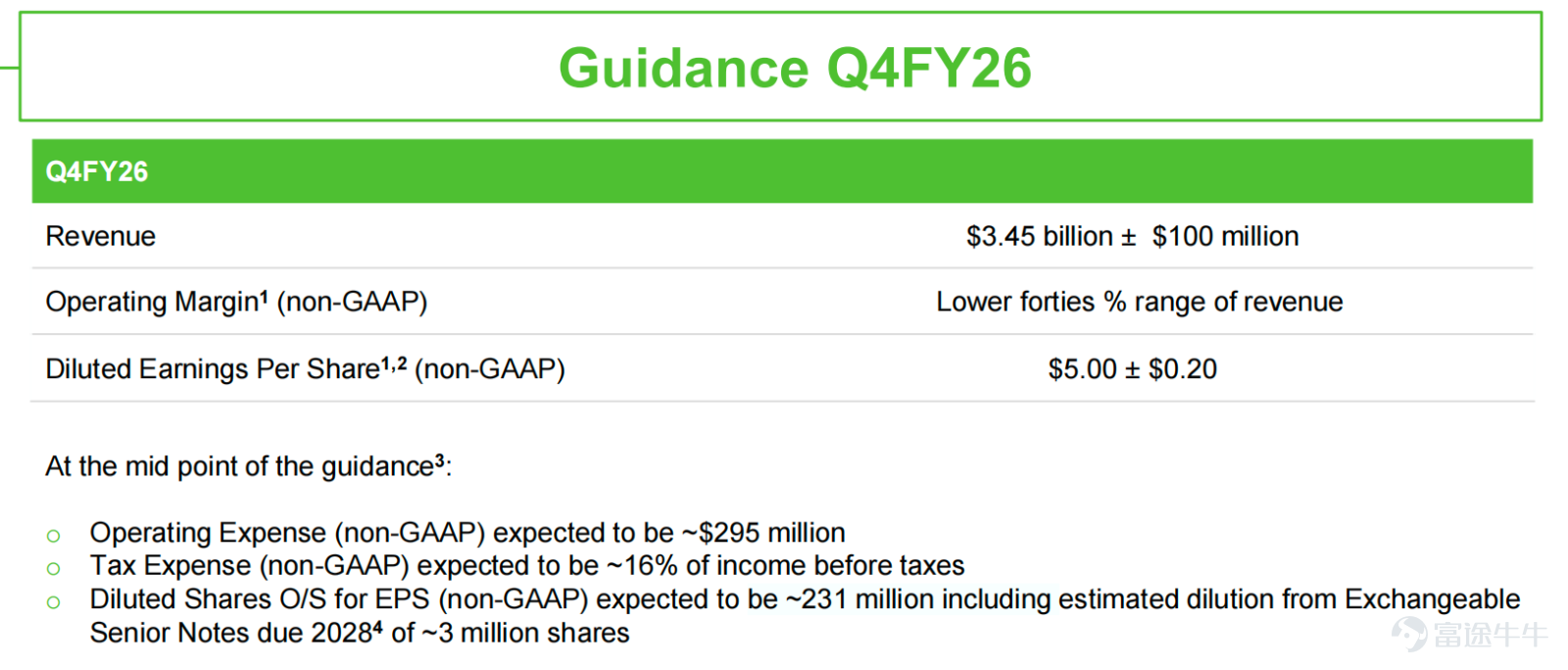
After the US stock market closed on April 28, $Seagate Technology (STX.US)$ Seagate delivered a significantly better-than-expected earnings report, bringing a shining moment to the HDD segment of the storage industry after segments like memory and HBM. Seagate’s Q3 FY2026 revenue reached $3.112 billion, with a Non-GAAP gross margin of 47.0%. More importantly, Seagate projected the next quarter's revenue to be $3.45 billion, with a fluctuation of $100 million,still far exceeding market expectations prior to the announcement.。
Why did Seagate, the longstanding leader in HDD, ignite the storage sector?
Seagate’s earnings report released three signals that excited the market.
First, the demand for high-capacity HDDs remains tight. Seagate's management stated that the company is entering a structural growth phase driven by AI applications amplifying data creation and supporting sustained storage demand. Discussions with customers have already extended orders to 2028. This signal is significant for the market, as HDDs are no longer just cyclical products but are now part of AI data infrastructure. Additionally, Seagate raised its revenue growth forecast for the coming years to at least 20%, enhancing long-term earnings visibility.
Second, profit elasticity is stronger than revenue elasticity. Seagate's revenue this quarter increased year-over-year from $2.16 billion to $3.112 billion, while Non-GAAP gross margin rose from 36.2% last year to 47.0%, and Non-GAAP net profit increased from $407 million to $934 million. Once the storage cycle enters a phase of tight supply and demand, price increases and product mix improvements can rapidly expand profits.
Third, the linkage within the storage sector indicates that investor interest is driven by industry momentum.Following Seagate’s strong guidance, Western Digital surged about 10% after-hours, SanDisk rose approximately 4%, Micron gained around 3%, and the combined market capitalization of the four companies temporarily increased by about $60 billion. The storage industry ETF DRAM also rose nearly 4%.
In other words, Seagate's performance is not an isolated trend but rather a validation of the overall health of the storage supply chain.

Three key trading themes in the storage supply chain
This round of storage sector performance can be seen as a continuation of a full-industry trend.
The first theme is today's market focus on earnings: HDDs, with representative companies being Seagate, $Western Digital (WDC.US)$ . The core advantage of HDD lies in its low cost per unit of capacity, making it suitable for cloud vendors, enterprise data centers, video platforms, and AI data archiving. Its cost-performance ratio is particularly prominent compared to NAND, especially against the backdrop of significant NAND price hikes.
. The second line: NAND / Flash / SSD, with the representative company being $SanDisk (SNDK.US)$ . After SanDisk was spun off from Western Digital, it became an independent publicly listed company primarily taking over the Flash business. SanDisk's performance last quarter was already very strong: FY26Q2 revenue reached $3.025 billion, up 31% quarter-over-quarter and 61% year-over-year; data center revenue grew 64% quarter-over-quarter. The company’s guidance for the next quarter’s revenue is $4.4 billion to $4.8 billion.

. The third line: DRAM / HBM, with representative companies being Samsung, SK Hynix, $Micron Technology (MU.US)$ . This line is closest to AI computing power, with HBM directly tied to GPUs, while DRAM runs through server, PC, AI terminal, and inference-side demand. On the pricing front, TrendForce pointed out that sustained AI and data center demand are exacerbating global memory supply and demand imbalances and increasing suppliers' pricing power. $CSOP SK Hynix Daily (2x) Leveraged Product (07709.HK)$$CSOP Samsung Electronics Daily (2x) Leveraged Product (07747.HK)$
Therefore, the storage market trend is not driven by a single-point logic but rather by an explosion ignited by downstream data center demand fueled by AI, spreading across the industry chain from DRAM/HBM to HDD and then to NAND.
SanDisk and Western Digital earnings reports, the next key milestone
The next most critical milestone will be on April 30, after the US stock market closes, when Western Digital and SanDisk will release their latest earnings results.
For these two earnings reports, the market will focus on three key aspects:
First, whether Western Digital can replicate Seagate’s strong guidance.Western Digital's revenue last quarter was 3.017 billion USD, a year-over-year increase of 25%; Non-GAAP gross margin was 46.1%; the company expected the third-quarter revenue midpoint to be 3.2 billion USD, with a Non-GAAP EPS midpoint of 2.30 USD. If this upward revision continues, the HDD market will become closer to an industry-wide resonance.
Second, we need to see whether SanDisk’s NAND profit margin can continue to rise to the next level.SanDisk's Non-GAAP gross margin last quarter rose to 51.1%, and guidance for the next quarter indicated a Non-GAAP gross margin range of 65.0% to 67.0%. If actual performance and subsequent guidance remain strong, the market will further solidify the narrative of tight NAND supply and demand and improving enterprise SSD demand.

Third, we need to observe if management continues to emphasize AI storage demand.Earnings data determine short-term reactions, while the wording during earnings calls determines whether the market is willing to continue giving valuation. Key terms include: cloud vendor orders, high-capacity HDDs, enterprise SSDs, AI data centers, capacity allocation, and price hike sustainability.
Seagate has already proven that HDD results exceeded expectations; SanDisk and Western Digital need to use their performance once again to show the market that this is not an isolated company phenomenon but a continuation of the broader storage industry upturn.
If you want to invest in the overall storage industry, why focus on DRAM ETFs?
Stock price volatility caused by individual stock earnings reports and other events is significant. For individual investors looking to participate in the main trend of the storage industry, $Roundhill Memory ETF (DRAM.US)$ Roundhill Memory ETF, ticker symbol Dynamic Random-Access Memory, is a more straightforward observation tool.
The DRAM ETF began trading on April 2, 2026, primarily investing in global memory stocks, covering sectors such as HBM, NAND, DRAM, and HDD. Its top five holdings include Samsung, SK Hynix, Micron, Kioxia, and SanDisk. The expense ratio is 0.65%, and options trading for this ETF is now supported.
Compared to individual stocks, the appeal of the DRAM ETF lies in:
First, a purer theme. It is not a broad semiconductor ETF but rathera more concentrated bet on the memory supply chain.。
Second, broader coverage. Companies like Samsung, SK Hynix, and Kioxia are not the easiest targets for direct trading in a typical US equity account, and the ETF offers a more convenient entry point for portfolio exposure.
Third, it's more suitable for playing industry trends rather than betting solely on an individual company’s earnings report. If one believes that the memory industry’s upcycle is still ongoing, the DRAM ETF serves as a comprehensive expression of both 'memory cycle + AI data demand.'

Options Strategy Outlook
Implied volatility often rises significantly around earnings reports, and even if the directional view is correct post-earnings, some profits may be eroded by the decline in implied volatility (IV). Especially after Seagate issued strong guidance, some short-term expectations for SanDisk and Western Digital may have already been priced in. A better approach is to break it down into different scenarios:
If optimistic about Western Digital or SanDisk's earnings taking the lead: Use a bull call spread instead of outright buying calls.For instance, buy calls with a closer strike price while selling calls at a higher strike price. The advantage is reducing premium costs and partially hedging against IV declines post-earnings; the trade-off is capping upside potential. This strategy suits bullish investors who don't want to chase unlimited highs.

Bullish on the storage industry trend, but don't want to bet on a single earnings report: consider DRAM ETF shares or medium-term options.The logic behind the DRAM ETF is not just one night's earnings report, but the continued strength of the storage industry. If optimistic about the AI storage chain, participation can be staggered using shares; more aggressive investors might opt for longer-dated Calls or Call Spreads to avoid betting solely on a day or two of earnings surprises.
Already holding Seagate, Western Digital, and SanDisk: consider covered calls.If there are significant unrealized gains in the shares, selling out-of-the-money Calls further from the money can enhance returns. Suitable for those who are less aggressive about short-term spikes but willing to maintain their core position. The risk is that if the share price continues to rise sharply, some upside potential will be capped.

Concerned about pullbacks after earnings? Use protective puts or collars to manage risk.The trading congestion in storage stocks is already not low, and any pullback could be swift if the earnings are good but not great. Investors with heavy positions can use protective Puts or collars to lock in some downside risk.
If GPUs are the brain of AI, then storage is the memory of AI. Right now, the market is re-pricing this memory system. In the short term, SanDisk and Western Digital’s earnings reports are key validation points; mid-term, $Roundhill Memory ETF (DRAM.US)$The DRAM ETF may become a more direct tool for individual investors to track the health of the storage industry.。
Risk Disclaimer: The above content only represents the author's view. It does not represent any position or investment advice of Futu. Futu makes no representation or warranty.Read more


Comments (6)
to post a comment
43
167