
English
Back
Open Account
雷科技
wrote a column · Apr 21 21:28

DJI Mobile 8P Review: AI Tracking as Steady as a Rock, a Must-Have for Solo Shooting

In October last year, DJI released its latest smartphone gimbal, the Osmo Mobile 8. It made me curious why, after the P version of Osmo Mobile 7 was just released, it disappeared in this 8th generation. Does DJI think that the Osmo Mobile 8 is already flagship-worthy?
In October last year, DJI released its latest smartphone gimbal, the Osmo Mobile 8. It made me curious why, after the P version of Osmo Mobile 7 was just released, it disappeared in this 8th generation. Does DJI think that the Osmo Mobile 8 is already flagship-worthy? (Image Source: Lei Technology Photography) These questions vanished with the arrival of the Osmo Mobile 8P. Without further ado, let's dive into the hands-on experience. In terms of pricing, the standard kit for the DJI Osmo Mobile 8P is priced at 899 yuan, the AI tracking kit at 1099 yuan, and the all-in-one Vlog kit at 1299 yuan. Compact and portable, with thoughtful design details fully optimized Unlike the RS stabilizer series used for cameras, the Osmo Mobile emphasizes simplicity: you know how to use it as soon as you take it out — the structure is simple, the button logic is clear, and simply flipping up the gimbal arm turns on the machine and puts it directly into working mode in less than a second. (Image Source: Lei Technology Photography) Moreover, Osmo Mobile 8P has been comprehensively upgraded in many details. First, there’s the most frequently used extension rod and tripod, which received an integrated upgrade this time. The tripod, in particular, now has a wider range when unfolded, allowing it to be more stable whether placed on a desk or uneven grass. Comparing...
(Image Source: Lei Technology Photography)
These questions vanished with the arrival of the Osmo Mobile 8P. Without further ado, let's dive into the hands-on experience.
In terms of pricing, the standard package for the DJI Osmo Mobile 8P is priced at 899 yuan, the AI Tracking Package at 1099 yuan, and the All-in-One Vlog Package at 1299 yuan.
Compact and portable with meticulous attention to detail in a worry-free design
Unlike the RS stabilizer series designed for cameras, the Osmo Mobile emphasizes intuitive use right out of the box: simple structure, clear button logic, and by simply flipping up the gimbal arm, the device automatically powers on and enters working mode within less than a second.
In October last year, DJI released its latest smartphone gimbal, the Osmo Mobile 8. It made me curious why, after the P version of Osmo Mobile 7 was just released, it disappeared in this 8th generation. Does DJI think that the Osmo Mobile 8 is already flagship-worthy? (Image Source: Lei Technology Photography) These questions vanished with the arrival of the Osmo Mobile 8P. Without further ado, let's dive into the hands-on experience. In terms of pricing, the standard kit for the DJI Osmo Mobile 8P is priced at 899 yuan, the AI tracking kit at 1099 yuan, and the all-in-one Vlog kit at 1299 yuan. Compact and portable, with thoughtful design details fully optimized Unlike the RS stabilizer series used for cameras, the Osmo Mobile emphasizes simplicity: you know how to use it as soon as you take it out — the structure is simple, the button logic is clear, and simply flipping up the gimbal arm turns on the machine and puts it directly into working mode in less than a second. (Image Source: Lei Technology Photography) Moreover, Osmo Mobile 8P has been comprehensively upgraded in many details. First, there’s the most frequently used extension rod and tripod, which received an integrated upgrade this time. The tripod, in particular, now has a wider range when unfolded, allowing it to be more stable whether placed on a desk or uneven grass. Comparing...
(Image Source: Lei Technology Photography)
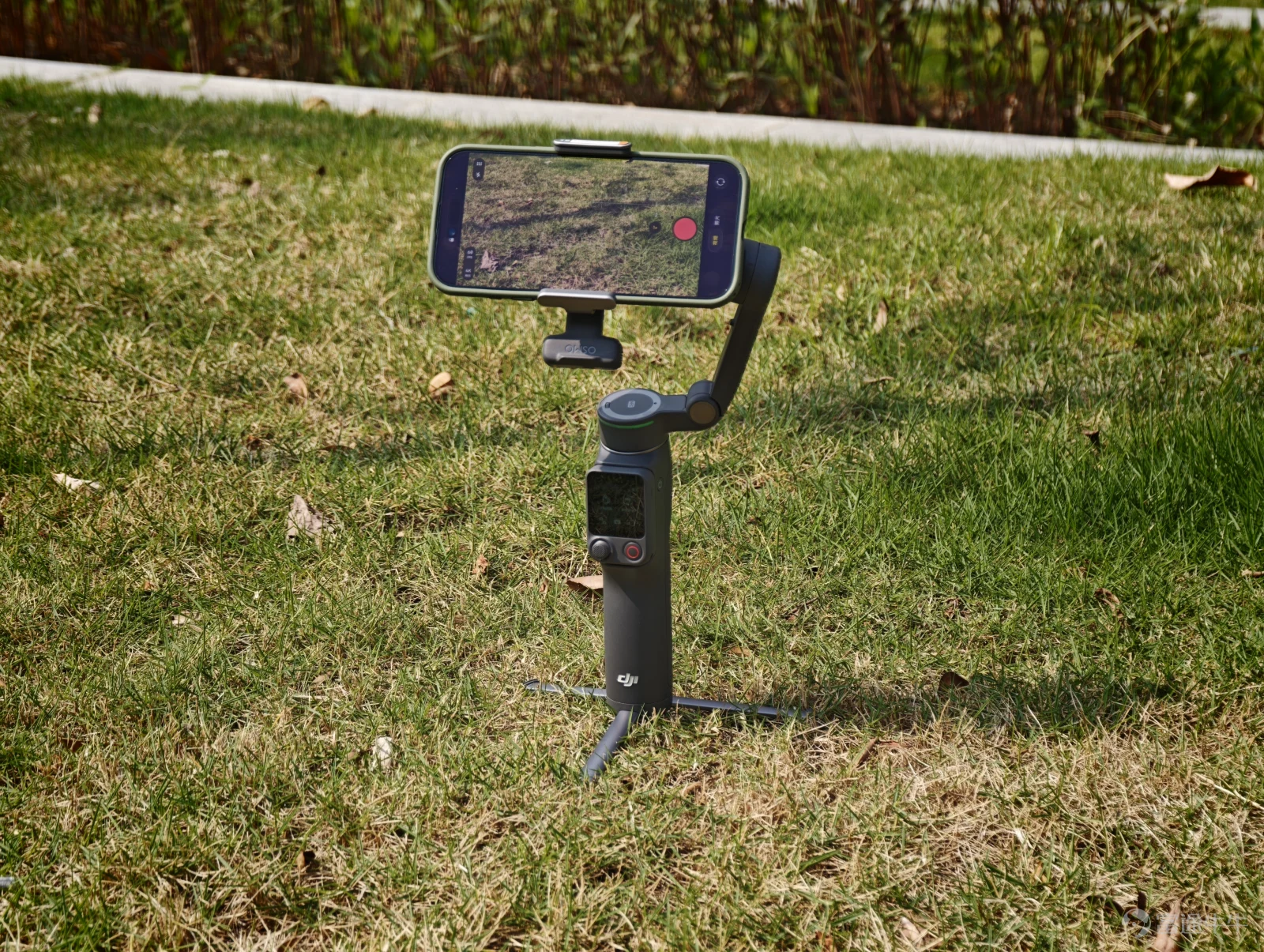
Moreover, Osmo Mobile 8P has seen comprehensive upgrades in many details. First is the extension rod and tripod that users most frequently utilize; this time, DJI has performed an integrated upgrade. In particular, the tripod’s deployment range is now larger, ensuring more stable placement whether on a tabletop or uneven grassy terrain.
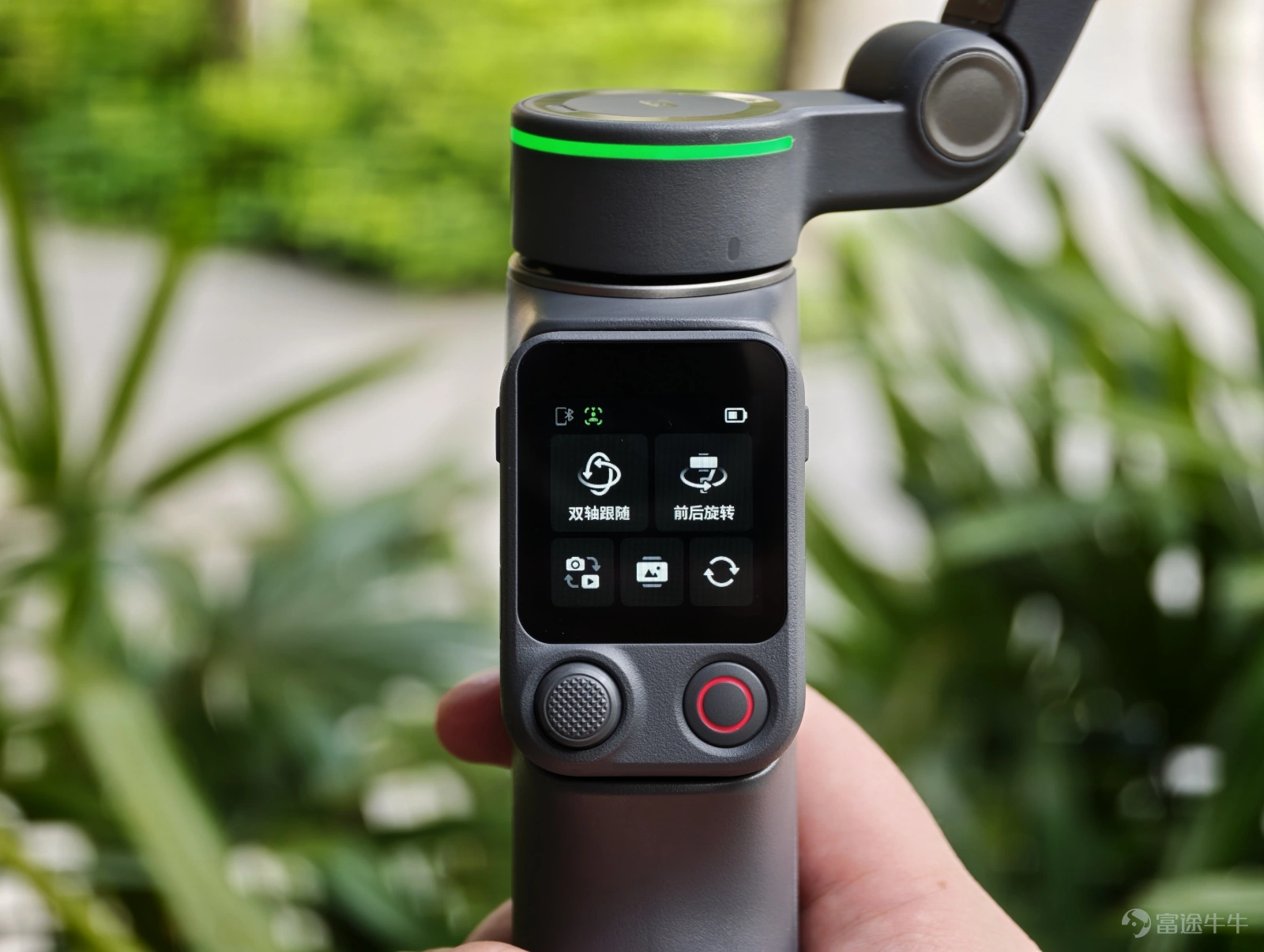
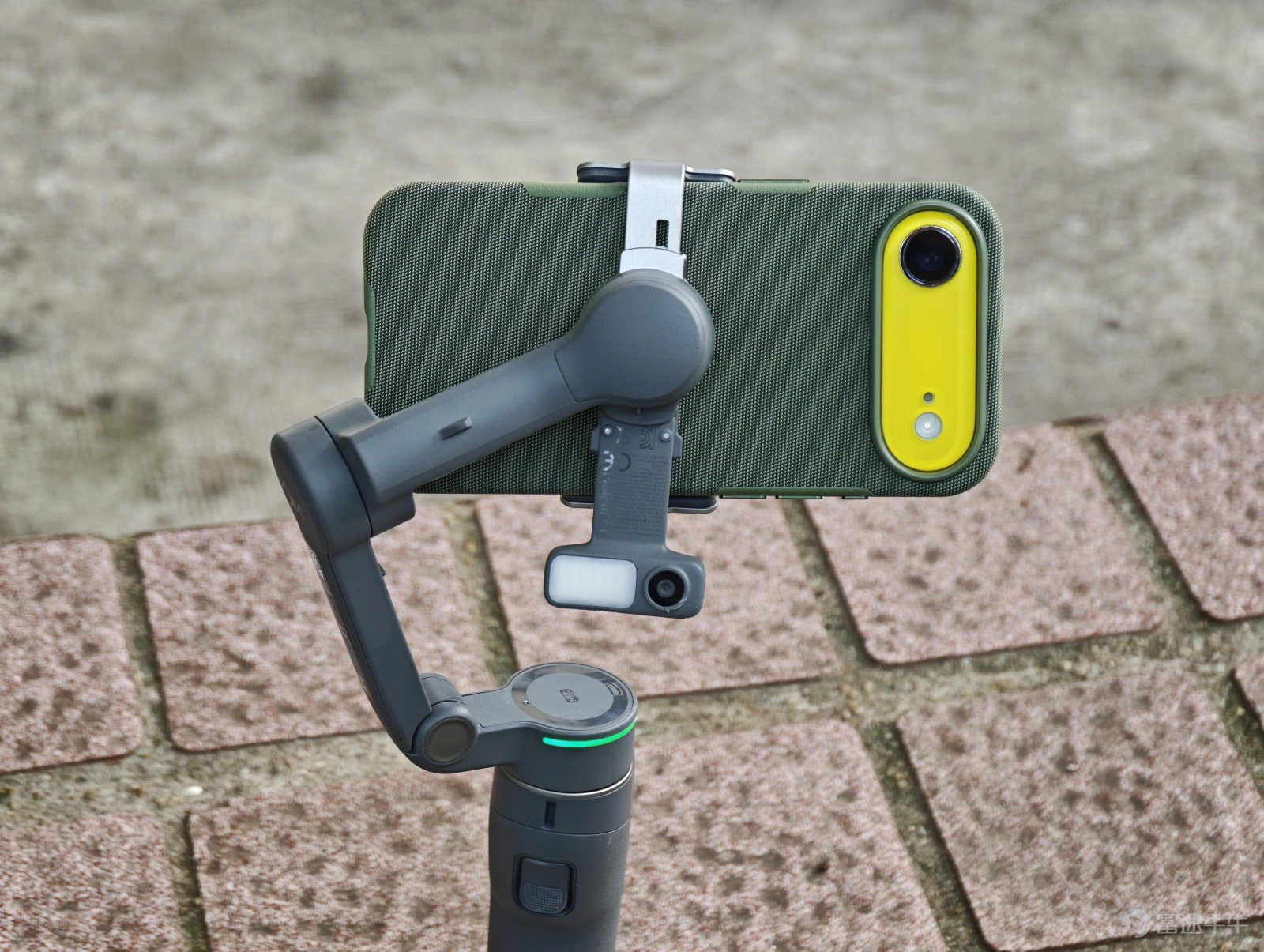
Interestingly, the body now features a new 'ring light' signal design. Previously, when using gimbals, it was often unclear whether they were following the target. Now, you only need to glance at the ring light: if the green light is breathing and flashing, it indicates that intelligent tracking is active; if the green light remains steady, it means the device is in standby mode, ready to be triggered; if the LED is off, it signifies that the device has exited or gone into sleep mode.
For solo users, simply glancing at the light will inform them of the current status of the gimbal, making it a very user-friendly small feature.
Additionally, as a flagship gimbal, the Osmo Mobile 8P is equipped with a brand-new generation of three-axis stabilization technology, further achieving lossless anti-shake. In actual testing, whether during significant running movements or rapid lateral shifts, the footage remained extremely steady, with a very high success rate for finished clips.
In October last year, DJI released its latest smartphone gimbal, the Osmo Mobile 8. It made me curious why, after the P version of Osmo Mobile 7 was just released, it disappeared in this 8th generation. Does DJI think that the Osmo Mobile 8 is already flagship-worthy? (Image Source: Lei Technology Photography) These questions vanished with the arrival of the Osmo Mobile 8P. Without further ado, let's dive into the hands-on experience. In terms of pricing, the standard kit for the DJI Osmo Mobile 8P is priced at 899 yuan, the AI tracking kit at 1099 yuan, and the all-in-one Vlog kit at 1299 yuan. Compact and portable, with thoughtful design details fully optimized Unlike the RS stabilizer series used for cameras, the Osmo Mobile emphasizes simplicity: you know how to use it as soon as you take it out — the structure is simple, the button logic is clear, and simply flipping up the gimbal arm turns on the machine and puts it directly into working mode in less than a second. (Image Source: Lei Technology Photography) Moreover, Osmo Mobile 8P has been comprehensively upgraded in many details. First, there’s the most frequently used extension rod and tripod, which received an integrated upgrade this time. The tripod, in particular, now has a wider range when unfolded, allowing it to be more stable whether placed on a desk or uneven grass. Comparing...
(Image Source: Lei Technology Photography)
Hey, if you’ve previously used the RS series stabilizers, you might find the Osmo Mobile 8P's design familiar at first glance because DJI really did transplant the small screen from the RS series onto the Osmo Mobile. Don’t underestimate this little screen; it truly offers a lot despite its size. Not only can you adjust various parameters on the screen, but you can also switch between different modes with one click. There are two standout functions we’ll discuss later.
In October last year, DJI released its latest smartphone gimbal, the Osmo Mobile 8. It made me curious why, after the P version of Osmo Mobile 7 was just released, it disappeared in this 8th generation. Does DJI think that the Osmo Mobile 8 is already flagship-worthy? (Image Source: Lei Technology Photography) These questions vanished with the arrival of the Osmo Mobile 8P. Without further ado, let's dive into the hands-on experience. In terms of pricing, the standard kit for the DJI Osmo Mobile 8P is priced at 899 yuan, the AI tracking kit at 1099 yuan, and the all-in-one Vlog kit at 1299 yuan. Compact and portable, with thoughtful design details fully optimized Unlike the RS stabilizer series used for cameras, the Osmo Mobile emphasizes simplicity: you know how to use it as soon as you take it out — the structure is simple, the button logic is clear, and simply flipping up the gimbal arm turns on the machine and puts it directly into working mode in less than a second. (Image Source: Lei Technology Photography) Moreover, Osmo Mobile 8P has been comprehensively upgraded in many details. First, there’s the most frequently used extension rod and tripod, which received an integrated upgrade this time. The tripod, in particular, now has a wider range when unfolded, allowing it to be more stable whether placed on a desk or uneven grass. Comparing...
(Image Source: Lei Technology Photography)

However, the most interesting aspect is its support for detachable remote control, which, without exaggeration, directly changes the usage logic of smartphone gimbals.
Previously, when shooting a vlog alone, after setting up the gimbal at a distance, if you wanted to adjust parameters or check whether you were still in frame, you had to run back to look at the phone – quite inconvenient. But now, the remote control of the Osmo Mobile 8P can be detached from the gimbal handle for use, doubling the operational experience.
In October last year, DJI released its latest smartphone gimbal, the Osmo Mobile 8. It made me curious why, after the P version of Osmo Mobile 7 was just released, it disappeared in this 8th generation. Does DJI think that the Osmo Mobile 8 is already flagship-worthy? (Image Source: Lei Technology Photography) These questions vanished with the arrival of the Osmo Mobile 8P. Without further ado, let's dive into the hands-on experience. In terms of pricing, the standard kit for the DJI Osmo Mobile 8P is priced at 899 yuan, the AI tracking kit at 1099 yuan, and the all-in-one Vlog kit at 1299 yuan. Compact and portable, with thoughtful design details fully optimized Unlike the RS stabilizer series used for cameras, the Osmo Mobile emphasizes simplicity: you know how to use it as soon as you take it out — the structure is simple, the button logic is clear, and simply flipping up the gimbal arm turns on the machine and puts it directly into working mode in less than a second. (Image Source: Lei Technology Photography) Moreover, Osmo Mobile 8P has been comprehensively upgraded in many details. First, there’s the most frequently used extension rod and tripod, which received an integrated upgrade this time. The tripod, in particular, now has a wider range when unfolded, allowing it to be more stable whether placed on a desk or uneven grass. Comparing...
(Image Source: Lei Technology Photography)
The most interesting part is that this compact remote control supports screen mirroring. Within a 10-meter range from the gimbal, it can control the gimbal to take photos, record videos, switch between horizontal and vertical screens, adjust compositions, and even modify various parameters and modes of the gimbal.

Of course, its operation is also very simple. Taking iOS as an example, after connecting to the DJI Mimo APP, we just need to pull down the status bar and select remote control screen mirroring to project the screen onto this small display.
In other words, with the help of the detachable remote control and screen projection, users can truly achieve 'remote selfies with precise framing' without relying on guesswork.
The addition of the screen has further streamlined Mobile 8P's buttons. Apart from the joystick and recording button on the module, there is only a power button and a trigger button left.From a positive perspective, this can further lower the user's barrier to entry, as all settings and operations can be completed on the screen. However, I think it would be better to retain a quick-switch button for horizontal/vertical orientation.
In October last year, DJI released its latest smartphone gimbal, the Osmo Mobile 8. It made me curious why, after the P version of Osmo Mobile 7 was just released, it disappeared in this 8th generation. Does DJI think that the Osmo Mobile 8 is already flagship-worthy? (Image Source: Lei Technology Photography) These questions vanished with the arrival of the Osmo Mobile 8P. Without further ado, let's dive into the hands-on experience. In terms of pricing, the standard kit for the DJI Osmo Mobile 8P is priced at 899 yuan, the AI tracking kit at 1099 yuan, and the all-in-one Vlog kit at 1299 yuan. Compact and portable, with thoughtful design details fully optimized Unlike the RS stabilizer series used for cameras, the Osmo Mobile emphasizes simplicity: you know how to use it as soon as you take it out — the structure is simple, the button logic is clear, and simply flipping up the gimbal arm turns on the machine and puts it directly into working mode in less than a second. (Image Source: Lei Technology Photography) Moreover, Osmo Mobile 8P has been comprehensively upgraded in many details. First, there’s the most frequently used extension rod and tripod, which received an integrated upgrade this time. The tripod, in particular, now has a wider range when unfolded, allowing it to be more stable whether placed on a desk or uneven grass. Comparing...
(Image Source: Lei Technology Photography)
As an affordable product, DJI Osmo Mobile 8P doesn’t require balancing adjustments before each shoot like traditional gimbals, allowing you to start shooting almost immediately after powering on.If you feel the frame is still slightly tilted after automatic balancing, it’s likely due to your phone not being centered, causing the center of gravity to shift in one direction. Simple adjustments will fix this.
In terms of material composition alone, Mobile 8P demonstrates ample sincerity, providing nearly all handheld gimbal functions within its compact body. But are these features enough? Of course not.
Tracking Performance: Whether it's a person or a dog, it locks firmly on the target.
DJI has always been an industry leader in intelligent tracking, with outstanding performance across its Pocket series, drones, and RS camera stabilizers, which has greatly impressed us at TechRadar. In the Osmo Mobile 8P, DJI offers three tracking modes: DJI Mimo Intelligent Tracking 8.0, Multi-functional Tracking Module 2, and direct smartphone connection for smart tracking. Each mode has its own strengths, fully satisfying your shooting needs in all complex scenarios.
In October last year, DJI released its latest smartphone gimbal, the Osmo Mobile 8. It made me curious why, after the P version of Osmo Mobile 7 was just released, it disappeared in this 8th generation. Does DJI think that the Osmo Mobile 8 is already flagship-worthy? (Image Source: Lei Technology Photography) These questions vanished with the arrival of the Osmo Mobile 8P. Without further ado, let's dive into the hands-on experience. In terms of pricing, the standard kit for the DJI Osmo Mobile 8P is priced at 899 yuan, the AI tracking kit at 1099 yuan, and the all-in-one Vlog kit at 1299 yuan. Compact and portable, with thoughtful design details fully optimized Unlike the RS stabilizer series used for cameras, the Osmo Mobile emphasizes simplicity: you know how to use it as soon as you take it out — the structure is simple, the button logic is clear, and simply flipping up the gimbal arm turns on the machine and puts it directly into working mode in less than a second. (Image Source: Lei Technology Photography) Moreover, Osmo Mobile 8P has been comprehensively upgraded in many details. First, there’s the most frequently used extension rod and tripod, which received an integrated upgrade this time. The tripod, in particular, now has a wider range when unfolded, allowing it to be more stable whether placed on a desk or uneven grass. Comparing...
(Image Source: Lei Technology Photography)

First, let's talk about the biggest and most challenging upgrade: DJI Mimo Smart Follow 8.0.It not only supports intelligent framing, allowing you to select multiple subjects with a simple tap and switch targets quickly, but it also boasts an incredibly powerful subject-tracking ability.
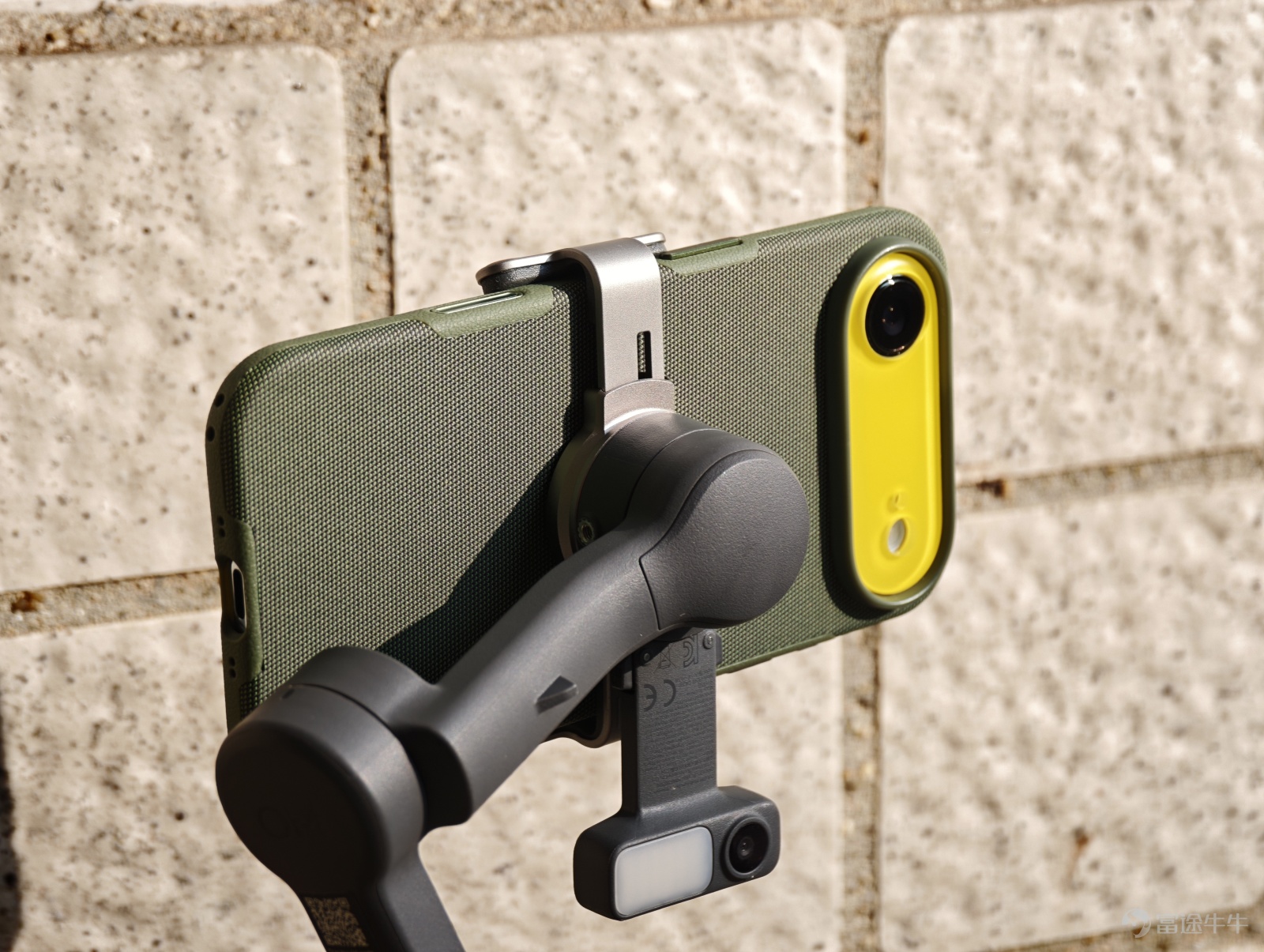
Of course, most users are likely more accustomed to using their phone’s native camera for recording. This is where the 'Second-Generation AI Tracking Module,' equipped with built-in hardware processing power, comes into play. It can track not only people but also cats, dogs, and even random objects. For example, if you want to capture your dog frolicking on the grass or showcase your cherished collectibles or vehicles in a video, simply manually select the object. As long as it occupies more than 10% of the frame and contrasts well with the background, the gimbal will firmly track it.
In October last year, DJI released its latest smartphone gimbal, the Osmo Mobile 8. It made me curious why, after the P version of Osmo Mobile 7 was just released, it disappeared in this 8th generation. Does DJI think that the Osmo Mobile 8 is already flagship-worthy? (Image Source: Lei Technology Photography) These questions vanished with the arrival of the Osmo Mobile 8P. Without further ado, let's dive into the hands-on experience. In terms of pricing, the standard kit for the DJI Osmo Mobile 8P is priced at 899 yuan, the AI tracking kit at 1099 yuan, and the all-in-one Vlog kit at 1299 yuan. Compact and portable, with thoughtful design details fully optimized Unlike the RS stabilizer series used for cameras, the Osmo Mobile emphasizes simplicity: you know how to use it as soon as you take it out — the structure is simple, the button logic is clear, and simply flipping up the gimbal arm turns on the machine and puts it directly into working mode in less than a second. (Image Source: Lei Technology Photography) Moreover, Osmo Mobile 8P has been comprehensively upgraded in many details. First, there’s the most frequently used extension rod and tripod, which received an integrated upgrade this time. The tripod, in particular, now has a wider range when unfolded, allowing it to be more stable whether placed on a desk or uneven grass. Comparing...
(Image Source: Lei Technology Photography)
This module also supports precise gesture control. By making a 'peace sign' (V gesture) at the lens, you can start or stop recording. An open palm allows you to freely start or stop tracking, and a 'shaka' gesture directly activates framing adjustments—all without touching the phone.
It also supports switching between front and rear positions, meaning you can use the phone’s rear camera to track people or the front camera for selfie tracking.
Interestingly, the new tracking module also features an upgraded fill light that supports precise adjustments across eight levels of brightness and eight levels of color temperature (2500K–6500K). It can enhance facial illumination when needed or serve as basic lighting for focus.
At this point, some readers may feel dissatisfied because the above operations require the phone to be connected to the app. For those users, DJI has introduced a technology capable of transforming the entire smartphone stabilizer market: direct smartphone-to-smart tracking.
Its usage is extremely simple: just detach the AI module, then lightly tap your phone against the NFC sensing area of the gimbal handle to pair via Bluetooth. The initial connection takes only ten seconds, without needing to open any app.After a successful connection, simply open the phone's default camera app or use third-party shooting or live-streaming software, and the gimbal will automatically recognize and smoothly track the main subject. This plug-and-play experience will inevitably attract more content creators.
In October last year, DJI released its latest smartphone gimbal, the Osmo Mobile 8. It made me curious why, after the P version of Osmo Mobile 7 was just released, it disappeared in this 8th generation. Does DJI think that the Osmo Mobile 8 is already flagship-worthy? (Image Source: Lei Technology Photography) These questions vanished with the arrival of the Osmo Mobile 8P. Without further ado, let's dive into the hands-on experience. In terms of pricing, the standard kit for the DJI Osmo Mobile 8P is priced at 899 yuan, the AI tracking kit at 1099 yuan, and the all-in-one Vlog kit at 1299 yuan. Compact and portable, with thoughtful design details fully optimized Unlike the RS stabilizer series used for cameras, the Osmo Mobile emphasizes simplicity: you know how to use it as soon as you take it out — the structure is simple, the button logic is clear, and simply flipping up the gimbal arm turns on the machine and puts it directly into working mode in less than a second. (Image Source: Lei Technology Photography) Moreover, Osmo Mobile 8P has been comprehensively upgraded in many details. First, there’s the most frequently used extension rod and tripod, which received an integrated upgrade this time. The tripod, in particular, now has a wider range when unfolded, allowing it to be more stable whether placed on a desk or uneven grass. Comparing...
(Image Source: Lei Technology Photography)
However, it’s worth noting that this feature currently only supports newer models from Apple, Huawei, and Samsung. If you’re using a device from another brand, you may need to wait for a future OTA update to enjoy this functionality.
As for core stability, there's no need to say much. As one of DJI's signature strengths, the Mobile 8P delivers rock-solid performance whether you're walking, running, or rotating while shooting—something smartphones simply can't match.
So far, we've addressed portability, tracking issues, and stability. The only remaining question is: how to shoot beautiful footage. Since the Pocket 3, DJI has been committed to enabling users to capture various interesting videos with minimal effort, and this advantage naturally carries over to the Mobile 8P.
For example, in terms of physical camera movements, all you need to do is tilt the pan axis forward and extend the pole to its maximum length, instantly switching to a low-angle perspective close to the ground. This angle works wonders when tracking pets running around the house or recording children's activities, greatly enhancing the visual impact. Its pan axis also supports unlimited 360° horizontal rotation, which can create intriguing footage when filming still objects. Of course, dynamic zoom with bidirectional adjustment for "far-to-near" and "near-to-far" is also available, allowing you to achieve the highly cinematic "Hitchcock Zoom" with just a gentle push of the joystick.

In October last year, DJI released its latest smartphone gimbal, the Osmo Mobile 8. It made me curious why, after the P version of Osmo Mobile 7 was just released, it disappeared in this 8th generation. Does DJI think that the Osmo Mobile 8 is already flagship-worthy? (Image Source: Lei Technology Photography) These questions vanished with the arrival of the Osmo Mobile 8P. Without further ado, let's dive into the hands-on experience. In terms of pricing, the standard kit for the DJI Osmo Mobile 8P is priced at 899 yuan, the AI tracking kit at 1099 yuan, and the all-in-one Vlog kit at 1299 yuan. Compact and portable, with thoughtful design details fully optimized Unlike the RS stabilizer series used for cameras, the Osmo Mobile emphasizes simplicity: you know how to use it as soon as you take it out — the structure is simple, the button logic is clear, and simply flipping up the gimbal arm turns on the machine and puts it directly into working mode in less than a second. (Image Source: Lei Technology Photography) Moreover, Osmo Mobile 8P has been comprehensively upgraded in many details. First, there’s the most frequently used extension rod and tripod, which received an integrated upgrade this time. The tripod, in particular, now has a wider range when unfolded, allowing it to be more stable whether placed on a desk or uneven grass. Comparing...
(Image Source: Lei Technology Photography)
Additionally, the Mimo App hides a variety of useful features. The newly added "Cinematic Slow Shutter" can capture flowing light trails of bustling traffic at night. "Motion Tracking" automatically adjusts to deliver the steadiest shots when tracking activities like running or skateboarding. Meanwhile, the "Widescreen" mode provides a classic cinematic aspect ratio of 2.35:1, turning any grand scene into a strongly narrative-driven masterpiece with minimal effort.
With stable footage covered, audio recording and battery life can't be overlooked either. DJI has just launched the OM 8P All-in-One Vlog Kit, which includes not only the gimbal and tracking module but also the DJI Mic Mini 2 microphone, addressing all high-fidelity audio needs for live streaming, voice-overs, and vlogging in one comprehensive package.
Regarding battery life, the most critical concern for many, the Osmo Mobile 8P offers up to 10 hours of runtime. What pleasantly surprised me is its ability to double as a power bank, charging your phone when the gimbal has sufficient battery and isn't actively stabilizing. You can charge your phone directly via the C-port on the multifunctional module 2 or the C-port next to the gimbal handle. You can even connect your phone to a mainstream power bank while simultaneously drawing power from the gimbal's C-port. Whether you're traveling all day or enduring marathon-like concerts and live streams, battery anxiety will be a thing of the past.
Conclusion: Turning your phone into a Pocket 4?
Finally, following Lei Technology's tradition, here’s a brief summary of the pros and cons of the Osmo Mobile 8P.
Advantages:
1. The detachable remote control is highly practical, perfectly addressing the shortcomings of single-operator use.
2. Outstanding tracking performance, capable of firmly locking onto both people and objects.
3. Many of the newly added templates are very practical;
4. The handheld stability remains excellent.
Disadvantages:
1. There are a bit too few buttons;
2. Foldable screen models are not suitable for use.
After a week of in-depth experience, Xiao Lei’s evaluation of this machine can be summed up in four words: full of sincerity. Osmo Mobile 8P not only thoroughly resolves the pain point of single-person blind shooting with its split-type remote screen casting but also takes AI intelligence to the extreme, cramming nearly every need a creator could think of into this compact body.
If you are a creator who loves documenting life, enjoys shooting Vlogs, and pursues picture quality, then this device, which can turn your smartphone into something akin to a Pocket 4, is absolutely worth trying out.
The 19th Beijing International Automotive Exhibition 2026 will be held from April 24 to May 3 at the China International Exhibition Center (Shunyi Pavilion) and the Capital International Convention and Exhibition Center (New China Exhibition Hall Phase II) in Beijing. This year's auto show, themed 'Leading the Era, Smart Future,' will showcase numerous cutting-edge technologies in the automotive industry.
Industry-leading brands such as BYD, Xiaomi, Harmony Intelligence Travel (Wenjie, etc.), XPeng, Nio, and Lantu are gathering together, unveiling several highly anticipated new models; suppliers like Horizon Robotics, Momenta, Zhuoyu, and others are flexing their muscles collectively, with deep integration of AI-driven large models empowering advanced autonomous driving, power batteries, ultra-fast charging technology, and other frontier technologies making appearances, creating a feast for the eyes!
The 'Electric Vehicle News' team under Lei Technology will dispatch a reporting crew to cover the event live, bringing exclusive front-line reports with the professional perspective of 'focusing on electric vehicles, mastering intelligence,' so stay tuned!
In October last year, DJI released its latest smartphone gimbal, the Osmo Mobile 8. It made me curious why, after the P version of Osmo Mobile 7 was just released, it disappeared in this 8th generation. Does DJI think that the Osmo Mobile 8 is already flagship-worthy? (Image Source: Lei Technology Photography) These questions vanished with the arrival of the Osmo Mobile 8P. Without further ado, let's dive into the hands-on experience. In terms of pricing, the standard kit for the DJI Osmo Mobile 8P is priced at 899 yuan, the AI tracking kit at 1099 yuan, and the all-in-one Vlog kit at 1299 yuan. Compact and portable, with thoughtful design details fully optimized Unlike the RS stabilizer series used for cameras, the Osmo Mobile emphasizes simplicity: you know how to use it as soon as you take it out — the structure is simple, the button logic is clear, and simply flipping up the gimbal arm turns on the machine and puts it directly into working mode in less than a second. (Image Source: Lei Technology Photography) Moreover, Osmo Mobile 8P has been comprehensively upgraded in many details. First, there’s the most frequently used extension rod and tripod, which received an integrated upgrade this time. The tripod, in particular, now has a wider range when unfolded, allowing it to be more stable whether placed on a desk or uneven grass. Comparing...
Risk Disclaimer: The above content only represents the author's view. It does not represent any position or investment advice of Futu. Futu makes no representation or warranty.Read more
Thumbs Up
2
13K Views
Report
Comments
Write a Comment...
2