

English
Back
Open Account
雷科技
wrote a column · Apr 21 20:49

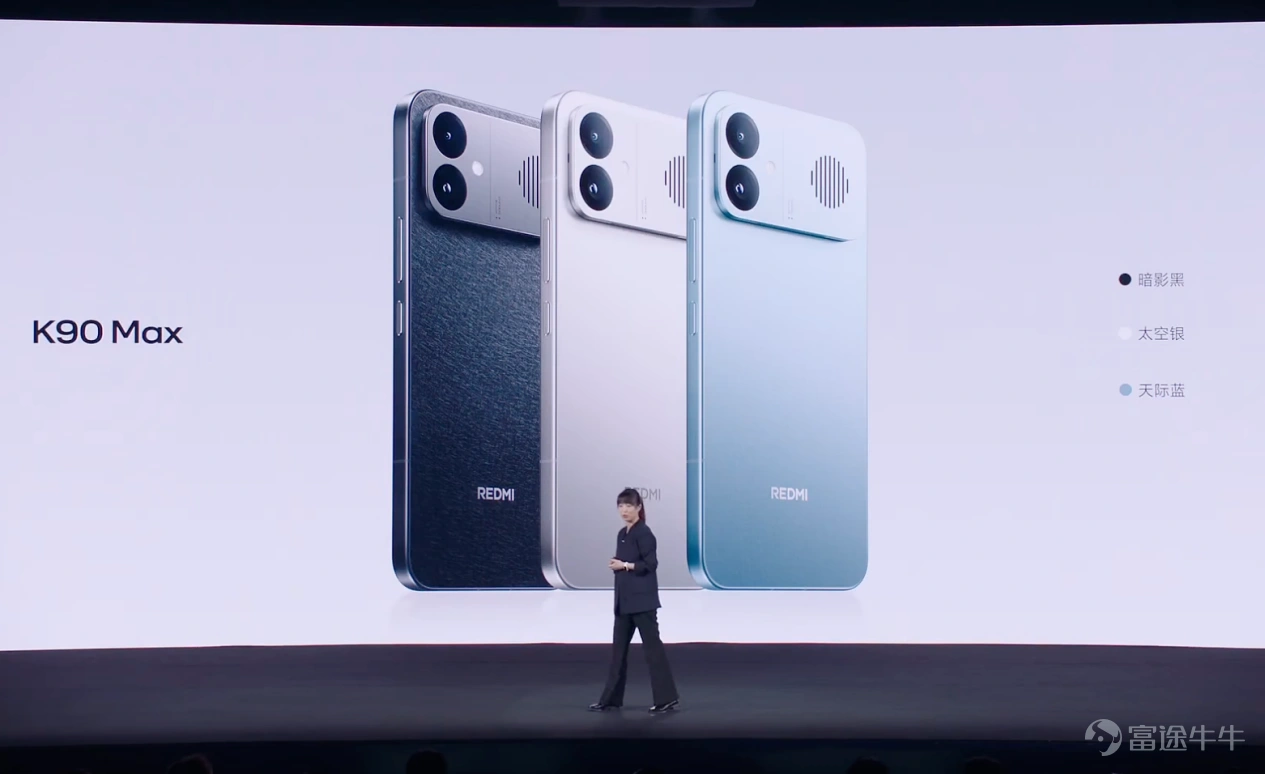
Starting at 2,999 yuan! Redmi K90 Max features built-in air cooling, making its mark in the gaming universe?

Redmi seems determined to conquer the gaming community.
Tonight, Redmi held the K90 Max new product launch event, unveiling not only the K90 Max but also a series of gaming devices, including the compact tablet K Pad 2, gaming monitor, Redmi Book Pro 2026, and more. Lei Technology (ID: leitech) was also invited to attend this launch event, witnessing the birth of Redmi's gaming ecosystem.

Redmi seems determined to conquer the gaming community. Tonight, Redmi held the K90 Max new product launch event, unveiling not only the K90 Max but also a series of gaming devices including the compact tablet K Pad 2, gaming monitor, and Redmi Book Pro 2026. Leitech (ID: leitech) was invited to attend this launch event and witnessed the birth of Redmi's gaming ecosystem. The core breakthrough of the K90 Max lies in its built-in active air cooling system. The fan itself is carefully designed. With a thickness of 18.1mm, it far exceeds the 15-17mm range of competitors. Combined with forward-tilted fan blades, the maximum airflow per unit reaches 0.42CFM, surpassing the industry norm of 0.2-0.3CFM.However, Redmi believes that the fan is just the starting point, and the key to determining cooling efficiency lies in the airflow design. Mainstream solutions on the market each have their pain points: L-shaped ducts have many turns, leading to significant efficiency loss; upright designs are interfered with by the camera, resulting in narrow airflow paths; side-intake schemes, while direct, suffer from small fans with insufficient airflow.The K90 Max adopts an upright intake structure, increasing airflow by 32%, with the air blowing directly onto the SoC without any detours. Even more ingenious is the eccentric pressure-increasing structure: the fan is not centrally symmetrical but offset downwards, utilizing high pressure in narrow areas and low pressure in wide areas to create a pressure differential, forcefully driving the air into the duct. Coupled with a wide and smooth...
The most significant breakthrough of the K90 Max lies in its built-in active air-cooling system.
The fan itself is meticulously designed. With a thickness of 18.1mm, it far exceeds the industry standard of 15-17mm, combined with a forward-tilted blade design, delivering a maximum airflow of 0.42CFM, significantly surpassing the common industry range of 0.2-0.3CFM.However, Redmi believes that the fan is just the starting point, and the key to determining cooling efficiency lies in the airflow design.
Current mainstream solutions each have their pain points: L-shaped ducts suffer from too many turns, resulting in significant efficiency loss; upright designs are restricted by camera placement, leading to narrow ducts; side intake designs, though direct, feature small fans and insufficient airflow.The K90 Max adopts an upright intake structure, increasing airflow by 32%, blowing air directly onto the SoC without any detours.
Redmi seems determined to conquer the gaming community. Tonight, Redmi held the K90 Max new product launch event, unveiling not only the K90 Max but also a series of gaming devices including the compact tablet K Pad 2, gaming monitor, and Redmi Book Pro 2026. Leitech (ID: leitech) was invited to attend this launch event and witnessed the birth of Redmi's gaming ecosystem. The core breakthrough of the K90 Max lies in its built-in active air cooling system. The fan itself is carefully designed. With a thickness of 18.1mm, it far exceeds the 15-17mm range of competitors. Combined with forward-tilted fan blades, the maximum airflow per unit reaches 0.42CFM, surpassing the industry norm of 0.2-0.3CFM.However, Redmi believes that the fan is just the starting point, and the key to determining cooling efficiency lies in the airflow design. Mainstream solutions on the market each have their pain points: L-shaped ducts have many turns, leading to significant efficiency loss; upright designs are interfered with by the camera, resulting in narrow airflow paths; side-intake schemes, while direct, suffer from small fans with insufficient airflow.The K90 Max adopts an upright intake structure, increasing airflow by 32%, with the air blowing directly onto the SoC without any detours. Even more ingenious is the eccentric pressure-increasing structure: the fan is not centrally symmetrical but offset downwards, utilizing high pressure in narrow areas and low pressure in wide areas to create a pressure differential, forcefully driving the air into the duct. Coupled with a wide and smooth...
Even more ingenious is the eccentric pressure-boosting structure: the fan is not centrally symmetrical but offset downwards, utilizing high pressure in narrow areas and low pressure in wider areas to create a pressure differential that forcefully drives air into the duct. Combined with the wide and smooth vortex-style duct and internal metal fins for flow guidance, the K90 Max achieves an airflow utilization rate of 78.6%, currently the highest in the industry.
The design of the exhaust vent is equally thoughtful.The 'waste air' expelled by the fan passes again over the phone’s back panel, dissipating battery heat, with tests showing a maximum temperature reduction of 2.5°C.
How does it perform in reality? Official real-world tests show:It takes only 100 seconds to cool down from 48°C to 38°C; during a four-hour session of Honor of Kings, the temperature never exceeds 37°C, with a maximum of just 36.7°C; in dual gaming scenarios, the temperature drops by 10°C, and the highest temperature does not exceed 38.4°C. Even heavy-load games like Star Rail can run continuously at full frames.
Redmi seems determined to conquer the gaming community. Tonight, Redmi held the K90 Max new product launch event, unveiling not only the K90 Max but also a series of gaming devices including the compact tablet K Pad 2, gaming monitor, and Redmi Book Pro 2026. Leitech (ID: leitech) was invited to attend this launch event and witnessed the birth of Redmi's gaming ecosystem. The core breakthrough of the K90 Max lies in its built-in active air cooling system. The fan itself is carefully designed. With a thickness of 18.1mm, it far exceeds the 15-17mm range of competitors. Combined with forward-tilted fan blades, the maximum airflow per unit reaches 0.42CFM, surpassing the industry norm of 0.2-0.3CFM.However, Redmi believes that the fan is just the starting point, and the key to determining cooling efficiency lies in the airflow design. Mainstream solutions on the market each have their pain points: L-shaped ducts have many turns, leading to significant efficiency loss; upright designs are interfered with by the camera, resulting in narrow airflow paths; side-intake schemes, while direct, suffer from small fans with insufficient airflow.The K90 Max adopts an upright intake structure, increasing airflow by 32%, with the air blowing directly onto the SoC without any detours. Even more ingenious is the eccentric pressure-increasing structure: the fan is not centrally symmetrical but offset downwards, utilizing high pressure in narrow areas and low pressure in wide areas to create a pressure differential, forcefully driving the air into the duct. Coupled with a wide and smooth...
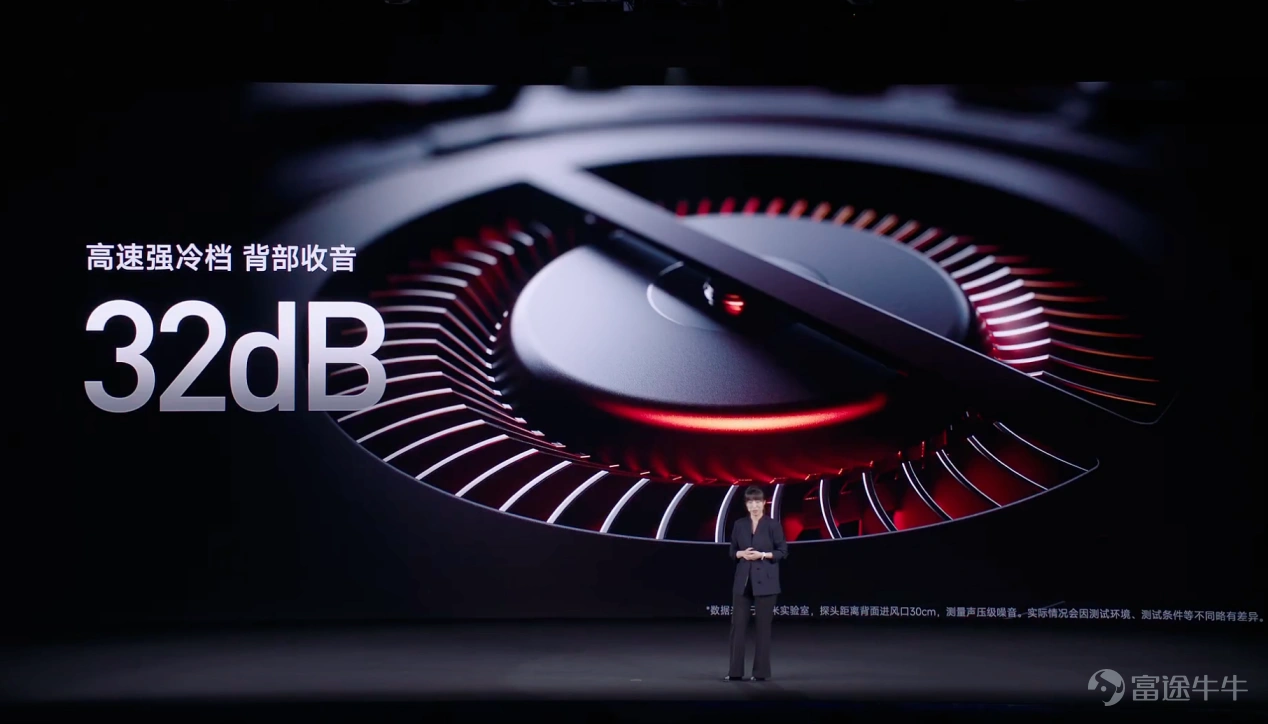
Silence is another major surprise,with noise levels at only 32dB on the highest setting, equivalent to the baseline noise level of a nighttime environment, making it nearly imperceptible during everyday use. Redmi meticulously fine-tuned every detail, including fan blade design, dynamic balance, and noise-reduction materials, achieving “powerful airflow, quietly delivered.”
Redmi seems determined to conquer the gaming community. Tonight, Redmi held the K90 Max new product launch event, unveiling not only the K90 Max but also a series of gaming devices including the compact tablet K Pad 2, gaming monitor, and Redmi Book Pro 2026. Leitech (ID: leitech) was invited to attend this launch event and witnessed the birth of Redmi's gaming ecosystem. The core breakthrough of the K90 Max lies in its built-in active air cooling system. The fan itself is carefully designed. With a thickness of 18.1mm, it far exceeds the 15-17mm range of competitors. Combined with forward-tilted fan blades, the maximum airflow per unit reaches 0.42CFM, surpassing the industry norm of 0.2-0.3CFM.However, Redmi believes that the fan is just the starting point, and the key to determining cooling efficiency lies in the airflow design. Mainstream solutions on the market each have their pain points: L-shaped ducts have many turns, leading to significant efficiency loss; upright designs are interfered with by the camera, resulting in narrow airflow paths; side-intake schemes, while direct, suffer from small fans with insufficient airflow.The K90 Max adopts an upright intake structure, increasing airflow by 32%, with the air blowing directly onto the SoC without any detours. Even more ingenious is the eccentric pressure-increasing structure: the fan is not centrally symmetrical but offset downwards, utilizing high pressure in narrow areas and low pressure in wide areas to create a pressure differential, forcefully driving the air into the duct. Coupled with a wide and smooth...
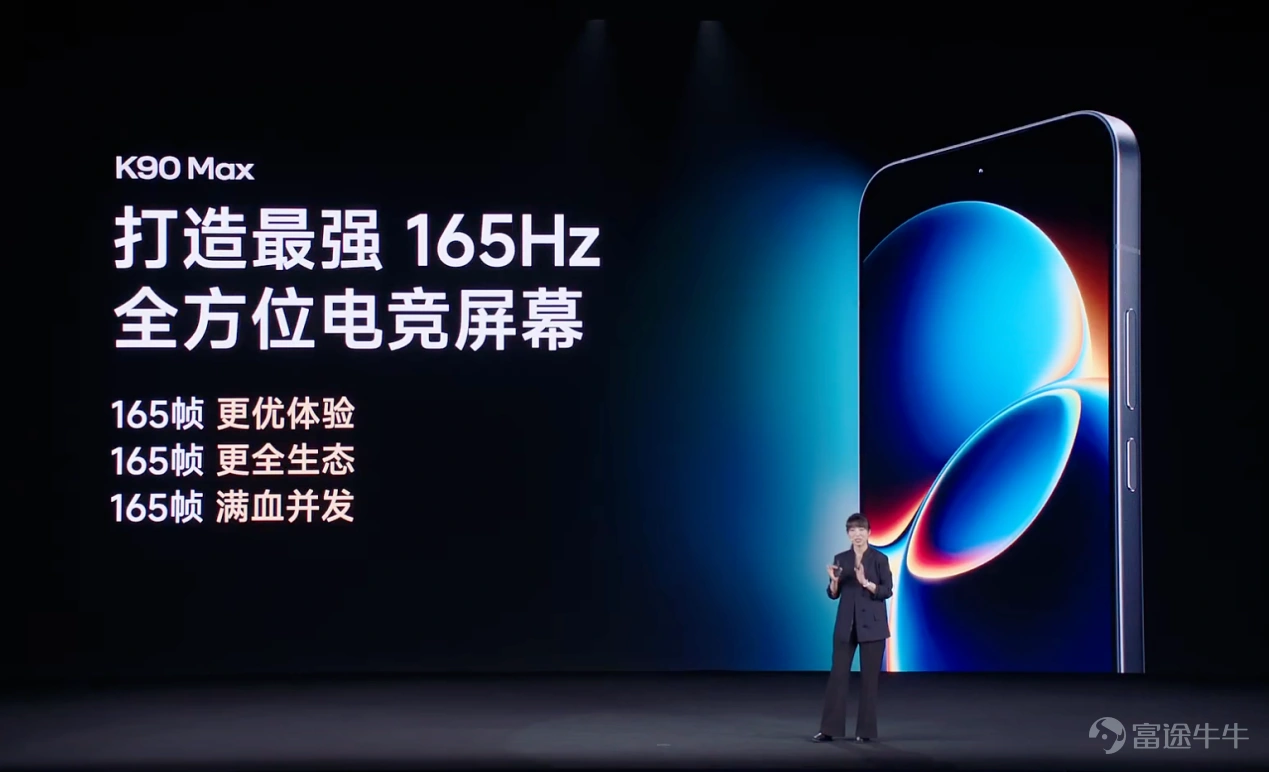
In terms of performance,the K90 Max is equipped with the flagship Dimensity 9500 chip, featuring a dedicated display chip that supports ultra-resolution and high frame rates for over a hundred mainstream games. The screen uses a 165Hz high-refresh-rate esports display, the first to support native 165Hz mode for more than 40 games, including popular titles such as Peacekeeper Elite, Dark Area Breakout, and Delta Operations.
The screen features a 6.83-inch flagship large flat display with a 3500Hz instant sampling rate, 480Hz multi-touch reporting rate, and a 400Hz gyroscope, along with zone touch optimization jointly calibrated with seven mainstream games. For example, in Peacekeeper Elite, the aiming reticle remains steady even when pulling the gun quickly, and the recoil control stays accurate under high zoom; in Honor of Kings, movement becomes smoother, skills are released faster, and 'movement-based heroes' see an immediate boost in gameplay.
Redmi seems determined to conquer the gaming community. Tonight, Redmi held the K90 Max new product launch event, unveiling not only the K90 Max but also a series of gaming devices including the compact tablet K Pad 2, gaming monitor, and Redmi Book Pro 2026. Leitech (ID: leitech) was invited to attend this launch event and witnessed the birth of Redmi's gaming ecosystem. The core breakthrough of the K90 Max lies in its built-in active air cooling system. The fan itself is carefully designed. With a thickness of 18.1mm, it far exceeds the 15-17mm range of competitors. Combined with forward-tilted fan blades, the maximum airflow per unit reaches 0.42CFM, surpassing the industry norm of 0.2-0.3CFM.However, Redmi believes that the fan is just the starting point, and the key to determining cooling efficiency lies in the airflow design. Mainstream solutions on the market each have their pain points: L-shaped ducts have many turns, leading to significant efficiency loss; upright designs are interfered with by the camera, resulting in narrow airflow paths; side-intake schemes, while direct, suffer from small fans with insufficient airflow.The K90 Max adopts an upright intake structure, increasing airflow by 32%, with the air blowing directly onto the SoC without any detours. Even more ingenious is the eccentric pressure-increasing structure: the fan is not centrally symmetrical but offset downwards, utilizing high pressure in narrow areas and low pressure in wide areas to create a pressure differential, forcefully driving the air into the duct. Coupled with a wide and smooth...
For battery life, it has an 8500mAh large battery with 100W fast charging, supporting 100-watt PPS and 22.5W reverse charging. When playing and charging simultaneously, bypass charging is automatically triggered, allowing current to flow directly to the motherboard while bypassing the battery, preventing overheating. The X-axis linear motor provides differentiated vibration feedback for different hero ultimate abilities, and the symmetrical dual speakers, co-tuned with Bose, enhance footstep sounds by 200% in gaming scenarios, acting as a physical 'hearing aid' advantage.
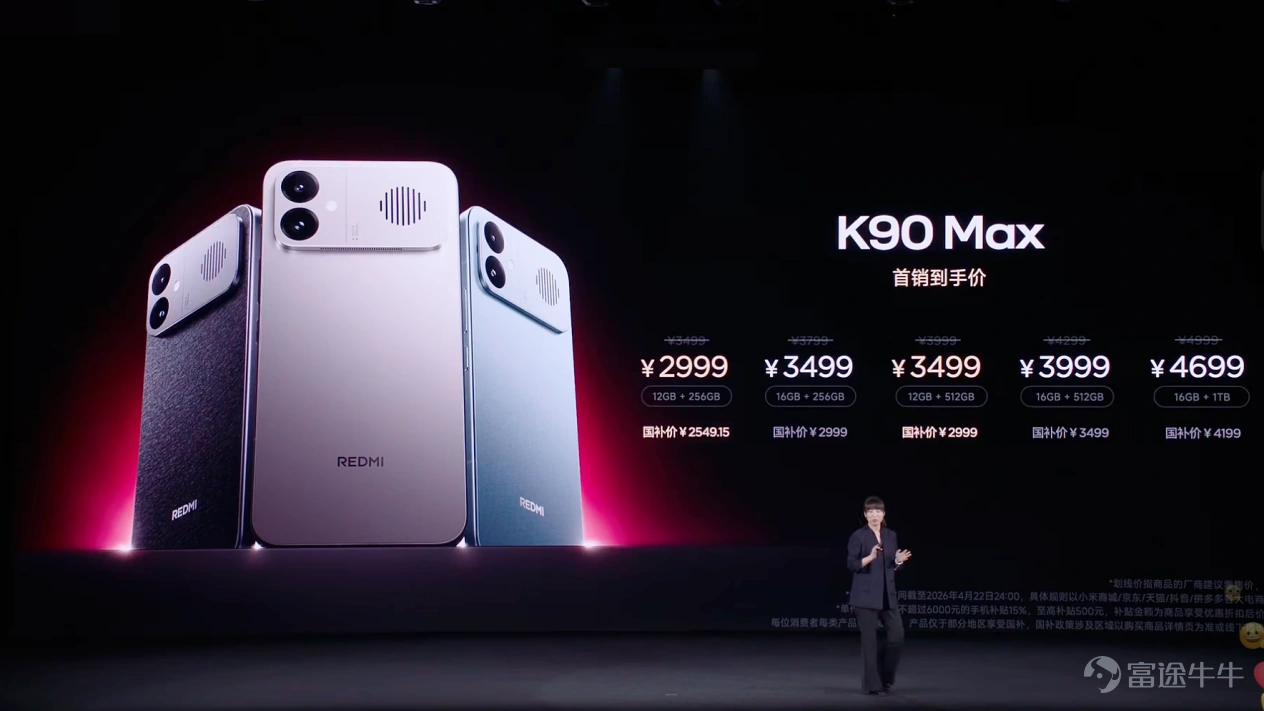
Pricing:
The initial sale price for the 12+256GB version is 2999 yuan
The initial sale price for the 16+256GB version is 3499 yuan
The initial sale price for the 12+512GB version is 3499 yuan
The initial sale price for the 16+512GB version is 3999 yuan
The initial sale price for the 16+1TB version is 4699 yuan
Redmi seems determined to conquer the gaming community. Tonight, Redmi held the K90 Max new product launch event, unveiling not only the K90 Max but also a series of gaming devices including the compact tablet K Pad 2, gaming monitor, and Redmi Book Pro 2026. Leitech (ID: leitech) was invited to attend this launch event and witnessed the birth of Redmi's gaming ecosystem. The core breakthrough of the K90 Max lies in its built-in active air cooling system. The fan itself is carefully designed. With a thickness of 18.1mm, it far exceeds the 15-17mm range of competitors. Combined with forward-tilted fan blades, the maximum airflow per unit reaches 0.42CFM, surpassing the industry norm of 0.2-0.3CFM.However, Redmi believes that the fan is just the starting point, and the key to determining cooling efficiency lies in the airflow design. Mainstream solutions on the market each have their pain points: L-shaped ducts have many turns, leading to significant efficiency loss; upright designs are interfered with by the camera, resulting in narrow airflow paths; side-intake schemes, while direct, suffer from small fans with insufficient airflow.The K90 Max adopts an upright intake structure, increasing airflow by 32%, with the air blowing directly onto the SoC without any detours. Even more ingenious is the eccentric pressure-increasing structure: the fan is not centrally symmetrical but offset downwards, utilizing high pressure in narrow areas and low pressure in wide areas to create a pressure differential, forcefully driving the air into the duct. Coupled with a wide and smooth...
The next-generation K Pad (K Pad 2) has finally been released, continuing with the 8.8-inch golden size - just small enough to fit into a pocket but twice as large as a phone, offering more comfort for multi-finger operations.
It also features the Dimensity 9500 flagship chip, with upgraded cooling to a 15,300mm² ultra-large VC. The SoC is centrally located in the body, with thicker graphite heat conduction around the edges, reducing the temperature by up to 5.4°C in the grip area. For the 'large battlefield' mode where 48 players compete simultaneously, the aggressive engine has been specifically optimized to maintain maximum frame rates for three hours straight.
Redmi seems determined to conquer the gaming community. Tonight, Redmi held the K90 Max new product launch event, unveiling not only the K90 Max but also a series of gaming devices including the compact tablet K Pad 2, gaming monitor, and Redmi Book Pro 2026. Leitech (ID: leitech) was invited to attend this launch event and witnessed the birth of Redmi's gaming ecosystem. The core breakthrough of the K90 Max lies in its built-in active air cooling system. The fan itself is carefully designed. With a thickness of 18.1mm, it far exceeds the 15-17mm range of competitors. Combined with forward-tilted fan blades, the maximum airflow per unit reaches 0.42CFM, surpassing the industry norm of 0.2-0.3CFM.However, Redmi believes that the fan is just the starting point, and the key to determining cooling efficiency lies in the airflow design. Mainstream solutions on the market each have their pain points: L-shaped ducts have many turns, leading to significant efficiency loss; upright designs are interfered with by the camera, resulting in narrow airflow paths; side-intake schemes, while direct, suffer from small fans with insufficient airflow.The K90 Max adopts an upright intake structure, increasing airflow by 32%, with the air blowing directly onto the SoC without any detours. Even more ingenious is the eccentric pressure-increasing structure: the fan is not centrally symmetrical but offset downwards, utilizing high pressure in narrow areas and low pressure in wide areas to create a pressure differential, forcefully driving the air into the duct. Coupled with a wide and smooth...
The screen has been upgraded to 3K resolution, 1100 nits brightness, and a 165Hz high refresh rate, also supporting native high frame rates for over 40 games.In terms of touch control, it features a 540Hz multi-touch reporting rate and a 400Hz six-axis gyroscope. After optimization for skill release zones in Honor of Kings, latency has been reduced by 24%, and key adjustments have been made for movement responsiveness in Peacekeeper Elite. Touch super-resolution technology makes micro-operations more delicate; pulling the gun under an 8x scope eliminates interference jitter, achieving 'stop on pull.'

Redmi seems determined to conquer the gaming community. Tonight, Redmi held the K90 Max new product launch event, unveiling not only the K90 Max but also a series of gaming devices including the compact tablet K Pad 2, gaming monitor, and Redmi Book Pro 2026. Leitech (ID: leitech) was invited to attend this launch event and witnessed the birth of Redmi's gaming ecosystem. The core breakthrough of the K90 Max lies in its built-in active air cooling system. The fan itself is carefully designed. With a thickness of 18.1mm, it far exceeds the 15-17mm range of competitors. Combined with forward-tilted fan blades, the maximum airflow per unit reaches 0.42CFM, surpassing the industry norm of 0.2-0.3CFM.However, Redmi believes that the fan is just the starting point, and the key to determining cooling efficiency lies in the airflow design. Mainstream solutions on the market each have their pain points: L-shaped ducts have many turns, leading to significant efficiency loss; upright designs are interfered with by the camera, resulting in narrow airflow paths; side-intake schemes, while direct, suffer from small fans with insufficient airflow.The K90 Max adopts an upright intake structure, increasing airflow by 32%, with the air blowing directly onto the SoC without any detours. Even more ingenious is the eccentric pressure-increasing structure: the fan is not centrally symmetrical but offset downwards, utilizing high pressure in narrow areas and low pressure in wide areas to create a pressure differential, forcefully driving the air into the duct. Coupled with a wide and smooth...
The large-sized symmetrical dual speakers have been upgraded with a 0.2CC super-large sound chamber, supporting Bose's joint tuning for the first time. It provides optimized performance for music, gaming, and video. The 9100mAh battery supports six hours of continuous FPS gaming while retaining nearly half of its power. Direct motherboard power supply and dual C-type ports are also retained.
K Pad 2 is priced at 3,599 yuan, with an introductory price of 3,399 yuan. Students can get an additional discount of 100 yuan after verification, making it available for about 2,800 yuan after叠加 national subsidies.
A series of ecosystem products were also released simultaneously:Monitors, laptops, and headphones.
Among these, the G Pro 2026 gaming monitor has been upgraded to a 31.5-inch screen, offering a 36% larger display area compared to the 27-inch version. Features include thousand-level partition Mini LED, 1,600 nits peak brightness, and an ultra-low reflection rate of 2.6%, eliminating the need for curtains during the day. It supports dual high refresh rate modes, 1ms GTG response, and FreeSync anti-tearing technology.Available for 3,199 yuan, with the 27-inch version priced at 2,699 yuan.
Redmi seems determined to conquer the gaming community. Tonight, Redmi held the K90 Max new product launch event, unveiling not only the K90 Max but also a series of gaming devices including the compact tablet K Pad 2, gaming monitor, and Redmi Book Pro 2026. Leitech (ID: leitech) was invited to attend this launch event and witnessed the birth of Redmi's gaming ecosystem. The core breakthrough of the K90 Max lies in its built-in active air cooling system. The fan itself is carefully designed. With a thickness of 18.1mm, it far exceeds the 15-17mm range of competitors. Combined with forward-tilted fan blades, the maximum airflow per unit reaches 0.42CFM, surpassing the industry norm of 0.2-0.3CFM.However, Redmi believes that the fan is just the starting point, and the key to determining cooling efficiency lies in the airflow design. Mainstream solutions on the market each have their pain points: L-shaped ducts have many turns, leading to significant efficiency loss; upright designs are interfered with by the camera, resulting in narrow airflow paths; side-intake schemes, while direct, suffer from small fans with insufficient airflow.The K90 Max adopts an upright intake structure, increasing airflow by 32%, with the air blowing directly onto the SoC without any detours. Even more ingenious is the eccentric pressure-increasing structure: the fan is not centrally symmetrical but offset downwards, utilizing high pressure in narrow areas and low pressure in wide areas to create a pressure differential, forcefully driving the air into the duct. Coupled with a wide and smooth...
Redmi Book Pro 2026 is equipped with the third-generation Core Ultra X7 processor, built on a 2nm process. GPU performance is boosted by 71%, and energy efficiency improved by 106%. It features a 14-inch 2.8K display, a 92Wh battery providing 18.35 hours of office use, and supports remote power on/off and operation.The starting price for the 14-inch model is 4,799 yuan, while the 16-inch model starts at 7,699 yuan. The U5 version will have a promotional discount of 500 yuan during the initial sales period.
Redmi seems determined to conquer the gaming community. Tonight, Redmi held the K90 Max new product launch event, unveiling not only the K90 Max but also a series of gaming devices including the compact tablet K Pad 2, gaming monitor, and Redmi Book Pro 2026. Leitech (ID: leitech) was invited to attend this launch event and witnessed the birth of Redmi's gaming ecosystem. The core breakthrough of the K90 Max lies in its built-in active air cooling system. The fan itself is carefully designed. With a thickness of 18.1mm, it far exceeds the 15-17mm range of competitors. Combined with forward-tilted fan blades, the maximum airflow per unit reaches 0.42CFM, surpassing the industry norm of 0.2-0.3CFM.However, Redmi believes that the fan is just the starting point, and the key to determining cooling efficiency lies in the airflow design. Mainstream solutions on the market each have their pain points: L-shaped ducts have many turns, leading to significant efficiency loss; upright designs are interfered with by the camera, resulting in narrow airflow paths; side-intake schemes, while direct, suffer from small fans with insufficient airflow.The K90 Max adopts an upright intake structure, increasing airflow by 32%, with the air blowing directly onto the SoC without any detours. Even more ingenious is the eccentric pressure-increasing structure: the fan is not centrally symmetrical but offset downwards, utilizing high pressure in narrow areas and low pressure in wide areas to create a pressure differential, forcefully driving the air into the duct. Coupled with a wide and smooth...
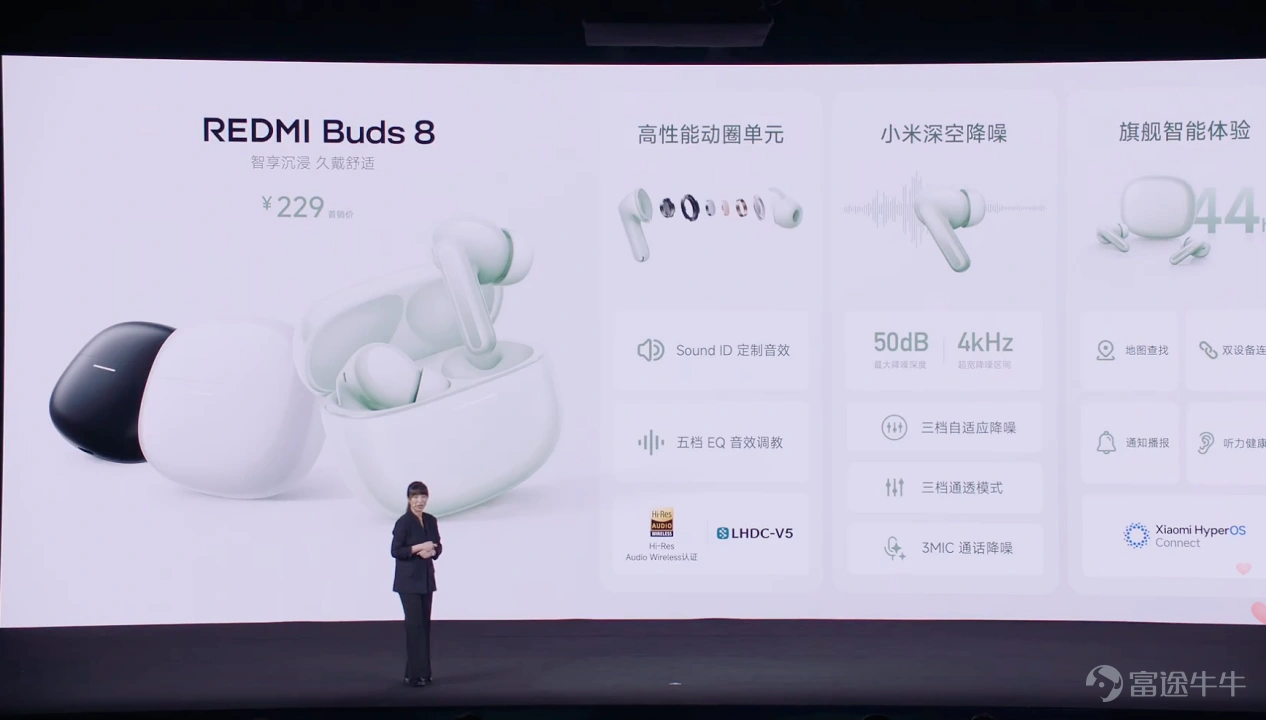
Redmi Buds 8 feature an 11mm high-performance dynamic driver unit, support for 50dB deep noise cancellation, and wide frequency coverage up to 4kHz, ensuring clear calls even in strong winds. The vertical charging case allows for convenient single-handed operation.Introductory price is 229 yuan, and student price is 209 yuan.
Redmi seems determined to conquer the gaming community. Tonight, Redmi held the K90 Max new product launch event, unveiling not only the K90 Max but also a series of gaming devices including the compact tablet K Pad 2, gaming monitor, and Redmi Book Pro 2026. Leitech (ID: leitech) was invited to attend this launch event and witnessed the birth of Redmi's gaming ecosystem. The core breakthrough of the K90 Max lies in its built-in active air cooling system. The fan itself is carefully designed. With a thickness of 18.1mm, it far exceeds the 15-17mm range of competitors. Combined with forward-tilted fan blades, the maximum airflow per unit reaches 0.42CFM, surpassing the industry norm of 0.2-0.3CFM.However, Redmi believes that the fan is just the starting point, and the key to determining cooling efficiency lies in the airflow design. Mainstream solutions on the market each have their pain points: L-shaped ducts have many turns, leading to significant efficiency loss; upright designs are interfered with by the camera, resulting in narrow airflow paths; side-intake schemes, while direct, suffer from small fans with insufficient airflow.The K90 Max adopts an upright intake structure, increasing airflow by 32%, with the air blowing directly onto the SoC without any detours. Even more ingenious is the eccentric pressure-increasing structure: the fan is not centrally symmetrical but offset downwards, utilizing high pressure in narrow areas and low pressure in wide areas to create a pressure differential, forcefully driving the air into the duct. Coupled with a wide and smooth...
What do you all think of the above new products? In Xiao Lei's opinion, the K90 Max starting at 2,999 yuan seems relatively sincere, as gaming phones with similar configurations from competitors start at a minimum of 3,999 yuan. Redmi’s approach to 'gaming devices' is also commendable, putting in significant effort on aspects that aren’t immediately visible, such as the eccentric offset of the fan, the vortex curve of the airflow channels, and the touch control zoning strategy. This kind of 'engineering perfectionism' is what truly sets the K90 Max and K Pad apart as their core competitive advantage.
The 19th Beijing International Automotive Exhibition 2026 will be held from April 24 to May 3 at the China International Exhibition Center (Shunyi Pavilion) and the Capital International Convention and Exhibition Center (New China Exhibition Hall Phase II) in Beijing. This year's auto show, themed 'Leading the Era, Smart Future,' will showcase numerous cutting-edge technologies in the automotive industry.
Industry-leading brands such as BYD, Xiaomi, Harmony Intelligence Travel (Wenjie, etc.), XPeng, Nio, and Lantu are gathering together, unveiling several highly anticipated new models; suppliers like Horizon Robotics, Momenta, Zhuoyu, and others are flexing their muscles collectively, with deep integration of AI-driven large models empowering advanced autonomous driving, power batteries, ultra-fast charging technology, and other frontier technologies making appearances, creating a feast for the eyes!
The 'Electric Vehicle News' team under Lei Technology will dispatch a reporting crew to cover the event live, bringing exclusive front-line reports with the professional perspective of 'focusing on electric vehicles, mastering intelligence,' so stay tuned!
Redmi seems determined to conquer the gaming community. Tonight, Redmi held the K90 Max new product launch event, unveiling not only the K90 Max but also a series of gaming devices including the compact tablet K Pad 2, gaming monitor, and Redmi Book Pro 2026. Leitech (ID: leitech) was invited to attend this launch event and witnessed the birth of Redmi's gaming ecosystem. The core breakthrough of the K90 Max lies in its built-in active air cooling system. The fan itself is carefully designed. With a thickness of 18.1mm, it far exceeds the 15-17mm range of competitors. Combined with forward-tilted fan blades, the maximum airflow per unit reaches 0.42CFM, surpassing the industry norm of 0.2-0.3CFM.However, Redmi believes that the fan is just the starting point, and the key to determining cooling efficiency lies in the airflow design. Mainstream solutions on the market each have their pain points: L-shaped ducts have many turns, leading to significant efficiency loss; upright designs are interfered with by the camera, resulting in narrow airflow paths; side-intake schemes, while direct, suffer from small fans with insufficient airflow.The K90 Max adopts an upright intake structure, increasing airflow by 32%, with the air blowing directly onto the SoC without any detours. Even more ingenious is the eccentric pressure-increasing structure: the fan is not centrally symmetrical but offset downwards, utilizing high pressure in narrow areas and low pressure in wide areas to create a pressure differential, forcefully driving the air into the duct. Coupled with a wide and smooth...
Risk Disclaimer: The above content only represents the author's view. It does not represent any position or investment advice of Futu. Futu makes no representation or warranty.Read more
9424 Views
Report
Comments
Write a Comment...