
Amazon GWD officially launched, will freight forwarders' fate truly change? | Going Global Reference
On April 15, Amazon Global Smart Hub Warehouse (GWD) officially opened to Chinese merchants, triggering an entirely new wave of discussion within the cross-border ecosystem.
Chen Junbin, founder of Shenzhen Lightning Technology, could not hide his anticipation: "With GWD, our customs clearance process will no longer be bottlenecked. We hope it can soon expand to Amazon's Europe and Japan sites, allowing us small and medium-sized businesses to test market reactions at a lower cost."
However, the other end of the freight forwarding community is filled with distress. Zhou Chen, general manager of a freight forwarding company, remarked to Ocean Reference: "The official opening of GWD means Amazon has taken both the meat and the broth, leaving very little room for third parties."
It’s not just Zhou Chen—many freight forwarders and cross-border first-mile service providers are feeling this survival crisis. 'FBA first-mile companies need to figure out how to survive,' said Lin Ruijie, head of another freight forwarding company.
As the leading player in global cross-border e-commerce, every move Amazon makes impacts the industry ecosystem. The launch of GWD services is reshaping the cross-border logistics chain, bringing benefits to sellers and the platform while pushing freight forwarders into a corner.
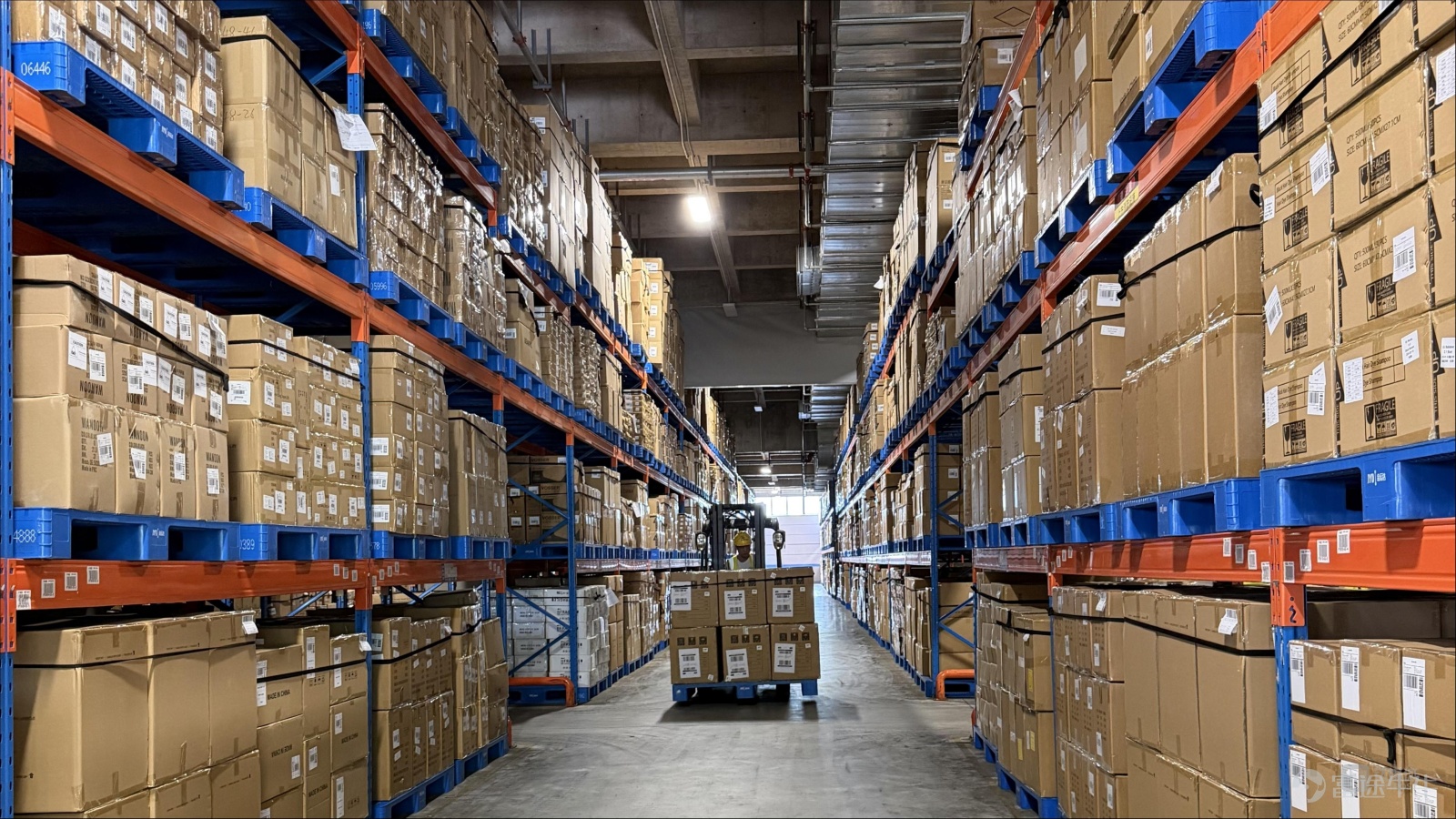
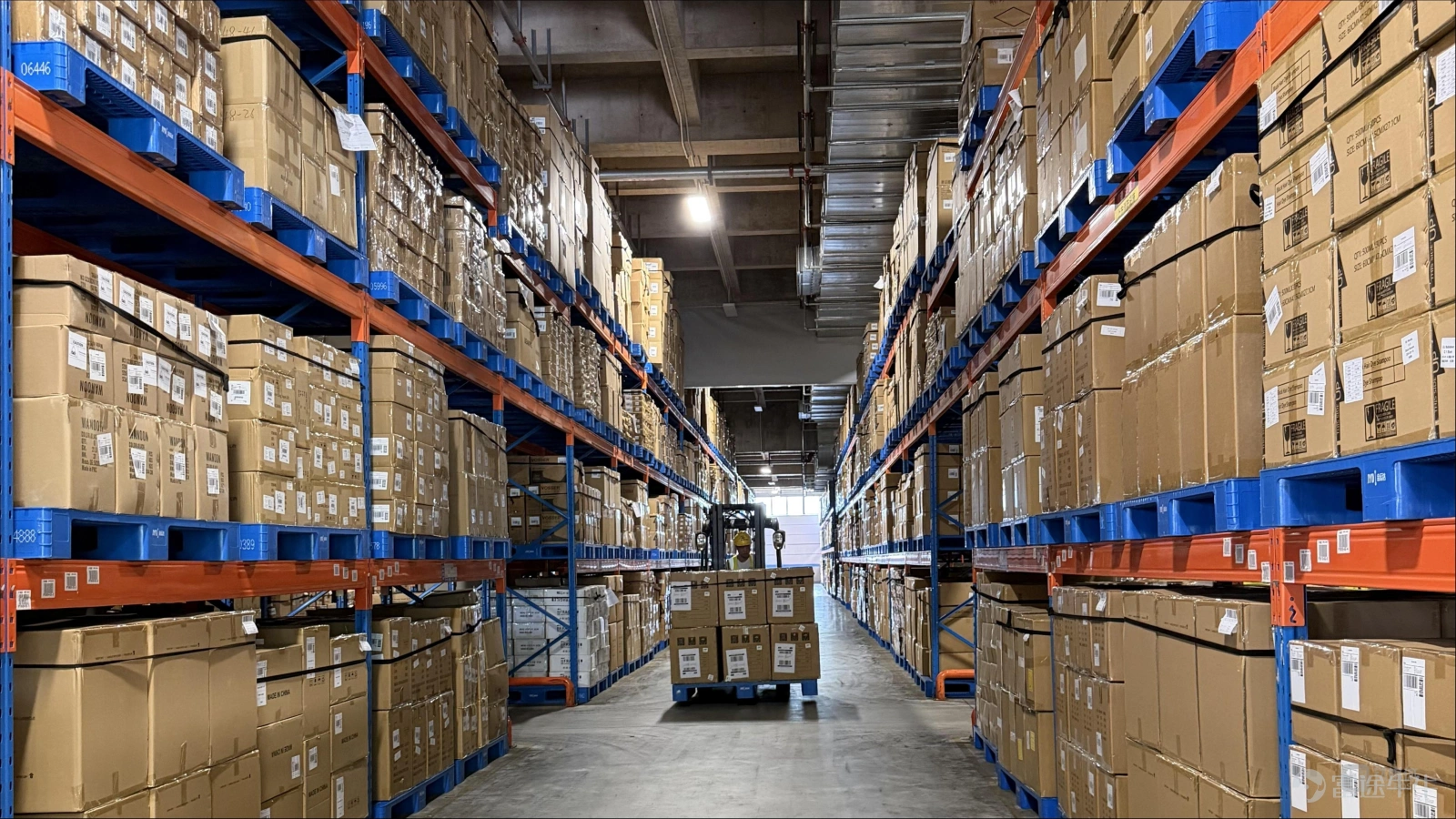
GWD is a one-stop bulk warehousing and distribution service established by Amazon at the source of goods (currently operational only in Shenzhen, China). Merchants send their goods directly from domestic factories to Amazon's GWD warehouse. Afterward, GWD handles customs clearance, sea and air freight, and inventory allocation before entering Amazon Logistics' (FBA) overseas local warehousing and local delivery network, ultimately forming an end-to-end logistics service from product dispatch to the hands of consumers.
Going Global Reference has found that many cross-border merchants have already entered GWD warehouses, including TERBOLD, Spigen, and DDMOMMY from Lightning Technology.
When discussing the reasons for choosing GWD services, Chen Junbin, founder of Lightning Technology, told us, 'As a small-to-medium-sized merchant specializing in pet food storage containers, Lightning Technology needs to ship to the US in 'small batches, high frequency,' which requires frequent communication with multiple freight forwarding companies regarding customs clearance. Whenever inspections occur, shipping plans are delayed by a week. GWD integrates warehousing, customs declaration, and customs clearance; once goods enter GWD in compliance, there's no need for repetitive procedures, and products can be dispatched at any time. This also reduces the administrative workload on e-commerce operations personnel.'
Moreover, GWD operates two shipping schedules per week and can consolidate shipments within three days. This stable shipping rhythm allows merchants to flexibly adjust replenishment based on sales performance.
Chen Junbin emphasized, 'In the past, missing the container cutoff date meant waiting a week to ship. Through GWD, even if the company decides to replenish stock last minute, it can catch the next available shipment within three days. The shipping cycle has been shortened from an uncertain 2-4 weeks to 3 days to a week, aligning with our shipping efficiency and improving delivery times.'
Beyond efficiency improvements, more merchants are focusing on cost optimization, cash flow enhancement, and revenue growth.
Guo Hongtao, head of logistics at Baseus Innovation Technology, told us, 'Data shows that Baseus products using Amazon FBA have an average order value 15% higher than seller-fulfilled products, and conversion rates have improved as well. In the future, if we use GWD for small-batch testing of new products, Baseus' warehousing costs and return pressures will significantly decrease.'
It is worth noting that GWD undoubtedly imposes new compliance requirements on cross-border merchants. In the past, some sellers relied on gray customs clearance channels to enter warehouses—a practice that will no longer be sustainable with GWD. To enjoy a more flexible and autonomous Amazon operational channel, compliance with customs declaration and formal clearance processes is essential.
The opening of GWD not only allows sellers to achieve 'one inventory selling globally,' but more importantly, it aims to strengthen control over the global supply chain, thereby improving the efficiency of the transaction loop.
Roger, co-founder of a leading overseas warehouse, analyzed for Export Reference: 'Amazon's logistics has never been just a logistics business; essentially, it is about controlling seller inventory. Once products enter FBA, Amazon can accurately track the distribution of specific brands and SKUs, enabling precise product-to-consumer matching on the traffic front end. Now, with GWD, control extends to the factory shipping end, bringing forward supply chain management for more stable supply expectations, combined with front-end traffic distribution, ultimately driving transaction conversion and GMV growth.'
Data confirms the benefits brought by Amazon’s supply chain optimization. Over the past two years, Amazon achieved dual leaps in performance and profit through supply chain optimization, increased logistics fees, and organizational changes.
Data shows that Amazon's North American business (covering self-operated e-commerce, logistics commissions, advertising, and subscriptions in North America) generated revenue of $387.5 billion in 2024, up 10% year-over-year, with operating profit reaching $25 billion, a 67.8% increase year-over-year. In 2025, Amazon's North American business revenue grew 10% to $426.3 billion, with operating profit increasing 18.4% to $29.6 billion.
Compared to losses in 2022, even amid intensified AI investments in recent years, Amazon has maintained substantial profit growth, showcasing its operational efficiency and cost control capabilities.
With GWD officially opening, Amazon further strengthens its control over the front end of the supply chain, which may continue to positively impact its future GMV and profit performance.
However, these positive developments cannot conceal the anxieties of cross-border logistics service providers.
‘Amazon controls online traffic, and sellers naturally gravitate toward the platform. With GWD now open and deeply integrated with Amazon AGL, third-party FBA first-mile domestic service providers and freight forwarding companies will face significant pressure.’ Zhou Chen said helplessly to us.
In the past, first-mile service providers and freight forwarders handled the entire logistics chain, transporting goods from Chinese warehouses to Amazon FBA warehouses or third-party warehouses in the US, covering domestic transportation, export customs clearance, sea/air freight, destination country customs clearance, and warehousing.
With the rapid development of cross-border e-commerce, the industry has also grown quickly. According to a report by the China Research Institute of Prudential Industries, by 2025, the international express segment (including the first leg) of China's cross-border logistics market will exceed 950 billion yuan, with cross-border e-commerce parcels accounting for 68%, nearly 650 billion yuan.
However, this is an extremely fragmented market, with the combined market share of the top eight companies in the industry accounting for only about 3%, and there are a large number of mid- to small-sized firms. Especially against the backdrop of the Russia-Ukraine conflict and tensions in the Middle East causing global energy prices to soar, the stable pricing advantage provided by Amazon AGL Logistics is unmatched by ordinary first-leg companies and freight forwarders.
Considering that Chinese sellers account for roughly 50% of Amazon’s third-party sellers, Amazon's channel occupies about 60% of China’s cross-border e-commerce B2C exports. Relying on such a massive seller base, GWD will carve out a considerable slice from the multi-billion-dollar freight forwarding market, and this gap will continue to widen as routes expand.
For the highly fragmented freight forwarding industry crowded with small and medium players, this is nothing short of a survival test.
It is worth noting that Amazon GWD is not the only platform squeezing freight forwarding companies. SHEIN has recently shut down its U.S. site’s self-shipping function, supporting only platform logistics; Temu's "full托管" model similarly controls the entire chain from factory to consumer.
In comparison, overseas warehouses and local delivery segments remain relatively optimistic, with significant room for growth.
Roger pointed out to us, “First, in the U.S. and Europe, Amazon’s total retail volume is still not the largest; cross-border merchants' multi-channel development, combined with the overall volume of other channels, provides room for overseas warehouses to grow. Second, there are many products that Amazon FBA does not accept; third, Amazon FBA’s warehouse expansion rate contracted significantly in previous years, leading to increased cooperation with third parties.”
The returns process is another area where overseas warehouses have an irreplaceable advantage. Jason, an entrepreneur in U.S.-based overseas warehousing, added, “Many merchants repair returned products and relist them. Amazon does not offer such services, making product management, after-sales service, and secondary sales key strengths of overseas warehouses.”

However, he admitted, “GWD impacts domestic first-leg and freight forwarding companies the most.”
Faced with shrinking survival space, freight forwarding companies are being forced to transform. Zhou Chen revealed to us, “Fortunately, last year I started trying my hand at becoming a cross-border seller, and recently I’ve been preparing offline distribution channels for products in Southeast and South Asia.”
This ecological earthquake triggered by Amazon's GWD may just be a microcosm of the power shift in the cross-border e-commerce supply chain. For freight forwarders, the once-comfortable zone has already collapsed, and how to leverage a deep understanding of logistics to find a new position will be key to survival. (At the request of the interviewees, Zhou Chen, Roger, and Lin Ruijie are pseudonyms.)(Article by Overseas Reference, Author: Wang Lu)
Risk Disclaimer: The above content only represents the author's view. It does not represent any position or investment advice of Futu. Futu makes no representation or warranty.Read more
Comments
to post a comment
1