
Is the 'aluminum replacing copper' in air conditioners being stigmatized? Gree and Hisense spark a war of words, with Gree accused of using aluminum materials in some products
Source of this article: Era Weekly, Author: Zhu Chengcheng
The debate over 'aluminum replacing copper' in the air conditioning industry has heated up again after several months of dormancy. This time, the focus of public opinion quickly shifted from technical route disagreements to a direct confrontation between two major brands: Gree Electric (000651.SZ) and Hisense Home Appliances (000921.SZ).
The trigger occurred at the recent Shanghai Appliance Expo. Zhu Lei, CMO of Gree Electric, posted on social media that he discovered Hisense Air Conditioners directly using the phrase 'genuine copper materials' in their promotions and questioned the boundaries of this claim. In Gree's narrative system, 'genuine copper materials' is not just a single advertising slogan but a set of standards centered around the selection of core components. One key criterion is whether the motor windings use copper wire—any product still using aluminum wire should not fall into this category.
Hisense responded swiftly, with Yang Xiangxi, Brand Director of its Air Division, citing past industry reports to deny that 'genuine copper materials' was an exclusive expression of Gree, redirecting the argument toward Gree’s own material usage issues. Yang Xiangxi argued that while Gree has publicly opposed 'aluminum replacing copper' for a long time, it joined a related industry research working group in 2025, which raises suspicions about its wavering stance.
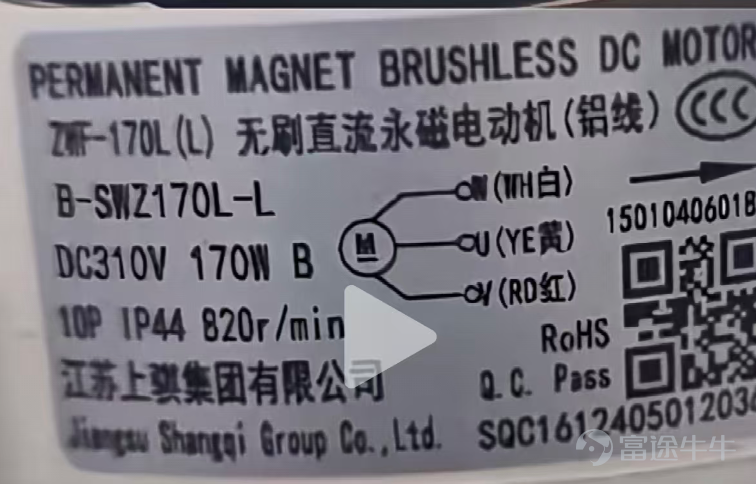
On the evening of April 15, Yang Xiangxi spoke out on a video platform, questioning the actual usage of motor winding materials in some of Gree's products and provided third-party teardown videos as evidence. The video showed that Gree's 5-horsepower air conditioner had an internal nameplate indicating a brushless DC permanent magnet motor marked as aluminum wire.
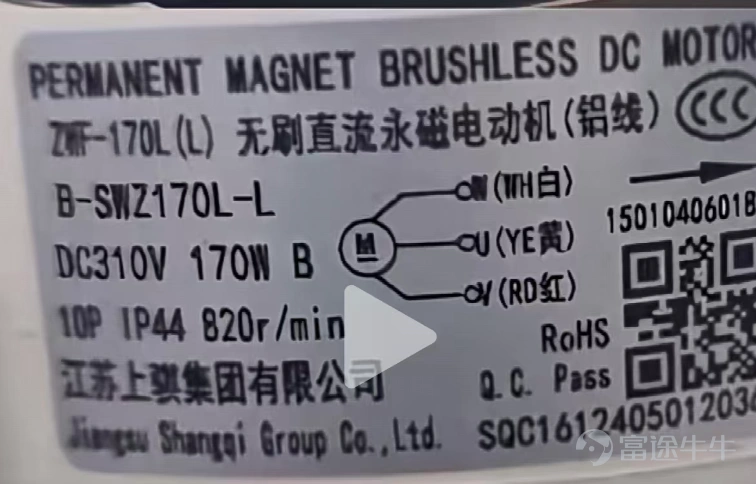
Image source: Yang Xiangxi's video platform account
The debate has now shifted from 'who is qualified to use a particular term' to a direct confrontation over the specific material composition of products. The disagreement over whether aluminum wire is present in motor windings has brought the originally marketing-oriented label 'genuine copper material' back to verifiable product details.
At the same time, the public discourse surrounding 'aluminum replacing copper' is also changing. Over the past period, related discussions have gradually been simplified into a synonym for 'passing off inferior goods as superior.' 'Some domestic voices simplistically equate 'aluminum replacing copper' with downgraded and substandard material selection, a perception that completely contradicts the mature practices of global high-end manufacturing,' said Chen Jianmin, a senior expert in the air conditioning industry.
Aluminum replacing copper: Who is researching it, and who is using it?
In Gree's narrative framework, 'aluminum replacing copper' is almost diametrically opposed to 'genuine copper material.' Zhu Lei publicly stated on social media that Gree insists on using copper materials in its four core components, 'unlike some companies that quietly switch to aluminum wire motors in low-cost products.' In his view, the industry-wide self-discipline initiative launched by 19 companies at the end of last year essentially represents 'a compromise in the face of cost pressures.'
However, Yang Xiangxi directly pointed out that the much-debated self-discipline initiative regarding 'aluminum replacing copper' has been exploited and hyped up.
In fact, there was a specific reason for the introduction of this industry-wide self-discipline initiative. The background lies in the progress of implementing the '14th Five-Year Plan' national key R&D program, specifically the 'High Corrosion-Resistant Technology and Processing Equipment Development for All-Aluminum Heat Exchangers.' The Chinese Refrigeration Society and its member companies were concerned that inconsistent messaging among member firms could hinder researchers’ progress in studying aluminum applications, hence the internal launch of the industry self-discipline initiative.
This explanation is largely consistent with the public statements made by industry organizations.
In December last year, a statement issued by the Aluminum Strengthening Application Working Group of the Sixth Special Committee of the Chinese Refrigeration Society indicated that, to align with national strategies and prevent inconsistent messaging or mutual defamation among companies, which could impede research progress on aluminum applications, the industry self-discipline initiative was launched. The statement noted that the initiative received positive responses but was unexpectedly exploited and maliciously publicized, causing adverse effects for member companies and seriously obstructing the progress of 'aluminum replacing copper' efforts within the industry, contrary to national development strategies.
In other words, this self-discipline agreement governs 'how to discuss' and 'how to promote,' not 'whether to apply.'
The research report from GF Futures Research Institute believes that the emergence of the joint statement and self-discipline convention is essentially solving a game theory problem. If only one company takes the lead in promoting aluminum air conditioners on a large scale, it would not only have to bear the costs of technological and production line modifications but also face disadvantages in brand promotion, resulting in both brand and market risks. However, when most leading companies choose to jointly promote aluminum replacing copper, the cost of consumer education can be partially socialized, and public opinion pressure significantly reduced.
From the current situation, the industry still remains at the stage of 'more research, less implementation.' Reporters from Time Weekly found that there are no clearly labeled aluminum air conditioners among mainstream brands' products available on multiple e-commerce platforms. Previously, sources close to Haier indicated that their related work is still at the level of cutting-edge technology reserves and has not entered the productization phase; Midea also stated to reporters that they have not yet launched or sold aluminum air conditioner products.
Hisense emphasized that its mainstream products still primarily use copper as the core material. 'For Hisense air conditioners, both the indoor and outdoor unit condensers, evaporators, and connecting pipes between units are made of copper tubes, and high-efficiency products use double-row copper tubes. Fairly speaking, mainstream big brands, including Midea and Haier, mostly also use copper tubes.' On April 16, Yang Xiangxi told reporters from Time Weekly.
In his view, during this ongoing public opinion process, once a company actively clarifies or participates in discussions, it tends to be easily labeled as 'supporting aluminum replacing copper,' which instead puts it in a passive position.
'There are indeed signs of shifting from technical route discussions to marketing hype. Mainstream companies will not adopt aluminum replacing copper in the short term, but will maintain attention and research in the medium to long term.' Ding Shaojiang, Chief Analyst of GKURC Industrial Economic Think Tank, told reporters from Time Weekly that the air conditioning industry currently has many focus points worth paying attention to, such as AI, health, comfort, and energy saving. Both the industry and consumers have a clear understanding of the advantages and disadvantages of copper and aluminum materials. The industry doesn't need to excessively focus on the topic of 'aluminum replacing copper' to avoid unnecessary marketing competition.
Possibly Misunderstood 'Aluminum Replacing Copper'
Over the past decade, the core obstacles to introducing aluminum into the air conditioning field mainly focused on three points: insufficient corrosion resistance, complex welding processes, and potential disadvantages in lifespan and energy efficiency. The industry consensus that 'copper is superior to aluminum' is based, to some extent, on the technological reality of this phase. However, with the evolution of materials and processes, this judgment is starting to loosen.
The research report from GF Futures Research Institute shows that in recent years, advancements in surface treatments such as zinc spraying and special coatings for aluminum tubes, alloy formulations (such as Hydro 9159, 3003N, and other highly corrosion-resistant alloys), internal wall oil treatments, and system optimizations for pipeline design have led the industry to generally believe that the main obstacles regarding lifespan and energy efficiency for internally threaded aluminum tubes in most household conditions have been resolved.
'Mass-produced aluminum replacing copper air conditioner models in China have had their core aluminum heat exchangers pass all accelerated life tests and real-world testing on ten-thousand-level prototypes, successfully passing the 15-year lifespan assessment.' Chen Jianmin stated that third-party reliability certification confirmed a 100% success rate in lifespan standards.
Feedback from upstream materials companies is also converging. Leading copper tube companies like Jintian and Hailiang have explicitly stated that based on their experimental data and customer feedback, although aluminum tube solutions are slightly inferior to copper in meeting national top-tier energy efficiency standards, optimizing the heat exchanger structure and pairing it with high-performance aluminum foil can ensure that the overall energy efficiency meets or even slightly exceeds the standard.
From a broader perspective, the substitution of aluminum for copper is not merely a technological choice for enterprises but is also related to resource endowment and industrial security.
The substitution of aluminum for copper was originally a development direction for air conditioning technology and also a strategic deployment at the national level regarding copper resources. Its stigmatization is abnormal. Liu Buchen, a senior observer in the home appliance industry, told reporters from the Times Weekly that currently, Japanese high-end air conditioning brands such as Daikin and Mitsubishi have more than 60% adoption of aluminum in place of copper in air conditioners.
In terms of material properties, aluminum is not merely a cheap substitute but a mature material that has been verified over a long period in fields like aerospace and high-end automobiles; from a technological pathway perspective, the substitution of aluminum for copper does not represent a 'regression' but rather a systematic evolution based on structural design, material modification, corrosion protection upgrades, and advancements in manufacturing processes.
Liu Buchen believes that from the perspective of technological development trends and national strategic resources, the substitution of aluminum for copper is a necessary direction for transformation and a technical threshold that air conditioning companies must overcome. Companies that fail to recognize this will be eliminated by technology.
Risk Disclaimer: The above content only represents the author's view. It does not represent any position or investment advice of Futu. Futu makes no representation or warranty.Read more
Comments
to post a comment