
The reevaluation of innovative drug stocks is happening right now—did you get in on this wave?
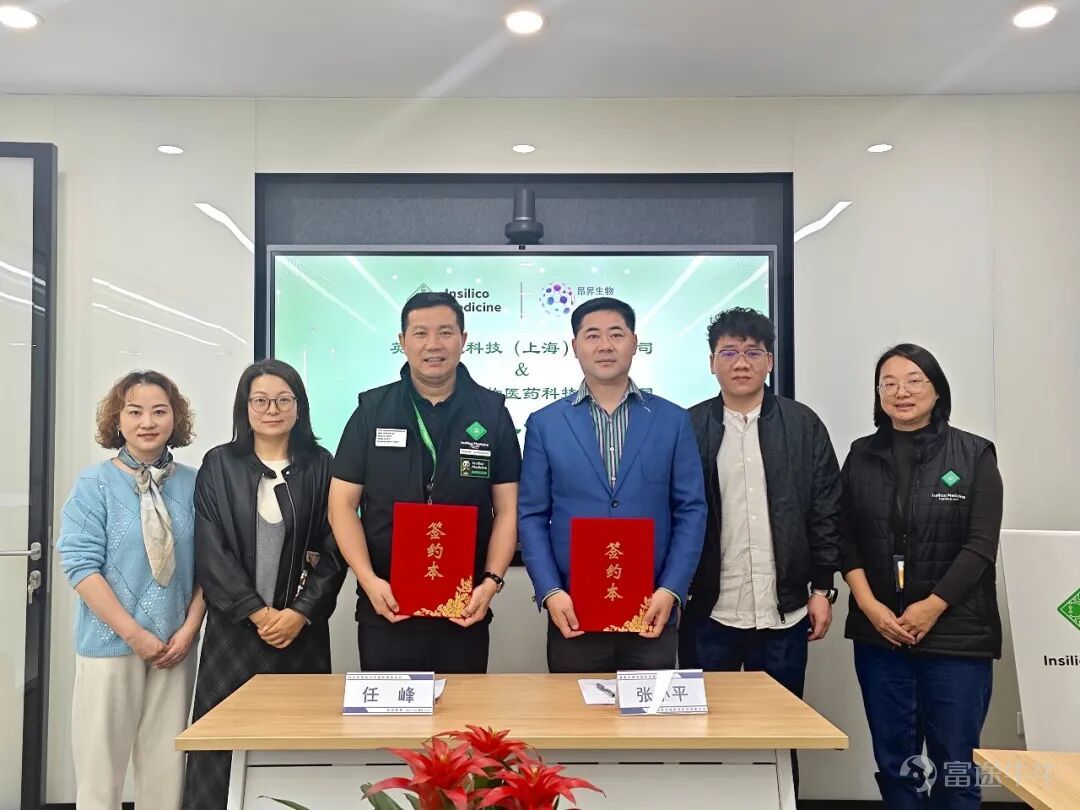
Insilico Medicine and Angsheng Biotech have reached a strategic cooperation agreement, with AI and exosome synergy driving a new paradigm in precision medicine
Insilico Medicine (03696.HK), a biotechnology company powered by generative artificial intelligence, announced, recently signed a strategic cooperation agreement with Shanghai Angsheng Biomedical Technology Co., Ltd. (hereinafter referred to as 'Angsheng Biotech'). Both parties will focus on the development of AI-driven precision therapies for stem cells and their derivatives,By jointly constructing an exosome multi-omics database, utilizing AI to deeply mine the 'exosome-disease' association map, tackling industry challenges in exosome component analysis and target matching, thereby accelerating the leap from basic research to clinical translation in stem cell exosome therapy.。

In the field of biology, exosomes, which are nanoscale vesicles secreted by cells, naturally play a key role in intercellular 'information transmission' within the body. As a highly promising new molecular entity (New Modality), stem cell exosomes show immense potential in precision medicine for the treatment of neurodegenerative diseases, tissue repair and regenerative medicine, and autoimmune diseases due to their low immunogenicity, excellent ability to penetrate biological barriers (such as crossing the blood-brain barrier), and strong capacity to carry bioactive molecules.
However, due to the high heterogeneity of exosome components, including vast amounts of protein and nucleic acid information, traditional manual analysis methods are inefficient when handling multi-omics data, making it difficult to establish precise mapping relationships between complex molecular backgrounds and disease targets. Moreover, due to the lack of efficient digital predictive tools, the R&D process heavily relies on repeated in vivo and in vitro experimental validation, leading to lengthy development cycles and high costs. Coupled with inconsistent standards within the industry for separation, purification, and data interpretation, the reproducibility of studies faces severe challenges. These technical bottlenecks collectively hinder the industrial transition of exosome therapies from laboratory discoveries to clinical applications.
This strategic cooperation will enable both parties to build a complementary R&D matrix of 'AI algorithm engine + exosome biology.' Among this, Insilico Medicine will leverage its generative artificial intelligence as a technological benchmark, relying on the PandaOmics target discovery engine within the Pharma.AI platform to deeply mine and logically model vast amounts of omics data, precisely screening active ingredients in exosomes and matching disease targets. Ascend Biotech, based on its accumulated R&D in stem cell exosomes, will be responsible for the preparation and purification of multi-source exosomes, omics data analysis, and subsequent cellular and animal experimental validation.
To achieve the leap from basic research to clinical implementation, the two parties will focus on three core directions to construct an innovative platform that integrates data, algorithms, and validation. First, by building a multi-omics database for exosomes, integrating molecular data from heterogeneous sources to solidify the R&D foundation. Second, developing AI intelligent matching algorithms by mapping precise 'exosome-disease target' association diagrams to efficiently screen optimal treatment combinations. Lastly, through cellular and animal experiments, forming a closed-loop of 'dry and wet experiments' to jointly promote innovative single-cell exosome therapeutic products into the clinical research stage.
Dr. Ren Feng, Co-CEO and Chief Scientific Officer of Insilico Medicine, statedInsilico Medicine has always been committed to using generative AI to explore the frontiers of life sciences, particularly in empowering the development of new molecular entities (New Modality) through AI. We are very pleased to collaborate with Ascend Biotech, relying on Insilico's proven artificial intelligence target discovery platform and biological insight capabilities to support the development of cutting-edge therapies such as stem cell exosomes. This collaboration will not only accelerate the leap of frontier concepts from basic research to clinical transformation but also help unlock new boundaries of precision medicine, bringing breakthrough innovative treatment solutions to patients worldwide.
Dr. Zhang Xiaoping, Founder and Chief Scientist of Ascend Biotech, statedAscend Biotech is dedicated to innovating through stem cell exosome technology to address unmet clinical needs. This strategic cooperation with Insilico Medicine marks the deep integration of 'AI + Biology' in the field of complex drug modality R&D. The empowerment of AI will significantly improve the efficiency of multi-omics data analysis, broadening the treatment boundaries of refractory diseases through precise matching mechanisms. We look forward to using AI as wings and biology as the foundation to jointly establish industry benchmarks for exosome precision therapy, unlocking new possibilities for stem cell exosome therapies, safeguarding life and health with technology, and benefiting millions of patients globally.
About Insilico Medicine
Insilico Medicine is a global pioneer biotechnology company dedicated to integrating artificial intelligence and automation technologies to accelerate drug discovery and drive innovation in the life sciences sector, enabling longer and healthier lives for humanity. On December 30, 2025, the company was listed on the Main Board of the Hong Kong Stock Exchange, with stock code: 03696.HK.
Using its self-developed Pharma.AI platform and advanced automated biology laboratories, Insilico Medicine is providing innovative drug solutions for unmet disease areas such as fibrosis, oncology, immunology, pain, obesity, and metabolic disorders. Additionally, Insilico Medicine continues to expand the application of Pharma.AI into diversified fields such as advanced materials, agriculture, nutritional products, and veterinary drugs. For more information, please visit www.insilico.com.
About Ascend Biotech
Shanghai Ascend Biomedical Technology Co., Ltd., founded in 2022 and led by Dr. Zhang Xiaoping, is a high-tech innovative enterprise focusing on stem cell and regenerative medicine technology. Backed by a top-tier scientific research team led by experts from the Chinese Academy of Sciences and clinical authorities, it focuses on stem cell drug development, engineered exosome technology translation, and clinical solutions, building an integrated innovation platform for industry, academia, research, and medicine.
The company possesses a full-chain technical system covering stem cell drugs, targeted engineered exosomes, and GMP-level production systems compliant with NMPA/FDA standards, with significant clinical achievements. Astem-101 by Ascend is the first male stem cell drug to receive dual registration from the National Medical Products Administration and the Health Commission.
The company currently has in-depth collaborations with medical institutions such as Shanghai Ninth People’s Hospital, Renji Hospital, and Obstetrics and Gynecology Hospital affiliated with Fudan University, establishing a base in the Yangtze River Delta region. It is committed to promoting the clinical translation of regenerative medicine in anti-aging, sexual health, and medical aesthetics areas, with the mission of 'decoding the language of cells and revitalizing life vitality,' striving to create a world-leading cell therapy ecosystem to support the future of life and health.
Risk Disclaimer: The above content only represents the author's view. It does not represent any position or investment advice of Futu. Futu makes no representation or warranty.Read more
Comments
to post a comment
1