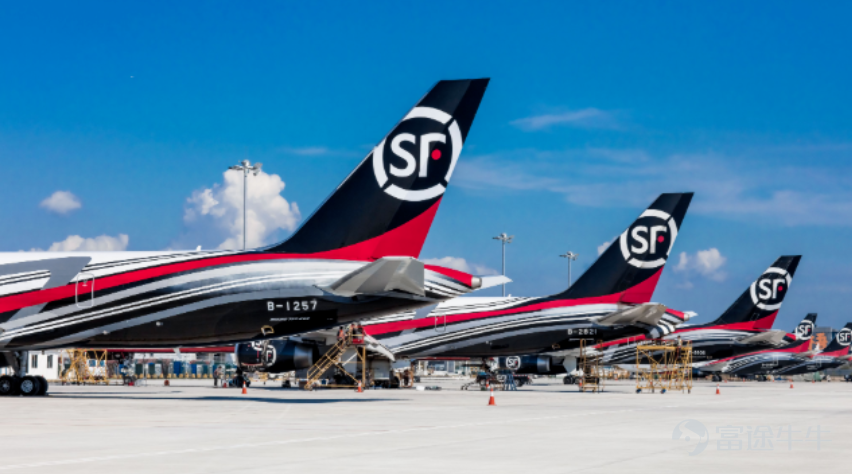

Revenue surpasses 300 billion yuan for the first time, two new businesses become profitable, SF Express develops a 'second growth curve'
Introduction:The rapid growth of intra-city business and the turnaround to profitability of supply chain and international operations have become two major highlights of SF Express' recent performance.

Li Ping/Author Lishi Business Review/Produced by
1
Revenue breaks through 300 billion yuan for the first time
Not long ago, SF Holding $S.F. Holding (002352.SZ)$$SF HOLDING (06936.HK)$ The 2025 annual financial report was disclosed. Data showed that in the whole year of 2025, SF Holding achieved revenue of 308.23 billion yuan, an increase of 8.4% year-over-year. This is also the first time SF's revenue scale has broken through the 300 billion yuan mark. The company realized a net profit attributable to shareholders of 11.12 billion yuan, an increase of 9.3% year-over-year; the net profit excluding non-recurring items was 9.264 billion yuan, a slight increase of 1.29% year-over-year. In the fourth quarter of 2025, SF Holding achieved revenue of 82.97 billion yuan, an increase of 7.0% year-over-year, and a net profit attributable to shareholders of 2.81 billion yuan, an increase of 10.0% year-over-year.

In terms of business breakdown, each business line of SF successfully achieved coordinated growth. Specifically, SF Holding’s time-sensitive express delivery business achieved sales revenue of 131.05 billion yuan, an increase of 7.2% year-over-year; the economy express delivery business achieved sales revenue of 32.05 billion yuan, an increase of 17.6% year-over-year; the freight business achieved sales revenue of 42.13 billion yuan, an increase of 11.9% year-over-year; the cold chain and pharmaceutical business achieved sales revenue of 10.61 billion yuan, an increase of 8.1% year-over-year; the local delivery business achieved sales revenue of 12.72 billion yuan, an increase of 43.4% year-over-year; the supply chain and international business achieved sales revenue of 72.94 billion yuan, an increase of 3.5% year-over-year.
In terms of operating cash flow, SF Holding generated about 27.6 billion yuan in operating cash flow in 2025. After deducting approximately 9.6 billion yuan in asset-related investments, free cash flow reached nearly 17.9 billion yuan, demonstrating strong cash generation capabilities.
Furthermore, in terms of the debt-to-asset ratio, SF Holding's debt situation has significantly improved, with its financial structure becoming more robust. As of the end of 2025, the company's debt-to-asset ratio was 49.03%, marking a continuous decline over three years. The company's short-term loan balance decreased by nearly 8 billion yuan year-over-year, while the long-term loan balance decreased by over 1 billion yuan year-over-year, showing a significant improvement in debt repayment capability.

Based on the company's stable earnings growth and abundant cash flow performance, SF Holding increased its returns to shareholders. According to the company's dividend plan, SF Holding will distribute a final cash dividend of 4.3 yuan per 10 shares (tax included) to all shareholders, totaling 2.14 billion yuan in final cash dividends. Combined with the 2.32 billion yuan interim cash dividend distributed in 2025, the total cash dividend for 2025 amounted to 4.46 billion yuan.
When adding the 1.64 billion yuan in share repurchases in 2025, SF returned a total of 6.1 billion yuan to shareholders in real cash, representing 55% of the net profit attributable to shareholders for that year.
Meanwhile, the board of directors of SF Holding agreed to adjust the total amount of repurchase funds for the first phase of A-share repurchases in 2025 from “no less than 1.5 billion yuan and no more than 3 billion yuan” to “no less than 3 billion yuan and no more than 6 billion yuan.” The purpose of the repurchased shares was changed from “for employee stock ownership plans or equity incentives” to “for cancellation and reduction of registered capital,” and a 500 million Hong Kong dollar H-share repurchase plan was initiated simultaneously.
On March 31, the day after the earnings announcement, SF Holding's stock price rose by 3.48%, increasing the company’s market value by more than 6 billion yuan in a single day. However, SF Holding's stock price once again fell into volatility afterward. As of the most recent trading day’s close, SF Holding's latest market value was approximately 189.785 billion yuan. So why are secondary market investors choosing to 'ignore' SF Holding’s earnings growth and enhanced shareholder returns?
2
“Volume-for-price” leads to lower gross margin
According to data from the State Post Bureau, the total volume of express delivery business in 2025 reached 198.95 billion pieces, an increase of 13.6% year-over-year; express delivery business revenue reached 1.5 trillion yuan, an increase of 6.5% year-over-year, with the average unit price still in a declining trend. However, since the second half of 2025, driven by the “anti-internal competition” policy, multiple regions (such as Yiwu in Zhejiang, Guangdong) have successively raised the base price of express delivery, narrowing the decline in unit prices, with some areas even seeing slight month-on-month increases.
According to the annual report, in 2025, SF Express completed a business volume of 16.63 billion tickets, a year-on-year increase of 25.4%, achieving a significant expansion in business scale; meanwhile, the average revenue per ticket of SF Express dropped to RMB 13.7, a year-on-year decrease of 11.4%, maintaining the previous pattern of 'volume increase and price decrease.' In response, SF Holdings stated in its annual report that the decline in average revenue per ticket was mainly caused by changes in product structure. Starting from September 2025, the year-on-year decline in monthly average revenue per ticket has shown a continuous narrowing trend.
However, in terms of gross margin, SF Holdings has not escaped the growth model of 'exchanging price for volume,' which is also a concern for some investors. Data shows that in 2025, the gross margin of SF Holdings was 13.07%, a year-on-year decrease of 0.61 percentage points. In the third quarter of 2025, SF achieved a sales gross margin of approximately 12.49%, a year-on-year decrease of 1.65 percentage points. Affected by the decline in gross margin, SF's total net profit attributable to shareholders in the third quarter was RMB 2.571 billion, a year-on-year decrease of 8.53%.

In the fourth quarter of 2025, SF Holdings achieved a sales gross margin of 14.28%, an increase of 1.79 percentage points quarter-on-quarter and 0.4 percentage points year-on-year. In this regard, SF Holdings stated during the earnings conference that the decline in the company's full-year gross margin in 2025 was mainly due to the company's proactive market expansion strategy and necessary long-term strategic investments. Especially, a series of strategic investments made by the company in the second and third quarters had a short-term impact on gross profit, but were quickly optimized, resulting in the highest gross margin level of the year in the fourth quarter.
However, considering the increasing pressure of labor costs, the future trend of SF Holdings' gross margin remains unclear. Financial data shows that in 2025, SF's total operating cost reached RMB 267.18 billion, a year-on-year increase of 9.14%.
Among this, labor cost expenditure was as high as RMB 129.78 billion, a year-on-year increase of 15.75%. The proportion of labor cost in total operating cost reached 48.57%, an increase of 2.77 percentage points compared to the same period last year (45.80%). The growth rate was much higher than the revenue and total cost growth rates, becoming an important factor dragging down the company's profits.

It is worth mentioning that SF Holdings' non-logistics business costs have significantly improved. According to the annual report, in 2025, SF's non-logistics business costs decreased by 22.97% year-on-year, further compressing the proportion to 1.97%, showing the company's clearer strategic focus and significant improvement in resource allocation efficiency.
Additionally, due to the decline in the expense ratio during the period, SF Holdings maintained a stable sales net profit margin despite the decline in gross margin. Specifically, thanks to the company's lean management strategy and technological empowerment, as well as improvements in management efficiency and R&D efficiency, SF's management expense ratio and R&D expense ratio both decreased by 0.2 percentage points year-on-year in 2025. Meanwhile, the decrease in average borrowing balance led to a reduction in interest expenses, pulling SF's financial expense ratio down by 0.1 percentage points year-on-year. In terms of sales expenses, due to the company's strengthening of sales team building and accelerating the advancement of industry-specific and international strategies, SF's sales expense ratio increased by 0.2 percentage points year-on-year.

Benefiting from the decline in the three major expense ratios—management, R&D, and financial—SF Holdings' overall expense ratio in 2025 finally recorded 8.9%, a year-on-year decrease of 0.3 percentage points, basically offsetting the impact of the decline in gross margin on the company's sales net profit margin. Data shows that in 2025, the sales net profit margin of SF Holdings was 3.79%, an increase of 0.2 percentage points compared to the same period last year, which was also a key factor for the stabilization and recovery of SF's profit in the fourth quarter.
3
International and supply chain businesses turned losses into profits
Starting from 2023, SF Holdings proposed a 'multi-network integration' strategy to improve operational efficiency and synergy effects. It merged the original express division with the large parcel division, forming the 'Express and Large Parcel' segment. Thereafter, SF divided its main business into three major segments: Express and Large Parcel, Supply Chain and International, and Same-day Delivery. Among these, the Express and Large Parcel division belongs to SF's core business, the Supply Chain and International segment serves as SF's revenue growth engine, and the Same-day Delivery business represents SF’s important move in the instant retail sector, belonging to the company's emerging business.
The financial report shows that in 2025, SF Express and its large parcel division achieved a revenue of 217.55 billion yuan, representing a year-on-year increase of 8.69%, accounting for 70.38% of total revenue. Among this, both economic express delivery and freight services achieved double-digit year-on-year growth. In terms of net profit, SF Express and its large parcel division achieved a net profit of approximately 10.6 billion yuan, a year-on-year decrease of 3.46%, mainly affected by increased market expansion expenses and long-term strategic investments.

Benefiting from the 'food delivery war' initiated by e-commerce giants such as Alibaba and JD.com,同城即时配送 (urban instant delivery) business became a highlight in SF Express's 2025 financial report. For the full year of 2025, SF Express's urban instant delivery division achieved a revenue of 12.87 billion yuan, a year-on-year increase of 42.83%, with revenue growth significantly higher than the previous year's 22.24%. During the same period, this business achieved a net profit of approximately 280 million yuan, a year-on-year increase of 109.66%.
With the 'divine assist' of the food delivery war, in 2025, SF Express's同城配送 (urban delivery) service order volume increased by more than 55% year-on-year, mainly driven by rapid growth in delivery revenues from fast food, tea drinks, and other core non-food categories like supermarkets, as well as double-digit year-on-year growth in county-level income. Notably, SF Express's urban delivery services for merchants generated revenue of approximately 10.701 billion yuan, a year-on-year increase of 60%, with over 7,900 new cooperative stores added.
In terms of revenue share, the urban instant delivery division accounted for about 4.18% of SF Express's total revenue in 2025, a significant increase from 2.8% in the same period of 2023, though the overall proportion is still less than 5%. Therefore, compared to the relatively smaller urban delivery business, SF Express's supply chain and international operations are more highly regarded by outsiders, widely seen as the second growth curve of SF Holding.
It is reported that SF Holding's supply chain and international business primarily includes international logistics services, supply chain solutions, bonded warehousing, overseas warehousing, and similar lines. These services target domestic and overseas manufacturing enterprises, trading companies, cross-border e-commerce platforms, and consumers, providing international express, overseas local express, cross-border e-commerce parcel services, and overseas warehouse services.
In 2021, SF Holding spent 17.555 billion yuan to acquire Kerry Logistics, marking an important step in its international layout. Regarding this, SF founder Wang Wei has repeatedly stated that internationalization is a core direction of SF Holding’s strategic layout. This move was both a passive response to the fierce 'price war' in the domestic courier market and an inevitable path for the company’s upgrade from a regional logistics provider to a global supply chain service provider.
Data shows that from 2022 to 2024, SF's supply chain and international business achieved revenues of 87.87 billion yuan, 59.98 billion yuan, and 70.49 billion yuan respectively, corresponding to year-on-year growth rates of 124.1%, -31.7%, and 17.5%, with significant fluctuations in revenue.

Additionally, due to factors such as the decline in global air and sea freight demand and intensified industry competition, the profitability of SF's supply chain and international business was not ideal. Data indicates that in 2024, the gross margin of SF's supply chain and international business was only 6.6%, with a net loss for the year reaching 1.32 billion yuan, mainly due to high costs associated with the KEX restructuring and early-stage overseas expansion.
Annual report data shows that for the full year of 2025, SF's supply chain and international business achieved a revenue of 72.94 billion yuan, a year-on-year increase of 3.5%, and a net profit of approximately 190 million yuan, an increase of 950 million yuan year-on-year, successfully turning losses into profits. Excluding the impact of KEX, the supply chain and international division's net profit in 2025 grew by over 50% year-on-year.
It is clear that although SF's supply chain and international business successfully turned losses into profits in 2025, its revenue growth rate slowed significantly compared to the same period last year (17.53%). In response, SF Holding mentioned during its earnings call that due to the decline in ocean freight prices, revenue growth in its subsidiary KLN International Freight Forwarding business faced pressure. However, excluding KLN's performance, SF Holding’s core cross-border supply chain business grew by 32.3% year-on-year.
Overall, after years of deep cultivation and strategic layout, SF Holdings' three divisions achieved profitability in 2025, with a healthier profit structure. Among these, the rapid growth of the同城 instant delivery business and the turnaround to profitability of the supply chain and international operations can be seen as two major highlights in SF's earnings report.
However, it should be noted that against the backdrop of intensifying competition in the fast-moving industry, the net profit of SF Express and the large parcel division, which form the core business, has still experienced negative growth. At the same time, with regulators repeatedly halting the 'food delivery wars,' the current high growth of SF's同城 operations may be difficult to sustain. Nevertheless, considering signs that the 'price war' in the express delivery sector is subsiding, the profitability of SF Express and the large parcel division, which are core businesses, is expected to recover. This represents the true opportunity for SF Holdings in the secondary market.
Risk Disclaimer: The above content only represents the author's view. It does not represent any position or investment advice of Futu. Futu makes no representation or warranty.Read more

Comments
to post a comment
1