
English
Back
Open Account
时代周报
wrote a column · Apr 16 08:55

Unpacking the 'Lightning M&A' in memory chips: Behind the skyrocketing performance, numerous doubts arise over customers, supply chain, and R&D | The Conundrum of Chengbang Co.

Source: Times Business Research Institute Author: Huaqiu Sun
Source: Times Business Research Institute Author: Huaqiu Sun  Image source: Tuchong Creative  Source: Times Business Research Institute Author | Sun Huaqiu Editor: Han Xun  Preface: Transitioning from traditional ecological landscaping to the high-tech field of semiconductor memory, Chengbang's transformation has drawn significant market attention since its inception. The company's multi-year losses, high debt levels, and rising bad debt risks in accounts receivable have kept its operational logic and compliance with information disclosure under continuous scrutiny. Reporters from the Times Business Research Institute conducted on-site visits and combed through financial reports to verify and raise questions about related doubts. They released a special report titled 'The Chengbang Shares Dilemma,' attempting to reveal the true picture of this cross-sector transition.   In October 2024, Chengbang Co., Ltd. (603316.SH), which specializes in municipal landscaping and ecological environment engineering, suddenly announced a 'lightning acquisition'—investing 58 million yuan to acquire Dongguan Xincun Electronics Technology Co., Ltd. (later renamed Dongguan Xincun Chengbang Technology Co., Ltd., hereinafter referred to as 'Xincun Technology'), gaining 51.02% equity and incorporating it into the consolidated financial statements.  Following the consolidation of Core Storage Technology, its performance experienced explosive growth, quickly emerging as a dark horse in the memory industry. However, behind this dazzling growth, a series of questions have arisen: a net profit margin of only 0.83%, barely making any money; the largest client contributing over 200 million yuan in sales has only two employees covered by social insurance;...
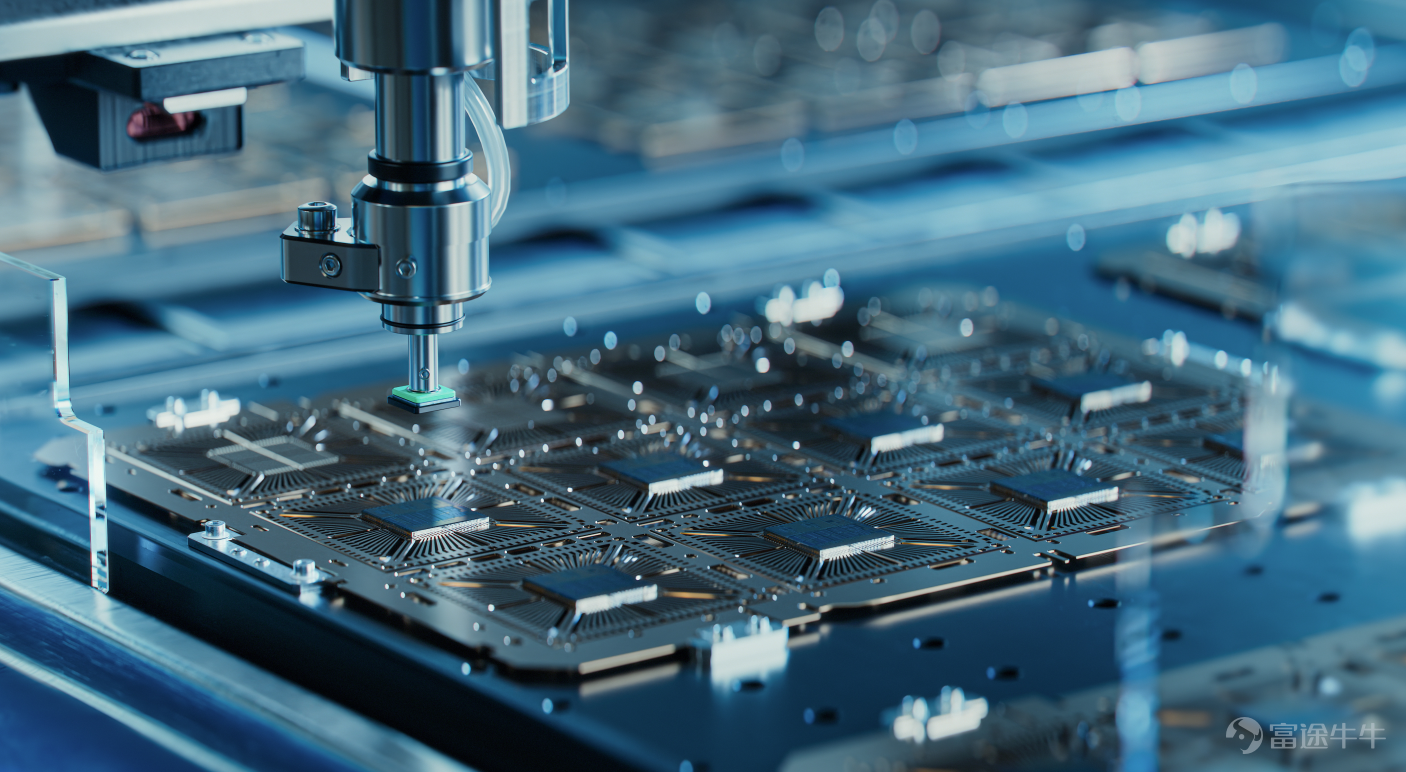
Image source: Tuchong Creative
Source: Times Business Research Institute
Author | Sun Huaqiu
Editor: Han Xun
Preface: Transitioning from traditional ecological landscaping to the high-tech field of semiconductor memory, Chengbang's transformation has drawn significant market attention since its inception. The company's multi-year losses, high debt levels, and rising bad debt risks in accounts receivable have kept its operational logic and compliance with information disclosure under continuous scrutiny. Reporters from the Times Business Research Institute conducted on-site visits and combed through financial reports to verify and raise questions about related doubts. They released a special report titled 'The Chengbang Shares Dilemma,' attempting to reveal the true picture of this cross-sector transition.
In October 2024, Chengbang Co., Ltd. (603316.SH), which specializes in municipal landscaping and ecological environment engineering, suddenly announced a 'lightning acquisition'—investing 58 million yuan to acquire Dongguan Xincun Electronics Technology Co., Ltd. (later renamed Dongguan Xincun Chengbang Technology Co., Ltd., hereinafter referred to as 'Xincun Technology'), gaining 51.02% equity and incorporating it into the consolidated financial statements.
Following the consolidation of Xincun Technology, its performance experienced explosive growth, quickly becoming a dark horse in the memory industry. However, behind this dazzling growth, a series of doubts emerged: a net profit margin of only 0.83%, almost non-profitable; the largest client contributing over 200 million yuan in sales had only two employees enrolled in social security; multiple customers and suppliers overlapped significantly…
As the core operating entity for Chengbang Co., Ltd.'s transformation into the semiconductor sector, XinCun Technology’s disclosed positioning is impressive. According to its official website, the company is a national high-tech enterprise specializing in the research and development of semiconductor storage chips, packaging and testing, and module manufacturing. Its product range covers solid-state drives, embedded storage, and raw storage devices across three main categories. The company targets high-growth sectors such as artificial intelligence, cloud computing, and the Internet of Things (IoT), portraying an ambitious blueprint for future development.
Source: Times Business Research Institute Author: Huaqiu Sun  Image source: Tuchong Creative  Source: Times Business Research Institute Author | Sun Huaqiu Editor: Han Xun  Preface: Transitioning from traditional ecological landscaping to the high-tech field of semiconductor memory, Chengbang's transformation has drawn significant market attention since its inception. The company's multi-year losses, high debt levels, and rising bad debt risks in accounts receivable have kept its operational logic and compliance with information disclosure under continuous scrutiny. Reporters from the Times Business Research Institute conducted on-site visits and combed through financial reports to verify and raise questions about related doubts. They released a special report titled 'The Chengbang Shares Dilemma,' attempting to reveal the true picture of this cross-sector transition.   In October 2024, Chengbang Co., Ltd. (603316.SH), which specializes in municipal landscaping and ecological environment engineering, suddenly announced a 'lightning acquisition'—investing 58 million yuan to acquire Dongguan Xincun Electronics Technology Co., Ltd. (later renamed Dongguan Xincun Chengbang Technology Co., Ltd., hereinafter referred to as 'Xincun Technology'), gaining 51.02% equity and incorporating it into the consolidated financial statements.  Following the consolidation of Core Storage Technology, its performance experienced explosive growth, quickly emerging as a dark horse in the memory industry. However, behind this dazzling growth, a series of questions have arisen: a net profit margin of only 0.83%, barely making any money; the largest client contributing over 200 million yuan in sales has only two employees covered by social insurance;...
On March 11, reporters from the Times Business Research Institute visited the HuaSai Electronics Wholesale Market in Tangxia Town, Dongguan, where XinCun Technology is registered. After inquiries at multiple counters in the market, no relevant storage products from XinCun Technology were found for sale. Several counter merchants stated that storage products have high requirements for brand recognition, quality control, and stable after-sales service. On a daily basis, they primarily sell mainstream brands like Samsung, Seagate, SanDisk, Asus, and Kingston. None of the merchants interviewed had heard of XinCun Technology, a local manufacturer. Additionally, reporters searched for related storage products with keywords like 'XinCun' and 'Chengbang' on major e-commerce platforms such as JD.com, Tmall, and PDD Holdings, but no corresponding brand products were found for sale. Based on these findings, it appears that XinCun Technology’s products may not yet be directly available through mainstream consumer channels (offline wholesale + major e-commerce), and their sales may focus on industry customization and overseas markets.
Subsequently, reporters visited XinCun Technology's business premises, which is a four-story office building located in a residential area. After identifying themselves, reporters were informed by the front desk staff that the third floor housed the production workshop. The reporters requested to tour the production workshop and interview the person responsible for production technology. However, after the HR manager consulted with higher-ups, this request was denied.
Source: Times Business Research Institute Author: Huaqiu Sun  Image source: Tuchong Creative  Source: Times Business Research Institute Author | Sun Huaqiu Editor: Han Xun  Preface: Transitioning from traditional ecological landscaping to the high-tech field of semiconductor memory, Chengbang's transformation has drawn significant market attention since its inception. The company's multi-year losses, high debt levels, and rising bad debt risks in accounts receivable have kept its operational logic and compliance with information disclosure under continuous scrutiny. Reporters from the Times Business Research Institute conducted on-site visits and combed through financial reports to verify and raise questions about related doubts. They released a special report titled 'The Chengbang Shares Dilemma,' attempting to reveal the true picture of this cross-sector transition.   In October 2024, Chengbang Co., Ltd. (603316.SH), which specializes in municipal landscaping and ecological environment engineering, suddenly announced a 'lightning acquisition'—investing 58 million yuan to acquire Dongguan Xincun Electronics Technology Co., Ltd. (later renamed Dongguan Xincun Chengbang Technology Co., Ltd., hereinafter referred to as 'Xincun Technology'), gaining 51.02% equity and incorporating it into the consolidated financial statements.  Following the consolidation of Core Storage Technology, its performance experienced explosive growth, quickly emerging as a dark horse in the memory industry. However, behind this dazzling growth, a series of questions have arisen: a net profit margin of only 0.83%, barely making any money; the largest client contributing over 200 million yuan in sales has only two employees covered by social insurance;...
According to nearby residents, XinCun Technology moved to its current business premises about a year ago and has over 100 employees.
Abnormal revenue surge in the fourth quarter of the first year of consolidation
Despite its relatively small scale, XinCun Technology has become the core pillar for Chengbang Co., Ltd.'s transition from ecological environment construction to the semiconductor sector. This pivotal transition began with a lightning-fast acquisition deal in October 2024.
Announcements revealed that on October 12, 2024, Chengbang Co., Ltd.'s board approved an investment increase in XinCun Technology, proposing to invest 58 million yuan to acquire 51.02% equity in XinCun Technology. The next day, on October 13, Chengbang completed the equity transfer, revised the company’s articles of association, restructured the board, and included XinCun Technology in the consolidated financial statements within the same month. On October 15, Chengbang completed the industrial and commercial registration changes. The entire core transaction process took only three working days, leaving just over two and a half months before the end of 2024.
The sudden consolidation of XinCun Technology became the core driver behind Chengbang Co., Ltd.’s explosive revenue growth in the fourth quarter. According to reports, after XinCun Technology's consolidation, it contributed 122 million yuan in new semiconductor storage business revenue to Chengbang Co., Ltd. during the fourth quarter, accounting for 35% of the company’s total annual revenue in 2024, becoming the key support for the quarter's revenue.
This explosive growth starkly contrasted with Chengbang Co., Ltd.'s declining performance in the first three quarters of 2024: In the first three quarters, Chengbang Co., Ltd.'s revenue was only 138 million yuan, marking a significant year-on-year decline of 59.80%. However, in the fourth quarter alone, revenue soared to 210 million yuan, a year-on-year increase of 97.85% and a staggering sequential increase of 425.92%, far exceeding the combined revenue of the first three quarters, making the performance fluctuations highly noticeable.
More critically, the scale of revenue and profitability from this newly added business showed severe disconnection, presenting an unusual 'high revenue, low profit' characteristic. According to the announcement, at the end of 2024, XinCun Technology only operated four production lines with a total workforce of 112 employees, yet it generated 329 million yuan in annual revenue, achieving nearly 3 million yuan in revenue per employee—a level comparable to industry leaders like Jiangbo Long (301308.SZ). However, its profitability underperformed significantly: In 2024, Chengbang Co., Ltd.’s overall gross margin in the semiconductor storage business was only 2.80%, far lower than Jiangbo Long’s 19.05%, Biwin Storage’s (688525.SH) 18.19%, and Demingli’s (001309.SZ) 17.75%, and even below its own processing business’s 8.04% gross margin, showing a deviation from the industry norm.
Source: Times Business Research Institute Author: Huaqiu Sun  Image source: Tuchong Creative  Source: Times Business Research Institute Author | Sun Huaqiu Editor: Han Xun  Preface: Transitioning from traditional ecological landscaping to the high-tech field of semiconductor memory, Chengbang's transformation has drawn significant market attention since its inception. The company's multi-year losses, high debt levels, and rising bad debt risks in accounts receivable have kept its operational logic and compliance with information disclosure under continuous scrutiny. Reporters from the Times Business Research Institute conducted on-site visits and combed through financial reports to verify and raise questions about related doubts. They released a special report titled 'The Chengbang Shares Dilemma,' attempting to reveal the true picture of this cross-sector transition.   In October 2024, Chengbang Co., Ltd. (603316.SH), which specializes in municipal landscaping and ecological environment engineering, suddenly announced a 'lightning acquisition'—investing 58 million yuan to acquire Dongguan Xincun Electronics Technology Co., Ltd. (later renamed Dongguan Xincun Chengbang Technology Co., Ltd., hereinafter referred to as 'Xincun Technology'), gaining 51.02% equity and incorporating it into the consolidated financial statements.  Following the consolidation of Core Storage Technology, its performance experienced explosive growth, quickly emerging as a dark horse in the memory industry. However, behind this dazzling growth, a series of questions have arisen: a net profit margin of only 0.83%, barely making any money; the largest client contributing over 200 million yuan in sales has only two employees covered by social insurance;...
At the net profit level, this characteristic of 'barely profitable and nearly a loss-making business' is even more pronounced. According to the announcement, in 2024, after the consolidation of Core Storage Technology, it contributed over 122 million yuan in revenue, with a corresponding net profit of only 1.02 million yuan, representing a net profit margin of approximately 0.83%, close to the break-even line.
If the semiconductor storage business revenue added in the fourth quarter is excluded, Chengbang Co.'s revenue for 2024 will fall below 300 million yuan. Coupled with the current situation of a full-year net loss attributable to shareholders, the company faces significant operational pressure, and continuous efforts are still needed to improve relevant operating indicators.
Source: Times Business Research Institute Author: Huaqiu Sun  Image source: Tuchong Creative  Source: Times Business Research Institute Author | Sun Huaqiu Editor: Han Xun  Preface: Transitioning from traditional ecological landscaping to the high-tech field of semiconductor memory, Chengbang's transformation has drawn significant market attention since its inception. The company's multi-year losses, high debt levels, and rising bad debt risks in accounts receivable have kept its operational logic and compliance with information disclosure under continuous scrutiny. Reporters from the Times Business Research Institute conducted on-site visits and combed through financial reports to verify and raise questions about related doubts. They released a special report titled 'The Chengbang Shares Dilemma,' attempting to reveal the true picture of this cross-sector transition.   In October 2024, Chengbang Co., Ltd. (603316.SH), which specializes in municipal landscaping and ecological environment engineering, suddenly announced a 'lightning acquisition'—investing 58 million yuan to acquire Dongguan Xincun Electronics Technology Co., Ltd. (later renamed Dongguan Xincun Chengbang Technology Co., Ltd., hereinafter referred to as 'Xincun Technology'), gaining 51.02% equity and incorporating it into the consolidated financial statements.  Following the consolidation of Core Storage Technology, its performance experienced explosive growth, quickly emerging as a dark horse in the memory industry. However, behind this dazzling growth, a series of questions have arisen: a net profit margin of only 0.83%, barely making any money; the largest client contributing over 200 million yuan in sales has only two employees covered by social insurance;...
Furthermore, the performance growth rate of Core Storage Technology after consolidation far exceeds that of industry leaders such as Jiangbo Long, Biwin Storage, and Demingli, raising market concerns about the authenticity and reasonableness of its performance.
In terms of performance growth rate, the growth curve of Core Storage Technology is particularly steep. According to the announcement, as a high-tech enterprise focusing on storage testing, R&D, and production, Core Storage Technology achieved revenues of 11.2616 million yuan, 50.5341 million yuan, and 329 million yuan in 2022, 2023, and 2024 respectively, with a cumulative increase of over 28 times in two years. In 2024, its revenue increased by 551.28% year-on-year. Meanwhile, the year-on-year revenue growth rates of listed peers Jiangbo Long, Biwin Storage, and Demingli were 72.48%, 86.46%, and 168.74% respectively, with an average year-on-year growth rate of only 109.23%. The performance growth rate of Core Storage Technology is more than five times the industry average, showing a significant gap.
More coincidentally, the timing of Core Storage Technology's performance release closely aligns with Chengbang Co.'s consolidation period. According to the announcement, from January to August 2024, Core Storage Technology's revenue was only 125 million yuan; however, in just over two months after Chengbang Co. completed the consolidation from October to December, Core Storage Technology contributed 122 million yuan in revenue to Chengbang Co., almost matching the revenue scale of the first eight months. This concentrated release of income after year-end consolidation is extremely evident.
Source: Times Business Research Institute Author: Huaqiu Sun  Image source: Tuchong Creative  Source: Times Business Research Institute Author | Sun Huaqiu Editor: Han Xun  Preface: Transitioning from traditional ecological landscaping to the high-tech field of semiconductor memory, Chengbang's transformation has drawn significant market attention since its inception. The company's multi-year losses, high debt levels, and rising bad debt risks in accounts receivable have kept its operational logic and compliance with information disclosure under continuous scrutiny. Reporters from the Times Business Research Institute conducted on-site visits and combed through financial reports to verify and raise questions about related doubts. They released a special report titled 'The Chengbang Shares Dilemma,' attempting to reveal the true picture of this cross-sector transition.   In October 2024, Chengbang Co., Ltd. (603316.SH), which specializes in municipal landscaping and ecological environment engineering, suddenly announced a 'lightning acquisition'—investing 58 million yuan to acquire Dongguan Xincun Electronics Technology Co., Ltd. (later renamed Dongguan Xincun Chengbang Technology Co., Ltd., hereinafter referred to as 'Xincun Technology'), gaining 51.02% equity and incorporating it into the consolidated financial statements.  Following the consolidation of Core Storage Technology, its performance experienced explosive growth, quickly emerging as a dark horse in the memory industry. However, behind this dazzling growth, a series of questions have arisen: a net profit margin of only 0.83%, barely making any money; the largest client contributing over 200 million yuan in sales has only two employees covered by social insurance;...
R&D Strength: R&D expenses in 2022 were less than 900,000 yuan
Semiconductor storage is a typical technology-intensive industry where companies' core competitiveness highly depends on continuous R&D investment and long-term technological accumulation. However, Core Storage Technology’s R&D investment lags significantly behind industry leaders.
Chengbang Co.’s original core businesses were municipal landscaping and ecological environment construction projects, which have no synergistic effects in terms of technology, customers, or management with semiconductor storage R&D, testing, and supply chain management. The company itself has no resource accumulation or empowerment capabilities in the semiconductor storage industry. Nevertheless, within just two months after the acquisition and consolidation, Core Storage Technology generated additional revenue exceeding 100 million yuan, helping Chengbang Co. break through the 300-million-yuan revenue threshold. This pace of performance release raises market concerns about its reasonableness.
In its 2025 annual report, Chengbang Co. expressed extreme optimism about its transformation prospects, proposing a dual-core development strategy of 'semiconductor storage + ecological environment construction,' aiming to seize opportunities in the artificial intelligence industry transformation. Focused on advanced electronic components, storage modules and chips, semiconductor advanced manufacturing, and AI-related industrial layouts, the company aims to become a green ecological technology enterprise.
However, as the core operating entity of Chengbang Co.'s semiconductor business, the value proposition of Core Storage Technology’s business model remains questionable.
The latest annual report shows that in 2025, the sales revenue of memory products in Chengbang Corporation's semiconductor business was approximately 316 million yuan, with the gross profit margin jumping significantly from 2.54% after the 2024 consolidation to 16.59%, an increase of over 13 percentage points. Meanwhile, the processing income for memory products during the same period was 23.1 million yuan, turning from profit to loss, with the gross profit margin dropping to -8.09%. The change in profitability appears particularly abrupt.
Source: Times Business Research Institute Author: Huaqiu Sun  Image source: Tuchong Creative  Source: Times Business Research Institute Author | Sun Huaqiu Editor: Han Xun  Preface: Transitioning from traditional ecological landscaping to the high-tech field of semiconductor memory, Chengbang's transformation has drawn significant market attention since its inception. The company's multi-year losses, high debt levels, and rising bad debt risks in accounts receivable have kept its operational logic and compliance with information disclosure under continuous scrutiny. Reporters from the Times Business Research Institute conducted on-site visits and combed through financial reports to verify and raise questions about related doubts. They released a special report titled 'The Chengbang Shares Dilemma,' attempting to reveal the true picture of this cross-sector transition.   In October 2024, Chengbang Co., Ltd. (603316.SH), which specializes in municipal landscaping and ecological environment engineering, suddenly announced a 'lightning acquisition'—investing 58 million yuan to acquire Dongguan Xincun Electronics Technology Co., Ltd. (later renamed Dongguan Xincun Chengbang Technology Co., Ltd., hereinafter referred to as 'Xincun Technology'), gaining 51.02% equity and incorporating it into the consolidated financial statements.  Following the consolidation of Core Storage Technology, its performance experienced explosive growth, quickly emerging as a dark horse in the memory industry. However, behind this dazzling growth, a series of questions have arisen: a net profit margin of only 0.83%, barely making any money; the largest client contributing over 200 million yuan in sales has only two employees covered by social insurance;...
In terms of R&D investment, Core Storage Technology's ability to build a core technology barrier in the semiconductor storage sector is concerning. Firmware algorithms, controller chip adaptation, and testing technologies are key technological thresholds in the storage industry. Core Storage Technology had extremely low early R&D investment, with only 895,200 yuan spent on R&D in 2022. Considering the technical barriers and R&D patterns of the semiconductor storage industry, it may lack sufficient initial technological accumulation.
Announcements show that from 2022 to 2024, Core Storage Technology's R&D expenses were 895,200 yuan, 2.1846 million yuan, and 10.0869 million yuan respectively, with a total R&D investment of only 13.1667 million yuan over three years. Among this, the R&D expense ratio in 2024 was only 3.06%. In contrast, Jiangbo Long’s R&D expenditure in 2024 was 910 million yuan, with an R&D expense ratio of 5.21%. There is a stark difference in both the scale and intensity of R&D investments between the two.
It is worth noting that in the highly technical semiconductor storage industry, Core Storage Technology's cumulative R&D investment of over 13 million yuan in three years is relatively small in scale. Compared to industry norms, it still faces significant challenges in building core competitiveness. This level of R&D investment contrasts sharply with Chengbang Corporation's disclosed statement in the announcement about 'focusing on high-end memory products, integrating packaging and testing with modules, possessing full-stack chip testing development capabilities, and achieving end-to-end autonomous control from storage wafers to terminal products.'
Source: Times Business Research Institute Author: Huaqiu Sun  Image source: Tuchong Creative  Source: Times Business Research Institute Author | Sun Huaqiu Editor: Han Xun  Preface: Transitioning from traditional ecological landscaping to the high-tech field of semiconductor memory, Chengbang's transformation has drawn significant market attention since its inception. The company's multi-year losses, high debt levels, and rising bad debt risks in accounts receivable have kept its operational logic and compliance with information disclosure under continuous scrutiny. Reporters from the Times Business Research Institute conducted on-site visits and combed through financial reports to verify and raise questions about related doubts. They released a special report titled 'The Chengbang Shares Dilemma,' attempting to reveal the true picture of this cross-sector transition.   In October 2024, Chengbang Co., Ltd. (603316.SH), which specializes in municipal landscaping and ecological environment engineering, suddenly announced a 'lightning acquisition'—investing 58 million yuan to acquire Dongguan Xincun Electronics Technology Co., Ltd. (later renamed Dongguan Xincun Chengbang Technology Co., Ltd., hereinafter referred to as 'Xincun Technology'), gaining 51.02% equity and incorporating it into the consolidated financial statements.  Following the consolidation of Core Storage Technology, its performance experienced explosive growth, quickly emerging as a dark horse in the memory industry. However, behind this dazzling growth, a series of questions have arisen: a net profit margin of only 0.83%, barely making any money; the largest client contributing over 200 million yuan in sales has only two employees covered by social insurance;...
The latest annual report data further exposes its R&D shortcomings: in 2025, Chengbang Corporation's overall R&D expenses amounted to 12.4256 million yuan, with an R&D expense ratio of only 2.47%. There were only 15 R&D personnel, including one with a master's degree, two with bachelor’s degrees, and the remaining 12 with associate degrees, high school diplomas, or lower. Moreover, the company’s annual report did not disclose any core invention patents or substantial technological breakthroughs related to memory products, raising concerns about the effectiveness of R&D investments.
Source: Times Business Research Institute Author: Huaqiu Sun  Image source: Tuchong Creative  Source: Times Business Research Institute Author | Sun Huaqiu Editor: Han Xun  Preface: Transitioning from traditional ecological landscaping to the high-tech field of semiconductor memory, Chengbang's transformation has drawn significant market attention since its inception. The company's multi-year losses, high debt levels, and rising bad debt risks in accounts receivable have kept its operational logic and compliance with information disclosure under continuous scrutiny. Reporters from the Times Business Research Institute conducted on-site visits and combed through financial reports to verify and raise questions about related doubts. They released a special report titled 'The Chengbang Shares Dilemma,' attempting to reveal the true picture of this cross-sector transition.   In October 2024, Chengbang Co., Ltd. (603316.SH), which specializes in municipal landscaping and ecological environment engineering, suddenly announced a 'lightning acquisition'—investing 58 million yuan to acquire Dongguan Xincun Electronics Technology Co., Ltd. (later renamed Dongguan Xincun Chengbang Technology Co., Ltd., hereinafter referred to as 'Xincun Technology'), gaining 51.02% equity and incorporating it into the consolidated financial statements.  Following the consolidation of Core Storage Technology, its performance experienced explosive growth, quickly emerging as a dark horse in the memory industry. However, behind this dazzling growth, a series of questions have arisen: a net profit margin of only 0.83%, barely making any money; the largest client contributing over 200 million yuan in sales has only two employees covered by social insurance;...
Clouds of suspicion loom over the client base: newly established clients sign multi-million-yuan contracts, while companies with only two insured employees contribute over 200 million yuan in revenue.
If the explosive growth of Core Storage Technology’s performance is a surface-level phenomenon, then the customer system supporting its revenue surge conceals layers of mysteries.
Announcements indicate that in Q4 of 2024, the top ten clients of Core Storage Technology collectively contributed 106 million yuan in revenue, accounting for a staggering 86.75% of the quarter’s total storage business revenue. Notably, nine out of these ten clients were new customers added in 2024, including several “new faces” whose establishment dates coincided closely with their collaboration timelines.
Source: Times Business Research Institute Author: Huaqiu Sun  Image source: Tuchong Creative  Source: Times Business Research Institute Author | Sun Huaqiu Editor: Han Xun  Preface: Transitioning from traditional ecological landscaping to the high-tech field of semiconductor memory, Chengbang's transformation has drawn significant market attention since its inception. The company's multi-year losses, high debt levels, and rising bad debt risks in accounts receivable have kept its operational logic and compliance with information disclosure under continuous scrutiny. Reporters from the Times Business Research Institute conducted on-site visits and combed through financial reports to verify and raise questions about related doubts. They released a special report titled 'The Chengbang Shares Dilemma,' attempting to reveal the true picture of this cross-sector transition.   In October 2024, Chengbang Co., Ltd. (603316.SH), which specializes in municipal landscaping and ecological environment engineering, suddenly announced a 'lightning acquisition'—investing 58 million yuan to acquire Dongguan Xincun Electronics Technology Co., Ltd. (later renamed Dongguan Xincun Chengbang Technology Co., Ltd., hereinafter referred to as 'Xincun Technology'), gaining 51.02% equity and incorporating it into the consolidated financial statements.  Following the consolidation of Core Storage Technology, its performance experienced explosive growth, quickly emerging as a dark horse in the memory industry. However, behind this dazzling growth, a series of questions have arisen: a net profit margin of only 0.83%, barely making any money; the largest client contributing over 200 million yuan in sales has only two employees covered by social insurance;...
Specifically, Dongguan Jingyikang Electronics Co., Ltd. (hereinafter referred to as 'Jingyikang Electronics'), established on October 30, 2024, signed a contract with Core Storage Technology in the same month (based on the establishment date, the contract signing date was either on the day of incorporation or the following day) and contributed 10.7351 million yuan in revenue within just two months. Yucun Technology (Shenzhen) Co., Ltd. (hereinafter referred to as 'Yucun Technology'), established on November 15, 2024, signed a contract with Core Storage Technology the following month and contributed 1.6182 million yuan in revenue to Core Storage Technology in the same quarter. However, by the end of the year, Core Storage Technology's accounts receivable from Yucun Technology reached 1.8286 million yuan, exceeding the current period’s sales revenue.
Source: Times Business Research Institute Author: Huaqiu Sun  Image source: Tuchong Creative  Source: Times Business Research Institute Author | Sun Huaqiu Editor: Han Xun  Preface: Transitioning from traditional ecological landscaping to the high-tech field of semiconductor memory, Chengbang's transformation has drawn significant market attention since its inception. The company's multi-year losses, high debt levels, and rising bad debt risks in accounts receivable have kept its operational logic and compliance with information disclosure under continuous scrutiny. Reporters from the Times Business Research Institute conducted on-site visits and combed through financial reports to verify and raise questions about related doubts. They released a special report titled 'The Chengbang Shares Dilemma,' attempting to reveal the true picture of this cross-sector transition.   In October 2024, Chengbang Co., Ltd. (603316.SH), which specializes in municipal landscaping and ecological environment engineering, suddenly announced a 'lightning acquisition'—investing 58 million yuan to acquire Dongguan Xincun Electronics Technology Co., Ltd. (later renamed Dongguan Xincun Chengbang Technology Co., Ltd., hereinafter referred to as 'Xincun Technology'), gaining 51.02% equity and incorporating it into the consolidated financial statements.  Following the consolidation of Core Storage Technology, its performance experienced explosive growth, quickly emerging as a dark horse in the memory industry. However, behind this dazzling growth, a series of questions have arisen: a net profit margin of only 0.83%, barely making any money; the largest client contributing over 200 million yuan in sales has only two employees covered by social insurance;...
Tianyancha data further confirms the 'asset-light' characteristics of these clients: in 2024, Jingyikang Electronics had only three insured employees, while Yucun Technology had no insured employees at all, clearly lacking the basic conditions for large-scale production and operation.
Source: Times Business Research Institute Author: Huaqiu Sun  Image source: Tuchong Creative  Source: Times Business Research Institute Author | Sun Huaqiu Editor: Han Xun  Preface: Transitioning from traditional ecological landscaping to the high-tech field of semiconductor memory, Chengbang's transformation has drawn significant market attention since its inception. The company's multi-year losses, high debt levels, and rising bad debt risks in accounts receivable have kept its operational logic and compliance with information disclosure under continuous scrutiny. Reporters from the Times Business Research Institute conducted on-site visits and combed through financial reports to verify and raise questions about related doubts. They released a special report titled 'The Chengbang Shares Dilemma,' attempting to reveal the true picture of this cross-sector transition.   In October 2024, Chengbang Co., Ltd. (603316.SH), which specializes in municipal landscaping and ecological environment engineering, suddenly announced a 'lightning acquisition'—investing 58 million yuan to acquire Dongguan Xincun Electronics Technology Co., Ltd. (later renamed Dongguan Xincun Chengbang Technology Co., Ltd., hereinafter referred to as 'Xincun Technology'), gaining 51.02% equity and incorporating it into the consolidated financial statements.  Following the consolidation of Core Storage Technology, its performance experienced explosive growth, quickly emerging as a dark horse in the memory industry. However, behind this dazzling growth, a series of questions have arisen: a net profit margin of only 0.83%, barely making any money; the largest client contributing over 200 million yuan in sales has only two employees covered by social insurance;...
Reporters found that these "core clients" are mostly supply chain trading companies, rather than end manufacturing enterprises with the ability to actually consume and process stored products.
Among them, Chongqing Huitong Supply Chain Co., Ltd. (hereinafter referred to as "Chongqing Huitong") was the largest client of Xincun Technology in 2024, contributing over 200 million yuan in revenue that year, making it a key pillar of Xincun Technology's performance. However, Tianyancha shows that the number of insured employees at Chongqing Huitong is only two (according to the 2024 annual report), and both of its shareholders have become被执行人, while its controlling shareholder, Shenzhen Biyi Xiaomifeng Technology Co., Ltd. (holding 80% of Chongqing Huitong's shares), has been applied for bankruptcy liquidation in 2025, with 80% of Chongqing Huitong’s shares also listed as enforcement targets. From this perspective, Chongqing Huitong's operational stability is precarious.
Source: Times Business Research Institute Author: Huaqiu Sun  Image source: Tuchong Creative  Source: Times Business Research Institute Author | Sun Huaqiu Editor: Han Xun  Preface: Transitioning from traditional ecological landscaping to the high-tech field of semiconductor memory, Chengbang's transformation has drawn significant market attention since its inception. The company's multi-year losses, high debt levels, and rising bad debt risks in accounts receivable have kept its operational logic and compliance with information disclosure under continuous scrutiny. Reporters from the Times Business Research Institute conducted on-site visits and combed through financial reports to verify and raise questions about related doubts. They released a special report titled 'The Chengbang Shares Dilemma,' attempting to reveal the true picture of this cross-sector transition.   In October 2024, Chengbang Co., Ltd. (603316.SH), which specializes in municipal landscaping and ecological environment engineering, suddenly announced a 'lightning acquisition'—investing 58 million yuan to acquire Dongguan Xincun Electronics Technology Co., Ltd. (later renamed Dongguan Xincun Chengbang Technology Co., Ltd., hereinafter referred to as 'Xincun Technology'), gaining 51.02% equity and incorporating it into the consolidated financial statements.  Following the consolidation of Core Storage Technology, its performance experienced explosive growth, quickly emerging as a dark horse in the memory industry. However, behind this dazzling growth, a series of questions have arisen: a net profit margin of only 0.83%, barely making any money; the largest client contributing over 200 million yuan in sales has only two employees covered by social insurance;...
So, as the largest client, is the transaction between Chongqing Huitong and Xincun Technology still ongoing? Will Xincun Technology's accounts receivable from Chongqing Huitong turn into bad debt?
On March 13, reporters visited Chongqing Huitong's business location—Room 210, 2nd Floor, Science and Technology Incubation Building, Tongnan Micro Enterprise Park, Zitong Street, Tongnan District, Chongqing. On-site, reporters observed that the company operates out of a simple small office. A basic white-on-black company sign is posted on the wall next to the entrance, and there are only a few basic office desks and chairs inside. There is no storage area or logistics machinery, and there are only two staff members present.
Source: Times Business Research Institute Author: Huaqiu Sun  Image source: Tuchong Creative  Source: Times Business Research Institute Author | Sun Huaqiu Editor: Han Xun  Preface: Transitioning from traditional ecological landscaping to the high-tech field of semiconductor memory, Chengbang's transformation has drawn significant market attention since its inception. The company's multi-year losses, high debt levels, and rising bad debt risks in accounts receivable have kept its operational logic and compliance with information disclosure under continuous scrutiny. Reporters from the Times Business Research Institute conducted on-site visits and combed through financial reports to verify and raise questions about related doubts. They released a special report titled 'The Chengbang Shares Dilemma,' attempting to reveal the true picture of this cross-sector transition.   In October 2024, Chengbang Co., Ltd. (603316.SH), which specializes in municipal landscaping and ecological environment engineering, suddenly announced a 'lightning acquisition'—investing 58 million yuan to acquire Dongguan Xincun Electronics Technology Co., Ltd. (later renamed Dongguan Xincun Chengbang Technology Co., Ltd., hereinafter referred to as 'Xincun Technology'), gaining 51.02% equity and incorporating it into the consolidated financial statements.  Following the consolidation of Core Storage Technology, its performance experienced explosive growth, quickly emerging as a dark horse in the memory industry. However, behind this dazzling growth, a series of questions have arisen: a net profit margin of only 0.83%, barely making any money; the largest client contributing over 200 million yuan in sales has only two employees covered by social insurance;...
The reporter inquired about the company's operations in the guise of a customer, and both employees confirmed that Chongqing Huitong is still in operation. During the conversation, the staff revealed that Chongqing Huitong shares the same operating identity with its neighboring company, Chongqing Tongshengpu Supply Chain Management Co., Ltd. (hereinafter referred to as "Chongqing Tongshengpu"), stating that they are essentially the same entity. Regarding the bankruptcy of the controlling shareholder, Chongqing Huitong's sales manager said: "We've already abandoned the identity of Chongqing Huitong and switched to another identity (Chongqing Tongshengpu) to continue operations." As for transactions with Xincun Technology and returns, the sales manager further stated: "Xincun Technology is still our client. About 70-80% of our export revenue comes from working with them, exporting products to Hong Kong and Taiwan, with clients sourced by Xincun Technology, and there are basically no returns."
Source: Times Business Research Institute Author: Huaqiu Sun  Image source: Tuchong Creative  Source: Times Business Research Institute Author | Sun Huaqiu Editor: Han Xun  Preface: Transitioning from traditional ecological landscaping to the high-tech field of semiconductor memory, Chengbang's transformation has drawn significant market attention since its inception. The company's multi-year losses, high debt levels, and rising bad debt risks in accounts receivable have kept its operational logic and compliance with information disclosure under continuous scrutiny. Reporters from the Times Business Research Institute conducted on-site visits and combed through financial reports to verify and raise questions about related doubts. They released a special report titled 'The Chengbang Shares Dilemma,' attempting to reveal the true picture of this cross-sector transition.   In October 2024, Chengbang Co., Ltd. (603316.SH), which specializes in municipal landscaping and ecological environment engineering, suddenly announced a 'lightning acquisition'—investing 58 million yuan to acquire Dongguan Xincun Electronics Technology Co., Ltd. (later renamed Dongguan Xincun Chengbang Technology Co., Ltd., hereinafter referred to as 'Xincun Technology'), gaining 51.02% equity and incorporating it into the consolidated financial statements.  Following the consolidation of Core Storage Technology, its performance experienced explosive growth, quickly emerging as a dark horse in the memory industry. However, behind this dazzling growth, a series of questions have arisen: a net profit margin of only 0.83%, barely making any money; the largest client contributing over 200 million yuan in sales has only two employees covered by social insurance;...
Jingyikang Electronics, the third-largest client of Xincun Technology in 2024, is registered at Room 203, Building 1, No. 1 Longtan Road, Daping, Tangxia Town, Dongguan City, Guangdong Province. According to Tianyancha, the company was established on October 30, 2024, and mainly engages in computer, communication, and other electronic equipment manufacturing.
However, after visiting the site, reporters discovered that the registered address belongs to a cosmetics company, with no signs of Jingyikang Electronics' operations. After some inquiries, the reporter located their office in another building within the same industrial park—they share an office with Aortai Electronics Co., Ltd., and are not an electronics manufacturing enterprise with production and assembly capabilities; similarly, there are no warehousing or logistics facilities on-site.
Source: Times Business Research Institute Author: Huaqiu Sun  Image source: Tuchong Creative  Source: Times Business Research Institute Author | Sun Huaqiu Editor: Han Xun  Preface: Transitioning from traditional ecological landscaping to the high-tech field of semiconductor memory, Chengbang's transformation has drawn significant market attention since its inception. The company's multi-year losses, high debt levels, and rising bad debt risks in accounts receivable have kept its operational logic and compliance with information disclosure under continuous scrutiny. Reporters from the Times Business Research Institute conducted on-site visits and combed through financial reports to verify and raise questions about related doubts. They released a special report titled 'The Chengbang Shares Dilemma,' attempting to reveal the true picture of this cross-sector transition.   In October 2024, Chengbang Co., Ltd. (603316.SH), which specializes in municipal landscaping and ecological environment engineering, suddenly announced a 'lightning acquisition'—investing 58 million yuan to acquire Dongguan Xincun Electronics Technology Co., Ltd. (later renamed Dongguan Xincun Chengbang Technology Co., Ltd., hereinafter referred to as 'Xincun Technology'), gaining 51.02% equity and incorporating it into the consolidated financial statements.  Following the consolidation of Core Storage Technology, its performance experienced explosive growth, quickly emerging as a dark horse in the memory industry. However, behind this dazzling growth, a series of questions have arisen: a net profit margin of only 0.83%, barely making any money; the largest client contributing over 200 million yuan in sales has only two employees covered by social insurance;...
When reporters posed as customers to inquire about the business, an employee of Jingyikang Electronics, who was familiar with Xincun Technology’s situation, stated: "Our company is indeed a major client of Xincun Technology, cooperating with them on trade exports."
Source: Times Business Research Institute Author: Huaqiu Sun  Image source: Tuchong Creative  Source: Times Business Research Institute Author | Sun Huaqiu Editor: Han Xun  Preface: Transitioning from traditional ecological landscaping to the high-tech field of semiconductor memory, Chengbang's transformation has drawn significant market attention since its inception. The company's multi-year losses, high debt levels, and rising bad debt risks in accounts receivable have kept its operational logic and compliance with information disclosure under continuous scrutiny. Reporters from the Times Business Research Institute conducted on-site visits and combed through financial reports to verify and raise questions about related doubts. They released a special report titled 'The Chengbang Shares Dilemma,' attempting to reveal the true picture of this cross-sector transition.   In October 2024, Chengbang Co., Ltd. (603316.SH), which specializes in municipal landscaping and ecological environment engineering, suddenly announced a 'lightning acquisition'—investing 58 million yuan to acquire Dongguan Xincun Electronics Technology Co., Ltd. (later renamed Dongguan Xincun Chengbang Technology Co., Ltd., hereinafter referred to as 'Xincun Technology'), gaining 51.02% equity and incorporating it into the consolidated financial statements.  Following the consolidation of Core Storage Technology, its performance experienced explosive growth, quickly emerging as a dark horse in the memory industry. However, behind this dazzling growth, a series of questions have arisen: a net profit margin of only 0.83%, barely making any money; the largest client contributing over 200 million yuan in sales has only two employees covered by social insurance;...
Another company, Yukun Technology, which "signed large orders shortly after establishment," was founded on November 15, 2024. Its office is located in a small office in Yujingfeng Building, Taoyuan Street, Nanshan District, Shenzhen. It is also a supply chain trading company without production or assembly capabilities, equipped only with simple office furniture, and no warehousing or logistics facilities. The surrounding area consists of densely packed residential neighborhoods.
Source: Times Business Research Institute Author: Huaqiu Sun  Image source: Tuchong Creative  Source: Times Business Research Institute Author | Sun Huaqiu Editor: Han Xun  Preface: Transitioning from traditional ecological landscaping to the high-tech field of semiconductor memory, Chengbang's transformation has drawn significant market attention since its inception. The company's multi-year losses, high debt levels, and rising bad debt risks in accounts receivable have kept its operational logic and compliance with information disclosure under continuous scrutiny. Reporters from the Times Business Research Institute conducted on-site visits and combed through financial reports to verify and raise questions about related doubts. They released a special report titled 'The Chengbang Shares Dilemma,' attempting to reveal the true picture of this cross-sector transition.   In October 2024, Chengbang Co., Ltd. (603316.SH), which specializes in municipal landscaping and ecological environment engineering, suddenly announced a 'lightning acquisition'—investing 58 million yuan to acquire Dongguan Xincun Electronics Technology Co., Ltd. (later renamed Dongguan Xincun Chengbang Technology Co., Ltd., hereinafter referred to as 'Xincun Technology'), gaining 51.02% equity and incorporating it into the consolidated financial statements.  Following the consolidation of Core Storage Technology, its performance experienced explosive growth, quickly emerging as a dark horse in the memory industry. However, behind this dazzling growth, a series of questions have arisen: a net profit margin of only 0.83%, barely making any money; the largest client contributing over 200 million yuan in sales has only two employees covered by social insurance;...
Additionally, Shenzhen Jubang Technology Co., Ltd., Xincun Technology’s second-largest client in 2024, is also a supply chain trading company, and its office similarly lacks warehousing or logistics facilities.
Source: Times Business Research Institute Author: Huaqiu Sun  Image source: Tuchong Creative  Source: Times Business Research Institute Author | Sun Huaqiu Editor: Han Xun  Preface: Transitioning from traditional ecological landscaping to the high-tech field of semiconductor memory, Chengbang's transformation has drawn significant market attention since its inception. The company's multi-year losses, high debt levels, and rising bad debt risks in accounts receivable have kept its operational logic and compliance with information disclosure under continuous scrutiny. Reporters from the Times Business Research Institute conducted on-site visits and combed through financial reports to verify and raise questions about related doubts. They released a special report titled 'The Chengbang Shares Dilemma,' attempting to reveal the true picture of this cross-sector transition.   In October 2024, Chengbang Co., Ltd. (603316.SH), which specializes in municipal landscaping and ecological environment engineering, suddenly announced a 'lightning acquisition'—investing 58 million yuan to acquire Dongguan Xincun Electronics Technology Co., Ltd. (later renamed Dongguan Xincun Chengbang Technology Co., Ltd., hereinafter referred to as 'Xincun Technology'), gaining 51.02% equity and incorporating it into the consolidated financial statements.  Following the consolidation of Core Storage Technology, its performance experienced explosive growth, quickly emerging as a dark horse in the memory industry. However, behind this dazzling growth, a series of questions have arisen: a net profit margin of only 0.83%, barely making any money; the largest client contributing over 200 million yuan in sales has only two employees covered by social insurance;...
The aforementioned clients are all supply chain trading entities, lacking the ability to store products or engage in production and processing. Their transactions with Core Storage Technology mainly involve trade cooperation, and the terminal consumption channels of these transactions require further verification.
Notably, there are also questions regarding the transaction fulfillment cycle between Core Storage Technology and its key clients. Many contracts corresponding to Core Storage Technology's core revenue in Q4 2024 were signed between October and December of that year, with income generally recognized in the following month after signing. For instance, Shenzhen Langhua Supply Chain Services entered into a contract with Core Storage Technology in October 2024, resulting in sales revenue of 9.903 million yuan for the year, but accounts receivable at year-end reached as high as 10.2408 million yuan, surpassing the period’s sales revenue, with post-period collections amounting to only 1.4604 million yuan. Considering the standard production, delivery, and acceptance processes in the semiconductor storage industry, the compliance and reasonableness of such short-term income recognition practices warrant further investigation.
For Chongqing Huitong, the largest client in 2024, the method of revenue recognition has drawn significant market attention. According to the company’s announcement, Core Storage Technology recognizes revenue from Chongqing Huitong solely based on 'customs declarations,' meaning revenue is recognized upon customs clearance without obtaining key documents like customer receipt or acceptance certificates. Given regulatory requirements that revenue recognition must adhere to the core principle of 'transfer of control,' the practice of using customs declarations as the sole basis for recognition requires further scrutiny regarding its compliance.
Source: Times Business Research Institute Author: Huaqiu Sun  Image source: Tuchong Creative  Source: Times Business Research Institute Author | Sun Huaqiu Editor: Han Xun  Preface: Transitioning from traditional ecological landscaping to the high-tech field of semiconductor memory, Chengbang's transformation has drawn significant market attention since its inception. The company's multi-year losses, high debt levels, and rising bad debt risks in accounts receivable have kept its operational logic and compliance with information disclosure under continuous scrutiny. Reporters from the Times Business Research Institute conducted on-site visits and combed through financial reports to verify and raise questions about related doubts. They released a special report titled 'The Chengbang Shares Dilemma,' attempting to reveal the true picture of this cross-sector transition.   In October 2024, Chengbang Co., Ltd. (603316.SH), which specializes in municipal landscaping and ecological environment engineering, suddenly announced a 'lightning acquisition'—investing 58 million yuan to acquire Dongguan Xincun Electronics Technology Co., Ltd. (later renamed Dongguan Xincun Chengbang Technology Co., Ltd., hereinafter referred to as 'Xincun Technology'), gaining 51.02% equity and incorporating it into the consolidated financial statements.  Following the consolidation of Core Storage Technology, its performance experienced explosive growth, quickly emerging as a dark horse in the memory industry. However, behind this dazzling growth, a series of questions have arisen: a net profit margin of only 0.83%, barely making any money; the largest client contributing over 200 million yuan in sales has only two employees covered by social insurance;...
More alarmingly, Chengbang Co. has made noticeable changes in its disclosure approach for the top five clients and top five suppliers in its periodic reports.
In periodic reports from 2023 and prior years, Chengbang Co. fully disclosed the specific names of its top five clients and top five suppliers, along with corresponding sales/purchase amounts and their proportions to the annual total, allowing investors to clearly understand the company’s key upstream and downstream enterprises and transaction volumes.
Following the consolidation of Core Storage Technology in 2024, Chengbang Co.’s periodic reports for 2024 and 2025 no longer separately disclose the specific names of the top five clients and top five suppliers or their respective transaction amounts and proportions, but instead provide only aggregate sales/purchase amounts for the top five clients/suppliers, their proportion to the annual total, and general information such as whether related-party transactions exist. This adjustment further reduces traceability and transparency of key transaction parties. The specific reasons for this change in disclosure policy remain to be explained by Chengbang Co.
Source: Times Business Research Institute Author: Huaqiu Sun  Image source: Tuchong Creative  Source: Times Business Research Institute Author | Sun Huaqiu Editor: Han Xun  Preface: Transitioning from traditional ecological landscaping to the high-tech field of semiconductor memory, Chengbang's transformation has drawn significant market attention since its inception. The company's multi-year losses, high debt levels, and rising bad debt risks in accounts receivable have kept its operational logic and compliance with information disclosure under continuous scrutiny. Reporters from the Times Business Research Institute conducted on-site visits and combed through financial reports to verify and raise questions about related doubts. They released a special report titled 'The Chengbang Shares Dilemma,' attempting to reveal the true picture of this cross-sector transition.   In October 2024, Chengbang Co., Ltd. (603316.SH), which specializes in municipal landscaping and ecological environment engineering, suddenly announced a 'lightning acquisition'—investing 58 million yuan to acquire Dongguan Xincun Electronics Technology Co., Ltd. (later renamed Dongguan Xincun Chengbang Technology Co., Ltd., hereinafter referred to as 'Xincun Technology'), gaining 51.02% equity and incorporating it into the consolidated financial statements.  Following the consolidation of Core Storage Technology, its performance experienced explosive growth, quickly emerging as a dark horse in the memory industry. However, behind this dazzling growth, a series of questions have arisen: a net profit margin of only 0.83%, barely making any money; the largest client contributing over 200 million yuan in sales has only two employees covered by social insurance;...
Even more critically, although some client information for 2024 was retrieved from regulatory inquiry letters, the anonymity of end transaction parties makes it difficult to verify the authenticity of these transactions. All overseas sales of Chengbang Co.'s storage products are conducted through supply chain companies, with end customers and suppliers mostly being anonymous entities in Hong Kong and Taiwan, offering no verifiable corporate details. Based on publicly available information, the consistency and authenticity of corresponding logistics, cash flow, and bill flow cannot be individually validated.
Supply Chain Risks Lurking: Overlap Among Multiple Key Clients and Suppliers
In addition to client-side issues, Core Storage Technology’s supply chain system has also drawn attention.
According to announcements, in 2024, the top five suppliers of Chengbang Co.’s storage business collectively accounted for procurement worth 288 million yuan, representing over 87% of the total procurement for this business, and all of these suppliers are supply chain enterprises, not original manufacturers of core raw materials like wafers or main control chips.
This indicates that the procurement of core raw materials by XinCun Technology relies on third-party supply chain channels, without direct cooperation with original manufacturers. Compared to companies that directly interface with original manufacturers, its supply chain autonomy and risk resistance capabilities face significant challenges.
It should be noted that in 2024, Chongqing Huitong simultaneously served as XinCun Technology's largest customer and second-largest supplier. If we consider the statement from a Chongqing Huitong staff member about 'sharing the same operating entity' and combine Chongqing Huitong with the third-largest supplier, Chongqing Tongshengpu, the total procurement amount reaches 151 million yuan, making Chongqing Huitong effectively the largest supplier for XinCun Technology.
Source: Times Business Research Institute Author: Huaqiu Sun  Image source: Tuchong Creative  Source: Times Business Research Institute Author | Sun Huaqiu Editor: Han Xun  Preface: Transitioning from traditional ecological landscaping to the high-tech field of semiconductor memory, Chengbang's transformation has drawn significant market attention since its inception. The company's multi-year losses, high debt levels, and rising bad debt risks in accounts receivable have kept its operational logic and compliance with information disclosure under continuous scrutiny. Reporters from the Times Business Research Institute conducted on-site visits and combed through financial reports to verify and raise questions about related doubts. They released a special report titled 'The Chengbang Shares Dilemma,' attempting to reveal the true picture of this cross-sector transition.   In October 2024, Chengbang Co., Ltd. (603316.SH), which specializes in municipal landscaping and ecological environment engineering, suddenly announced a 'lightning acquisition'—investing 58 million yuan to acquire Dongguan Xincun Electronics Technology Co., Ltd. (later renamed Dongguan Xincun Chengbang Technology Co., Ltd., hereinafter referred to as 'Xincun Technology'), gaining 51.02% equity and incorporating it into the consolidated financial statements.  Following the consolidation of Core Storage Technology, its performance experienced explosive growth, quickly emerging as a dark horse in the memory industry. However, behind this dazzling growth, a series of questions have arisen: a net profit margin of only 0.83%, barely making any money; the largest client contributing over 200 million yuan in sales has only two employees covered by social insurance;...
The model where the same entity acts as both a key upstream and downstream trading partner is relatively rare among A-share semiconductor memory listed companies. Following industry norms, customers of memory module enterprises are typically end-brand merchants or channel distributors, while suppliers are upstream wafer and chip original manufacturers, with clear boundaries between upstream and downstream players and fewer overlaps between customers and suppliers.
Meanwhile, there is also a noticeable difference in the transaction settlement methods between XinCun Technology and Chongqing Huitong compared to other suppliers. In 2024, XinCun Technology’s procurement amount from its second-largest supplier, Chongqing Huitong, was 84.432 million yuan, with zero accounts payable at year-end, indicating no credit purchases. In contrast, for its largest supplier, Foshan Langhua Supply Chain Service Co., Ltd., XinCun Technology's procurement amount for the year was 105 million yuan, but year-end accounts payable reached 98.0759 million yuan, reflecting a high level of credit purchases. The significant differences in settlement methods between the two types of suppliers require further explanation from Chengbang Corporation.
Additionally, in 2024, XinCun Technology sold over 200 million yuan worth of products to Chongqing Huitong, resulting in 73.478 million yuan in accounts receivable by the end of the year, with only 19.958 million yuan collected post-period, reflecting a low collection rate.
Source: Times Business Research Institute Author: Huaqiu Sun  Image source: Tuchong Creative  Source: Times Business Research Institute Author | Sun Huaqiu Editor: Han Xun  Preface: Transitioning from traditional ecological landscaping to the high-tech field of semiconductor memory, Chengbang's transformation has drawn significant market attention since its inception. The company's multi-year losses, high debt levels, and rising bad debt risks in accounts receivable have kept its operational logic and compliance with information disclosure under continuous scrutiny. Reporters from the Times Business Research Institute conducted on-site visits and combed through financial reports to verify and raise questions about related doubts. They released a special report titled 'The Chengbang Shares Dilemma,' attempting to reveal the true picture of this cross-sector transition.   In October 2024, Chengbang Co., Ltd. (603316.SH), which specializes in municipal landscaping and ecological environment engineering, suddenly announced a 'lightning acquisition'—investing 58 million yuan to acquire Dongguan Xincun Electronics Technology Co., Ltd. (later renamed Dongguan Xincun Chengbang Technology Co., Ltd., hereinafter referred to as 'Xincun Technology'), gaining 51.02% equity and incorporating it into the consolidated financial statements.  Following the consolidation of Core Storage Technology, its performance experienced explosive growth, quickly emerging as a dark horse in the memory industry. However, behind this dazzling growth, a series of questions have arisen: a net profit margin of only 0.83%, barely making any money; the largest client contributing over 200 million yuan in sales has only two employees covered by social insurance;...
Aside from Chongqing Huitong, XinCun Technology has experienced significant overlap between customers and suppliers in recent years. Public filings show that from 2022 to 2024, seven entities including MuShui (Shenzhen) Trading Co., Ltd., Shenzhen Lifengyuan Technology Co., Ltd., and Shenzhen China Electronics Investment Co., Ltd., were simultaneously clients and suppliers of Chengbang Corporation’s storage business, with two-way transaction amounts often in the tens of millions of yuan range, covering mutual processing commissions and bidirectional purchases and sales of raw materials and finished goods.
In its announcements, Chengbang Corporation explained such two-way transactions as 'industry characteristics and temporary procurement needs' but provided no evidence supporting the fairness of pricing. The fairness and reasonableness of related transactions’ pricing still need verification.
Source: Times Business Research Institute Author: Huaqiu Sun  Image source: Tuchong Creative  Source: Times Business Research Institute Author | Sun Huaqiu Editor: Han Xun  Preface: Transitioning from traditional ecological landscaping to the high-tech field of semiconductor memory, Chengbang's transformation has drawn significant market attention since its inception. The company's multi-year losses, high debt levels, and rising bad debt risks in accounts receivable have kept its operational logic and compliance with information disclosure under continuous scrutiny. Reporters from the Times Business Research Institute conducted on-site visits and combed through financial reports to verify and raise questions about related doubts. They released a special report titled 'The Chengbang Shares Dilemma,' attempting to reveal the true picture of this cross-sector transition.   In October 2024, Chengbang Co., Ltd. (603316.SH), which specializes in municipal landscaping and ecological environment engineering, suddenly announced a 'lightning acquisition'—investing 58 million yuan to acquire Dongguan Xincun Electronics Technology Co., Ltd. (later renamed Dongguan Xincun Chengbang Technology Co., Ltd., hereinafter referred to as 'Xincun Technology'), gaining 51.02% equity and incorporating it into the consolidated financial statements.  Following the consolidation of Core Storage Technology, its performance experienced explosive growth, quickly emerging as a dark horse in the memory industry. However, behind this dazzling growth, a series of questions have arisen: a net profit margin of only 0.83%, barely making any money; the largest client contributing over 200 million yuan in sales has only two employees covered by social insurance;...
On April 2-3, regarding market expansion, major client collections, and revenue recognition methods for its storage business, the Times Business Research Institute sent an inquiry letter and made a phone call to Chengbang Corporation’s securities department. Staff replied by phone that the company is assessing the relevant matters and currently cannot provide answers. As of press time, the counterpart has not yet responded to these questions.
The Times Business Research Institute believes that Chengbang Corporation’s hope of achieving cross-sector breakthroughs through the 'lightning-style' acquisition of XinCun Technology may appear to have escaped the decline of its main business thanks to surging revenue, but in reality, its performance, R&D, clients, and supply chain harbor numerous concerns. Whether this seemingly impressive transformation represents a strategic move to break through difficulties or just a short-term operational adjustment remains to be seen over time.
(Full text: 7,531 words)


Disclaimer: This report is intended solely for clients of the Times Business Research Institute. The company does not regard any recipient of this report as a client simply by virtue of receiving it. This report is prepared based on information that the company believes to be reliable and publicly available, but the company makes no guarantees regarding the accuracy or completeness of such information. The opinions, assessments, and forecasts contained in this report reflect only the views and judgments as of the date of publication. The company does not guarantee that the information contained in this report remains up-to-date. The company may modify the information contained in this report without prior notice, and investors should independently monitor any updates or changes. The company strives to present objective and impartial content in this report; however, the views, conclusions, and recommendations contained herein are for reference only and do not constitute an offer or solicitation to buy or sell any securities. Such views and recommendations do not take into account the specific investment objectives, financial situation, or particular needs of individual investors and at no time constitute personalized investment advice. Investors should fully consider their own circumstances and comprehensively understand and utilize the content of this report and should not regard this report as the sole factor in making investment decisions. Neither the company nor the author assumes any legal responsibility for any consequences arising from reliance on or use of this report. Within the scope of their knowledge, neither the company nor the author has any legally prohibited interest in the securities or investment targets referenced in this report. To the extent permitted by law, the company and its affiliated entities may hold positions in the securities issued by companies mentioned in this report and engage in trading, or they may provide or seek to provide related services such as investment banking, financial advisory, or financial products. The copyright of this report belongs exclusively to the company. Without the written permission of the company, no institution or individual may infringe upon the company's copyright by reproducing, copying, publishing, quoting, or redistributing this report in any form. If the company grants permission for citation or publication, the report must be used within the allowed scope, with proper attribution to 'Times Business Research Institute,' and no alterations, omissions, or modifications may be made that distort the original intent. The company reserves the right to pursue relevant responsibilities. All trademarks, service marks, and logos used in this report are the property of the company.
Risk Disclaimer: The above content only represents the author's view. It does not represent any position or investment advice of Futu. Futu makes no representation or warranty.Read more
1700 Views
Report
Comments
Write a Comment...