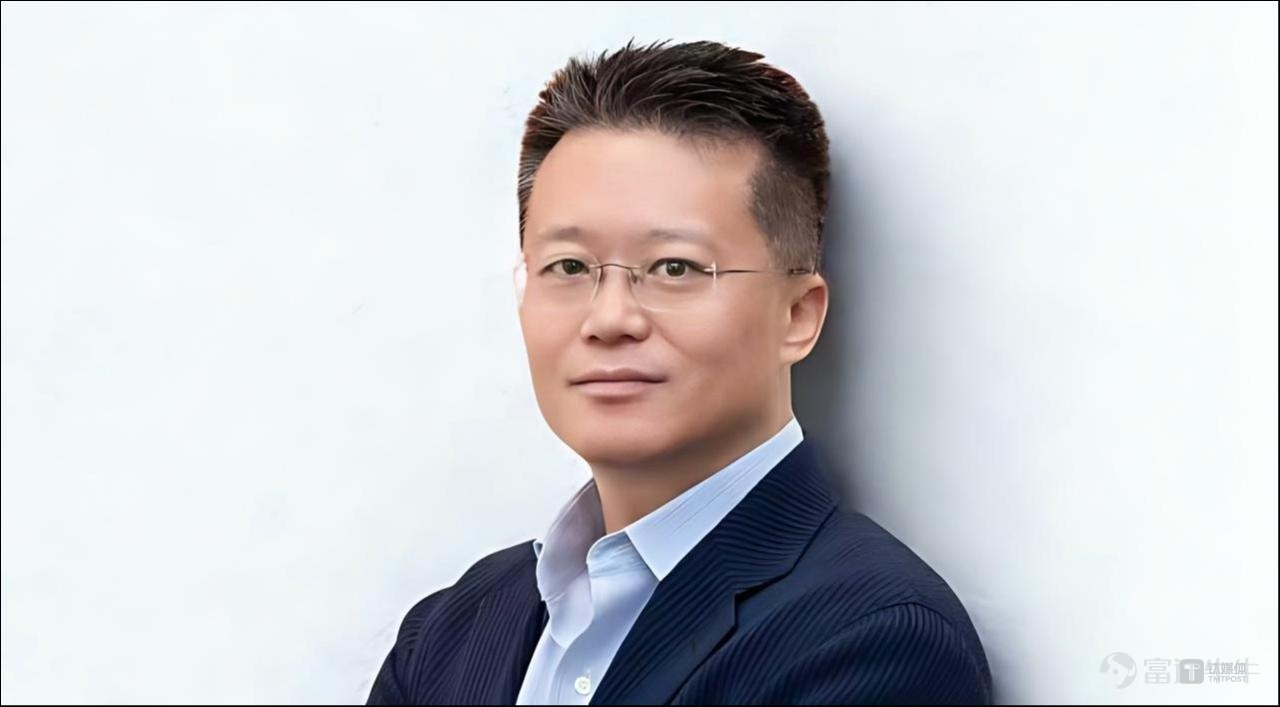

Exclusive interview with Zhou Wei: The key to winning the embodied intelligence battle between China and the US lies in scenario ecosystems and financial depth
The news about the latest round of financing for Dexterous Hand finally could not be contained.
This company, which became the 'most expensive' dexterous hand firm globally in February this year, is likely to complete a new round of financing at a valuation of 24 billion yuan.
The renewed breakthrough in its valuation has further split the recently formed '10 billion club' of embodied intelligence into a new subgroup – the '20 billion club.' Currently, this group includes only five players: Unitree Technology, Zhiyuan Robotics, Galaxy General, StarSea Chart, and Lingxin Qiaoshou. Notably, Lingxin Qiaoshou is the only 'component' company within this new group.
In the second half of 2025, when Creation Venture Capital joined as an A++ round investor in Lingxin Qiaoshou, the latter’s valuation was still 2.5 billion yuan. In just four months, its valuation increased more than eightfold.
‘Currently, most people discussing embodied intelligence are referring to humanoid robots that walk on two legs.’ Zhou Wei, Founding Managing Partner of Creation Venture Capital, defined ‘embodied’ with a broader boundary than the mainstream market from the very beginning. ‘But in reality, any robot that completes tasks using robotic arms should be considered embodied. Their lower body can be wheeled, tracked, or even have a fixed base. From this perspective, the market for embodied intelligence is vast.’
Creation Venture Capital's investment portfolio in robotics clearly reflects Zhou Wei’s preferences: besides dexterous hand companies like Lingxin Qiaoshou and HuiLing Technology, recent investments include embodied intelligence firms like Original Force Infinity, Shenpu Intelligence, and Ruoban Technology. Several years ago, Creation Venture Capital also invested in leading urban general AI robotics firm COWAROBOT, AI kitchen robot solution provider BusTech, intelligent warehouse robotics system provider Quicktron, and intra-site smart logistics solutions provider Multiway Robotics, among other ‘non-typical’ embodied enterprises.
‘As an interface for AI to interact with the world, embodied intelligence undoubtedly has significant room for development.’ In Zhou Wei’s framework, ‘embodied’ is not a definition based on form but rather a pragmatic one centered on functionality and scenarios. The core lies in whether it involves robotic arm operations, whether it can be applied to vertical scenarios, and whether there are real orders to validate its use.

This year marks the ninth year since Zhou Wei left KPCB China to establish Creation Venture Capital. In 2007, he transitioned from being an entrepreneur to becoming an investor, joining KPCB just as the golden age of dollar venture capital in China began. He witnessed the glory of Web 2.0, the decade of mobile internet, the deep waters of hard technology, and the explosive growth of AI – spanning four cycles, leaving behind remarkable achievements such as JD.com, CreditEase, Himalaya, Tantan, Minglue Technology, Shukun Technology, and COWAROBOT. He experienced the heyday of dollar funds in China and witnessed their gradual retreat, followed by the rise of RMB and state-owned capital to the forefront, and eventually the quiet return of foreign capital. He has remained on the front lines, and in 2025, his deal-making pace tripled compared to the previous year.
At 53, he still doesn’t feel comfortable being called a 'veteran investor.' But he has indeed sensed changes in the investment landscape. ‘Over the past 19 years, I’ve at least heard of or known the most outstanding companies and founders. Now, there are many projects I haven’t even heard of. Maybe this is the generation gap.’ He chuckled, ‘So we’re always bringing in young talent. In today’s venture capital environment, our judgment remains valid, and the experience accumulated over 19 years is still applicable. But the key is – can we spot opportunities in time?’
At the point when Lingxin Qiaoshou’s valuation surpassed the 20 billion mark, we secured an opportunity to speak with Zhou Wei about the embodied intelligence industry. In this conversation, Zhou Wei provided us with a macro perspective shaped by his experience across multiple cycles, offering an in-depth analysis of the significance of bubbles in the embodied intelligence industry, the challenges posed by the gap between the US and China in embodied intelligence, and the opportunities available for embodied startups.
▎Below is the full transcript of the conversation with Zhou Wei, slightly edited:
Venture Capitalist: How do you view the bubble in embodied intelligence?
Zhou Wei:There is definitely a bubble, and things have been a bit crazy recently. Whether it's AI or robotics, some companies that maintained a normal growth rate in valuation last year suddenly saw their valuations increase tenfold or even twentyfold this year.
But do you think the bubble has grown to an extremely unhealthy level? I don’t believe so.
Because these two sectors are massive in scale. Starting from e-commerce years ago, then content platforms, social media, mobile internet – people have always been talking about bubbles. My view has always been: as long as the total societal value generated by this sector exceeds the amount of investment poured in, it remains healthy.
The bubble does present many challenges for investment firms; companies become extremely expensive, and competition among investors intensifies. However, on the other hand, only with the presence of a bubble can enough capital flow into the industry, attracting more outstanding entrepreneurs and talent, which is mutually reinforcing.
Venture Capitalist: What impact will the influx of tens of billions of dollars into a few leading companies in the embodied AI sector over the course of several months have?
Zhou Wei:Such an enormous inflow of capital may very likely quickly lead to a situation where there is only one ultra-leading company left worldwide that can compete against a group of Chinese companies.
You can compare it to the development of the new energy vehicle industry. China’s new energy vehicle industry is unparalleled, and currently, Tesla is the only company globally that can go head-to-head with China. We predicted early on that based on America’s accumulated innovation capabilities in certain areas, it would still cultivate standout companies in many fields like Apple and Tesla. But from second place to twentieth, or even thirtieth place, it’s highly probable that they will all be Chinese companies. I think this scenario will likely repeat itself in the robotics field, and it’s even possible that the top spot will belong to China.
In the US, currently, only Musk’s Optimus seems promising, but his product hasn't been fully unveiled yet, so we cannot confirm how far along it is. On the other hand, the progress made during the Spring Festival in the domestic industry has already showcased to the world the heights reached by Chinese robotics engineering. Next, there will be hyper-rapid development across all directions, and previous concepts will quickly materialize into real commercial, industrial, and household scenarios, generating actual revenue.
We are also seeing now that the revenues of many robotics companies have indeed grown significantly. This includes Lingxinqiaoshou, which we invested in. At the time of investment, it did feel very expensive, but only when you see their orders do you realize they are no longer the concept written on a PowerPoint presentation.
Venture capitalist: Will there be any negative impacts?
Zhou Wei:From another perspective, there is indeed a concern. Our domestic market environment tends to turn advanced technology involving hardware into a mass commodity, and then price competition begins to intensify internally.
The embodied AI sector has raised substantial funds. If no one possesses unique technological barriers, it could lead to another round of unhealthy internal competition characterized by low profits or even losses.
Of course, this is something for the future, but regardless, I always believe that healthy internal competition can spur a lot of innovative technologies, whereas unhealthy internal competition focuses on cutting costs, increasing overtime, and selling at low prices. This is something that requires joint encouragement and guidance from the government, capital, and entrepreneurs.
Venture capitalist: You once mentioned a phenomenon of 'crypto-currency circle influence,' where during times of excessive market prosperity, entrepreneurs make money faster through other means than by focusing on solid business operations, leading them to neglect R&D and core business activities. Do you think this will happen in the domestic embodied intelligence industry?
Zhou Wei:The 'crypto-currency circle influence' was my observation in Silicon Valley, not in China.
I remember it was 2024, and in Silicon Valley, there was an obvious growing trend of just talking about concepts, while products were slow to truly address problems. This phenomenon was quite serious. Over the past three years in the U.S., so much funding has flowed into the AI sector, but aside from a few large leading companies, there are not many firms that have genuinely added value to the capital markets. So, what everyone worries about as a bubble, I think, might be bigger in the U.S.
In fact, from this perspective, it is also one of the signs that China is more promising: our entrepreneurs are indeed working diligently on solid ground.
We started laying out in the robotics industry domestically back in 2016. The first generation of embodied companies, such as Cowa Robotics, Quicktron Intelligence, and HuiLing Technology, are basically all in the queue for going public. Meanwhile, the new generation of embodied companies have been relying on AI as the core brain from day one, showing a deeper understanding of AI. Moreover, the relatively sluggish capital market over the past couple of years, to some extent, isn't necessarily a bad thing. The environment has pushed every company to not just tell stories but to generate actual commercial applications and revenue.
Venture capitalist: So when will China's embodied intelligence companies catch up with the valuation of their American counterparts?
Zhou Wei:I remember that Eric Schmidt, former CEO of Google and executive chairman of Alphabet, underwent a shift in his statements.
In an earlier CNN interview, he publicly stated that China's AI would surpass that of the US, but later, in December 2025 at the Harvard Kennedy School Forum, he expressed that compared to the US, China lacks the depth of financial markets, resulting in Chinese startups struggling to secure funding to keep up in the AI race. In fact, this point is precisely the key for Chinese embodied companies to catch up with the valuation of their American counterparts.
The US capital market offers smooth channels from early stages to IPOs, and the overall valuation levels of US stocks are already high. Therefore, a tech company of similar caliber in the US might achieve a valuation of $1 trillion and raise $200 billion. However, if this company were in the Chinese capital market, whether on the A-share or Hong Kong stock exchange, based on last year's valuation levels, it would likely only be valued at around 100 billion RMB, with financing correspondingly reduced to the hundred-billion RMB level. The amount of money you can raise is only 1/10 to 1/20 of what they can. If this situation persists long-term, how can you compete with them?
Everyone must understand this point: the capital market is extremely important, and its driving factors rank among the top two. As a former entrepreneur, I often emphasize this point to the founders of our portfolio companies. Without a well-functioning capital market and sufficient investment flowing into this industry, how can you attract the top talents?
However, shortly after Eric Schmidt made that speech, within about two to three months, the A-share and Hong Kong stock markets visibly improved, IPOs became increasingly smooth, and valuations of companies in the primary market kept rising. This once again demonstrates one point: although there are bubbles, we finally have access to enough funds to directly compete with American companies.

Moreover, it's still hard to say when valuations will catch up. Although the Hong Kong stock market has risen rapidly recently and was the best IPO market globally last year, if you consider the total liquidity across all stages of the capital market – from IPOs, secondary markets, primary markets, to angel investments – the total amount of capital in the US should be at least ten times that of China.
There is a core difference in the composition of GDP between China and the US: our GDP relies more on the support of the real economy, while a large portion of the US GDP is supported by its service industry, including financial services. Therefore, it can be imagined that a significant percentage of the US GDP can be used as financial assets to continuously support liquidity. So even if our GDP volumes are the same, the amount of money we can use to support the capital market will still be much less.
Venture capitalist: So how do we replenish the liquidity in our capital markets?
Zhou Wei:To solve this problem, we still need to attract more investment in China, especially foreign investment. Relying solely on the RMB or just our own funds for circulation is definitely not enough. Therefore, from this perspective, attracting more international capital—whether participating in Hong Kong stocks, A-shares, or private equity investments—is the top priority for the next phase.
I have actually seen some signs. Previously, we felt that the LPs of US dollar funds were always watching China from the sidelines because they were uncertain about how global situations would develop and also unsure about China’s policy direction. But recently, we have noticeably felt their growing interest in China. The heat in the Hong Kong stock market is an important indicator.
The private equity market, with its longer lock-up period, better represents foreign investors’ confidence in the Chinese market. If foreign capital—not specifically referring to US dollars, but including European, Middle Eastern, East Asian, and even American money—starts investing heavily again in China's venture capital (VC), particularly early-stage VC, that would be a significant sign showing that they are casting a long-term vote of confidence in China. This is also the foundation for Chinese companies to compete head-to-head with US valuations.
In the past, there have always been people criticizing and opposing foreign capital, asking why we should let foreign capital profit from Chinese companies? They fail to understand the difference between price and value. The value of the company hasn't changed—or has even increased—but the price may drop because they can no longer trade in a market where 'more wealthy individuals are willing to pay higher prices for stocks.'
Therefore, attracting foreign capital will remain a long-term proposition. Even the US is trying every means to attract foreign investment; why shouldn’t we?
Venture capitalist: You’ve previously expressed that the US has a stronger 'brain' (AI models) and China has a stronger 'body' (cerebellum/manufacturing). How can this gap be bridged?
Zhou Wei:There was a metaphor I often used before the era of large models. I think Chinese companies are like children of normal intelligence who may not be spoiled by their families from a young age, running errands such as buying soy sauce for the family at five or six years old, growing up through daily practice, what we call street smart. On the other hand, American companies are more like kids cultivated in a lab, with IQs potentially higher than average, somewhat genius-like, but they hardly get practical opportunities.
By analogy, the U.S. innovation model often waits until a product scores over 90 before putting it into practice. In contrast, Chinese companies frequently launch products when they reach just 60 points, then iterate three versions a day, continuously updating through small, rapid steps. This difference results in the U.S. possibly leading us in underlying technology, but we far surpass them in the accumulation of practical application data. Moreover, since China has more application scenarios, it naturally leads to richer data accumulation.
This factor is especially crucial in the embodied intelligence industry. No matter how superior the underlying model of a robot is, it still requires a vast amount of real-world data to be trained. Looking back at the history of industrial robots in the 1970s, why did the field ultimately converge to two German and two Japanese companies? Beyond national characteristics, the core reason lies in the fact that Japan and Germany had the largest industrial manufacturing scenarios during the era of big industrial manufacturing. Their robots were mutually honed and continuously improved through practical use in these scenarios, inadvertently becoming the best in the world.
Now, the largest industrial scenarios are in China; even the U.S. cannot bypass China to obtain industrial manufacturing scenarios of the same scale. This is the confidence behind our brainpower eventually catching up with the U.S.
Venture capitalist: Given that there are already multiple embodied intelligence companies valued at tens of billions, will you still invest in early-stage embodied companies?
Zhou Wei:If it's purely humanoid robots, I find it quite challenging. You'll notice that many leading embodied companies have been深耕 in the field long before anyone paid attention, and their enthusiasm is no less than that of startups. How do you surpass them? (laughs)
However, I believe there are still plenty of opportunities in many vertical fields. The success of a robot product depends on whether it can completely replace humans at workstations or fully take over a certain process. Achieving full automation where human intervention is entirely unnecessary remains extremely difficult and requires extensive training. It is almost impossible for general-purpose robots from leading embodied companies to quickly take over multiple scenarios in a short period.
This leaves room for startups. Whoever achieves relative versatility of robots in one scenario first will gain a competitive edge. Factory scenarios are relatively easier since assembly line processes are simpler. The harder part is applying this to everyday life or commercial scenarios, which means there are more opportunities for startup embodied companies in life and commercial applications.
In conclusion:
While the industry revels in the '20 billion club' celebration and everyone talks about how advantages in scenarios, data, and supply chains will ensure victory in the U.S.-China competition in embodied intelligence, Zhou Wei highlights a structural deficiency in fundamental conditions.
The overlooked underlying variable is the depth of financial markets. Without a deep pool of capital, all advantages in technology, data, and supply chain cannot be maximized into absolute momentum in global competition. This is no groundless worry but rather the clarity and conviction of a 'veteran VC' who has navigated four cycles.
Since 2025, the explosive growth and full recovery of liquidity in the A-share and Hong Kong stock markets have rapidly enhanced the depth of China's financial markets. This strong influx of capital is providing continuous support and confidence for China’s embodied intelligence to take a leading position on the global track.
Risk Disclaimer: The above content only represents the author's view. It does not represent any position or investment advice of Futu. Futu makes no representation or warranty.Read more
Comments
to post a comment