
Selling 26 million pairs of running shoes, Li Ning is 'changing engines'

By / Zero Degree
Source: Node Finance
Recently, Li Ning released its annual performance: revenue approached the 30 billion yuan mark, while net profit slightly decreased by 2.56% year-on-year. The day after the earnings release, Li Ning's Hong Kong-listed shares surged over 13%, adding 4.3 billion Hong Kong dollars to its market value in a single day.
How did a set of results showing 'revenue growth without profit growth' bring about a positive reaction in the capital markets?
After analyzing this financial report, Node Finance believes that if we shift our perspective away from the surface numbers, we can see that Li Ning is undergoing a structural adjustment: the basketball and sportswear businesses, which were once the pillars of growth, have declined, while the running category has topped for the first time with 31% of sales volume, becoming the largest category in the group; the badminton business has also completed a transition from apparel to equipment.
Breaking it down, Li Ning seems to be actively shedding its reliance on growth driven by 'trends' and 'traffic,' instead focusing on R&D investment, professional equipment, and Olympic cooperation to build higher technological barriers.
Whether this adjustment will work remains to be verified over time.
Why did the capital market react positively to this financial report?
To answer one question first: why did the capital markets still give positive signals despite 'increased revenue without increased profits'?
Node Finance believes there are several reasons behind this.
First, at the gross margin level, amidst an industry-wide price war and inventory reduction through discounting as the primary strategy in 2025, Li Ning maintained a relatively stable gross margin.
The financial report shows that in 2025, Li Ning's total revenue reached RMB 29.598 billion, representing a year-on-year increase of 3.2%. The gross profit was RMB 14.489 billion, with a gross margin of 49.0%.According to Node Finance, this figure indicates that the advancement of the professionalization strategy has, to some extent, translated into pricing power — the individual profit margins for professional running shoes or high-priced rackets are indeed higher than those for regular sportswear.
Second is the inventory structure.Financial data shows that by the end of 2025, Li Ning’s inventory turnover days were 64 days. In terms of channel inventory structure, inventory aged less than six months accounted for about 85% of total inventory, while inventory aged 7 to 12 months made up 9%, and inventory over 12 months accounted for only 6%.
Against the backdrop of widespread inventory pressure across the industry, this structure deserves attention. Li Ning attributes it to the digital transformation of its back-end supply chain, which enabled a more precise replenishment mechanism and thereby reduced reliance on large-scale discounts to clear inventory.

Third is operating cash flow. When evaluating Li Ning, one should not focus solely on profit (Profit), but also look at cash (Cash).
Net inflow of operating cash for the full year was RMB 4.852 billion. By the end of 2025, net cash (cash and cash equivalents plus term deposits) reached RMB 19.97 billion, an increase of RMB 1.8 billion from the same period last year. The slight decline in net profit was partly due to Li Ning's allocation of funds towards Olympic Committee partnerships, R&D center construction, and overseas channel expansion, all long-term strategic initiatives.In the view of Node Finance, as long as operating cash flow remains stable, this approach of 'sacrificing book profits for strategic positioning' still has sustainable room for maneuver.
From a financial perspective, the characteristics of Li Ning in 2025 can be summarized as follows: ample cash reserves, a relatively lean inventory structure, and a stable gross margin. This might be the main reason why investors responded positively after the earnings report.
From "selling hit products" to "selling technology," how much industry risk can specialization hedge against?
The Node Finance believes that the more noteworthy change in Li Ning is not about how much inventory was sold, but rather the logic shift under the single-brand strategy. Li Ning told The Node Finance that the company adheres to a single-brand, multi-category, and multi-channel strategy, with growth coming from category expansion and channel development.Professional categories cover running, basketball, comprehensive training, badminton, and table tennis, aiming to strengthen professional perception while expanding market share. "We believe there are opportunities in sports casual, with huge business potential, but there are still many areas where we need improvement. This is where we will enhance and refine. New categories such as outdoor and Glory Gold Label will become new growth drivers in the future."
Data shows that the revenue contribution of Li Ning's running business has risen to 31%. Regarding this change, Qian Wei, co-CEO of Li Ning Group, stated, "The group began consciously increasing its focus on the running category a few years ago, and the recent surge in the running category did not come from waiting for business scale, but from conscious top-down efforts to build it up." He also set a goal: "In the coming years, we hope Li Ning Running becomes the number one running brand in consumers' minds."
By 2025, Li Ning aims to sell 26 million pairs of professional running shoes, with the core series—Feidian, Chitu, and Super Light—contributing approximately 11 million pairs. Li Ning attributes this growth to its self-developed 'Super Boom' capsule technology and adopts a product line strategy covering all demographics—ranging from racing products for professional athletes to different options for intermediate runners and general consumers. The logic behind this strategy is to leverage top-tier professional endorsements to engage various consumer groups, bringing a broader range of runners into the brand ecosystem.
The change in endorsement strategy also reflects this direction.
On April 1st, Japanese badminton star Chiaki Shida officially announced her partnership with Li Ning. Over the past few years, Li Ning deeply collaborated with top-tier celebrities like Xiao Zhan, adopting a "national trend" approach to expand into the mass market. However, in the 2025 adjustments, the resource focus clearly shifted back to sports professionalism.

The most representative move was reuniting with the Chinese Olympic Committee after 16 years, becoming the official partner from 2025 to 2028. This means that in the coming years, Li Ning will use the "National Team" as its core endorsement, which differs from celebrity endorsements in terms of stability and professional attributes.
The Node Finance believes that the underlying logic is that trends are hard to predict, while technological improvements provide a more stable product experience. Once users develop a reliance on specific technical feedback, the cost of switching brands increases accordingly. This moat, built by technological barriers and reputation, is one of the foundational conditions enabling Li Ning to push forward structural adjustments during the most competitive periods.
In the badminton business, this logic is illustrated quite specifically: the proportion of equipment increased from 30% to 85%, with the L67N competitive racket line—the first made-in-China high-performance badminton racket—filling a domestic gap, selling 5.5 million rackets annually. This represents a strategic migration from relatively low-barrier apparel businesses to higher-technology professional equipment fields.
At the same time, Li Ning has taken a proactive "slowdown" approach to its basketball and fashion businesses. The core consideration behind this is to protect the pricing system. The current sports consumer market is in a competitive cycle of "volume increase but price drop," where it has become common practice for new products to be discounted upon release. For Li Ning, which adheres to a single-brand strategy, once it gets caught in a price war, it will be difficult to restore the brand premium space. Strengthening brand value through specialized strategies is one of Li Ning's choices to address this industry pressure.
After signing international stars, will Li Ning's overseas journey be smooth?
In recent years, domestic sportswear brands like Li Ning and Anta have been pushing for internationalization. However, compared with Nike and Adidas, they still lag significantly in terms of global brand recognition and channel depth.
The latter two have established long-term brand presence globally, and their supply chains and retail systems are quite mature. In this context, Li Ning has chosen a differentiated entry path: not directly competing with Nike and Adidas in basketball and running categories in Europe and the US markets, but instead using badminton as an entry point.

Badminton enjoys widespread popularity in Southeast Asian countries such as Indonesia, Malaysia, and Thailand, and also has a certain professional following in some Western European countries like Denmark and the UK. By sponsoring the Indonesian national team and signing Singaporean player Loh Kean Yew and Japanese athlete Shiho Shida, Li Ning is gradually building a reputation as a "professional equipment supplier" in these markets. The strategic logic is to first establish professional credibility through high-barrier equipment products, then extend backward into apparel and footwear.
Moreover, Li Ning’s collaboration with Japanese marathon runner Suguru Osako goes beyond traditional endorsements—Osako participates in the research, testing, and fine-tuning of running shoes. The intent of this model is to leverage the professional perspective of international athletes to translate product experience into feedback language that resonates more easily with global runners.
Node Finance believes that internationalization is a necessary path for Li Ning to expand from a local brand to the global market. Currently, Li Ning’s system-building in overseas markets is still in its early stages, and signing international stars and opening overseas flagship stores are still far from achieving real scale revenue.
It must be acknowledged that internationalization involves much more than just brand exposure; it requires establishing a complete logistics, tax, legal, and retail management system locally. The accumulation achieved by Nike and Adidas in these areas is the result of decades of construction. If Li Ning cannot transform from "brand visibility" to "scale revenue" within a reasonable timeframe, it will face dual pressures of intensifying domestic competition and slow progress in overseas breakthroughs.
Epilogue
By 2025, Li Ning's overall actions point towards a clear direction: actively shedding dependence on trendy growth sources and instead strengthening technological accumulation and professional recognition.
From inventory control and cash flow assurance on the financial side to category structure adjustments at the business level, Li Ning is undergoing a transformation attempt from "selling clothing" to "selling technology."
Whether this transformation can be realized depends on whether the technological barriers can continue to expand and whether the internationalization path can be converted from strategic narrative into actual revenue.
For Li Ning after 2026, the answer may become clearer.
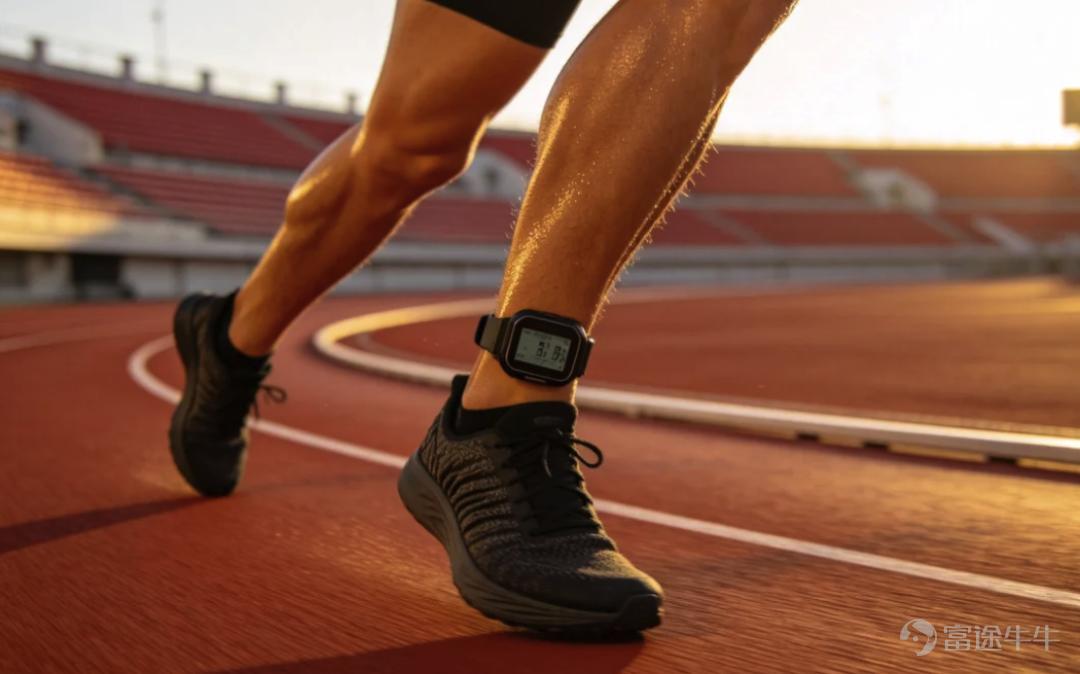
*The cover image is generated by AI.
Risk Disclaimer: The above content only represents the author's view. It does not represent any position or investment advice of Futu. Futu makes no representation or warranty.Read more
Comments
to post a comment