
From domestic competition to overseas: New tea beverage brands going global has shifted from an 'optional choice' to a 'must-answer question'
Sing Tao trainee reporter Zheng Shuyi reporting from Shenzhen
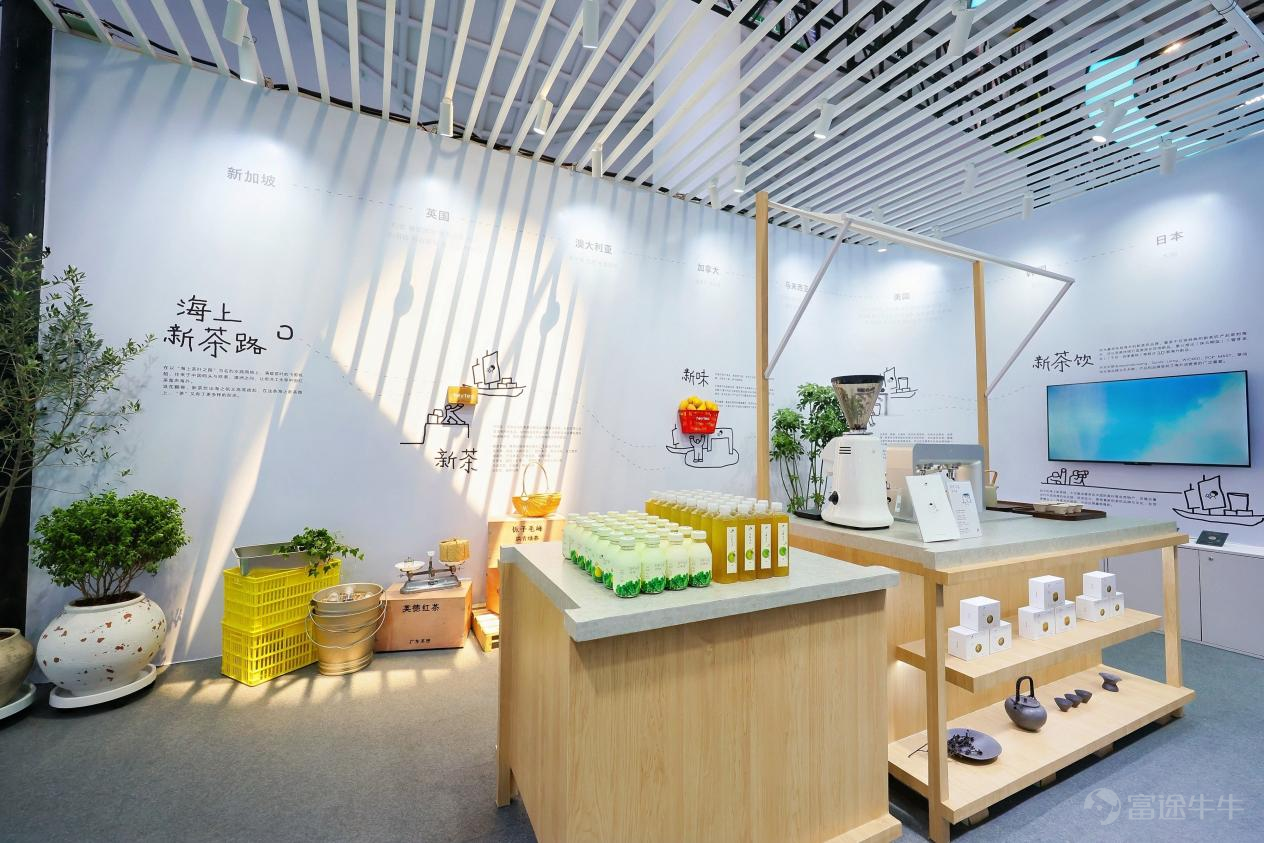
On April 13, the sixth China International Consumer Products Expo opened in Haikou, Hainan. Heytea participated for the fifth consecutive year as a key representative enterprise from Shenzhen, with this year’s exhibition theme being 'A New Maritime Tea Route'.
At the exhibition site, a tea and coffee integrated machine independently developed by Heytea is displayed in the center of the booth. This equipment has already been certified for use in nine overseas countries. Visitors can sample the limited-time pure tea product "Gardenia 1" from Heytea’s New York Times Square Lab store, which is extracted on-site by the integrated machine rather than traditionally brewed.

In 2018, Heytea took the lead in establishing a presence in Singapore, and by 2023 accelerated its globalization efforts comprehensively. Currently, its number of overseas stores has exceeded 100, spread across cities such as New York, Los Angeles, and London. Heytea revealed to The Sing Tao Daily that the company has cumulatively launched 13 varieties of Chinese tea bases overseas, with its self-developed smart equipment receiving certification in nine countries.
And in the overseas race of the 'new tea beverage' sector, Heytea is not the only player.
Going overseas has evolved from being an 'optional choice' to becoming a 'mandatory question.'
By 2026, overseas expansion has transitioned from exploratory positioning by tea beverage brands to becoming a strategic standard for leading enterprises.
At the China Chain Restaurant Summit in early April, the China Chain Store & Franchise Association released the 'Top 50 Brands in Overseas Expansion for Chinese Catering/New Tea Beverage in 2026.' As of the end of 2025, the total number of overseas operational stores for the 50 listed brands reached 6,801, with nine brands having more than 100 overseas outlets.
According to statistics from Tea Coffee Observer, as of the end of 2025, at least 38 tea beverage brands have opened 9,710 stores overseas. Among them, Mixue Ice City accounts for nearly half with 4,736 stores; Chagee has 345 stores; Chatime has 38 stores; and Nayuki has 20 stores.
Data from iiMedia Consulting also shows that the market size for China's new-style tea beverages is projected to reach 374.93 billion yuan in 2025, with year-on-year growth slowing to 5.7%. Domestically, the era of reckless expansion characterized by 'tens of thousands of stores' has ended, making 'going overseas' a mandatory step rather than an optional one.
"Currently, Southeast Asia remains the main battleground for Chinese catering brands going overseas, while the US, the world's largest catering market, still holds significant room for expansion." Li Yu, co-founder of MenuSifu, a North American catering SaaS company, stated at the summit.
New tea beverage brands have particularly stood out in this wave of overseas expansion. For instance, Mixue Ice City now operates over 4,400 stores overseas, while Chagee, Chatime, and Nayuki are also rapidly expanding their presence in international markets.
Industry insiders told The Sing Tao that compared to Chinese food brands, milk tea can more easily establish itself and penetrate the mainstream consumer base in the United States. 'Extremely high standardization, relatively easy-to-replicate supply chains, low cross-cultural barriers, and high acceptance among young people are natural advantages for tea beverage brands expanding overseas.'
New tea beverage brands going global create new growth poles
Although all are currently at the stage of overseas expansion, each brand has chosen a different path with its own focus.
By the end of 2025, Chagee's total number of overseas stores will reach 345, covering seven countries in Southeast Asia and North America. It will have opened four new markets: Indonesia, the United States, the Philippines, and Vietnam, and entered the U.S. market using a direct operation model.
Tebaidu, which started its globalization journey in South Korea, has 38 overseas stores covering multiple countries including South Korea, Singapore, the United States, and France.
Nayuki, which uses 'healthy tea beverages' as its entry point into overseas markets, has expanded its international store count to 20, covering cities such as New York, Cupertino, Singapore, and Bangkok.
Mixue Ice City has over 4,400 stores overseas, covering 13 countries. In 2026, it successively entered Mexico and Brazil, bringing its current coverage to 15 countries.
Heytea has prioritized entering core business districts of global cities like New York and London. As of now, Heytea has over 40 stores in the U.S., making it the fastest-growing and leading new tea beverage brand in the American market.
Heytea told The Sing Tao, 'Heytea’s overseas expansion is not simply about opening stores abroad or selling products internationally; rather, it aims to achieve a branded overseas presence for new tea beverages through differentiated product offerings and brand experiences.'
Heytea stated that the U.S. market, as a high ground of global consumption, boasts mature consumer culture, open consumption preferences, strong purchasing power, and significant influence on the global consumer market. In the U.S., Heytea's growth has been particularly prominent. When Silicon Valley engineers at Apple headquarters replace their Starbucks coffee with a cup of 'Mocha Coconut Blue,' or when financial elites in London carrying Heytea cups become a common street sight, these scenarios reflect revolutionary breakthroughs in the globalization of Chinese consumer brands.

▲Heytea's Times Square store in New York
However, under the massive wave of international expansion, the challenges faced by various brands are also evident.
After entering the scaled phase of overseas expansion, the real barrier lies in whether each brand can establish a stable supply chain system abroad to ensure consistent product quality. In this regard, Heytea claims to be one of the few new tea beverage brands that has built a systematic supply chain overseas, establishing warehousing centers in multiple international markets with core ingredients supplied uniformly from within the country; Mixue Ice City has set up localized warehousing systems and distribution networks in eight countries abroad; Chagee, leveraging its scale procurement from over 8,000 domestic stores, adopts a 'cross-border + local' strategy, sourcing fresh milk and fruits locally while relying on cross-border transportation for packaging materials, frozen items, and core raw materials.

Lai Yang, a member of the Expert Committee of the China General Chamber of Commerce, analyzed for The Sing Tao that the consumption of new tea beverages is showing growth globally. Domestic tea brands have rapidly improved their overall competitiveness in fierce market competition and now possess strong competitive power in the international market. 'The entry threshold for the Southeast Asian market is relatively low, while the market potential in Europe and America is larger, making both viable options. However, there are significant differences in consumer habits, regulatory environments, and competitive landscapes across different markets, requiring brands to formulate targeted strategies.'
Risk Disclaimer: The above content only represents the author's view. It does not represent any position or investment advice of Futu. Futu makes no representation or warranty.Read more

Comments
to post a comment
2