
Dialogue with Core Foundation and Z Protocol: In the Age of AI Agents, Could Privacy Finance Be the Next Track?

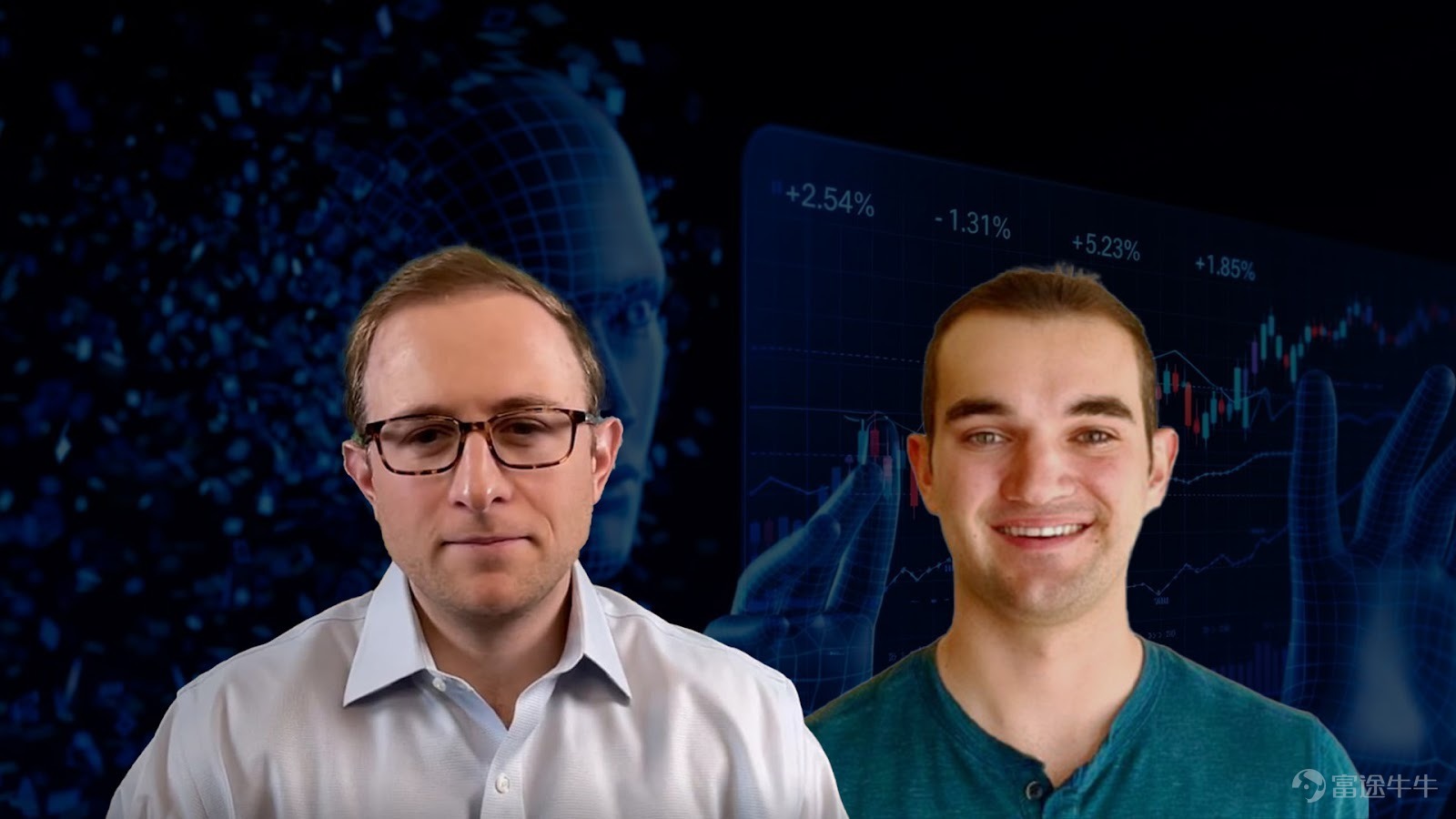
This episode of the Wu Talk podcast features a conversation with Rich Rines, an early contributor to Core Foundation, and Kieran Dennis, co-founder of Z Protocol. The main topics include the strongest current demands of Bitcoin holders, the necessity of integrating privacy with AI agents, and how public chain projects can transition from 'token-driven narratives' to 'revenue and value reflux' to build sustainable business models.
Rich highlighted Core's three growth pillars as a 'Bitcoin Power Grid': Bitcoin yield and asset management protocols, new crypto banks for the masses, and reusable Satoshi Plus consensus extending to more affiliated chains. Kieran elaborated on why Z Protocol chose to enter the 'privacy + AI' track, emphasizing that AI agents will become primary actors on-chain, and privacy financial infrastructure will be essential in high-frequency trading, strategy execution, and model interaction scenarios. They also discussed the compatibility of the Zcash tech stack with the Satoshi Plus consensus, the advantages of vertically integrated DeFi and AI-native applications, and believed that future on-chain value capture will increasingly rely on buybacks, protocol revenue, and closed-loop operations.
From Core to Z Protocol: The Evolution of Bitcoin Yield Demand and Privacy AI Infrastructure
Ehan: Welcome to the Wu Talk podcast. Could you please start by giving us a brief introduction of yourselves?
Rich: I entered the Bitcoin industry in 2013, attracted by this non-sovereign, decentralized, and censorship-resistant currency. Later, I joined Coinbase, where I worked for four years on funds transfer-related engineering and witnessed the company's transition from private to public. At that time, the industry leaned more towards Ethereum, but I've always focused on Bitcoin, continuously thinking about issues like Bitcoin scaling and yields, which ultimately led to the creation of Core. It has now been operating for three and a half years.
Kieran: My entry into the Bitcoin space was driven by my belief in ideals like freedom, technology, free currency, and open markets, which is why I became one of the early initial contributors to the Core Foundation. After four years at Core, I started focusing on the intersection of 'privacy + AI' within the crypto industry. As AI Agents gradually become significant participants on-chain, I saw an opportunity in this crossover space, leading me to found Z Protocol with the aim of enabling AI Agents to act, think, learn, and build autonomously in an end-to-end private manner.
This project builds on my experience at Core and has received support from many friends within the Core team. It employs a security mechanism similar to Satoshi Plus but is anchored to Zcash (ZEC) rather than Bitcoin. My goal is to make it the first Satoshi Plus affiliate network, expanding market potential while serving as a purer expression of the crypto AI narrative.
Ehan: Rich, you once described Core as the 'Bitcoin power grid,' emphasizing its role in supporting revenue-generating Bitcoin products. In your view, what is the most pressing demand among Bitcoin holders today?
Rich: At present, Bitcoin holders have two main core needs.
The first is yield. Users want to use their Bitcoin holdings to generate returns and select strategies based on their risk preferences, such as low-risk dual staking or higher-yield but riskier alternatives.
The second is leverage. Many people want to borrow stablecoins or other assets using Bitcoin as collateral, a need that falls under asset management protocols. Since the project's inception, demand in this area has grown significantly, continuing to expand both on the retail and institutional sides.
Beyond that, we see another important trend: new banking services. Users want to treat Bitcoin like a savings account and also be able to borrow against it for direct spending. In the future, mainstream crypto applications will likely take a form closer to Web2 products, with underlying capabilities for payments, yields, and lending becoming key distribution methods.
Ehan: Kieran, what motivated you to explore Z Protocol around privacy and AI?
Kieran: The core reason remains rooted in cypherpunk ideals, but the more direct driving force was recognizing the urgent need in the intersection of 'privacy + AI.' As AI Agents become increasingly important on-chain participants, their transaction frequency and scale of on-chain activity will far exceed that of humans. If they continue operating on fully transparent blockchains, risks related to strategy, behavior, and identity association will be further amplified.
Therefore, I believe simply adding AI functionalities to existing applications isn't enough; we need to start from the ground up and build specialized infrastructure for AI Agents. Z Protocol aims to provide a blockchain framework and toolset tailored for Agents, allowing them not only to make recommendations but also to independently execute operations on behalf of users.
From the user's perspective, the value lies in a stronger sense of security: privacy is protected, operational complexity is reduced, and many originally tedious and error-prone on-chain processes can be handed over to the Agent to complete.
Privacy Financial Needs in the AI Agent Era and Satoshi Plus's Cross-Ecosystem Expansion
Ehan: One of your core arguments is that AI Agents require private financial infrastructure. Why does privacy become such a critical need in an Agent-driven economy?
Kieran: The most fundamental reason is scale. Human users typically interact with the blockchain only a dozen times a day, but if Agents are truly operating continuously on-chain, interaction frequency could reach into the thousands. In the future, if more people interact with the blockchain through Agents while the underlying system remains fully transparent, the amount of exposed data will increase significantly, making privacy even more crucial.
In fact, human activity on transparent public chains has already introduced many real-world risks. Information such as transaction times and wallet balances, once identified and linked to real identities, could lead to security issues in the real world. With large-scale participation by AI Agents, these risks will only be further amplified. Therefore, if we want Agents to truly act on behalf of humans, privacy must be built-in from the ground up, not just as an add-on feature.
Moreover, a bigger opportunity lies in embedding privacy into the model itself. Whether asking questions to the model, receiving answers, or having it execute operations, end-to-end privacy protection throughout the entire process allows users to truly control their data.
Ehan: This is the first time Satoshi Plus has been applied outside the Bitcoin ecosystem. What do you think this means for the model itself? How will it evolve in the future?
Rich: From the beginning, we believed that Satoshi Plus is not only suitable for the Bitcoin ecosystem. The characteristic of this tripartite consensus mechanism is its versatility; besides native token staking, external forces can also participate in the security mechanism. Z represents its first deployment outside the Bitcoin ecosystem, and we believe more similar projects will emerge in the future.
More importantly, this not only expands the application boundaries of Satoshi Plus but also directly benefits CORE token holders. As with Z, all Satoshi Plus affiliate chains have revenue-sharing mechanisms, with part of the revenue used to repurchase CORE tokens.
Therefore, we see Z as an important starting point and look forward to more affiliate chains developing along this path in the future.
Ehan: Do you think Satoshi Plus could become a reusable security layer across multiple ecosystems?
Rich: I believe it is moving in this direction. Through this chain affiliation model, developers can directly adopt this underlying framework that has been battle-tested. It has already processed over 500 million transactions in real-world environments, operated stably for three and a half years, and maintained zero downtime. Such an underlying capability is very powerful, allowing people to modify, adjust, and directly launch their own chains based on it.
We believe this model surpasses those so-called shared security solutions. Ecosystems like Cosmos have tried to promote similar models, but overall, the value capture of such models tends to be more dispersed and hasn't formed a sufficiently enduring mechanism. In comparison, we are more optimistic about this fork-based model because it allows economic inflows to return directly to Core while granting chains and their developers enough freedom to build truly outstanding products.
How Z connects to Core and expands the momentum network narrative with privacy and integrated DeFi
Ehan: What does Z actually mean for Core? And how does it align with Core's positioning as a 'Bitcoin-powered network'?
Rich: We just discussed the asset management protocol and new banking services. The third pillar of the revenue roadmap, which further materializes the vision of the 'Bitcoin-powered network,' is these affiliated chains.
These affiliated chains each have their independent economic systems and demand for their native tokens. Part of this native token demand—whether from network activity, gas fees, or other uses—will flow back to repurchase Core tokens. In this way, Core is gradually becoming a value index covering asset management protocols, new banking, and more emerging chains.
I think this also reflects the further evolution of the 'momentum network' narrative. It is no longer just about powering Bitcoin applications but providing infrastructure support for crypto applications and even AI applications at a broader level. I believe this places us in a very unique and important position within the current and future ecosystem.
Ehan: Z is currently built on Zcash's privacy and staking system, using ZEC as both the gas asset and staking asset. From the perspective of avoiding information leakage, why does it serve as a suitable foundation for this system?
Kieran: I've always been optimistic about Zcash because it aligns highly with our requirements for privacy in both philosophy and technology. It has long focused on privacy issues and carried forward the cypherpunk spirit.
Technically, Zcash is also based on UTXO and PoW like Bitcoin, making it highly compatible with the Satoshi Plus architecture. Zcash miners can participate in Z Protocol's security mechanism at a low cost, and ZEC holders can also engage in staking through self-custody to earn rewards without introducing new trust assumptions.
Additionally, although Z is not Zcash’s Layer 2, it reuses many of Zcash’s cryptographic primitives, particularly evident in its privacy pool design. After users bridge their assets to Z, they can hold and transfer assets within an encrypted privacy pool and access various applications via stealth addresses, maintaining privacy and avoiding identity association throughout the process. This also forms the privacy foundation for Z’s AI Agent-focused experience.
Ehan: Upon its launch, Z will also roll out a vertically integrated DeFi ecosystem covering trading, lending, stablecoins, and yield scenarios. Why did you choose this approach instead of relying on external protocols?
Kieran: There are several compelling reasons for adopting vertical integration.
First, vertical integration is better suited for AI Agents. Only by unifying the design of key applications and achieving deep synergy can Agents seamlessly share context, achieve interoperability across different protocols, and reduce hallucinations, execution errors, and efficiency losses.
Second, this approach also brings stronger revenue potential. Instead of relying solely on L1 gas fees, we allow applications such as trading, lending, stablecoins, and yield generation to jointly create value, with part of that value flowing back to Core according to protocol arrangements.
Thus, vertical integration serves both to optimize the Agent experience and to establish a clearer path for value capture.
How value flows back to Core and how Z moves toward a chain-based Agent economy
Ehan: This time, you’ve emphasized establishing a revenue model from day one and ensuring value flows back to stakeholders. Why is this especially important in the current cycle?
Rich: Over the past 18 months, a clear shift has been that the narrative of relying solely on gas fees and on-chain usage to support L1 value accumulation has become increasingly unsustainable because this model results in significant value leakage.
Therefore, it is now more important to establish a clear revenue model from the start. Vertically integrating key protocols on-chain like Z and channeling more of the generated cash flow back to L1 token holders is a new approach. This not only enhances the efficiency of value recirculation but also reduces the value dilution caused by applications and protocols issuing their own tokens.
Of course, this model is still in its early stages of exploration, and the traditional model has not been without success stories. However, I believe that an increasing number of projects will shift towards this path that emphasizes real revenue and value recirculation because it ultimately benefits token holders more.
Ehan: How do you strike a balance between early adoption and building a sustainable business model?
Rich: I don't think the two are in conflict. Over the past few cycles, many public chains actually lacked a real business model and mainly relied on selling tokens, but the market has become increasingly aware that this approach is not sustainable.
This indicates that the industry is maturing. After experimenting with various models, people have started to place more emphasis on genuine business capabilities and hope that value can be clearly channeled back to the token itself. Therefore, any new chain should have a clear business model and verifiable short-term revenue streams from day one, rather than just focusing on long-term narratives.
Moreover, in traditional startups, most products fail, a reality that was not fully accepted in the crypto industry in the past. However, the market is now returning to this reality: weak projects will be eliminated, while projects with true business capabilities will stand out. I believe this is a healthy change that will lead to greater long-term outcomes.
Ehan: From Core's overall perspective, how will the value generated by this expansion flow back?
Rich: There are three main pathways.
The first is asset management protocols. A portion of the revenue generated by these protocols will be used to repurchase CORE tokens. The second is new banking services, including payment fees, lending income, etc., part of which will also flow back to CORE holders. Lastly, the Satoshi Plus affiliate chain, where a portion of its on-chain economic activity will similarly recirculate back to Core.
I believe this approach essentially represents an 'indexing' strategy: driving value growth through multiple directions such as asset management, new banking, and affiliate chains, while leveraging the power of more teams and ecosystems to amplify Core's overall value.
Ehan: Kieran, Z has introduced mechanisms such as Shielded Pool, Stealth Address, and Private Inference. In your opinion, which one will be the most important in real-world adoption?
Kieran: They are all important and build upon each other in a layered manner. The overall goal is to allow AI Agents to perform on-chain operations for users more securely and autonomously.
Among these, the Shielded Pool is the foundation. Users can bridge their assets into it and store and transfer them in an encrypted and private way, which will be the first step for many people entering Z.
The Stealth Address extends privacy capabilities to the application layer, allowing users to participate in DeFi activities while maintaining privacy and retaining verifiability.
Going further, Private Inference represents a deeper capability: enabling AI models to run privately natively on-chain and be directly invoked by smart contracts. This way, Agents can not only execute actions but also make decisions based on different models, continuously learn, and optimize through feedback.
Our long-term vision is that Z provides primitives, tools, and infrastructure, allowing Agents to operate truly autonomously, eventually developing a native economy and application ecosystem for Agents. This is the endgame in our view.
Core and Z's Next Phase of Validation: The Feasibility of Aggregating Value Structures and Privacy AI Agent Platforms
Ehan: If you had to summarize in one sentence, what exactly do Core and Z want to jointly validate in the next phase?
Rich: For Core, we want to validate whether the 'exponential' narrative holds, meaning whether we can aggregate different products and services to collectively create value for token holders across multiple sectors. For Z, it’s about validating a more complete form of combining encryption with AI—integrating privacy, Agent tools, and on-chain reasoning. There’s strong synergy between the two, and Z will serve as an excellent example.
Ehan: Is there anything else you’d like to share with our audience?
Rich: Although the bear market is full of challenges, it remains a phase suitable for building. What is more important now is to return to fundamentals and focus on protocols that have buyback mechanisms, real revenue sources, and are doing difficult but valuable things. At the same time, everyone is also welcome to check out some of the new yield products Core launched in the second quarter.
Kieran: From Z's perspective, the most important thing is to give users a sense of security. While on-chain operations are powerful, the lack of privacy, complex interfaces, and human errors can all cause stress. Z aims to let users simply provide the Agent with goals and tools, leaving the execution to the Agent. This way, users can utilize on-chain capabilities more easily, while the Agent will continuously learn, build, and accumulate value in the process.
Risk Disclaimer: The above content only represents the author's view. It does not represent any position or investment advice of Futu. Futu makes no representation or warranty.Read more
Comments
to post a comment