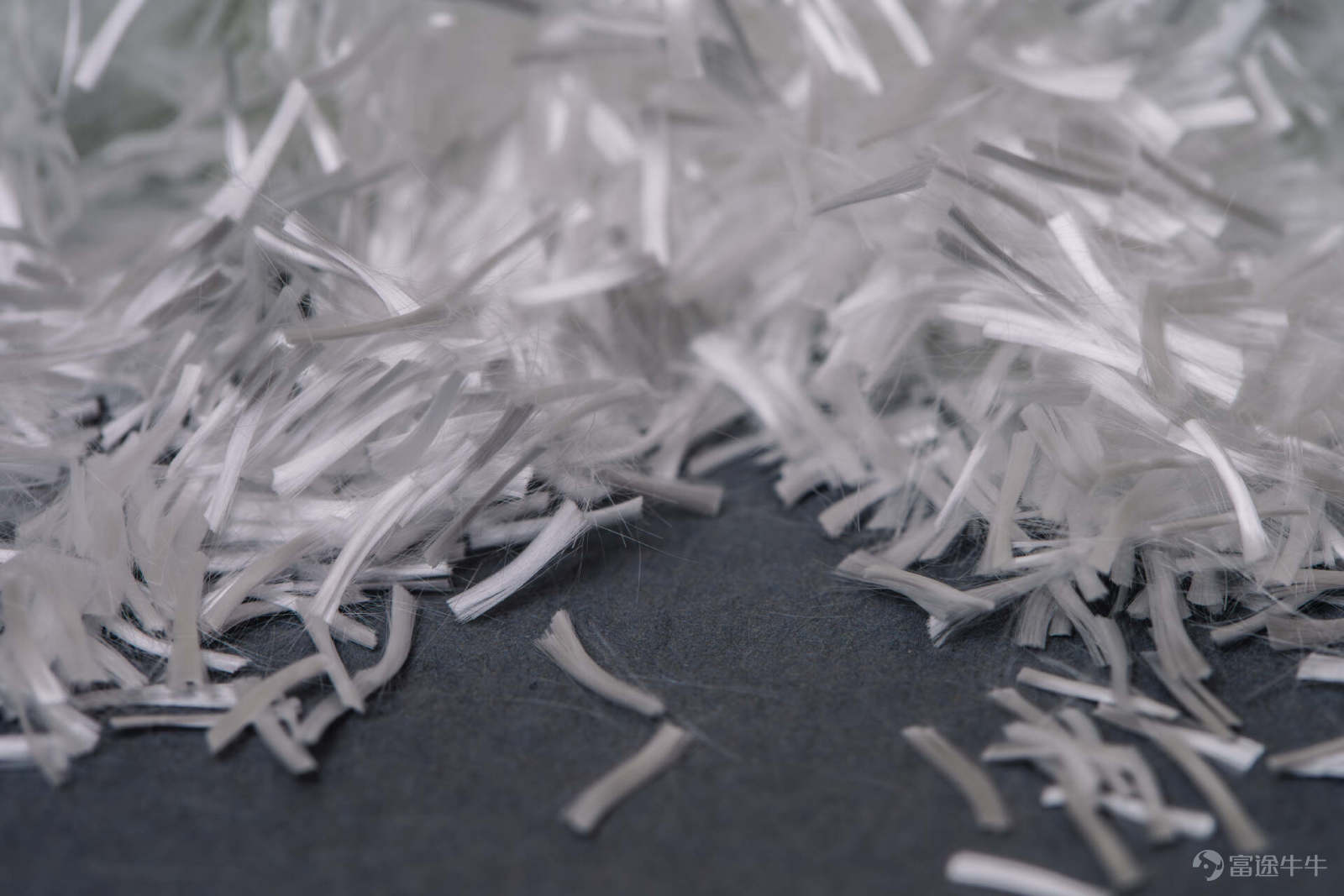

Fiberglass concept stocks collectively surged

On April 13, fiberglass concept stocks collectively surged, with Zhongcai Technology, China Jushi, and Honghe Technology all hitting the daily price limit. Other companies such as International Composite Materials, Changhai Co., Ltd., and Shandong Fiberglass also saw significant gains.
Glass fiber manufacturers will soon trigger a new wave of price increases.
According to Cailian News, if the trend continues throughout the year, prices are expected to double by the end of the year.
The continuous surge in global AI demand has triggered a chain reaction, leading to a surprising shortage of high-end glass fiber. This special electronic glass fiber cloth is one of the key materials essential for manufacturing AI chips and PCBs, directly impacting the speed and stability of signal transmission.
In order to secure supply, NVIDIA CEO Jensen Huang recently flew to Japan to visit Nitto Boseki, the global leader. Apple also followed suit, taking unconventional measures by sending additional staff to be stationed in Japan to negotiate with Nitto Boseki.
In addition, Qualcomm has been forced to break the traditional supply chain hierarchy, actively seeking and verifying alternative resources beyond Nitto Boseki to ensure the security of its AI chip and smartphone chip substrate material supplies. Notably, tech giants such as Google, Amazon, and Microsoft have also become embroiled in this competition.
According to a research report by Changjiang Securities, this round of price adjustments has been driven by both rising costs and climbing demand. On the cost side, the price of electronic yarn G75 has risen to 11,500-12,700 yuan per ton, marking an increase of about 800 yuan per ton compared to the previous period. Inventory levels of electronic cloth at both electronic fabric manufacturers and downstream copper-clad laminate factories have dropped to historical lows.
Entering 2026, the new round of price hikes has spread from high-end to regular products, with the pricing cycle shortening from months to weeks, demonstrating the intensity of supply-demand tensions.
Against the backdrop of rising prices, the cyclical recovery of the fiberglass industry is underway.
In the first three quarters of 2025, the glass fiber (SW) industry achieved revenue of 42.798 billion yuan, a year-on-year increase of 24.25%, with net profit attributable to shareholders reaching 4.6 billion yuan, a staggering 95% year-on-year growth.
According to Honghe Technology's recently disclosed 2025 annual report, the company achieved revenue of approximately 1.171 billion yuan, representing a year-on-year increase of 40.31%. Net profit attributable to shareholders of the listed company amounted to approximately 202 million yuan, marking a year-on-year increase of 785.55%.
This indicates that the fiberglass sector has made a strong comeback.
As an important industrial raw material, fiberglass has capital-intensive characteristics and exhibits distinct cyclical price behavior.
The previous cycle peak for fiberglass electronic cloth occurred in 2021, reaching a high of 8.75 yuan per meter. Following this, the industry entered a downward cycle, with prices dropping to 3.3 yuan per meter in 2024, marking a decline of over 60%.
The core reason for the decline was an imbalance in supply and demand, particularly due to continuous capacity releases on the supply side. This stemmed from a large-scale expansion wave driven by high profits during the previous high-growth cycle.
Statistics show that between 2021 and 2022 alone, nearly 300,000 tons of new electronic cloth production capacity were added domestically. It is worth noting that once a fiberglass kiln is ignited, it needs to operate continuously for several years, making shutdown costs extremely high. After the concentrated release of new capacity, market supply surged but could not be easily adjusted through production halts, while demand growth fell short of expectations, plunging the industry into widespread losses.
It wasn't until 2025 that emerging demands such as AI computing power, wind power, and new energy vehicles gradually took off, allowing fiberglass prices to stabilize, stop falling, and recover.
According to Trend Force, the global AI server shipment growth rate will be 24% in 2025, with a market value growth rate of approximately 48%. It is expected that these figures will grow by 20% and 30% respectively in 2026. The electronic cloth usage for a single AI server is three to five times that of a traditional server.
Huatai Securities estimates that the low-dielectric electronic cloth market demand driven by computing power GPUs will be approximately 68.57 million meters in 2025, increasing to 140 million meters in 2026.
In addition to AI computing power, the global wind power market is also growing rapidly, providing strong support for wind power yarn demand.
Global new wind power installations reached a record high of 117 GW in 2024. According to GWEC forecasts, new installations will reach 138 GW and 140 GW in 2025 and 2026, respectively, with a compound annual growth rate of nearly 9% from 2024 to 2030. Based on the estimate that each gigawatt of installed capacity requires 10,000 tons of fiberglass, the annual demand for wind power yarn will be about 1.4 million tons in the coming years, accounting for more than 15% of domestic total fiberglass production.
Moreover, the global new energy vehicle industry continues to expand, with penetration rates constantly rising, supporting the demand for thermoplastic yarns. Notably, every new energy vehicle carries a heavy battery pack, so reducing weight directly affects range and performance. Therefore, material lightweighting has become one of the key considerations for major automakers.
Thermoplastic composite materials are one of the key technological pathways to achieving lightweighting, offering significant market potential for thermoplastic yarns. Changhai Co., Ltd. predicts that by 2030, the fiberglass usage per new energy vehicle will be around 20 kg, corresponding to a thermoplastic yarn demand of 760,000 tons.
As fiberglass demand rises, supply is quietly tightening.
At the end of 2024, the China Fiberglass Industry Association issued an industry self-discipline convention. In July of the following year, after the top leadership set the tone of 'anti-internal competition,' the association, together with nine leading companies such as China Jushi and Zhongcai Technology, jointly proposed to firmly resist vicious competition below cost and blind expansion.
As a result, in 2025, China's fiberglass industry put the brakes on expansion, with annual capacity at 8.54 million tons, remaining flat year-on-year, compared to a near 10% compound annual growth rate over the previous three years.
In summary, under the emergence of tight supply-demand balance and industrial policy guidance, leading companies in the industry have coordinated multiple price increase initiatives to improve overall profitability.
At that time, the leading fiberglass companies indeed had the confidence and foundation to raise prices, and an upward turning point in the industry cycle also emerged.
China's fiberglass industry chain is not particularly complex. The upstream mainly consists of mineral raw materials (primarily pyrophyllite), chemical raw materials, and energy. The midstream involves fiberglass manufacturing and product production, which is the segment with the highest concentration of technology, capital, and scale effects, as well as the key determinant of product differentiation and added value.
Based on alkali metal oxide content, fiberglass is divided into two types: E-glass (alkali-free) and C-glass (medium-alkali), with the former accounting for 90%. In terms of product forms, it is classified into roving and fine yarn. Roving is used in wind turbine blades, pipelines, profiles, etc., while fine yarn is further split into electronic yarn and industrial fine yarn. Downstream applications cover five major sectors: infrastructure and building materials, electronics and electricals, transportation, industrial equipment, and wind power.
With the continuous expansion of application demands, the global fiberglass market has been growing. According to HengCe data, the global fiberglass market size is expected to reach $12.6 billion by 2025 and grow to $17.7 billion by 2032, with a compound annual growth rate of nearly 5% from 2026 to 2032.
In the global market, Chinese companies account for over 70% of production capacity. Among them, China Jushi alone holds a quarter of the global market share, making it the largest global leader. In the domestic market, the top three players are China Jushi, Zhongcai Technology, and International Composite Materials, with market shares of 35%, 17%, and 14%, respectively.
Among these three leaders, China Jushi has the most significant cost advantage. In 2024, China Jushi’s unit cost was 3,872 yuan per ton, while Zhongcai Technology and International Composite Materials were 4,686 yuan per ton and 5,718 yuan per ton, respectively, showing a considerable gap.
The cost advantage allows China Jushi to profit even during industry downturns, while most competitors struggle to avoid losses. For instance, in 2024, China Jushi reported a net profit attributable to shareholders of 2.45 billion yuan, whereas International Composite Materials suffered a loss of 350 million yuan.
So, where does China Jushi’s globally lowest cost come from?
One aspect is the ultra-large scale. For the fiberglass sector, larger production capacity means stronger bargaining power in raw material and energy procurement, thereby reducing manufacturing costs. Notably, the company owns its own mine, and its supply of pyrophyllite is largely self-sufficient.
On the other hand, it's about technological breakthroughs. Large-scale kilns are one of the key factors in reducing costs. Kiln drawing technology is the core technical barrier in the fiberglass industry. It is not only production equipment but also an engineering feat integrating capital, craftsmanship, control, and economies of scale.
As early as 1993, after China Giant Stone cooperated with a central enterprise to introduce alkali-free fiberglass kiln technology, it embarked on a path of self-research and development, increasing the single-line scale from ten thousand tons to an average of over 120,000 tons today.
Meanwhile, Zhongcai Technology and International Composite Materials have single-kiln scales of only 79,000 tons and 76,000 tons respectively. It should be noted that the larger the kiln scale, the higher the energy utilization efficiency, the lower the unit energy consumption, and naturally, the more competitive the cost.
Overall, this round of cyclical reversal in the fiberglass industry is driven by multiple factors including the AI-triggered shortage of electronic cloth, support from emerging demands such as wind power and new energy vehicles, and slower capacity deployment guided by supply-side policies. Amidst the convergence of these factors, leading enterprises are seizing the initiative in this recovery thanks to their advantages in scale and technology.
Who will have the last laugh? The answer may already be written on the cost curve.$Sinoma Science & Technology (002080.SZ)$$China Jushi Co., Ltd (600176.SH)$$Grace Fabric Technology (603256.SH)$
By Tai Luo
Disclaimer
This article contains content related to listed companies, reflecting the author's personal analysis and judgment based on information disclosed by these companies in accordance with their legal obligations (including but not limited to interim announcements, annual reports, and official interactive platforms). The information or opinions presented in this article do not constitute any form of investment or other business advice. Market Value Observer assumes no responsibility for any actions taken as a result of adopting the content of this article.
——END——
Risk Disclaimer: The above content only represents the author's view. It does not represent any position or investment advice of Futu. Futu makes no representation or warranty.Read more
Comments
to post a comment
2