
Manycore IPO subscription has exceeded 250 times! Here's how to make a big move in the spatial intelligence ecosystem
The first stock of Hangzhou's 'Six Little Dragons' has arrived!
On April 9, Manycore (00068.HK), the global spatial intelligence unicorn, officially launched its initial public offering and plans to list on the Hong Kong Stock Exchange on April 17.
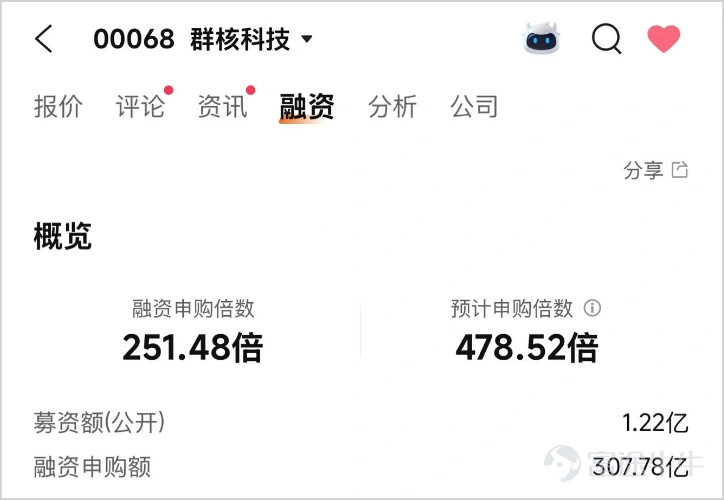
As one of the most prominent tech companies in recent years, the market response to the offering has been extremely enthusiastic. Brokerage data shows that the current oversubscription multiple has reached 250 times. According to the offering details, Manycore is issuing approximately 161 million shares globally at a maximum price of 7.62 Hong Kong dollars per share, with an expected fundraising of up to 1.23 billion Hong Kong dollars. $MANYCORE TECH (00068.HK)$
Notably, the company has brought in a diversified group of cornerstone investors including Taikang Life Insurance, Sunshine Life Insurance, GF Fund Management, Mirae Asset Securities, Rime Capital, and Hesai Group, who collectively subscribed for 455 million Hong Kong dollars. These institutional investors cover insurance funds, mutual funds, foreign capital, and industrial capital. The significant entry of long-term capital not only demonstrates recognition of Manycore’s core competitiveness but also represents a vote of confidence in the spatial intelligence sector.
In fact, as AI transitions from the digital plane to the physical world, spatial intelligence is becoming one of the most predictable growth areas. On February 19, World Labs, founded by “AI Godmother” Fei-Fei Li, secured 1 billion US dollars in new funding, igniting the tech innovation community. This company, established just two years ago and not yet profitable, now boasts a valuation of 35 billion Chinese yuan. Major computing power giants like NVIDIA and AMD have rushed to enter the space, betting on the future.
The explosive rise of Hesai Group and the soaring valuation of World Labs are, in fact, signs that capital has already started making forward-looking investments in the spatial intelligence sector.
[What is Spatial Intelligence?]
Here’s a harsh truth: AI can beat world chess champions and generate dazzling poetry, but why is it so difficult for robots to serve tea or pour water?
Because AI still can't comprehend the 'physical world.' Those everyday human behaviors we take for granted remain beyond AI's understanding, leaving it lost when faced with real-world scenarios.
According to Fei-Fei Li’s definition,so-called 'spatial intelligence' refers to an integrated cognitive ability that enables AI to understand and adapt to the three-dimensional physical world, bridging perception, imagination, and action.
Through generative, multi-modal, and interactive world models, it allows AI to advance from merely 'understanding the world' to 'operating within the world,' thus solving spatial cognition challenges in real-world scenarios.
This is not just a simple technological upgrade; it forms the foundation for bringing AI into the real world. Jensen Huang, CEO of NVIDIA, has repeatedly stated in public appearances over the past two years:The next wave of AI will be physical AI.A race for technological supremacy in spatial intelligence has officially begun.
Internationally, from Feifei Li's Marble world model, Google DeepMind's Genie3, to Meta’s SAM3D and NVIDIA’s Cosmos… all are continuously making strides in the spatial intelligence field.
Domestically, Cluster Core Technologies, one of the earliest companies in the country to engage in 3D spatial simulation and computation, entered the global spotlight last year. Alongside DeepSeek, Unitree Robotics, Game Science, DeepRobotics, and BrainCo, it has been dubbed the 'Hangzhou Six Dragons,' symbolizing Hangzhou’s and even China’s innovative technological strength.
Whether it is the title of the 'Hangzhou Six Dragons' or the current market’s enthusiastic response, the underlying bet is on Cluster Core Technologies’ narrative of spatial intelligence for the future. So why Cluster Core Technologies?
For AI training, there is an unavoidable challenge: data.When AI ventures into three-dimensional space, there remains a significant gap between photorealistic 3D scenes and interactive data that truly understands and simulates the physical world’s operational rules. What AI needs is not just visual realism but accuracy in physical modeling.
This is precisely Cluster Core Technologies’ expertise. Starting with spatial design, their models are ultimately applied 1:1 to the real world. This ensures that their data is not only visually realistic but also physically accurate, containing structured information, which distinguishes it significantly from video data available online.
To date, they have accumulated over 500 million 3D scenes, 480 million 3D models, and spatial design elements, possessing the world’s largest indoor scene deep learning dataset, InteriorNet. In 2025, the company open-sourced the world’s first 3D Gaussian semantic dataset, InteriorGS, which quickly topped HuggingFace, the largest AI open-source community’s dataset rankings.
With this, AI robots can understand that doors open at different angles, picking up a cup requires varying force, and microwaves have different opening mechanisms…
Last year, in a paper jointly published by Google DeepMind and Stanford, special acknowledgment was given to the 3D scene data support provided by Cluster Core Technologies' SpatialVerse team.
So how did Cluster Core Technologies evolve from being a cloud-native spatial design software provider to its current role as a spatial intelligence infrastructure leader?
[The Essence of ClusterCore: Simulating and Computing the Physical World Based on GPU]
The story of ClusterCore began with the collaboration of three technical geniuses.
In 2011, Huang Xiaohuang, Chen Hang, and Zhu Hao, three classmates from UIUC, returned to China and founded ClusterCore Technology in Hangzhou. All three post-85s individuals have deep expertise in the computer field: Chairman Huang Xiaohuang, who previously worked at NVIDIA and participated in CUDA development; CEO Chen Hang, specializing in information retrieval and high-performance computing; CTO Zhu Hao, who served as a software engineer at Amazon and Microsoft.
The founding team’s background in graphics and computer science laid the foundation for the company's spatial intelligence gene.
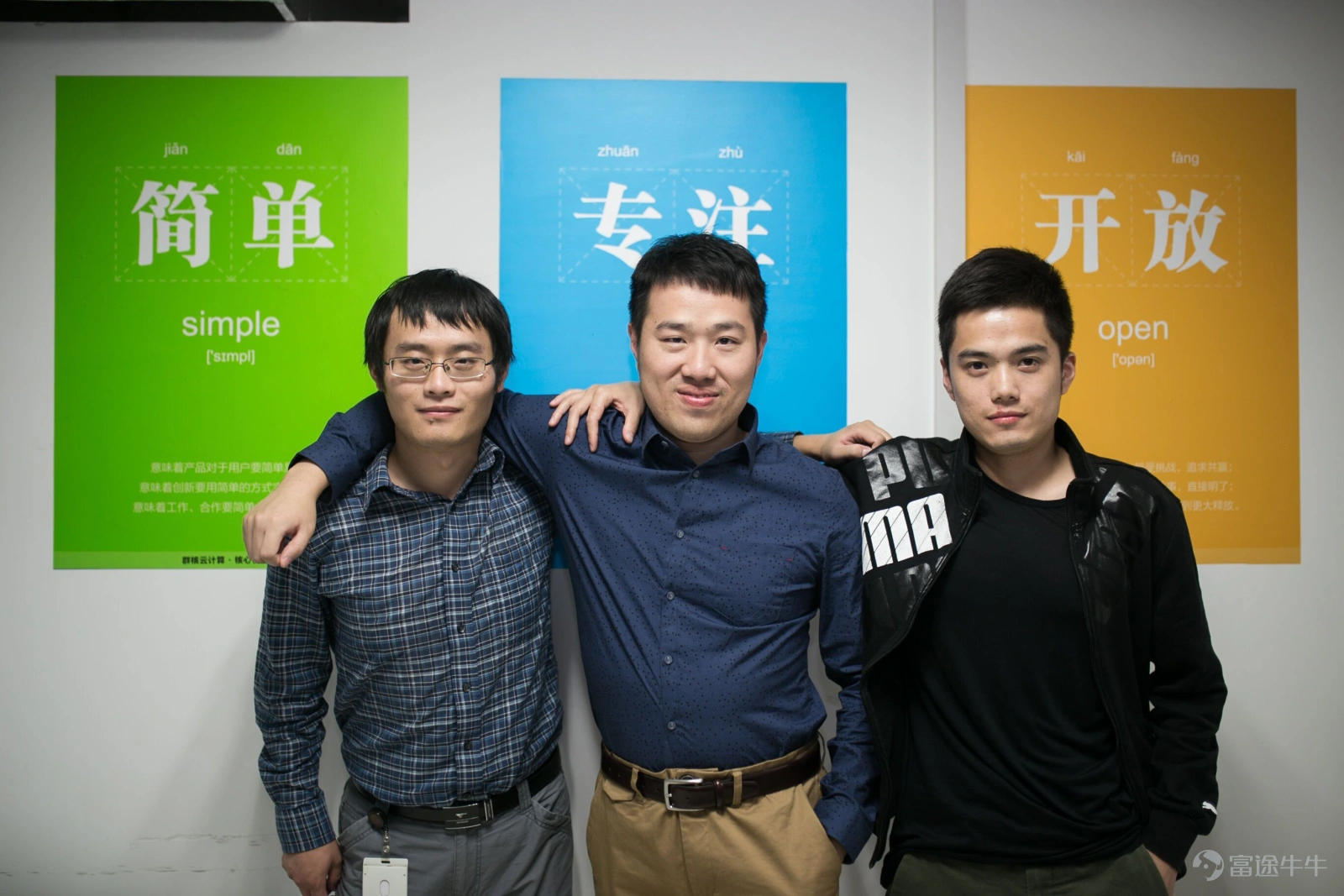
The trio believed in the promising future of GPU-based high-performance computing applications. However, during a time when even investors were unclear about what GPUs were, this technology wasn’t easy to implement. The three had to 'find nails with their hammer,' and eventually, the first major breakthrough came in the seemingly unrelated field of spatial design.
In 2013, amid a booming real estate market, ClusterCore Technology launched its first product, 'Kujiale.'With the powerful ability to produce 3D renderings in 10 seconds and full design solutions in 5 minutes, Kujiale sparked an efficiency revolution in spatial rendering. Today, Kujiale has grown into the largest domestic spatial design platform, serving 47,000 enterprise clients.
At its core, ClusterCore is using GPUs to build a 'digital twin' of the physical world. With the advent of Industry 4.0, customer demands have extended into deeper manufacturing processes. Kujiale began attempting to integrate design rendering with backend production. This means that in terms of technological R&D, they can no longer merely focus on visual realism but must achieve a 1:1 ultimate physical simulation, ensuring that what customers produce can function in the physical world.
In the process, the company accumulated massive amounts of interactive 3D data, leading to the creation of InteriorNet, the world's largest indoor scene deep learning dataset. In 2018, after this dataset was made open-source for free, it attracted tech giants from Silicon Valley seeking collaborations.
At this point, Huang Xiaohuang realized that the company possessed a valuable data 'goldmine,' which would bring greater opportunities in the future. While pushing forward with commercialization, the company consistently reinvested part of its earnings into cutting-edge technologies such as physical simulation and synthetic data. In 2024, ClusterCore officially launched the SpatialVerse platform, equivalent to an 'AI digital school,' providing high-fidelity synthetic datasets and virtual simulation training environments for embodied intelligence, XR, and AIGC.
At the model level, in 2025, ClusterCore successively launched the SpatialLM and SpatialGen spatial language models, combining spatial cognition and generation capabilities to help artificial intelligence achieve understanding, reasoning, and generation of three-dimensional scenes. After SpatialLM was open-sourced, it quickly rose to the top three on the trending list of HuggingFace, the world’s largest AI open-source community, alongside Deepseek and Qwen2.5-Omni. The spatial generation model SpatialGen has taken a similar path to Li Feifei's Marble, creating a truly 3D-centric world generation model.
Thus, ClusterCore Technology has built up a flywheel of 'spatial editing tools - spatial data - large spatial models'.The data is generated by stable user tools, which supports model iteration, and the model helps the tools evolve, forming a positive cycle.
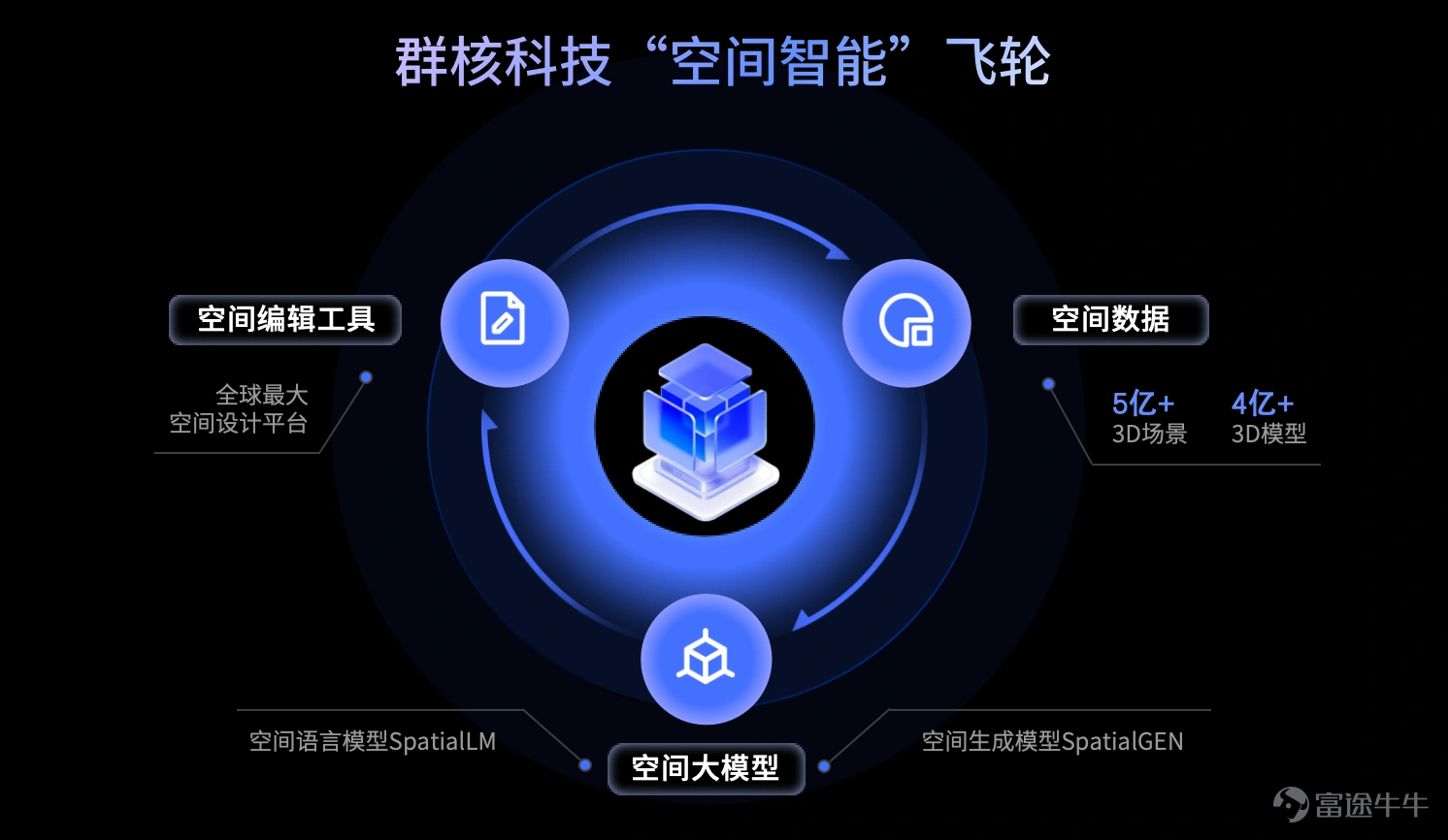
Last year, ClusterCore Technology launched Aholo, an open spatial intelligence platform, gradually encapsulating 15 years of accumulated capabilities in spatial reconstruction, generation, editing, and understanding into APIs and SDKs, fully opening them up to industries such as AI, film and television, and e-commerce. This also means that more scenarios will be derived from Aholo, giving ClusterCore Technology the opportunity to digitize a broader physical world and bridge the physical and digital worlds.
Looking back at ClusterCore’s 15 years, it has consistently focused on one thing—simulating and computing the physical world based on GPU. In the AI era, this has become the digital foundation of spatial intelligence.
[Grand Strategy for the Spatial Intelligence Ecosystem]
Even without considering ClusterCore Technology’s future narrative, its core business centered around CoolHomeDesign remains commendable. Recently, discussions about AI disrupting the SaaS model have been rampant, but ClusterCore’s trajectory seems to prove that SaaS itself is not the issue—it’s about whether it can find a new ecological niche in the AI era.
According to the prospectus, in 2025, ClusterCore’s revenue reached 820 million yuan, with a gross margin of 82.2%. After adjustment, net profit turned positive, reaching 57.127 million yuan.This means that ClusterCore has been able to sustain itself, which is relatively rare in the generally cash-burning tech industry.
ClusterCore Technology’s core business model comes from software subscriptions. The net revenue retention rate for enterprise customers is 100.7%, and for large clients, it is as high as 109%. It adopts a 100% prepayment model, under which its anti-cyclicality and operational stability become even more prominent.
It is evident that the SaaS model itself is not problematic. The real issues lie in whether the software is competitive and whether it can transform the deep scenario know-how accumulated during the internet era into a first-mover advantage in the AI era, forming a key bargaining chip for the next round of competition.
Last year, Google regained its leading position in the AI race primarily because its accumulated scenarios and ecosystem capabilities over time proved to be more advantageous in the long-term battle. Compared to companies like OpenAI, which initially took the lead at the algorithm level, Google's 'scenario-technology' feedback loop was effectively utilized, exceeding OpenAI’s expectations.
Domestically, take Kuaishou as an example. Although it was not considered a first-tier player in AI initially, based on the massive scenario accumulation and data gathered during the app era, Kuaishou successfully built 'Kling' by following the path pioneered by Sora.
Cluster Tech may represent a key player in the spatial intelligence track. Reviewing Cluster Tech’s growth trajectory, it started with 3D tools and amassed vast amounts of high-quality, three-dimensional interactive data during the internet era. Entering the AI age, under the influence of Scaling Law, these assets reignited, forming a closed loop between 'application scenarios-models,' allowing the company to gradually evolve towards becoming spatial intelligence infrastructure.
Currently, Cluster Tech’s business scope is mainly divided into two aspects: enabling human creativity in 3D design and helping intelligent agents understand the physical world.In specific industries, the company no longer serves just spatial design but also provides foundational spatial capabilities to sectors such as e-commerce, robotics, XR, and digital twins.
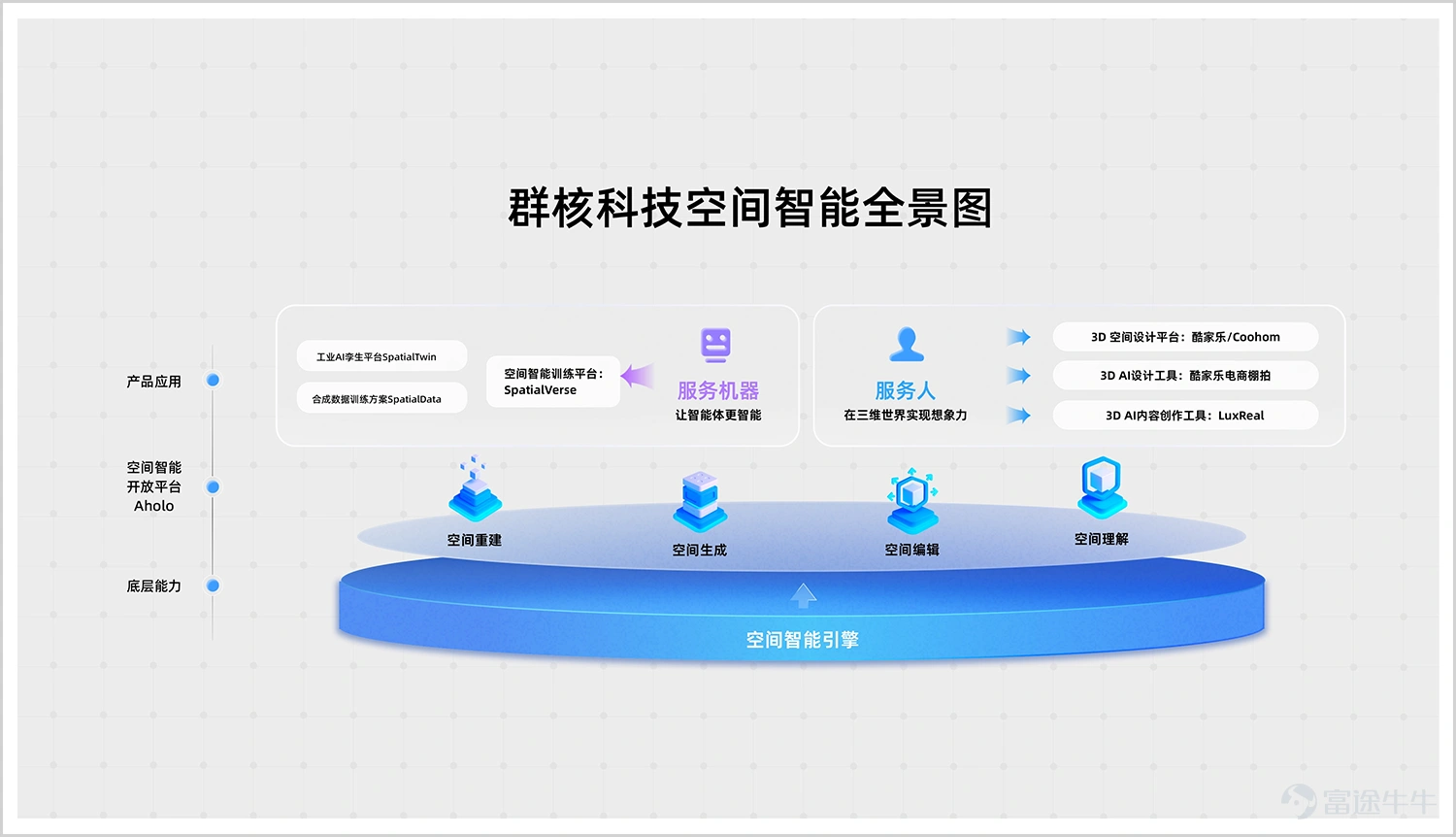
Public information shows that in the embodied intelligence sector, Cluster Tech’s partners include Zhiyuan Robotics, Galaxy General, Qiongche Intelligent, and Digua Robotics. In the film and television industry, leading company Huace Film & TV has been using Cluster Tech’s Aholo platform to create virtual sets and reconstruct filming scenes. Cluster Tech has also partnered with PICO to jointly build 'the world’s largest interactive XR asset library.'
In terms of business models, adapting to the times, besides subscription services, the company is exploring diverse models such as professional services and token payment systems.
Once AI successfully leaps into the real physical world, spatial intelligence, as a core track, could reach a trillion-dollar market scale. At that point, as the 'enabler' in the spatial intelligence field, Cluster Tech may face even greater market opportunities.
By Xu Jiahui
Disclaimer
This article contains content related to listed companies, reflecting the author's personal analysis and judgment based on information disclosed by these companies in accordance with their legal obligations (including but not limited to interim announcements, annual reports, and official interactive platforms). The information or opinions presented in this article do not constitute any form of investment or other business advice. Market Value Observer assumes no responsibility for any actions taken as a result of adopting the content of this article.
——END——
Risk Disclaimer: The above content only represents the author's view. It does not represent any position or investment advice of Futu. Futu makes no representation or warranty.Read more

Comments
to post a comment
6
9