
A small card drives billions in revenue; the Pop Mart of the trading card industry is at the IPO door

By Yang Lei
Source / Node Finance
During this year’s Spring Festival Gala, when actors including Tony Leung, Tao Liu, and Xincheng Zhang performed 'Fortune Comes to Hand,' countless cards fluttered down from above the stage as the audience below reached out to catch them. Young host Yuhao Song was seen backstage exchanging cards with performers, prompting live chat comments like 'So even the Spring Festival Gala backstage is into card collecting.' Moments after host Fanshu Ma finished her announcement, 20,000 sets of the 'Galloping Steed Collectible Card' gift boxes sold out within a minute.
This marked the first time in over four decades of the Spring Festival Gala that an 'exclusive card partner' appeared — Kayou. For older audiences, this name might still be unfamiliar, but among Gen Z, Kayou is nearly ubiquitous and well-known by everyone.
The company's profitability is remarkable. In 2024, Kayou’s revenue surpassed 10 billion yuan, with gross margins on collectible trading cards reaching 71.3%, and adjusted net profit margins hitting 44.4%. This level of profitability even exceeded that of Pop Mart during the same period.
Behind Kayou stand two capital giants, Sequoia China and Tencent Investment. In June 2021, Kayou completed a round of strategic financing, with Sequoia China contributing $105 million and Tencent investing $30 million through its subsidiary Grand Hematite. The cost per share was $76.5, valuing the company at approximately $1 billion at that time. However, this financing came with a valuation adjustment mechanism: if Kayou fails to go public within five years from the issuance of preferred shares, it must repurchase the shares at the issue price plus an annualized interest rate of 8%.
However, in October 2025, Kayou’s second filing of its prospectus with the Hong Kong Stock Exchange automatically lapsed. Since then, there has been no third submission, nor any public progress regarding hearings or offerings. With less than two months left before the deadline set by the valuation adjustment agreement, Kayou is still lingering at the IPO door, unable to cross this threshold.
On one side stands the industry leader with tens of billions in revenue and over 70% market share; on the other, a listing dilemma marked by two failed attempts and looming valuation pressure. Facing the countdown of only two months left, why has Kayou’s IPO entered a 'silent zone'?
A hundred-billion empire driven by Ultraman cards
Before Kayou, Li Qibin had already been exploring this track for over a decade.
Born in 1972 in Kaihua, Quzhou, Zhejiang, after graduating from a technical secondary school, he returned to his hometown of Yanglin Town to work as a rural water conservancy officer. In the early 1990s, his father's luggage business in Yiwu failed, leaving behind more than 3 million yuan in debt. Relying solely on his salary as a water conservancy officer, this debt would never be repaid in his lifetime. Li Qibin quit his job, sold off his family property to raise 10,000 yuan, and headed south to Yiwu to start a business.
Inspired by the market success of sticker cards included in Pop Martian bubble gum and 'Water Margin' cards inside instant noodles, he realized that a card costing just a few cents could significantly enhance a product’s added value. He thus entered the card market via printing subcontracting. In 2001, he founded the Beetle Toy Factory in Yiwu, earning his first pot of gold through subcontracting. Subsequently, he extended upstream, acquiring IP licenses for Disney, 'Seer,' and 'The Legend of Qin.' However, licensing fees devoured profits. In 2014, he invested 1.2 billion yuan to build the Beetle Animation Cultural Industry Park in his hometown of Kaihua, aiming to create a Disney-like animation derivative products industrial chain.
But moving too fast led to trouble. Within two years, the industrial park couldn’t even afford to pay employee salaries.
The turning point came in 2018 when Kayou obtained the Ultraman IP license from a domestic agent. Though Ultraman was an old IP born in the 1960s, it was enjoying renewed popularity among post-2000s and post-2010s generations due to the resurgence of tokusatsu dramas. Kayou launched trading cards featuring Ultraman, controlling production volume and release cycles by assigning rarity levels, fueling players’ desire to collect and repurchase.
Card packs are priced between 2 yuan and 30 yuan, making them highly appealing to elementary and middle school students. According to Node Finance, common cards sell by weight in secondary markets, with one jin (Chinese unit) as low as 2.99 yuan, free shipping for five jin. However, limited-edition cards can fetch hundreds of yuan each.

This strategy quickly proved effective. From 2018 to the end of 2024, Kayou launched a total of 320 trading card series and 42 stationery series based on more than 50 Ultraman hero characters. Following this, the IP portfolio rapidly expanded: My Little Pony, Ye Luo Li, Douluo Continent animation, Egg Party, Naruto, Detective Conan, Harry Potter, and others were successively integrated into the lineup. By the end of 2024, Kayou had collaborated with over 70 domestic and international IPs, of which more than 30 were 'Guochao' IPs.

In terms of distribution channels, Kayou primarily operates through a dealer model, distributing its products to stationery stores and small shops across all 31 provinces in the country, penetrating deep into areas surrounding primary and secondary schools. Currently, it has 217 distributors and 32 self-operated flagship stores, with distributor channel revenue accounting for over 80%.
With the combination of a 'strong IP portfolio + strong offline channels,' Kayou quickly grew to become the absolute leader in China's trading card market. In 2024, the company's revenue exceeded 10 billion yuan, a year-on-year increase of 277.8%; adjusted net profit reached 4.466 billion yuan, up 378.2% year-on-year; the gross margin for trading cards was as high as 71.3%, even surpassing Pop Mart during the same period.
Measured by Gross Merchandise Volume (GMV), Kayou holds a 71.1% market share in China's trading card sector, far outpacing the second-place competitor at only 4.7%. It also ranks first in the broader entertainment product and toy industries, with market shares of 13.3% and 21.5%, respectively.
From a rural water conservancy officer repaying his father's debts to the head of a card empire with billions in revenue, Li Qibin spent nearly three decades. The pivotal moment that transformed Kayou from an ordinary toy factory into an industry leader came in 2018 when Ultraman cards became a 'social currency' among elementary school students, also securing Kayou's entry ticket to the capital markets.
Dual challenges of IP dependency and regulation on minors
However, the foundation of this empire is not unshakable.
First, consider the IP structure. As of the end of 2024, Kayou owns 70 IPs, but only one is a proprietary IP, 'Kayou Romance of the Three Kingdoms,' with cumulative GMV of just 290 million yuan. Revenue from externally licensed IPs accounts for 88%, with the top five IPs (Ultraman, My Little Pony, etc.) contributing approximately 86% of total revenue. Industry insiders comment that Kayou is essentially a company 'working for IPs.'

This creates three layers of risk: IP popularity is cyclical, and if any core IP loses traction, revenue will be directly impacted; many licensing agreements are set to expire between 2025-2026 (38 agreements in 2025 and 39 in 2026), creating uncertainty around renewals; additionally, all licenses are non-exclusive, meaning competitors can acquire the same IPs. The capital market is well aware of this—a story dependent on external IPs and lacking independent intellectual property struggles to sustain high valuations.
This is precisely why the capital market remains cautious about Kayou’s growth potential. Analysts have pointed out that reliance on licensed IPs for core revenue raises concerns about being 'strangled' by licensors; limited expansion opportunities beyond existing business lines fail to excite the capital market.
More challenging than IP dependency is the regulatory red line concerning the protection of minors.Kayou's core users are students under the age of 15. The sales model of 'blind boxes plus probability,' combined with offline channels deeply embedded around schools, has kept the controversy over诱导 non-rational consumption alive.
In 2024, Kayou sold 4.8 billion packs of cards, with an average production cost of only 0.4 yuan per pack, while retail prices ranged from 2 to 30 yuan. Low cost, high markup, coupled with the 'dopamine rush' from card draws, has sparked widespread societal criticism.
On the Heimao Complaints platform, there are over 2,600 complaints related to Kayou; CCTV Finance, People’s Daily, and other major state media have repeatedly named and criticized the company. In 2023, the State Administration for Market Regulation issued regulations on blind box operations, explicitly prohibiting sales to children under 8 years old and requiring parental consent for sales to minors aged 8 or above. However, over 80% of Kayou's revenue comes from offline distribution channels, where age verification in these small stores is practically non-existent.
After Kayou filed its initial prospectus in January 2024, the China Securities Regulatory Commission requested that it explain compliance issues such as the protection of children’s personal information, causing the IPO process to stall, with the first prospectus expiring in July of the same year.
Can Kayou still cross the IPO threshold?
In addition to regulatory hurdles, Kayou is also burdened by the pressure of capital wagers.
In June 2021, Kayou completed a Series A preferred stock financing round, with Sequoia China investing $105 million and Tencent contributing $30 million, at a share price of $76.5 each, valuing the company at approximately $1 billion. The financing agreement included a wager clause: if the company fails to complete its IPO within five years from the issuance of the preferred shares, Kayou must repurchase the shares at the issue price plus an annual interest rate of 8%. Calculated using simple interest, by the time the deadline arrives in June 2026, the repurchase amount will be approximately $189 million, equivalent to about 1.35 billion yuan.
Now, less than two months remain until this deadline. Meanwhile, Kayou's IPO progress has shown no new developments since the second prospectus expired in October 2025—no third filing, no hearing, and no public updates. Recently, Node Finance emailed Kayou regarding the IPO progress and plans, but as of press time, the company has not responded.
From the perspective of Hong Kong's listing procedures, it typically takes at least three to six months from filing to going public. This means that the likelihood of Kayou completing its IPO before June 2026 is now extremely slim.
Of course, a 1.35 billion yuan buyback is not unmanageable for Kayou – by the end of 2024, the company had nearly 4.9 billion yuan in cash on hand, with the buyback accounting for about 27.7%. However, the greater harm lies in reputation:Triggering a valuation adjustment clause breach would severely undermine market confidence in Kayou and make subsequent financing more difficult.
What perhaps worries Kayou more are its competitors on the track. On the first day of 2026, Suplay, a trendy toy card brand, submitted an IPO application to the Hong Kong Stock Exchange, attempting to claim the title of 'China's First Card Stock'.
Based on card revenue of 198 million yuan in the first three quarters of 2025, SUPLAY’s revenue scale lags far behind Kayou’s. However, leveraging HoYoverse IPs like Genshin Impact and Honkai: Star Rail, it has pushed the unit price of cards to between 60-90 yuan. Moreover, with HoYoverse holding an 11.86% stake, SUPLAY continues to attract significant attention from the capital markets.

Additionally, companies such as Flash Soul, Hitcard, and 52TOYS are also preparing for their IPOs. If competitors manage to go public on the Hong Kong stock exchange first, Kayou’s narrative value as the 'first mover' will significantly diminish.
From the perspective of industry fundamentals, the growth of China’s card market is far from peaking. Currently, per capita spending on trading cards in China is only about 8.87 yuan, which is approximately one-sixth of that in the U.S. and one-twelfth of that in Japan. With consumption upgrades and the audience expanding from teenagers to all age groups, structural dividends remain substantial.
However, the core issue with Kayou’s IPO dilemma does not lie in market prospects but whether its business logic can convince regulators and investors. The expiration of two prospectuses has already shown that high-growth and high-profit financial data alone are insufficient to unlock the doors of the Hong Kong Stock Exchange. Amid tightening policies on minor protection and increasingly strict regulations on blind box operations, Kayou needs to find a new balance between commercial interests and social responsibility.
As of April 2026, Kayou remains in the IPO 'quiet period.' With less than two months left before the valuation adjustment deadline, will it trigger a buyback, seek alternative paths, or experience a last-minute turnaround? This not only concerns the fate of a company with annual revenues exceeding 10 billion yuan but will also set an important benchmark for the entire card market’s capital journey.
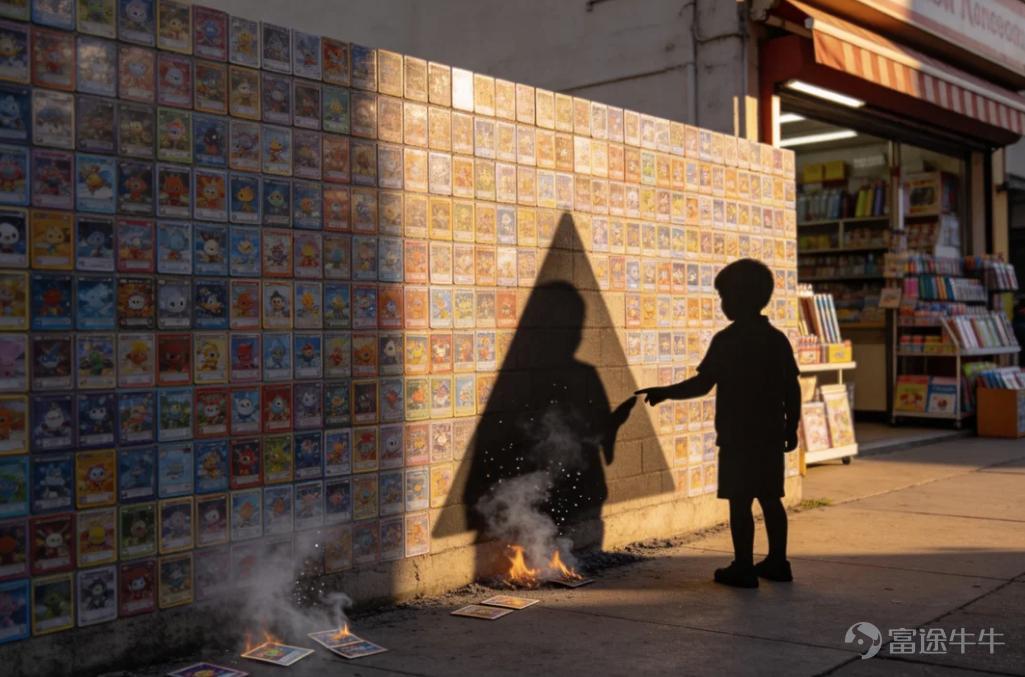
*The cover image is generated by AI.
Risk Disclaimer: The above content only represents the author's view. It does not represent any position or investment advice of Futu. Futu makes no representation or warranty.Read more

Comments
to post a comment
1
1