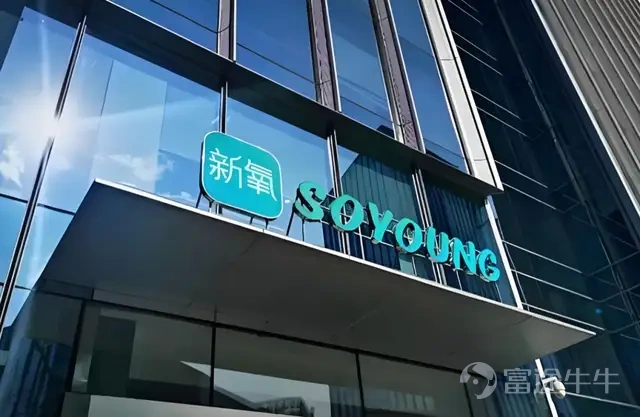

Profitable Outlets, Group-Wide Losses: Why Can't So-Young International Learn from Uniqlo?

Jin Xing, the founder of So-Young International, has a simple dream: to make medical aesthetics in China as accessible as in Korea, becoming an everyday affordable consumption for the masses. He attempted to reconstruct the medical aesthetics industry with Uniqlo's logic—standardization, low prices, and decentralization.
After undergoing a vigorous offline transformation, So-Young International delivered a contradictory report card at the end of last month: Public information shows that in Q4 2025, So-Young achieved total revenue of 461 million yuan, a year-on-year increase of 25%, setting a new record for the company’s single-quarter revenue. For the full year 2025, So-Young's total revenue was 1.523 billion yuan, up 3.87% year-on-year. Meanwhile, offline clinic revenue surged by 298.7% in 2025, with the number of stores growing rapidly.
The company achieved double-digit growth in Q4 revenue, which should have been a moment of celebration.However, upon closer examination of this earnings report, one would find a staggering cost figure: 860 million yuan (this number is the sum of 'sales and marketing expenses' and 'administrative expenses').
That internet giant, which once earned money effortlessly through traffic, is now facing its darkest hour on the asset-heavy offline battlefield—profitable outlets but massive losses for the company.

01
Transformation Pains: From Effortlessly Earning Traffic to Painstakingly Selling Services
To understand the business model of So-Young Youth Clinics, one must first look at its evolving environment—it has indeed changed.
According to financial data, So-Young is undergoing a radical restructuring of its business operations:
Information service revenue collapsed, plummeting from 1.06 billion in 2023 to 499 million in 2025. This segment was once So-young International's cash cow, characterized by high margins and light assets. Medical aesthetics treatment revenue is on the rise, with the company fully transitioning to offline lightweight medical aesthetics chain clinics starting in 2024. By 2025, this segment’s revenue reached 674 million, operating 49 clinics. However, despite its large revenue scale, this business is low margin and asset-heavy. So-young lost its high-margin information service 'golden rice bowl' and went after the low-margin medical service 'iron rice bowl,' but the headquarters team that supported the golden rice bowl (high three expenses) has remained largely unchanged.

(Data source: Earnings report)
Why did such an illogical change occur?
Simply put, So-young didn't voluntarily abandon the golden rice bowl; rather, it became impossible to sustain.The shift towards the iron rice bowl—though labor-intensive and less profitable—is aimed at finding a new path to control its own destiny amidst peak traffic dividends and encirclement by giants.
So-young initially thrived on a 'content community + e-commerce' model, monopolizing online traffic in the medical aesthetics field early on. However, with the rise of content platforms like Douyin and Xiaohongshu, as well as cross-industry moves by comprehensive giants like Ali Health and Meituan, advertising budgets for medical aesthetics institutions have been significantly diverted. These new platforms boast larger user bases and stronger traffic monetization capabilities, quickly eroding So-young’s online traffic advantage, directly leading to a sharp decline in its core information service revenue. Additionally, excessively low prices on So-young’s platform have made normal fulfillment services untenable for many institutions, resulting in their gradual exit from the platform and causing its original information service platform to shrink.
Faced with the contraction of its core business, So-young chose a very challenging path: a full transition from an online platform to offline, asset-heavy chain clinics.
So-young launched 'So-young Youth Clinics,' focusing on low pricing and standardization as its core strategy. By leveraging group centralized procurement and private-label production of medical consumables, it aims to lower material costs. This echoes the consumption industry’s approach of selling non-branded goods instead of branded ones. So-young hopes to reduce traditionally high medical aesthetic project prices to attract price-sensitive consumers. This pricing strategy seeks to disrupt the traditional medical aesthetics industry chain by vertically integrating upstream products with downstream services to reclaim pricing power within the sector.
So-young’s low-price strategy triggered significant turbulence across the entire upstream supply chain of the medical aesthetics industry.Over a period, medical device brands such as Avilun (Shengboma), Puliran, and Weiyimei issued cease-and-desist letters or public statements to So-young, launching a large-scale 'price defense battle.'
At the heart of these conflicts lies the direct confrontation between manufacturers safeguarding the traditional high-price system through ‘price control rights’ and So-young’s attempt to establish affordable, low-cost ‘channel rights.’ Manufacturers typically set recommended retail prices (e.g., Avilun’s previous price of 18,000 yuan) and rely on multi-layered distributor models for profit. However, So-young bypassed intermediaries to make direct purchases, slashing prices to rock bottom (e.g., Avilun dropped to several thousand yuan), severely breaching the carefully maintained price defenses of manufacturers.
In response to this threat, the brands adopted a combination of 'supply cutoff and anti-counterfeiting': on one hand accusing So-young International of unclear sourcing and untrained doctors, and on the other cutting off supplies while threatening legal action. This confrontation not only exposed the growing pains of the medical aesthetics supply chain under the impact of So-young's model but also signaled the company’s determination to transition from a simple traffic platform to an industry integrator with control over product and service pricing.
The latest financial report shows that its offline business has become So-young International's largest source of revenue.In the fourth quarter of 2025, So-young International’s medical aesthetics treatment service revenue reached 248 million yuan, representing a year-on-year increase of 205.3%. It accounted for 53.9% of total revenue in the quarter, surpassing online services for the first time to become the company’s primary source of income. For the full year of 2025, total revenue from medical aesthetics treatment services amounted to 675 million yuan, marking a 298.7% year-on-year growth and accounting for 44.3% of annual revenue.
This data indicates a fundamental shift in So-young International’s business structure, successfully transforming from a platform primarily focused on online information and reservation services to a hybrid model combining 'platform and chain clinics' as its main revenue streams.These figures demonstrate the effectiveness of this transformation in terms of both user acquisition and revenue generation.
02
Financial Fog: Corporate Headquarters Losses Behind ‘Clinic Profitability’
In its financial disclosures, So-young International reported a gross margin of 23.1% for its medical aesthetics treatment services in 2025. At first glance, this may seem like an acceptable figure, but further analysis reveals that this level of gross profit is insufficient to cover the company’s losses. Medical aesthetics treatment services had the lowest gross margin among all business lines, with total gross profit (674 million yuan in revenue × 23.1%) amounting to 156 million yuan. Meanwhile, the company’s combined sales and administrative expenses exceeded 800 million yuan annually. Even under optimistic assumptions—allocating only a portion of these 800 million yuan in expenses to the clinic operations based on their 44.3% revenue share—So-young Youth Clinics still bore approximately 355 million yuan in costs. Subtracting 355 million yuan in expenses from 156 million yuan in gross profit results in a staggering loss of 199 million yuan.

Jin Xing, co-founder and CEO of So-young International, highlighted two significant milestones achieved by the chain business during the earnings call:
First, in terms of store scale,By the end of 2025, So-young Youth Clinics had opened 49 light medical aesthetics stores, ranking first nationwide among lightweight medical aesthetics chain brands.
The second aspect pertains to the treatment volume,In the fourth quarter of 2025, the number of redemptions at chain outlets exceeded 125,000, representing a year-on-year increase of 178%. The number of redemption service points surpassed 289,400, growing by 168% year-on-year. By the end of December, the number of active users broke through 170,000. The simultaneous growth in treatment volume and user base demonstrates the genuine demand for the chain model in the market and continued consumer recognition.
In the fourth quarter, 25 stores achieved profitability at the store level, while 39 stores achieved positive cash flow. Entering 2026, the company will further accelerate its expansion, planning to add no fewer than 35 new stores during the year. It will focus on strengthening its presence in core cities such as Beijing, Shanghai, Guangzhou, and Shenzhen, while also exploring opportunities in second-tier cities.
What is 'store-level profitability'? If it only deducts the direct costs of the store but does not allocate the headquarters expenses (back-office administration, mid-office R&D, branding, and marketing) that led to So-Young International's significant losses, this essentially measures 'operating cash flow' rather than net profit.
This calculation method typically only deducts rent, consumables, and direct labor but overlooks a major hidden cost:
Headquarters amortization,Sales and administrative expenses amounting to 860 million represent the heavy burden that So-Young International, as a publicly listed company, must bear.
Additionally, regarding the company's customer acquisition cost.The company emphasizes low customer acquisition costs in its communications with the capital markets. If medical aesthetics clinics have low marketing expenses and older businesses are shrinking, their marketing expenses should also decrease, as rational individuals wouldn't increase investment in declining businesses. So why hasn't the overall marketing and administrative expense decreased? So-young International claims that clinics' customer acquisition costs are below 10%, much lower than the industry average. However, balancing high customer acquisition costs with low-margin services remains its biggest challenge.

(Haitong International report)
Another noteworthy detail isIn 2024, So-young International wrote down $540 million in goodwill and asset impairments, narrowing its net loss to $240 million in 2025, which appears to indicate improved operations. However, this narrowing of net losses does not stem from real cash flow. This 'paper profit,' while boosting stock prices, cannot mask the truth of insufficient profitability.
03
Why can't medical aesthetics succeed like Uniqlo?
In Jin Xing's vision, China's medical aesthetics industry should resemble South Korea's, becoming an everyday consumer product accessible and affordable to the masses. To achieve this, he launched 'So-young Youth Clinics,' which can be likened to the 'Uniqlo' of the medical aesthetics world.
Jin Xing believes that the medical aesthetics projects at So-young Youth Clinics are somewhat like Uniqlo selling basic products. These projects are time-tested, highly safe, and represent categories that most consumers genuinely need and repeatedly purchase.
It sounds promising, but South Korea's 'breathing-style' medical aesthetics doesn't work in China.
Firstly, there is a significant gap in compliance costs between the two countries.Although South Korea's medical aesthetics market is advanced, its regulatory system is entirely different from that of our country. In China, the approval, regulation, and compliance costs for medical products and licenses, as well as import and export, are extremely high. This is not just a matter of 'high procurement costs,' but rather a systemic cost brought about by the stringent safety requirements of the entire healthcare system.
Secondly, there is a significant difference in restrictions on medical advertisements and educational costs.The reason why South Korean medical aesthetics can be as free as 'breathing' is due to its very relaxed advertising and marketing environment, where the entire population has subtly completed their education on medical aesthetics. In contrast, in China, the penetration rate of medical aesthetics is less than 5%, and the Advertisement Law imposes strict limitations on medical advertisements, making it impossible to feature them in many physical advertisements and online platforms. This means that in order to educate the market and increase penetration, Chinese medical aesthetics must bear extremely high customer acquisition and educational costs.
These two points illustrate major differences between China and South Korea in terms of regulatory environments, market conditions, and cost structures within the medical aesthetics industry.As a commercial company, So-young International cannot overturn industry regulations and relevant laws single-handedly.
In fact, I believe comparing clinics to Uniqlo presents a certain logical mismatch. Uniqlo sells certainty—whether users buy the same shirt at any store, the fabric and fit remain identical. Medical aesthetics, on the other hand, sells customization; the same hyaluronic acid injected by different doctors with varying techniques, depths, and aesthetic sensibilities results in vastly different outcomes.When an institution overemphasizes 'low prices' and 'standardization,' it often leads to assembly-line operations, which run counter to the individualized treatments emphasized by medical aesthetics.
Furthermore, what medical aesthetics sells is service, with the core being the human capital of doctors.Doctors require long training cycles, have high mobility, and their medical services are highly non-standardized. Moreover, the essence of medicine is trust, not extreme cost-effectiveness, and overemphasizing low prices actually undermines the brand's professional credibility.
Conclusion
So-young International currently finds itself in an awkward situation of paper wealth: although it has the highest number of stores in the industry and each store appears profitable individually, the high headquarters expenses leave the group still in an overall loss.
In a recent media interview, Jin Xing told reporters that by 2026, So-Young International aims to achieve a group-wide quarterly turnaround to profitability. He predicted that the next two to three years will be a critical period for the medical aesthetics industry's consolidation and restructuring, and the prerequisite for all players to 'survive' is to find their own 'ecological niche'.
In this endless marathon, So-Young International is no longer just an internet company but an explorer attempting to reconstruct the industry's logic. Its success hinges on whether it can find that subtle survival gap between its 'internet DNA' and 'medical aesthetics operations'.
Risk Disclaimer: The above content only represents the author's view. It does not represent any position or investment advice of Futu. Futu makes no representation or warranty.Read more

Comments
to post a comment
2
1