English
Back
Open Account
市值风云APP
wrote a column · Apr 7 16:38

In just three years and ten months, Sigen New Energy has passed the hearing session, becoming the fastest-growing new energy storage company to reach the top in developed markets! Sigen New Energy IPO: Growth continues

A comprehensive energy portfolio covering residential, commercial, industrial, and ground-mounted power stations.
A comprehensive energy portfolio covering residential, commercial, industrial, and ground-mounted power stations. Author |Muyu Editor |Novice In Warsaw, Poland, a typical household noticed a fascinating change in their electricity bill after installing a white machine. Their cost per kilowatt-hour dropped from 1.1 zloty to 0.55 zloty, nearly halving their expenses; selling solar energy generated from their rooftop back to the grid increased their earnings two to threefold. This is a device called SigenStor, an AI-powered energy storage system that autonomously plans when to store, release, or sell electricity, even seizing moments of 'negative pricing' to generate profits. Electricity, once merely a passive daily expense, has transformed into an asset that can be managed, scheduled, and even 'traded'. It comes from a Chinese company that has already filed with the Hong Kong Stock Exchange: Sigen New Energy. Today, we will talk about this company, which was established only three years and ten months ago but has already become the global leader in its niche market and is expected to become the fastest-listed new star in the energy storage sector. Making complex energy storage systems as simple as building blocks In the winter of 2025, there were 142 coal-fired generator outages in Australia's national electricity market, with 119 being unplanned. By 2025, the median annual electricity bill for households in rural New South Wales had surged to 2,850 Australian dollars (approximately 13,000 RMB). Facing rising electricity prices and frequent blackouts, more and more Australian households and businesses have begun...
Author |Muyu
Editor |Novice
In Warsaw, Poland, a typical household noticed a fascinating change in their electricity bill after installing a white machine. Their cost per kilowatt-hour dropped from 1.1 zloty to 0.55 zloty, nearly halving their expenses; selling solar energy generated from their rooftop back to the grid increased their earnings two to threefold.
This is a device called SigenStor, an AI-powered energy storage system that autonomously plans when to store, release, or sell electricity, even seizing moments of 'negative pricing' to generate profits. Electricity, once merely a passive daily expense, has transformed into an asset that can be managed, scheduled, and even 'traded'.
A comprehensive energy portfolio covering residential, commercial, industrial, and ground-mounted power stations. Author |Muyu Editor |Novice In Warsaw, Poland, a typical household noticed a fascinating change in their electricity bill after installing a white machine. Their cost per kilowatt-hour dropped from 1.1 zloty to 0.55 zloty, nearly halving their expenses; selling solar energy generated from their rooftop back to the grid increased their earnings two to threefold. This is a device called SigenStor, an AI-powered energy storage system that autonomously plans when to store, release, or sell electricity, even seizing moments of 'negative pricing' to generate profits. Electricity, once merely a passive daily expense, has transformed into an asset that can be managed, scheduled, and even 'traded'. It comes from a Chinese company that has already filed with the Hong Kong Stock Exchange: Sigen New Energy. Today, we will talk about this company, which was established only three years and ten months ago but has already become the global leader in its niche market and is expected to become the fastest-listed new star in the energy storage sector. Making complex energy storage systems as simple as building blocks In the winter of 2025, there were 142 coal-fired generator outages in Australia's national electricity market, with 119 being unplanned. By 2025, the median annual electricity bill for households in rural New South Wales had surged to 2,850 Australian dollars (approximately 13,000 RMB). Facing rising electricity prices and frequent blackouts, more and more Australian households and businesses have begun...
It comes from a Chinese company that has already filed with the Hong Kong Stock Exchange: Sigen New Energy. Today, we will talk about this company, which was established only three years and ten months ago but has already become the global leader in its niche market and is expected to become the fastest-listed new star in the energy storage sector.
A comprehensive energy portfolio covering residential, commercial, industrial, and ground-mounted power stations. Author |Muyu Editor |Novice In Warsaw, Poland, a typical household noticed a fascinating change in their electricity bill after installing a white machine. Their cost per kilowatt-hour dropped from 1.1 zloty to 0.55 zloty, nearly halving their expenses; selling solar energy generated from their rooftop back to the grid increased their earnings two to threefold. This is a device called SigenStor, an AI-powered energy storage system that autonomously plans when to store, release, or sell electricity, even seizing moments of 'negative pricing' to generate profits. Electricity, once merely a passive daily expense, has transformed into an asset that can be managed, scheduled, and even 'traded'. It comes from a Chinese company that has already filed with the Hong Kong Stock Exchange: Sigen New Energy. Today, we will talk about this company, which was established only three years and ten months ago but has already become the global leader in its niche market and is expected to become the fastest-listed new star in the energy storage sector. Making complex energy storage systems as simple as building blocks In the winter of 2025, there were 142 coal-fired generator outages in Australia's national electricity market, with 119 being unplanned. By 2025, the median annual electricity bill for households in rural New South Wales had surged to 2,850 Australian dollars (approximately 13,000 RMB). Facing rising electricity prices and frequent blackouts, more and more Australian households and businesses have begun...
Making complex energy storage systems as simple as building blocks
In the winter of 2025, there were 142 coal-fired generator outages in Australia's national electricity market, with 119 being unplanned. By 2025, the median annual electricity bill for households in rural New South Wales had surged to 2,850 Australian dollars (approximately 13,000 RMB).
Faced with rising electricity prices and frequent blackouts, more and more Australian households and businesses have started installing solar panels paired with energy storage systems to achieve 'self-generation, self-storage, and self-consumption' of electricity.
The recent conflict in Iran, threatening oil and gas exports from the Middle East, has directly accelerated the rise in global oil prices and triggered a chain reaction in supply chains, once again highlighting energy risks. Geopolitical conflicts are exacerbating energy security concerns, leading to a surge in demand for household energy independence.
Behind this lies a lifestyle of energy independence and an electricity revolution spreading globally.
From 2020 to 2024, global shipments of energy storage systems soared from 14.2GWh to 230.0GWh, increasing 16-fold in four years, with a compound annual growth rate of 100.6%. It is projected to reach 804.5GWh by 2030.
A comprehensive energy portfolio covering residential, commercial, industrial, and ground-mounted power stations. Author |Muyu Editor |Novice In Warsaw, Poland, a typical household noticed a fascinating change in their electricity bill after installing a white machine. Their cost per kilowatt-hour dropped from 1.1 zloty to 0.55 zloty, nearly halving their expenses; selling solar energy generated from their rooftop back to the grid increased their earnings two to threefold. This is a device called SigenStor, an AI-powered energy storage system that autonomously plans when to store, release, or sell electricity, even seizing moments of 'negative pricing' to generate profits. Electricity, once merely a passive daily expense, has transformed into an asset that can be managed, scheduled, and even 'traded'. It comes from a Chinese company that has already filed with the Hong Kong Stock Exchange: Sigen New Energy. Today, we will talk about this company, which was established only three years and ten months ago but has already become the global leader in its niche market and is expected to become the fastest-listed new star in the energy storage sector. Making complex energy storage systems as simple as building blocks In the winter of 2025, there were 142 coal-fired generator outages in Australia's national electricity market, with 119 being unplanned. By 2025, the median annual electricity bill for households in rural New South Wales had surged to 2,850 Australian dollars (approximately 13,000 RMB). Facing rising electricity prices and frequent blackouts, more and more Australian households and businesses have begun...
Among these, the fastest-growing segment is distributed energy storage—especially residential energy storage.
From 2020 to 2024, global residential energy storage shipments surged from 1.7GWh to 48.9GWh, with an annual compound growth rate of 130.2%. This figure is expected to further increase to 158.1GWh by 2030, with an annual compound growth rate of 21.4% between 2025 and 2030.
A comprehensive energy portfolio covering residential, commercial, industrial, and ground-mounted power stations. Author |Muyu Editor |Novice In Warsaw, Poland, a typical household noticed a fascinating change in their electricity bill after installing a white machine. Their cost per kilowatt-hour dropped from 1.1 zloty to 0.55 zloty, nearly halving their expenses; selling solar energy generated from their rooftop back to the grid increased their earnings two to threefold. This is a device called SigenStor, an AI-powered energy storage system that autonomously plans when to store, release, or sell electricity, even seizing moments of 'negative pricing' to generate profits. Electricity, once merely a passive daily expense, has transformed into an asset that can be managed, scheduled, and even 'traded'. It comes from a Chinese company that has already filed with the Hong Kong Stock Exchange: Sigen New Energy. Today, we will talk about this company, which was established only three years and ten months ago but has already become the global leader in its niche market and is expected to become the fastest-listed new star in the energy storage sector. Making complex energy storage systems as simple as building blocks In the winter of 2025, there were 142 coal-fired generator outages in Australia's national electricity market, with 119 being unplanned. By 2025, the median annual electricity bill for households in rural New South Wales had surged to 2,850 Australian dollars (approximately 13,000 RMB). Facing rising electricity prices and frequent blackouts, more and more Australian households and businesses have begun...
Another noticeable trend is the accelerating integration of photovoltaics and energy storage. Traditional 'split-type' solutions (where photovoltaics and storage are installed separately) are gradually being replaced by 'all-in-one' solutions.
In 2024, global shipments of split-type photovoltaic storage solutions reached 32.0GWh, while all-in-one solutions stood at 5.8GWh. However, the growth rate of all-in-one solutions far exceeds that of split-type ones, with shipments expected to reach 72.3GWh by 2030, representing an annual compound growth rate of 42.6%, more than double that of split-type solutions.
In this wave of development, traditional products commonly suffer from a major pain point: complex installation, difficult-to-understand usage, and troublesome expansion. A system often requires piecing together multiple devices such as inverters, batteries, and controllers, taking a full day for installation, and requiring re-wiring for later capacity expansion. For modern consumers accustomed to 'plug-and-play', this is clearly not user-friendly enough.
Whoever can make complex energy systems as convenient and easy to use as 'Lego blocks' will seize the market opportunity.
Xu Yingtong, founder of Sigen New Energy, and his team recognized this opportunity window. Abandoning the traditional, crude approach to battery assembly, they are committed to creating a truly user-centric, intelligent energy management solution that offers simplified experiences and smart capabilities to deliver visible and quantifiable cost reductions and efficiency improvements for users.
Thus, SigenStor was born.
A comprehensive energy portfolio covering residential, commercial, industrial, and ground-mounted power stations. Author |Muyu Editor |Novice In Warsaw, Poland, a typical household noticed a fascinating change in their electricity bill after installing a white machine. Their cost per kilowatt-hour dropped from 1.1 zloty to 0.55 zloty, nearly halving their expenses; selling solar energy generated from their rooftop back to the grid increased their earnings two to threefold. This is a device called SigenStor, an AI-powered energy storage system that autonomously plans when to store, release, or sell electricity, even seizing moments of 'negative pricing' to generate profits. Electricity, once merely a passive daily expense, has transformed into an asset that can be managed, scheduled, and even 'traded'. It comes from a Chinese company that has already filed with the Hong Kong Stock Exchange: Sigen New Energy. Today, we will talk about this company, which was established only three years and ten months ago but has already become the global leader in its niche market and is expected to become the fastest-listed new star in the energy storage sector. Making complex energy storage systems as simple as building blocks In the winter of 2025, there were 142 coal-fired generator outages in Australia's national electricity market, with 119 being unplanned. By 2025, the median annual electricity bill for households in rural New South Wales had surged to 2,850 Australian dollars (approximately 13,000 RMB). Facing rising electricity prices and frequent blackouts, more and more Australian households and businesses have begun...
Hardware integration + AI-driven, SigenStor redefines energy storage.
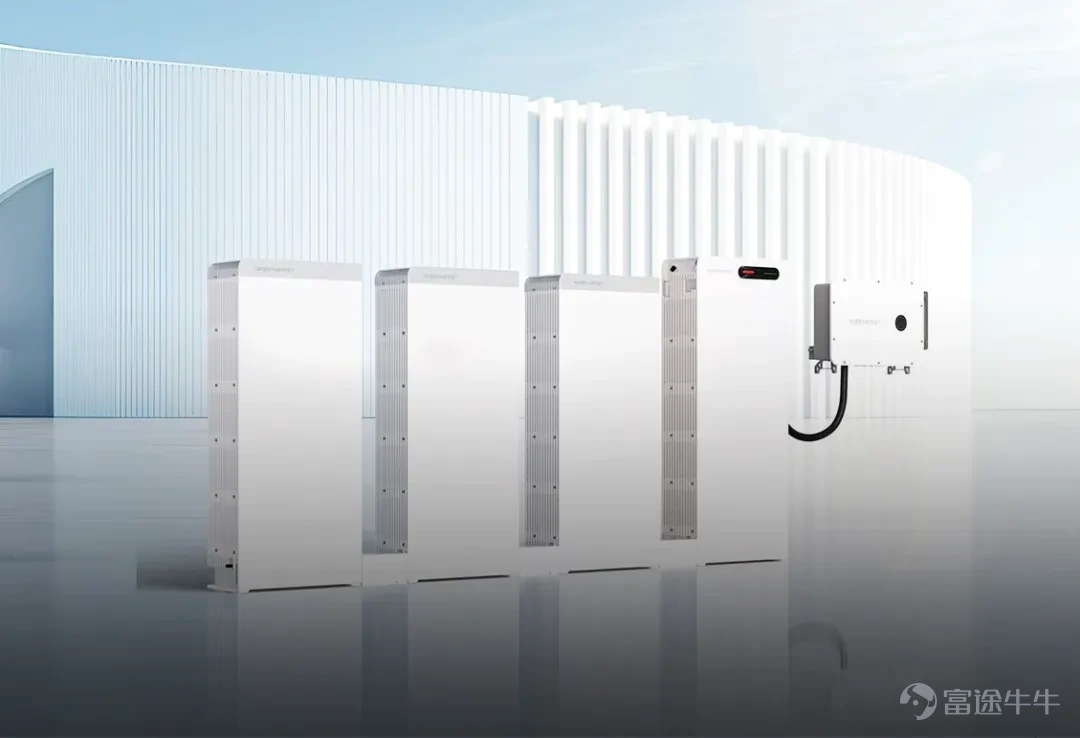
What is SigenStor? Simply put, it is an all-in-one photovoltaic storage and charging system with five key functions:
1. Photovoltaic inverter: Converts direct current generated by solar panels into alternating current for household use;
2. Energy storage battery: Stores electricity, saving excess power generated during the day for use at night;
3. DC charging module: Charges electric vehicles and supports bidirectional charging (vehicles can also supply power to homes);
4. Energy storage inverter: Manages the current flow between the battery and the grid;
5. Energy management system: Uses AI to coordinate all operations, making power usage smarter and more cost-effective.
In traditional setups, implementing these five functions simultaneously usually requires multiple standalone devices, various teams of professionals, and several days of installation and debugging. However, Sigen New Energy integrates all these functions into a single machine the size of a refrigerator, with deployment completed in as little as 15 minutes, enabling plug-and-play functionality.
A comprehensive energy portfolio covering residential, commercial, industrial, and ground-mounted power stations. Author |Muyu Editor |Novice In Warsaw, Poland, a typical household noticed a fascinating change in their electricity bill after installing a white machine. Their cost per kilowatt-hour dropped from 1.1 zloty to 0.55 zloty, nearly halving their expenses; selling solar energy generated from their rooftop back to the grid increased their earnings two to threefold. This is a device called SigenStor, an AI-powered energy storage system that autonomously plans when to store, release, or sell electricity, even seizing moments of 'negative pricing' to generate profits. Electricity, once merely a passive daily expense, has transformed into an asset that can be managed, scheduled, and even 'traded'. It comes from a Chinese company that has already filed with the Hong Kong Stock Exchange: Sigen New Energy. Today, we will talk about this company, which was established only three years and ten months ago but has already become the global leader in its niche market and is expected to become the fastest-listed new star in the energy storage sector. Making complex energy storage systems as simple as building blocks In the winter of 2025, there were 142 coal-fired generator outages in Australia's national electricity market, with 119 being unplanned. By 2025, the median annual electricity bill for households in rural New South Wales had surged to 2,850 Australian dollars (approximately 13,000 RMB). Facing rising electricity prices and frequent blackouts, more and more Australian households and businesses have begun...
From energy storage to charging, and further to bidirectional energy flow, this is not simply bundling several devices together for sale but rather integrating an entire photovoltaic-storage-charging system into one unified device.
More importantly, this is not a rigidly functional device but an open energy system with continuous expansion potential. SigenStor adopts a modular and stackable design, allowing users to stack battery modules as needed and freely expand capacity, perfectly adapting to lifecycle energy demands.
In addition to the high integration of hardware, Sigen New Energy has fully integrated AI capabilities across all processes and scenarios to enhance user experience. According to a Frost & Sullivan report, Sigen New Energy is the first company in the industry to integrate GPT-4o technology into an energy storage system. Its mySigen App features a natural language interaction interface for multiple scenarios, completely redefining how humans interact with energy systems.
Users can view in real-time on the app where their household electricity comes from and where it is being used, and set when to use grid power and when to use battery power. The app can also automatically optimize charging and discharging strategies based on weather forecasts, electricity price fluctuations, and user habits.
In fact, this integration goes beyond merely adding a smart assistant on the user end.
On the manufacturing side, AI is applied in incoming material inspection, visual recognition, and process optimization, improving production efficiency and reducing errors, transforming the manufacturing process from automation to intelligence;
At the equipment operation level, AI participates in energy scheduling and system control, achieving better operational strategies through comprehensive analysis of multi-source data;
At the power station level, AI is used for power generation forecasting and scheduling optimization, enhancing overall power station revenue and operational efficiency;
On the user side, AI further optimizes interactive experiences, enabling the system to provide more reasonable energy usage strategies based on user behavior and habits;
This full-link coverage capability transforms AI from a single-point technology into a core competency that spans the entire system lifecycle;
More importantly, Sigen New Energy’s AI capabilities do not rely on a single algorithm or product but are built on an integrated hardware-software architecture with a continuously iterated data loop, representing true system-level intelligence;
Previously, AI mostly existed as an auxiliary tool, but within Sigen New Energy's system, it has been deeply embedded into the system architecture, giving the energy system actual thinking abilities, evolving from 'automatic execution' to 'autonomous decision-making';
A comprehensive energy portfolio covering residential, commercial, industrial, and ground-mounted power stations. Author |Muyu Editor |Novice In Warsaw, Poland, a typical household noticed a fascinating change in their electricity bill after installing a white machine. Their cost per kilowatt-hour dropped from 1.1 zloty to 0.55 zloty, nearly halving their expenses; selling solar energy generated from their rooftop back to the grid increased their earnings two to threefold. This is a device called SigenStor, an AI-powered energy storage system that autonomously plans when to store, release, or sell electricity, even seizing moments of 'negative pricing' to generate profits. Electricity, once merely a passive daily expense, has transformed into an asset that can be managed, scheduled, and even 'traded'. It comes from a Chinese company that has already filed with the Hong Kong Stock Exchange: Sigen New Energy. Today, we will talk about this company, which was established only three years and ten months ago but has already become the global leader in its niche market and is expected to become the fastest-listed new star in the energy storage sector. Making complex energy storage systems as simple as building blocks In the winter of 2025, there were 142 coal-fired generator outages in Australia's national electricity market, with 119 being unplanned. By 2025, the median annual electricity bill for households in rural New South Wales had surged to 2,850 Australian dollars (approximately 13,000 RMB). Facing rising electricity prices and frequent blackouts, more and more Australian households and businesses have begun...
World's first stackable distributed solar-storage integrated machine
This combination allowed SigenStor to quickly penetrate overseas markets. In 2023, sales began at 18MWh for the year; by 2024, it surged to 447MWh, a 24-fold increase; and in 2025, it reached 3,947MWh.
A comprehensive energy portfolio covering residential, commercial, industrial, and ground-mounted power stations. Author |Muyu Editor |Novice In Warsaw, Poland, a typical household noticed a fascinating change in their electricity bill after installing a white machine. Their cost per kilowatt-hour dropped from 1.1 zloty to 0.55 zloty, nearly halving their expenses; selling solar energy generated from their rooftop back to the grid increased their earnings two to threefold. This is a device called SigenStor, an AI-powered energy storage system that autonomously plans when to store, release, or sell electricity, even seizing moments of 'negative pricing' to generate profits. Electricity, once merely a passive daily expense, has transformed into an asset that can be managed, scheduled, and even 'traded'. It comes from a Chinese company that has already filed with the Hong Kong Stock Exchange: Sigen New Energy. Today, we will talk about this company, which was established only three years and ten months ago but has already become the global leader in its niche market and is expected to become the fastest-listed new star in the energy storage sector. Making complex energy storage systems as simple as building blocks In the winter of 2025, there were 142 coal-fired generator outages in Australia's national electricity market, with 119 being unplanned. By 2025, the median annual electricity bill for households in rural New South Wales had surged to 2,850 Australian dollars (approximately 13,000 RMB). Facing rising electricity prices and frequent blackouts, more and more Australian households and businesses have begun...
(Source: Sigen New Energy prospectus)
Among its global markets, Australia is the core benchmark for SGE New Energy's globalization strategy and a key driver of its performance growth. According to the SunWiz 2025 Market Report, SGE New Energy has captured the top market share in Australia’s distributed energy storage systems (0-1000kWh) segment.
Entering 2026, the pace in the Australian market has noticeably accelerated. In February, the company signed a 1GWh energy storage cooperation MOU with Lawrence & Hanson, one of Australia’s leading distributors, and shortly after, reached a 1.5GWh strategic partnership with Energy Spurt.
Two critical factors underpinning SGE New Energy's global expansion are its worldwide manufacturing and delivery system, as well as the business ecosystem barriers built through global strategic partnerships.
On the manufacturing front, SGE New Energy has established three major production bases in Lingang and Jinqiao in Shanghai, as well as Nantong in Jiangsu Province, forming a global manufacturing network covering core components and system integration.
Unlike traditional manufacturing, SGE New Energy leverages digitalization and AI, relying on a unified data platform and MES industrial systems, to achieve end-to-end connectivity across production, warehousing, quality control, and energy management processes. This is commonly referred to as “global unified” digital management, where all bases can collaborate in real time and dynamically adjust capacity to meet demand fluctuations in different markets.
On the ecosystem front, SGE New Energy's global channel network is rapidly taking shape. By the end of 2025, the company had established partnerships with 172 distributors from 85 countries and over 17,600 installers, covering core markets such as Europe, Asia-Pacific, North America, and Africa, while extending into emerging regions like Latin America, Central Asia, and South Asia.
In Europe, SGE New Energy has formed deep partnerships with leading distributors such as Sonepar and Energy3000 Solar, solidifying its position in the first tier of core markets including Ireland, Belgium, Sweden, and the United Kingdom.
In 2025, the Asia-Pacific and European markets together contributed 90% of the company’s revenue.
A comprehensive energy portfolio covering residential, commercial, industrial, and ground-mounted power stations. Author |Muyu Editor |Novice In Warsaw, Poland, a typical household noticed a fascinating change in their electricity bill after installing a white machine. Their cost per kilowatt-hour dropped from 1.1 zloty to 0.55 zloty, nearly halving their expenses; selling solar energy generated from their rooftop back to the grid increased their earnings two to threefold. This is a device called SigenStor, an AI-powered energy storage system that autonomously plans when to store, release, or sell electricity, even seizing moments of 'negative pricing' to generate profits. Electricity, once merely a passive daily expense, has transformed into an asset that can be managed, scheduled, and even 'traded'. It comes from a Chinese company that has already filed with the Hong Kong Stock Exchange: Sigen New Energy. Today, we will talk about this company, which was established only three years and ten months ago but has already become the global leader in its niche market and is expected to become the fastest-listed new star in the energy storage sector. Making complex energy storage systems as simple as building blocks In the winter of 2025, there were 142 coal-fired generator outages in Australia's national electricity market, with 119 being unplanned. By 2025, the median annual electricity bill for households in rural New South Wales had surged to 2,850 Australian dollars (approximately 13,000 RMB). Facing rising electricity prices and frequent blackouts, more and more Australian households and businesses have begun...
(Source: Sigen New Energy prospectus)
Once the infrastructure is established, the application scenarios are no longer limited. From households to commercial and industrial sectors, and even large-scale power stations, wherever energy management is required, the same dispatch logic and management system can be integrated, turning these areas into its operational territory.
In industrial and commercial scenarios, Sigen New Energy has launched a zero-carbon park solution, covering inverters ranging from 50kW to 125kW and modular energy storage systems. It supports various operating modes such as pure solar, pure storage, and integrated solar-storage, and can also achieve seamless upgrades from pure solar to solar-storage integration.
This means that companies can install a photovoltaic system based on their current budget and needs, and later add storage modules when electricity demand grows or storage costs decrease, without having to start over. Whether it’s industrial parks, commercial centers, or data centers, each can find an entry point that fits their pace while reserving room for future expansion.
In the more upstream utility-scale power station market, Sigen New Energy has entered large centralized projects through high-power inverters and system-level solutions.
A comprehensive energy portfolio covering residential, commercial, industrial, and ground-mounted power stations. Author |Muyu Editor |Novice In Warsaw, Poland, a typical household noticed a fascinating change in their electricity bill after installing a white machine. Their cost per kilowatt-hour dropped from 1.1 zloty to 0.55 zloty, nearly halving their expenses; selling solar energy generated from their rooftop back to the grid increased their earnings two to threefold. This is a device called SigenStor, an AI-powered energy storage system that autonomously plans when to store, release, or sell electricity, even seizing moments of 'negative pricing' to generate profits. Electricity, once merely a passive daily expense, has transformed into an asset that can be managed, scheduled, and even 'traded'. It comes from a Chinese company that has already filed with the Hong Kong Stock Exchange: Sigen New Energy. Today, we will talk about this company, which was established only three years and ten months ago but has already become the global leader in its niche market and is expected to become the fastest-listed new star in the energy storage sector. Making complex energy storage systems as simple as building blocks In the winter of 2025, there were 142 coal-fired generator outages in Australia's national electricity market, with 119 being unplanned. By 2025, the median annual electricity bill for households in rural New South Wales had surged to 2,850 Australian dollars (approximately 13,000 RMB). Facing rising electricity prices and frequent blackouts, more and more Australian households and businesses have begun...
The underlying strategy is quite clear: Sigen New Energy isn't content with being a 'home energy storage' provider but aims to build acomprehensive energy ecosystem covering residential, industrial, commercial, and utility-scale power stations,moving from households to factories, and then to power stations, progressively capturing every level of the energy storage market.
In February 2026, Sigen New Energy's industrial and commercial inverter received certification from the Australian Clean Energy Council (CEC), extending its reach from the residential market to industrial and commercial applications, accelerating the implementation of its full-scenario strategy.
The result of perfecting a blockbuster product is that in 2024, Sigen New Energy ranked first in the global stackable distributed solar-storage integration machine market.In 2025, SigenStor contributed 8.36 billion, accounting for 92.8% of revenue.
A comprehensive energy portfolio covering residential, commercial, industrial, and ground-mounted power stations. Author |Muyu Editor |Novice In Warsaw, Poland, a typical household noticed a fascinating change in their electricity bill after installing a white machine. Their cost per kilowatt-hour dropped from 1.1 zloty to 0.55 zloty, nearly halving their expenses; selling solar energy generated from their rooftop back to the grid increased their earnings two to threefold. This is a device called SigenStor, an AI-powered energy storage system that autonomously plans when to store, release, or sell electricity, even seizing moments of 'negative pricing' to generate profits. Electricity, once merely a passive daily expense, has transformed into an asset that can be managed, scheduled, and even 'traded'. It comes from a Chinese company that has already filed with the Hong Kong Stock Exchange: Sigen New Energy. Today, we will talk about this company, which was established only three years and ten months ago but has already become the global leader in its niche market and is expected to become the fastest-listed new star in the energy storage sector. Making complex energy storage systems as simple as building blocks In the winter of 2025, there were 142 coal-fired generator outages in Australia's national electricity market, with 119 being unplanned. By 2025, the median annual electricity bill for households in rural New South Wales had surged to 2,850 Australian dollars (approximately 13,000 RMB). Facing rising electricity prices and frequent blackouts, more and more Australian households and businesses have begun...
(Source: Sigen New Energy prospectus)
A comprehensive energy portfolio covering residential, commercial, industrial, and ground-mounted power stations. Author |Muyu Editor |Novice In Warsaw, Poland, a typical household noticed a fascinating change in their electricity bill after installing a white machine. Their cost per kilowatt-hour dropped from 1.1 zloty to 0.55 zloty, nearly halving their expenses; selling solar energy generated from their rooftop back to the grid increased their earnings two to threefold. This is a device called SigenStor, an AI-powered energy storage system that autonomously plans when to store, release, or sell electricity, even seizing moments of 'negative pricing' to generate profits. Electricity, once merely a passive daily expense, has transformed into an asset that can be managed, scheduled, and even 'traded'. It comes from a Chinese company that has already filed with the Hong Kong Stock Exchange: Sigen New Energy. Today, we will talk about this company, which was established only three years and ten months ago but has already become the global leader in its niche market and is expected to become the fastest-listed new star in the energy storage sector. Making complex energy storage systems as simple as building blocks In the winter of 2025, there were 142 coal-fired generator outages in Australia's national electricity market, with 119 being unplanned. By 2025, the median annual electricity bill for households in rural New South Wales had surged to 2,850 Australian dollars (approximately 13,000 RMB). Facing rising electricity prices and frequent blackouts, more and more Australian households and businesses have begun...
In three years and ten months, from zero to 9 billion
Let’s take a look at Sigen New Energy's financial data to understand just how fast this company has grown.
In 2022, there were no sales yet, so revenue was zero. In 2023, revenue reached 58.3 million yuan, jumping to 1.33 billion yuan in 2024, and skyrocketing to 9 billion yuan in 2025, increasing 5.8 times year-over-year.
A comprehensive energy portfolio covering residential, commercial, industrial, and ground-mounted power stations. Author |Muyu Editor |Novice In Warsaw, Poland, a typical household noticed a fascinating change in their electricity bill after installing a white machine. Their cost per kilowatt-hour dropped from 1.1 zloty to 0.55 zloty, nearly halving their expenses; selling solar energy generated from their rooftop back to the grid increased their earnings two to threefold. This is a device called SigenStor, an AI-powered energy storage system that autonomously plans when to store, release, or sell electricity, even seizing moments of 'negative pricing' to generate profits. Electricity, once merely a passive daily expense, has transformed into an asset that can be managed, scheduled, and even 'traded'. It comes from a Chinese company that has already filed with the Hong Kong Stock Exchange: Sigen New Energy. Today, we will talk about this company, which was established only three years and ten months ago but has already become the global leader in its niche market and is expected to become the fastest-listed new star in the energy storage sector. Making complex energy storage systems as simple as building blocks In the winter of 2025, there were 142 coal-fired generator outages in Australia's national electricity market, with 119 being unplanned. By 2025, the median annual electricity bill for households in rural New South Wales had surged to 2,850 Australian dollars (approximately 13,000 RMB). Facing rising electricity prices and frequent blackouts, more and more Australian households and businesses have begun...
(Cartography: Market Value Storm App)
In 2022 and 2023, Sigen New Energy was just starting out, investing heavily in R&D and channel building, and was still operating at a loss. By 2024, it turned profitable with earnings of 83.84 million yuan. In 2025, net profit soared to 29.19 billion yuan, 35 times the full-year profit of 2024.This rate of profitability is rare across the entire energy storage industry.
A comprehensive energy portfolio covering residential, commercial, industrial, and ground-mounted power stations. Author |Muyu Editor |Novice In Warsaw, Poland, a typical household noticed a fascinating change in their electricity bill after installing a white machine. Their cost per kilowatt-hour dropped from 1.1 zloty to 0.55 zloty, nearly halving their expenses; selling solar energy generated from their rooftop back to the grid increased their earnings two to threefold. This is a device called SigenStor, an AI-powered energy storage system that autonomously plans when to store, release, or sell electricity, even seizing moments of 'negative pricing' to generate profits. Electricity, once merely a passive daily expense, has transformed into an asset that can be managed, scheduled, and even 'traded'. It comes from a Chinese company that has already filed with the Hong Kong Stock Exchange: Sigen New Energy. Today, we will talk about this company, which was established only three years and ten months ago but has already become the global leader in its niche market and is expected to become the fastest-listed new star in the energy storage sector. Making complex energy storage systems as simple as building blocks In the winter of 2025, there were 142 coal-fired generator outages in Australia's national electricity market, with 119 being unplanned. By 2025, the median annual electricity bill for households in rural New South Wales had surged to 2,850 Australian dollars (approximately 13,000 RMB). Facing rising electricity prices and frequent blackouts, more and more Australian households and businesses have begun...
(Cartography: Market Value Storm App)
The latest data disclosed in the prospectus shows that Sigen New Energy’s growth momentum continues to accelerate.
In the first two months of 2026, SigenStor sales reached 0.58GWh, growing 314.3% year-over-year.This figure is already close to 1.3 times the total sales volume for the whole of 2024, meaning that in just two months, the company achieved what took an entire year to accomplish two years ago.
A comprehensive energy portfolio covering residential, commercial, industrial, and ground-mounted power stations. Author |Muyu Editor |Novice In Warsaw, Poland, a typical household noticed a fascinating change in their electricity bill after installing a white machine. Their cost per kilowatt-hour dropped from 1.1 zloty to 0.55 zloty, nearly halving their expenses; selling solar energy generated from their rooftop back to the grid increased their earnings two to threefold. This is a device called SigenStor, an AI-powered energy storage system that autonomously plans when to store, release, or sell electricity, even seizing moments of 'negative pricing' to generate profits. Electricity, once merely a passive daily expense, has transformed into an asset that can be managed, scheduled, and even 'traded'. It comes from a Chinese company that has already filed with the Hong Kong Stock Exchange: Sigen New Energy. Today, we will talk about this company, which was established only three years and ten months ago but has already become the global leader in its niche market and is expected to become the fastest-listed new star in the energy storage sector. Making complex energy storage systems as simple as building blocks In the winter of 2025, there were 142 coal-fired generator outages in Australia's national electricity market, with 119 being unplanned. By 2025, the median annual electricity bill for households in rural New South Wales had surged to 2,850 Australian dollars (approximately 13,000 RMB). Facing rising electricity prices and frequent blackouts, more and more Australian households and businesses have begun...
(Source: Sigen New Energy prospectus)
More attention should be paid to the backlog of orders.
As of February 28, 2026, the total value of confirmed orders for Sieger New Energy's products reached 3.8 billion yuan, surging 520.4% from 600 million yuan in the same period last year.This means that even if we estimate revenue at 9 billion yuan in 2025, the current backlog of orders already covers performance for several months ahead, providing strong certainty for 2026 earnings.
With the orders secured, production capacity must also keep up.
By the end of 2025, Sieger New Energy’s inverter production capacity will reach 299,000 units, with energy storage battery capacity at 4.9 GWh. Capacity utilization rates are 83.4% and 85.5%, respectively. Additionally, the new production base in Nantong, Jiangsu, is still ramping up output, with full annual production expected by 2027.
In an increasingly competitive energy storage market, whether it’s revenue growth, sales volume, or order backlogs, all serve as direct proof of Sieger New Energy’s product strength. This three-year-old energy storage newcomer has yet to reach the peak of its growth narrative.
A comprehensive energy portfolio covering residential, commercial, industrial, and ground-mounted power stations. Author |Muyu Editor |Novice In Warsaw, Poland, a typical household noticed a fascinating change in their electricity bill after installing a white machine. Their cost per kilowatt-hour dropped from 1.1 zloty to 0.55 zloty, nearly halving their expenses; selling solar energy generated from their rooftop back to the grid increased their earnings two to threefold. This is a device called SigenStor, an AI-powered energy storage system that autonomously plans when to store, release, or sell electricity, even seizing moments of 'negative pricing' to generate profits. Electricity, once merely a passive daily expense, has transformed into an asset that can be managed, scheduled, and even 'traded'. It comes from a Chinese company that has already filed with the Hong Kong Stock Exchange: Sigen New Energy. Today, we will talk about this company, which was established only three years and ten months ago but has already become the global leader in its niche market and is expected to become the fastest-listed new star in the energy storage sector. Making complex energy storage systems as simple as building blocks In the winter of 2025, there were 142 coal-fired generator outages in Australia's national electricity market, with 119 being unplanned. By 2025, the median annual electricity bill for households in rural New South Wales had surged to 2,850 Australian dollars (approximately 13,000 RMB). Facing rising electricity prices and frequent blackouts, more and more Australian households and businesses have begun...
Summary: The next big tech export?
Returning to the beginning, the story of Warsaw, Poland, is now unfolding in more and more households, communities, and factories worldwide. For them, this may simply be a 'money-saving device' that cuts electricity bills in half.
But for Sieger New Energy, it represents a much larger possibility: when China’s engineering talent dividend and supply chain advantages meet huge overseas market demand, could this give rise to the next global consumer technology brand?
From being the first in a niche market to becoming a true industry giant, Sieyene New Energy has proven one thing:In the large energy storage sector, Chinese companies can not only be 'contract manufacturers' but also 'definers'
Disclaimer:This report (article) is based on the public company attributes of listed firms and relies on independently disclosed information by these companies in accordance with their legal obligations (including, but not limited to, interim announcements, annual reports, and official interactive platforms) as the core reference for third-party research. Market Value风云 strives to ensure that the content and viewpoints presented in this report (article) are objective and fair, but does not guarantee their accuracy, completeness, or timeliness. The information or opinions contained in this report (article) do not constitute any form of investment advice, and Market Value风云 assumes no responsibility for any actions taken based on the use of this report.
The above content is original from the Market Value风云 APP.
Unauthorized reproduction strictly prohibited.
Risk Disclaimer: The above content only represents the author's view. It does not represent any position or investment advice of Futu. Futu makes no representation or warranty.Read more
733 Views
Report
Comments
Write a Comment...