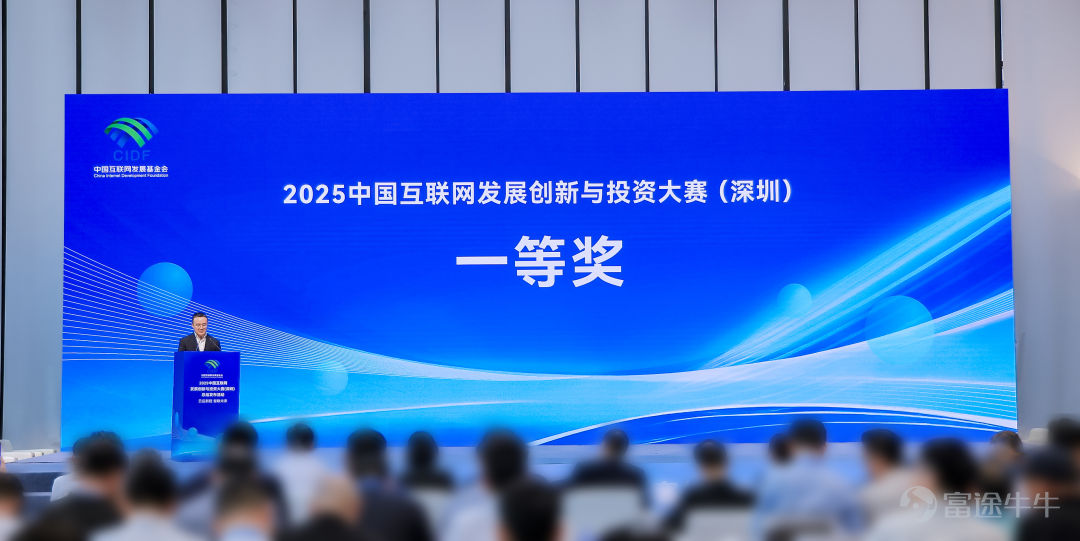

ZTE Microelectronics won the first prize at the 2025 China Internet Development Innovation and Investment Competition (Shenzhen)
Recently, the summary and release event for the 2025 China Internet Development Innovation and Investment Competition (Shenzhen) was held in Shenzhen.
The top three projects from this year's competition路演competed live during the summary event. Ultimately,ZTE Microelectronics' 'Dinghai DPU Chip' project won the first prize of this competition for its innovative achievements in the RISC-V sector.

The 2025 China Internet Development Innovation and Investment Competition (Shenzhen), guided by the Informatization Development Bureau of the Central Cyberspace Administration and the Cyberspace Administration of Guangdong Province, is jointly organized by the China Internet Development Foundation, China Internet Investment Fund, and the Cyberspace Administration of the Shenzhen Municipal Committee. The competition, themed 'Cloud Initiation, Smart Connectivity for the Future,' focuses on fundamental technological innovation and industrial investment value in the digital era. It features ten cutting-edge tracks including RISC-V, artificial intelligence, and smart manufacturing, attracting over 600 projects to register.
The newly established RISC-V track became one of the highlights of this year's event, with multiple projects from companies like ZTE and universities making their debut. Covering areas such as chip design, foundational software, performance simulation, security testing, and application migration, these projects comprehensively showcase various aspects of the current domestic RISC-V ecosystem.
Dinghai Chip is a core hardware urgently needed for data centers and AI network applications. With its open-source, modular, customizable, and scalable characteristics, it helps maintain the competitiveness of key domestic chips. Equipped with ZTE's self-developed quad-core RISC-V processor as the control plane processing unit, Dinghai Chip targets data centers, edge computing, and other scenarios, supporting acceleration functions for computing, networking, storage, and security. The chip supports various form factors including RDMA standard cards, smart NICs, and DPU cards. The series of NIC products have already been deployed at scale across telecom operators, government enterprises, and the internet sector.
While advancing hardware innovation, ZTE is also focusing on building the RISC-V software ecosystem, driving the transition from 'usable' to 'user-friendly.' Concentrating on software adaptation issues for RISC-V architecture in artificial intelligence scenarios, ZTE provides software support for AI applications from the chip level to upper-layer frameworks. ZTE has restructured algorithms and optimized performance for the widely-used x264 video encoding and decoding software under the RISC-V architecture and contributed over 10,000 lines of optimized assembly code back to the open-source community, laying a foundation for RISC-V's application in multimedia processing.
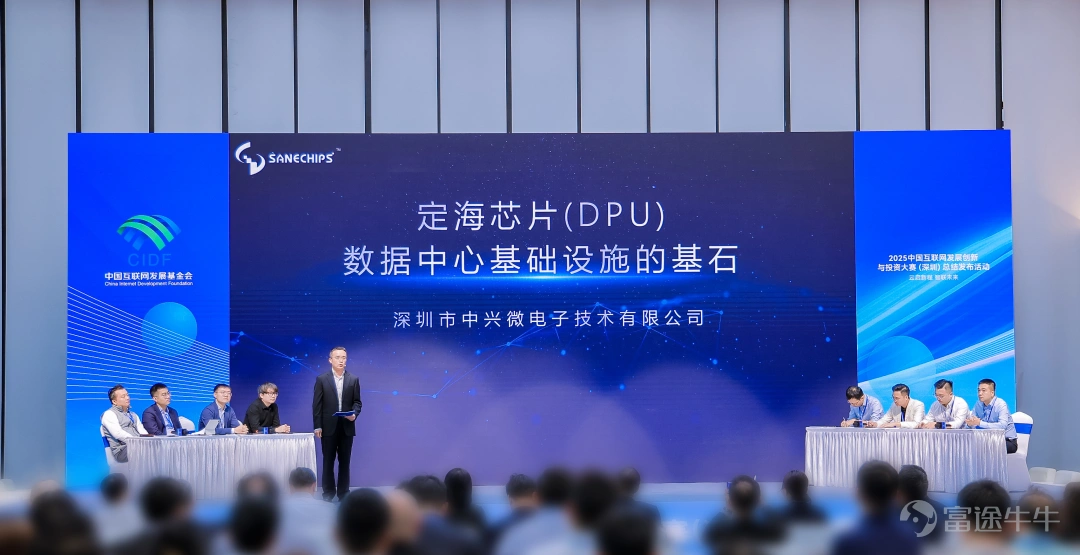
ZTE will steadfastly embrace the RISC-V ecosystem, continue to invest, deepen R&D efforts, and contribute to open-source ecosystem construction. We also call on industry peers to join hands and create a flourishing RISC-V industry!
Risk Disclaimer: The above content only represents the author's view. It does not represent any position or investment advice of Futu. Futu makes no representation or warranty.Read more
Comments
to post a comment