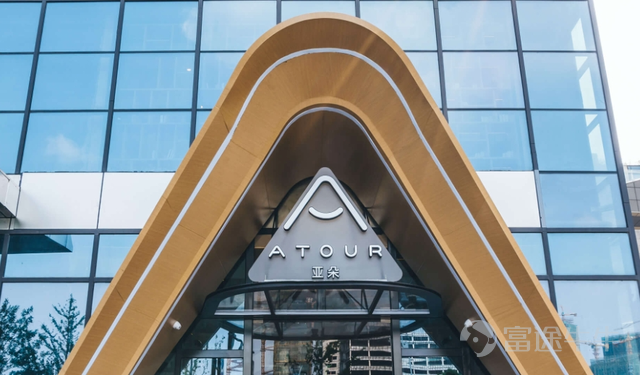

Atour, which has been criticized by working-class travelers as 'expensive,' actually saw a decline in its average daily rate (ADR) according to its financial report
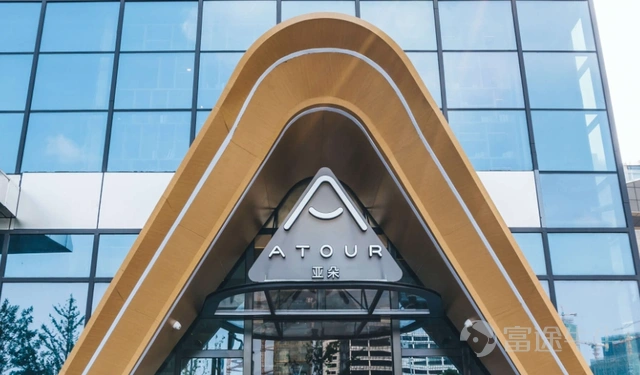
Recently, Atour released its 2025 earnings report.
Despite declines in its three core metrics—average daily rate (ADR), occupancy rate (OCC), and revenue per available room (RevPAR)—the company still achieved growth in both revenue and profit.
Behind this disconnection is Atour’s strategy of maintaining a fast pace of franchise expansion and offsetting slowing growth in its core hotel business with high growth in its retail segment.
However, this has created a crack in Atour’s otherwise glossy financial figures:
With all three core indicators declining, how will Atour balance the interests between its brand and franchisees? In the current downturn of the hotel industry, are consumers willing to pay a premium? Amid increasing low-cost competition and the lack of core barriers in its retail operations, how will Atour deliver on its narrative of a second growth curve?
01 Is Atour 'expensive' or not?
As a chain hotel, we must first return to the question of pricing itself.
In fact, discussions among netizens about Atour being 'expensive' have become commonplace in recent years.
During this year's Spring Festival, some Atdo room rates in the Shantou area reached 4,221 yuan per night, shocking social media. In response to the controversy over price hikes, Atdo Hotel staff told the media that it is normal company practice to raise hotel room rates during holidays.
Looking at recent times, taking the Fengtai Shoujingmao area of Beijing as an example, on March 24, a single-bed room at Atdo without breakfast was priced at 598 yuan per night. The nearby Lifen Hotel, also without breakfast, was priced at just 363 yuan per night, with the same room size of 23 square meters. Not far away, Quanjii Hotel’s rate was 450 yuan per night.

Source: Ctrip
Comparing fourth-tier cities, using Baoji City in Shaanxi Province as an example, rooms at Atdo near the high-speed rail south station exceeded 400 yuan per night. Of course, if you don't pursue quality of life, you could stay in a windowless room for 282 yuan.
However, in a fourth-tier city, a price close to 300 yuan for a windowless room is no wonder many people complain that 'with a monthly salary of 30,000 yuan, I can’t afford to stay at Atdo.'

Source: Ctrip
According to Atdo's disclosed annual report, the average daily room rate for Atdo in 2025 will be 431.9 yuan, higher than Huazhu’s 290 yuan.
It is worth noting that according to the 'Notice of the Ministry of Finance on Adjusting the Standards for Official Travel Accommodation Fees and Other Related Issues,' except for certain cities in Beijing, Shanghai, and Guangdong, the accommodation standards for general public servants traveling on official business are below 400 yuan. Many companies have similar standards.
Therefore, many office workers complain online that it is difficult to stay at Atdo hotels relying only on company reimbursement.
The reason why Atdo is 'expensive' stems from its desire to shape the perception among the public that 'Atdo is not just a hotel,' similar to Pangdonglai in retail and Haidilao in catering, creating product premium through service and atmosphere.
This strategy also originates from Wang Haijun, the founder of Atdo Hotels, who has over a decade of experience in the hotel industry. In his view, although Chinese chain hotel brands can easily grow large through standardized services, they are also easily imitated. As a result, after market saturation, everyone can only engage in price wars.
To break out of this cycle, Atdo cannot let consumers think of it as just another chain hotel. Wang Haijun aims to embed key concepts like 'bookstores,' 'communities,' and 'warm service' into consumers’ minds.
To create these differentiating features, Atour provides a welcoming tea service upon entry and changes beverages according to the season—offering lemon water in summer and warm ginger tea in winter. Toiletries are also upgraded to ESPA from the UK and Thank You from Australia.
However, whether these services are worth allowing Atour to charge 30% to 50% more than nearby competitors like Quanji and Lifen varies from person to person.
Although Atour has made every effort to create premium pricing through its services, ambiance, and branding, it cannot satisfy all consumers. For example, on the Black Cat Complaints platform, one consumer reported that 'the showerhead in the bathroom was broken, the hotel was aware but did not offer a solution, resulting in a very poor experience,' while another mentioned 'a strong formaldehyde smell at Atour S Hotel.'
Therefore, perhaps the biggest risk point for the Atour brand lies in whether consumers recognize and agree with the product premium generated by Atour’s efforts. If basic services encounter issues, Atour may struggle to become the Haidilao of the hospitality industry and might be more akin to Xibei in the catering sector.
Consumers are not unwilling to pay a premium, but they need to feel that the premium is worthwhile. In today's consumption environment, getting consumers to willingly spend more remains an elusive art.
02 All Three Key Metrics Decline
Recently, Atour released its 2025 financial report. In 2025, Atour's revenue reached 9.79 billion yuan, a year-on-year increase of 35.1%, with an annual net profit of 1.62 billion yuan, a year-on-year increase of 27.4%.
Breaking it down, in 2025, Atour’s retail business revenue reached 3.67 billion yuan, a year-on-year increase of 67%, accounting for nearly 40% of total revenue. Excluding the retail business, Atour’s pure hotel business revenue growth was only 21.6%, which lags behind the company’s overall growth rate.
In comparison, Huazhu’s domestic business attributable net profit increased by 39.4% year-on-year in 2025. After implementing cost-cutting measures such as closing loss-making stores, its international business successfully turned around, unlocking greater earnings potential.
Notably, within the hotel business, all three core metrics of Atour showed a year-on-year decline.
In 2025, Atour's average daily rate (ADR) was 431.9 yuan, a year-on-year decrease of 1.1%; occupancy rate (OCC) was 75.9%, a year-on-year decrease of 1.5%; revenue per available room (RevPAR) was 339.6 yuan, a year-on-year decrease of 3.3%.

Source: Corporate earnings reports
Similarly for Huazhu, the average daily rate (ADR) increased by 4.1% in 2025, the occupancy rate (OCC) decreased by 1.6%, and the revenue per available room (RevPAR) ultimately rose by 2%. Overall, its year-on-year performance was better than Atour's.

Source: Corporate earnings reports
Atour’s ADR is trending downward while Huazhu’s ADR is moving upward, indicating that consumers have demand for mid-to-high-end hotels but seem unwilling to pay a premium for 'service and ambiance.'
In terms of store expansion, the number of Atour hotels grew from 1,619 at the end of 2024 to 2,015 at the end of 2025, with a growth rate of 24.54%, surpassing Huazhu’s store growth rate of 15.35%.
However, considering Huazhu has already reached a scale of 12,000 stores, while Atour just surpassed 2,000 stores, this difference in growth rates is reasonable. For 2026, Atour stated it will maintain the same scale of store openings as in 2025, focusing on core urban business districts.
Notably, over the past period, Atour has also intensified its development efforts in lower-tier markets. However, the purchasing power in these markets cannot support Atour’s high-premium positioning, resulting in new stores having a lower ADR compared to mature stores in first- and second-tier core business districts, which has pulled down the brand’s overall average ADR.
The earnings call revealed phrases like 'focusing on core urban business districts' and 'maintaining the 2025 scale of store openings,' which may indicate that Atour’s strategy will shift from aggressively expanding its market share to maintaining profitability per store and preserving brand positioning.
Meanwhile, in response to the decline in the three core metrics, Atour mentioned during the earnings call that franchisees are now being more cautious about factors such as rent, location, and brand selection compared to before.
This also highlights the conflict between Atour’s brand management and its franchisees—while Atour can attract franchisees to expand its store network and generate profits, the profitability of franchisees declines in an environment where the three key metrics are falling, leading to heightened tensions between the two parties.
For example, according to Interface News, some franchisees previously reported that Atour hotels mandate the purchase of specific high-priced bedding products. Southern Weekly also reported that Atour required a franchisee to replace all the pillows in the high-end room type 'Jigsaw Room' with more expensive ones; otherwise, the rooms would not be listed for sale.
The initial investment for Atour Hotel is clearly higher than that of Quanji and Lifen. Against the backdrop of a decline in all three key metrics, how to strike a balance between its interests and those of franchisees is also a question Atour needs to consider.
Can selling pillows support the second growth curve?
While the hotel business saw a decline in its three core indicators, the retail segment experienced nearly 70% revenue growth. 'Selling pillows' seems to have become Atour's biggest highlight.
Atour's side business began in 2016, with its retail operations covering a wide variety of SKUs, including luggage, power banks, thermos cups, speakers, and bedding products. In 2022, Atour’s retail revenue reached 254 million yuan, increasing to 972 million yuan in 2023, then to 2.198 billion yuan in 2024, and finally hitting 3.67 billion yuan in 2025, showing rapid growth.
In fact, it’s not uncommon for companies in the hotel industry to explore side businesses—both Huazhu and BTG Homeinns have ventured into retail.
Huazhu started promoting room amenities as early as 2014 and even launched a memory foam pillow last year to rival Atour's offering. However, its retail operations haven’t taken center stage, nor are they separately highlighted in financial reports.
BTG Homeinns has also long shown interest in retail, taking steps such as signing an agreement in 2019 with the University of Science and Technology of China and Hefei City Cloud Data Center Co., Ltd. to establish the 'BTG Lifestyle Smart Service Lab' as the first step in boosting its new retail strategy. Unfortunately, despite much fanfare, BTG’s retail efforts have yet to gain brand recognition.
So why has Atour succeeded where Huazhu and BTG Homeinns have failed?
The secret lies in Atour’s shift in retail strategy in 2021, when it drastically reduced its SKU count and focused on the core scenario of 'sleep,' primarily promoting sleep-related products like pillows, mattresses, and comforters.
After all, products like shampoo, thermos cups, and speakers already have strong leading brands dominating their respective niches, making it hard for a hotel company to make any significant impact.
However, the sleep scenario is completely different. Consumers mainly stay in hotels during the evening, spending the most time in contact with bedding products, especially pillows. In this way, hotels become a natural consumption experience scene for consumers to interact with Atour's retail products, making buying pillows a logical next step.
However, this does not mean that Atour can rest easy on the strength of its robust retail business growth.
On one hand, as mentioned earlier, when franchisees’ interests diverge from Atour’s, franchisees may cut costs in hidden ways, which are hard for Atour’s official team to control. A previous example involved an Atour franchise being exposed for using hospital linens as pillowcases. As hotels serve as an important venue for consumers to purchase retail products, any trust crisis in the core business will inevitably affect consumer perceptions of the retail products.
On the other hand, Atour has indeed invested significant effort into making its pillows, conducting extensive research and setting numerous standards. However, it must be acknowledged that pillows are not a high-barrier product. If you make them well and price them high, competitors will naturally follow suit.
Currently, Atour's Deep Sleep Pillow PRO is priced at around 300 yuan in the market, but similar alternatives on Taobao cost less than 90 yuan. Some manufacturers even sell under the claim of being 'directly shipped from Atour's contract factories.'

With more affordable substitutes flooding the market and competitors entering, can Atour’s retail business maintain such high growth?
Summary
Atour’s development essentially reflects the transformation of China’s chain hotel industry from scale expansion to quality competition.
Attempts at service premium pricing, rapid store expansions, and diversification efforts bring both success and underlying concerns for Atour as it enjoys impressive financial results.
When brand premiums lose their foundation in service, expansion speeds detach from profitability, and retail businesses face challenges from cheaper alternatives, balancing positioning and experience, brand and franchises, core business and side ventures becomes key to whether Atour can successfully continue its growth narrative.
Risk Disclaimer: The above content only represents the author's view. It does not represent any position or investment advice of Futu. Futu makes no representation or warranty.Read more
Comments
to post a comment